
Key Points
Banana peels are rich in potassium and make great compost, mulch, or fertilizer.Prep peels by drying, steeping, or composting to help plants absorb more nutrients and prevents pests.Fruiting and flowering plants especially thrive on banana peel-based treatments like compost or tea.
Banana peels are packed with nutrients that go to waste when simply tossed in the trash. But with a bit of time and know-how, banana peels can be transformed into compost, mulch, or a basic fertilizer to help gardens and houseplants grow better.
We asked a pro for her tips on how to make the most of banana peels instead of just tossing them straight in the garbage, and she gave us all her tips.
Meet the Expert
Bea Johnson is an environmental educator at ecomaine, a Maine-based organization focused on sustainable waste management.
Can You Use Banana Peels to Help Your Garden?
The best place for banana peels is the compost bin.
Credit:
Jenny Dettrick / Getty Images
Banana peels can be an asset in the garden, but you’ll get more benefits out of old peels if you know how to use them.
“Banana peels have high levels of potassium, which strengthens the stems of plants, yields a sturdier crop, and can help fight off disease,” says environmental educator Bea Johnson. “Tomatoes, peppers, and other flowering plants can benefit greatly from a potassium additive.”
It’s best to process banana peels before applying them to gardens, either by drying, steeping them in water, or composting. This makes the nutrients in banana peels more accessible to plants.
Banana peels are biodegradable and can technically be added to gardens as-is, but it takes a while for whole peels to break down and peels won’t offer many benefits to plants until they’re well-incorporated into the soil.
Warning
Whole banana peels can sometimes attract pests, like flies and some digging animals, so it’s usually best to break them down in some form before adding to your garden.
How to Use Banana Peels in the Garden
Gardeners can use banana peels in several different ways, depending on the types of plants you’re growing and how much effort you want to put into repurposing old peels. Here are a few ways to use banana peels for healthier and happier plants:
Compost. The best way to use banana peels is to add them to your compost pile as a nitrogen source and then apply the composted peels as a soil additive. Compost made with banana peels can be used as a side dressing or top dressing in the garden, mixed into garden beds, or added to potting mixes to improve soil structure and add nutrients.
Vermicompost. If you have a worm bin composting system, add banana peels to your vermicompost bin and allow composting worms to transform those peels into nutrient-rich worm castings.
Slow-release soil amendment. You can make banana peel powder by drying old banana peels in the sun or a food dehydrator and then pulverizing the peels. After grinding, mix the banana peel powder into potting mixes or garden soil for an extra boost of nutrients.
Liquid fertilizer “tea.” One of the most popular ways to use banana peels is to brew old peels in water to make a mild liquid fertilizer or foliar spray.
Mulch. Chopped banana peels can be spread across the soil as mulch, but it’s usually wise to cover them up with wood chips or straw to keep insects at bay. Composted banana peels can be applied as a mulch, too.
In planting holes. Adding a few chopped pieces of banana peel or dried banana peel powder to the base of planting holes can provide new plants and transplants with a slow release of nutrients.
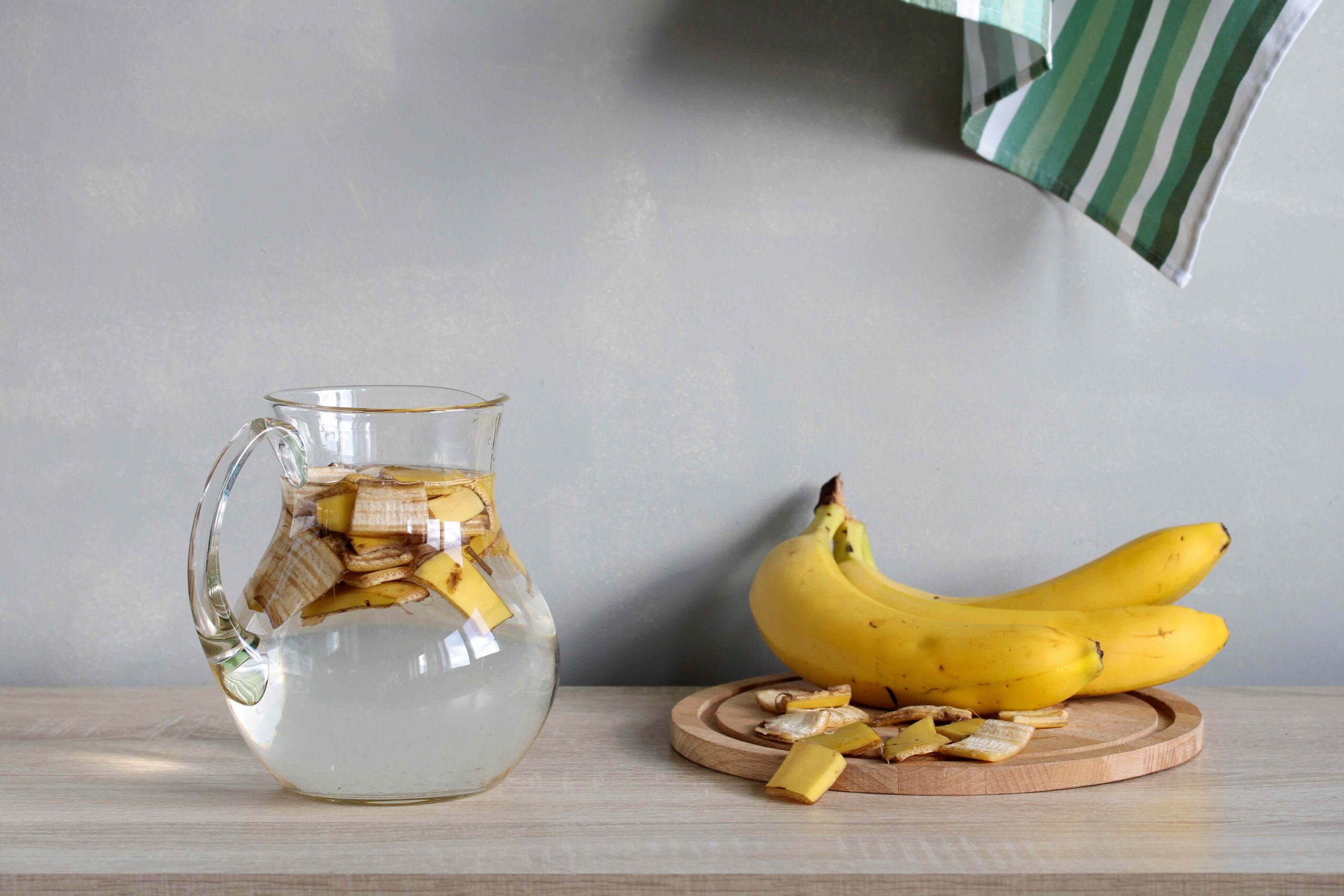
How to Make Banana Peel Water for Fertilizing
Credit:
The Spruce / Adrienne Legault
Banana peel water can be made with raw banana peels, but boiling banana peel water infuses more nutrients into the water and makes it even better for plants.
Use these tips to make your own boiled banana water “tea” for gardens or houseplants.
Collect banana peels. As you eat bananas, gather the spent peels in a jar with a lid. Keep the jar sealed to prevent pests.Steep the peels. Once the jar is filled with peels, cover the peels with room-temperature water and let the peels steep in a dark spot for a few days. It’s fine if the water and peels darken.Boil the water. Pour the peels and water into a saucepan and boil them on the stove for about 30 minutes.Let cool. Set the pot aside until the banana water has cooled completely.Strain the peels. Remove the peels from the banana water and toss the old peels in your compost pile.Apply. Pour the cooled banana water into a watering can or garden sprayer and dilute 1 part of banana water with 5 parts water. Then, water your plants as usual with the diluted banana water, or use it as a foliar spray on plant leaves.
Which Plants Like Banana Water?
Credit:
tchara / Getty Images
All plants, indoors and out, can be watered with banana water, but fruiting and flowering plants derive even more benefits from the potassium banana water contains.
Use banana water on melons, pumpkins, zucchini, tomatoes, peppers, and other cucurbits or nightshades, or spritz banana water on air plants to give them a little boost. Since it’s mild, banana water can be applied weekly as part of your regular watering schedule.
Comments are closed.