
Clipping, shaping, pruning, watering—maintaining a beautiful landscape can be hard work. And while many may enjoy the work that comes with maintaining a pristine, formal garden, sometimes it’s nice to be able to enjoy the fruits of your labor with just a little less work.
That’s where low-maintenance landscape design comes in—things like intentionally choosing drought-tolerant plants or selecting low or no-mow ground coverings can be beautiful while giving you time back in your busy schedule. Ahead, we spoke with gardeners and landscape designers to understand how you can turn your landscaping into a minimally maintained but still beautiful part of your home.
Plant Low-Maintenance Ground Covers
Credit:
Brett Hilton Photography
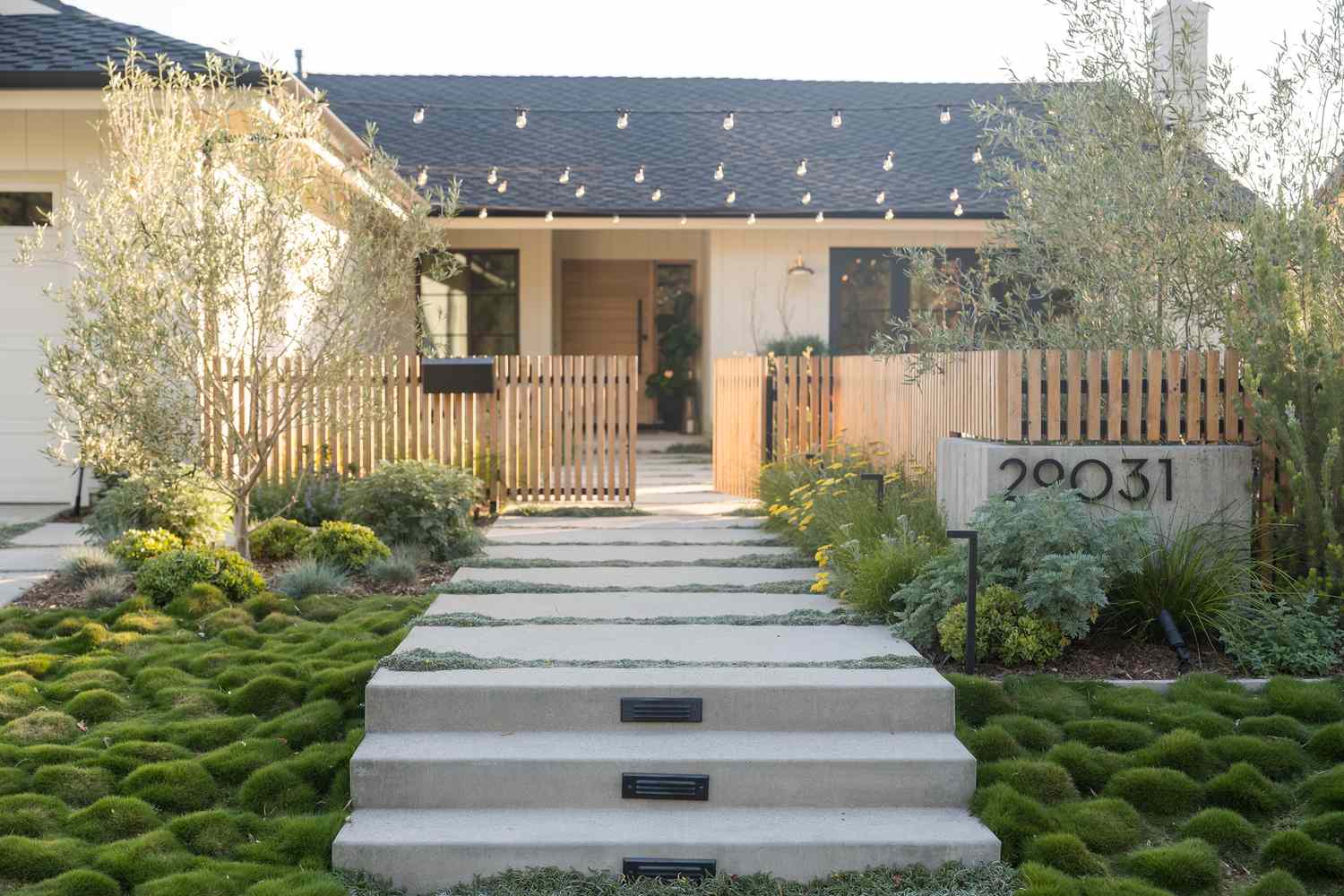
Ground cover plants naturally suppress weeds, retain moisture well, and reduce soil erosion, making them a natural choice for a low-maintenance yard. Sacha McCrae, a landscape designer who owns Living Gardens Landscape Design in Southern California, has used ground cover plants in a few of her projects to replace “thirsty, high-maintenance grass,” she says. Some of her favorites include Korean grass, ruschia nana, and kurapia; the latter two are also no-mow options.
Opt for Xeriscaping
Credit:
David Madison / Getty Images
Xeriscaping is a landscape method that effectively reduces or removes the need for irrigation, making your landscape supremely low-maintenance. “You focus on water-efficient design, usually using ground materials like rock or gravel in place of grass or soil,” says Steve Corcoran, CEO of Lawn Love. “Then, with the plants you grow, you strategically choose plants that are super drought-tolerant (succulents are common).”
Swap Turf for Limestone Gravel
Create an entertainment space by swapping turf grass for limestone gravel to create a front courtyard, as Danielle Faustini, owner of Helix Green Landscape Design Studio, did here. “What was once an undefined side-facing lawn is now a purposeful outdoor room; structured, inviting, and designed for longevity,” says Faustini. “Locally sourced gravel and crisp galvanized steel edging establish clean architectural lines, while drought-tolerant plantings, including native grasses, white salvia, rosemary, dwarf carissa ‘Emerald Blanket,’ and agave, provide year-round form and texture with minimal upkeep.”
Incorporate Drought-Resistant Plants
Credit:
The Inspired Garden
Drought-resistant plants thrive with minimal water, making them ideal for low-maintenance landscapes. Laura Janney, CEO of The Inspired Garden Master Class, regularly showcases drought-resistant plants in her work. “My designs shown are mainly with drought-tolerant plants,” she says. “Some perennial examples are catmint, hamlyn grass, coreopsis, Russian sage, coneflower, salvia, and yarrow. Some annuals [I use are] zinnias, angelonia, vinca, gomphrenia, and marigolds.”
Janney has a word of caution, though, for when you first plant them. “Do keep in mind that even drought-resistant plants need adequate water to get established,” she says.
Choose Self-Seeding Perennials
Credit:
The Inspired Garden
Instead of purchasing many different perennials to fill your front garden beds, choose a couple of self-seeding perennials that spread easily. “One of my favorite ways to fill a garden easily is to choose plants that are known for self-seeding, creating ‘volunteers’ in your garden,” says Janney. “Bachelor button, black-eyed Susan, coreopsis, coneflower, and yarrow are all known to spread.”
Edge Garden Beds
Credit:
The Inspired Garden
Adding clean, defined edge borders to your garden beds does more than boost curb appeal—it also prevents turf from creeping in, keeps mulch in place, and helps keep weeds out, making upkeep of your beds much more manageable. “Our favorite way is to just have a simple sharp edge formed by a flat spade,” says Janney.
Plant an Evergreen Shrub Layer
Credit:
Stacy Zarin Goldberg
Evergreen shrubs provide low-maintenance color and visual interest, even during colder months. “With irrigation, boxwoods, laurels, yews, and various species of hollies (some native, some not) are all low-maintenance options that look great year-round,” says Jordan Clough, associate principal of Richardson & Associates Landscape Architecture. Without irrigation, Clough recommends shifting towards mostly native species for your region in your yard.
Mass Plant Perennials
Credit:
Credit Stacy Zarin Goldberg
After adding an evergreen shrub layer, Clough recommends mass planting perennials. “Massing the perennials in the front yard is a good strategy in most suburban areas because the yard is typically viewed from a vehicle or at a distance,” he says. “This makes it hard to appreciate a very detailed planting plan with many individual species mixed together, and large mass plantings provide blocks of color and texture that read well at that scale.”
Group Plants With Similar Needs
Credit:
Caitlin Bird Landscape Design
While you’re massing plants, choose varieties that all have similar needs. “Maintenance is labor, but there is also a mental load in remembering the different habits of each individual plant,” says Caitlin Bird, a landscape designer and owner of Caitlin Bird Landscapes. Instead of choosing 20 plants of various varieties, she recommends 20 plants of the same variety, so care is relatively similar across the board. Bird notes that she likes to do mass grass plantings that can hold color all season long. Above is a “Globe Blue Spruce and 30 Blue Fescue Grass. The house glows blue all season,” she says.
Add Proportional Containers
Credit:
Anna Herbst Photo
For something even more low-maintenance than caring for an entire front yard landscape and garden, try placing just two well-proportioned containers near your front door, says Janney. “Even homes with gorgeous landscaping often feel like something is missing when there are no containers anchoring the front door,” she says. “I promise, two nicely sized containers are all you need. Two generous pots that are in scale with your door will almost always look more elevated than a scattering of little ones.”
Comments are closed.