
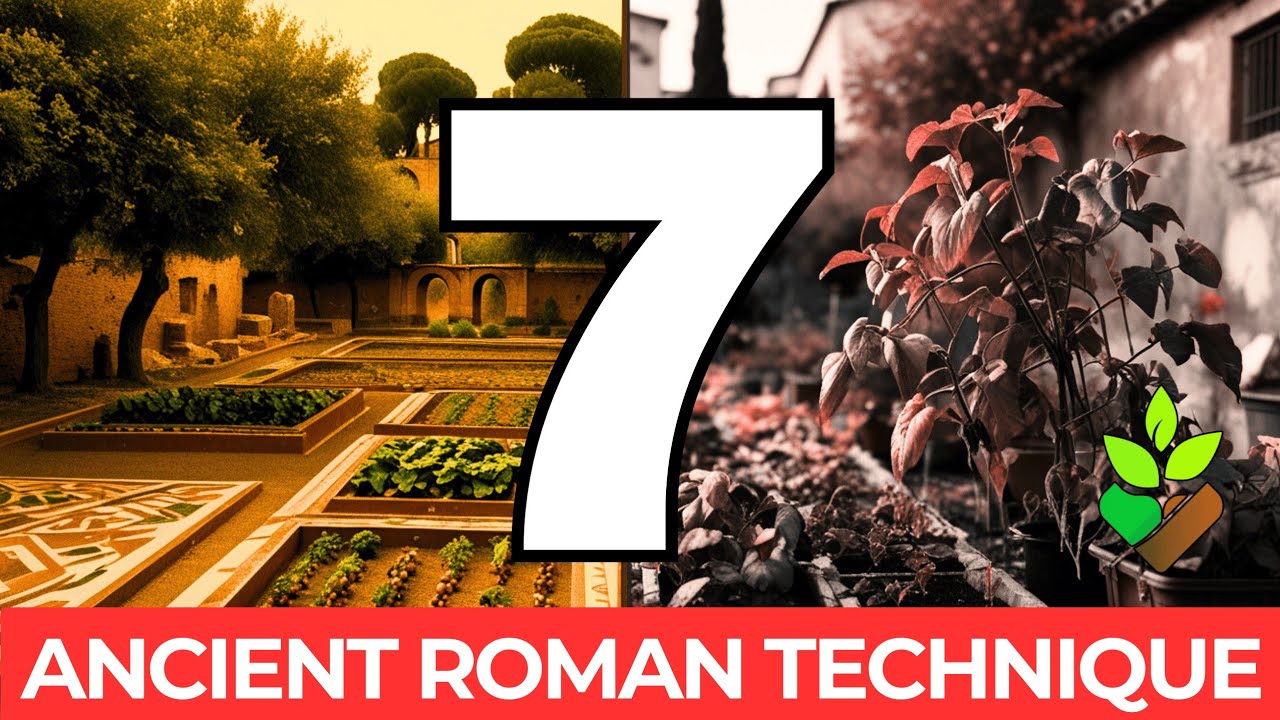
7 Roman Gardening Techniques MORE EFFICIENT Than Modern Gardening
What if ancient Roman gardeners achieved better results 2,000 years ago than most modern farms today? These 7 techniques tripled harvests while requiring 90% less work.
0:00 – Romans vs Modern Gardening
0:33 – Why Roman Gardens Fed Empires
1:07 – Historical Context: Efficiency Born From Necessity
1:45 – Technique 1: Perennial Asparagus Beds (25-Year Harvest)
3:17- Technique 2: Companion Planting (Zero Fertilizer)
4:52 – Technique 3: Stone Mulch (50% Less Water)
6:30 – Technique 4: Espalier Training (5X Yield Per Space)
8:10 – Technique 5: Hot Bed Systems (Winter Growing)
10:05 – Technique 6: Perennial Herb Gardens (Self-Propagating)
11:55 – Technique 7: Crop Rotation (Prevent Soil Depletion)
13:55 – Why Modern Agriculture Forgot This
🏛️ ANCIENT WISDOM:
– Asparagus beds producing 25+ years from single planting
– Companion planting eliminates need for synthetic fertilizers
– Stone mulch reduces irrigation by 50% in Mediterranean climates
– Espalier training produces 3-5X more fruit per square foot
– Hot beds provide year-round vegetables without electricity
– Perennial herbs outlive the gardener with zero maintenance
– Crop rotation prevents disease and maintains soil fertility
📊 MODERN VALIDATION:
Roman techniques proven by contemporary agricultural science. Permaculture rediscovers what Romans knew 2,000 years ago.
💬 YOUR TURN:
Which Roman technique will you try first? Have you used any of these without knowing they were Roman methods? Share below!
Subscribe to GrowWise Vision for ancient gardening secrets modern farming forgot.
33 Comments
🏛️ Roman Garden Wisdom That Still Works
Thank you for watching! The Romans mastered efficiency—plant once, harvest for decades. These aren't just history lessons, they're techniques you can use this weekend.
Quick highlights:
• Asparagus: 25+ years from one planting
• Companion planting: Natural soil feeding
• Stone mulch: 50% less watering
• Espalier: Turn fences into orchards
💬 Which technique will you try first? And if your grandparents used any of these, share their story below!
If you enjoyed this, subscribe for more ancient gardening secrets modern farming forgot. 🌿
—GrowWise Vision
Didnt have tomatoes
The Roman's NEVER HAD TOMATOES
Tomatoes are only perennial where there is no frost.
I don’t believe all of these ideas can be used in all areas. I know I won’t be picking rocks out before I replant😅.
Stones can also overheat the roots especially with climate change today.
Both pole beans one year and cucumbers this year did excellent and only factor I can figure is the roots were shaded by asparagus on one side and long raised bed on the other in a narrow space. I didn’t do anything special to the soil, just one application of organic granular.
Did they have plastic in the Roman days? 🤔. Many herbs don’t winter over. The winters they had were not as cold as Z3-5.
Romans didn't have tomatos, they came from the Americas.
Ancient Romans were not gardeners at all!!! They were warriors!!! They had slaves imported…to do that…most of the things you are talking about are from a whole other place and region…So AI didn't work
That was simply and beautifully done. On so many levels, Thank You👍😎✌️
In the cooler climes, Maori {Aotearoa, New Zealand} put rows of stones between their rows of Kumara plants.
Many informed dedicated gardeners still use these techniques today.
Stone beds sound very interesting and manure heated gardens.
All asparagus, Roman time to current, farms keep the crowns in the ground for succession of year's of growth as you mentioned. No farmer, big or small, ever digs the crown up to replant the following year. They must remain in the soil, period, lasting 15-30 years. (Romans did not invent this; it's a perennial.) Mine are growing in containers, but ended up with more females. Anyone looking to plant them, consider buying breeds that are majority male. Some are: Jersey Giant', 'Jersey Knight', and 'Jersey Supreme.'
I Edited so I didn't seem/sound rude. 😢
The “background” music is annoying, and serves no purpose.
You forgot to mention that Romans didn't have hybrid or GMO seeds .. and they could reuse seeds over and over. Farmes after harvesting ketp one quarter of their seed to be used for the planting of the following year, Today' 99% of all seeds are hybrids or GMO. Genetic modification. This means seeds can be used once, so year after year, farmers need to buy new seeds from the seeds companies.. if the crop fails, the farmers will starve . Obviously, you didn't look into it
Thank you❤❤❤
Nothing new ,more importantly you have to have right climate.
You might sell the ideas by calling them romans, but your also selling lies.
Romans? How can you give credit to the Romans when they've already accredited the Phoenicians? All the knowledge that the Romans possessed came from the Egyptians and the Phoenicians.
It's sad that you would sit there and lie because if you have this information you would have to know where it came from I know you didn't stop when they said Rome because they didn't stop Rome wasn't even mentioned when they speak on agriculture and where it came from.
You will not steal our history and our culture this is an outright lie. Yes they did produce these crops but only with the knowledge of black Africans. More directly the Egyptians and the Phoenicians. That is where the studies of agriculture and horticulture came from.
Now you can carry on with your little illusion.
Maybe you should do a video on ancient annunaki farming techniques, genetically modifying humans to use for labour and feed off their energy
I can’t believe how many “Karen’s” are obsessed with the fact that the Romans didn’t have tomatoes. Thereby totally missing the point that they are in the same family as other nightshades and the same techniques that worked on the others work the same on them. 🧐😮😕😢😎👍
Roman empire was all around the Mediterranean sea (no winter and very mild climate), so very easy to cultivate all year long. Many of thoise countries had active volcanoes , thus a lot of volcanic ashes (hence the roman concrete as an exemple). Those volcanic ashes have a CYNERGIC EFFECT on ANY crop/culture, resulting in bumper crops year after year. TThere are even studies showing the growth effects of volcanic ashes to even forest environment with a grow rate of trees far superior than non treated soil. Also hard to compare biocrops using manure (full varieties of elements, not just N-P-K) with a lot of slaves taking care of the gardens/fields with our modern pesticide/fertilizers approach with minimal employees taking care of the crops…
THE BACKGROUND COMMENTATOR USED THE PERSONAL PRONOUNS "I" AND "ME"…
WHAT IS "HIS" NAME?? SINCE WHEN IS A.I. ALLOWED TO USE PERSONAL PRONOUNS??
The climate is different from us. 💚🙂↕️
LEGEC LEGES FOLLOW SHARE LINK PLEASE KINDLY MESSAGE AF SOMALIA
Aqueducts are not Roman, they were created by Etruscans.
……..
Rabbit manure isn't hot compost
Tank you, veru intresting video
That’s true!!!
❤❤❤❤❤❤❤😊
What zones are you going to deal with .. Not every one lives in the roman climate. Everybody plants asparagus that deep and doing companion planting is common still and mulching is very good but not just stones who has them ha ha good mulch like your own compost actually fertilize and do all the above Geez I thought this video would be enlightening
Feik, The Romans didn't have tomatoes.
THANKS MY NEW FREND GOD BLESS YOU