
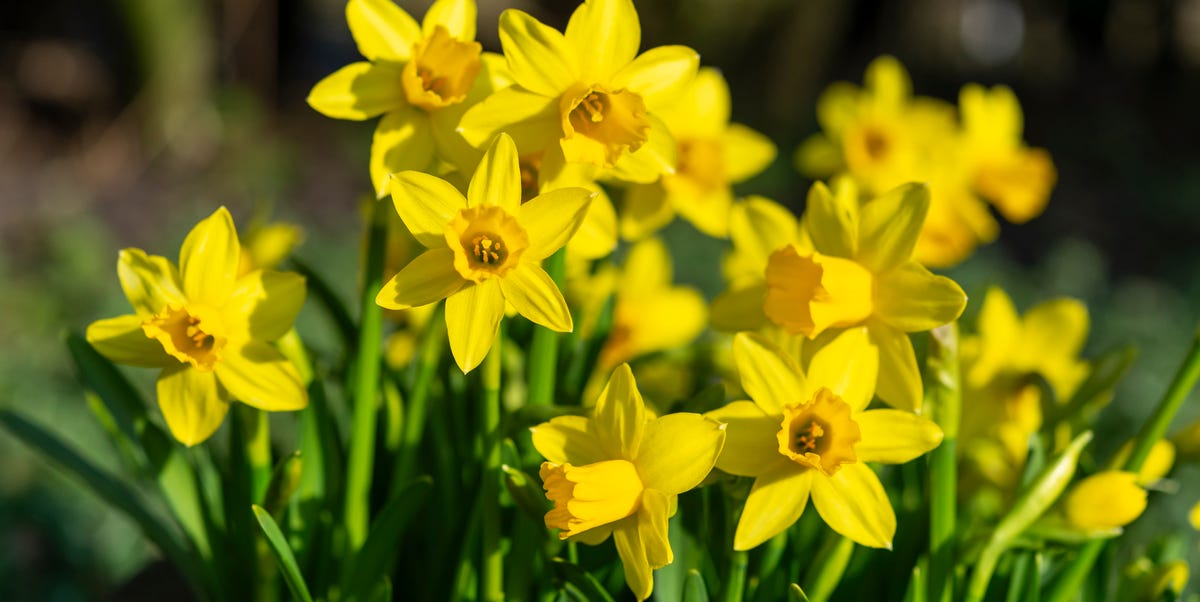
With milder weather arriving earlier across the UK, ecological experts say the first signs of spring are already beginning to appear — weeks earlier than many people might expect.
‘Spring doesn’t arrive all at once – it emerges in stages, reflected in changes across trees, flowers and wildlife. Spotting these early signs can help people better understand seasonal shifts and nature’s calendar,’ says Dean Meadows, principal arboriculturalist at Arbtech.
With that in mind, here are five early signs of spring to look out for in your garden.
1. Trees start to ‘wake up’
Norman Posselt//Getty Images
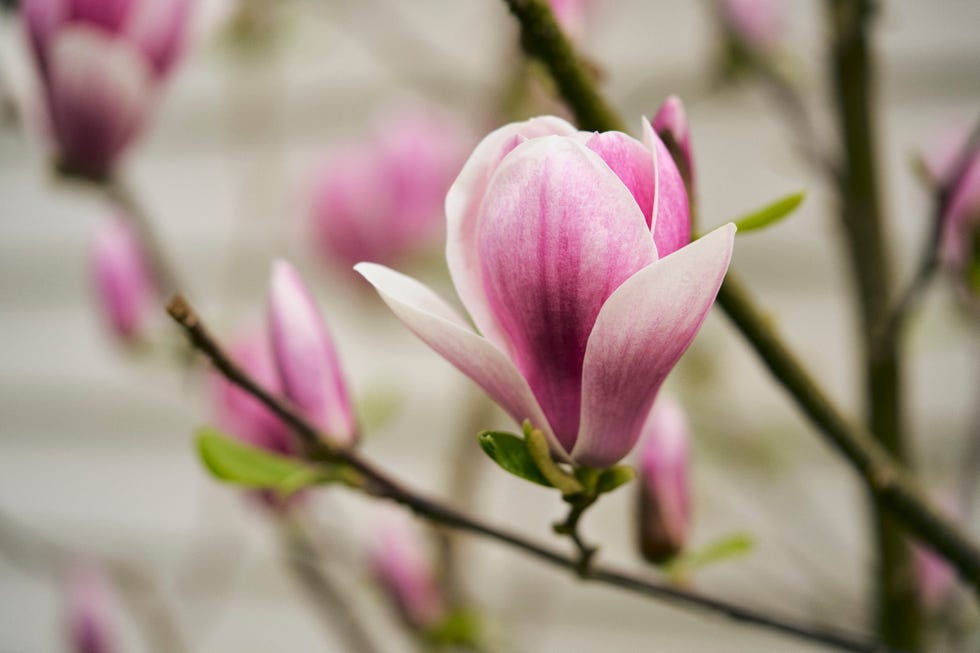
‘The first leaves of native trees are one of the clearest signs that the season is changing,’ Dean begins. ‘As we move into spring, the branches will start to develop new shoots and will look more alive.
‘Leafing tends to start in shrubs, then smaller trees and then larger trees. So you can spot early signs in small trees or shrubs in your garden or local area.’
2. The first early flowers appear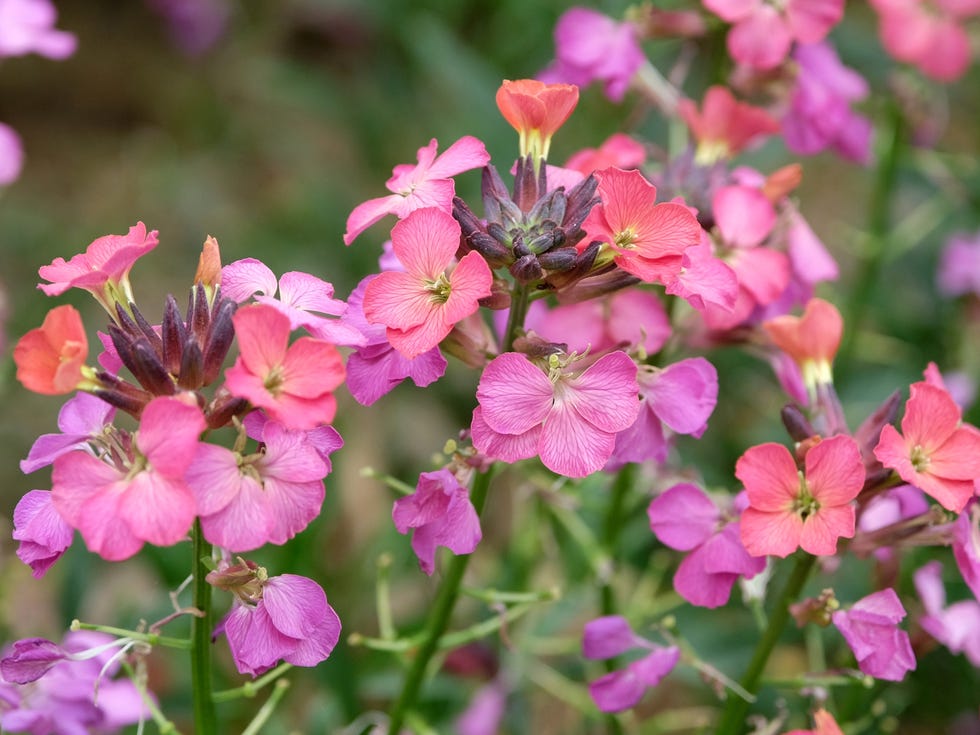
Alex Manders//Getty Images
Early spring colour often arrives sooner than people expect. Dean explains: ‘In February and March, you may start to spot some of the earliest perennials in your garden, including violets and erysimum. Daffodils will also start to bloom during this time if they were planted in November.’
3. Birdsong ramps up (especially at sunrise) 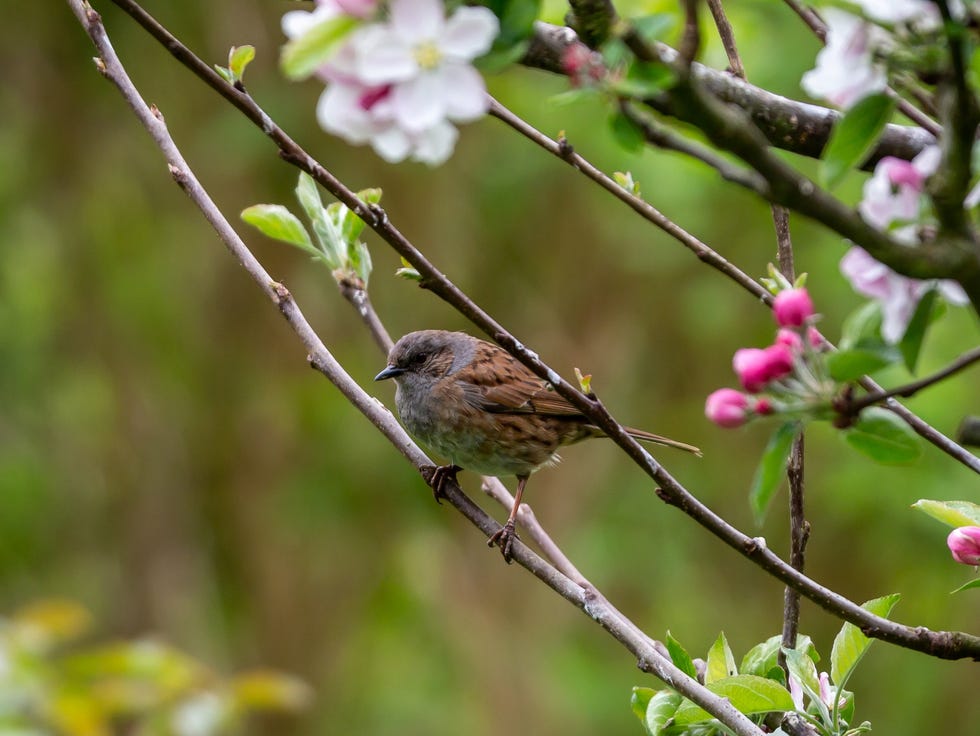
Melanie Hobson//Getty Images
Dean says bird behaviours tell us a lot about the changing seasons, with warmer temperatures and longer days triggering breeding, nesting and migration behaviours.
And it’s not subtle. ‘Birdsong will increase, as male birds try to attract mates and defend their territories,’ he says, adding that you may notice it most ‘especially around sunrise’.
You may also spot early nesting activity: ‘Early nesters will start their nests in February, and in March you may see species like robins and wrens start to collect materials like twigs, mud and fur for their nests.’
4. Bees are back on the move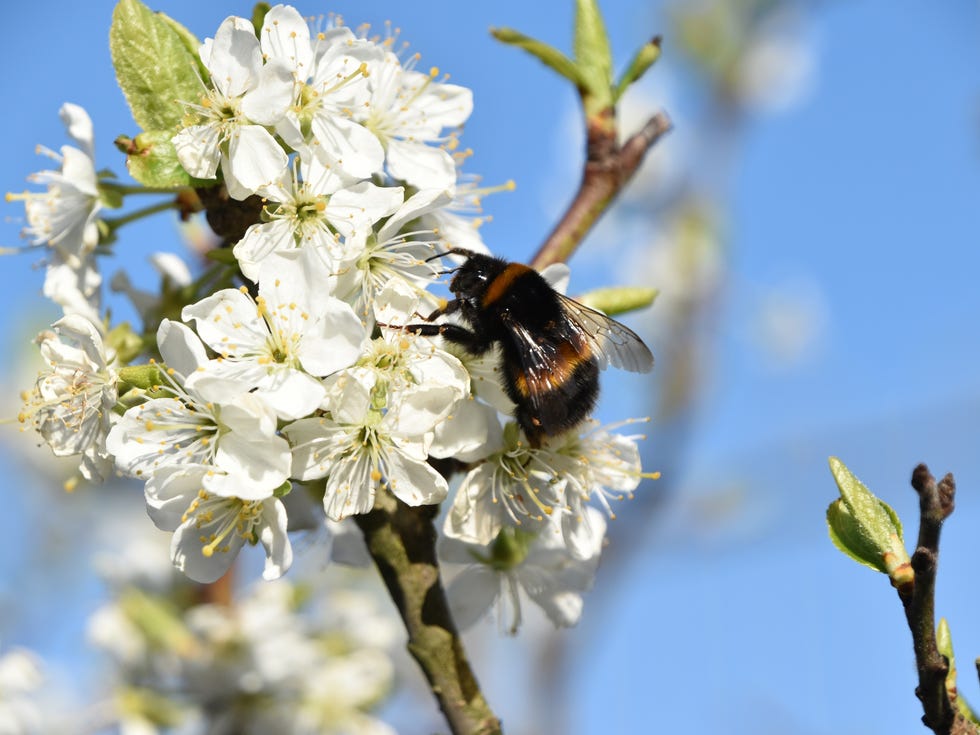
Christine Rose Photography//Getty Images
Seeing bees again is one of the clearest signs that spring is on the way.
‘Early spring marks time for bees to emerge from hibernation and forage for nectar and pollen,’ Dean says. They are also drawn to the first reliable food sources of the season. ‘They will be looking specifically for early flowers like dandelions and fruit trees.’
You may also spot queen bumblebees as they begin preparing for the months ahead. ‘Queen bumblebees will also seek spots for a new nest,’ he adds.
5. Hedgehogs begin to stir

imageBROKER/Kevin Sawford//Getty Images
Hedgehogs usually begin waking from hibernation in March or April, and experts say it’s important to be mindful of nests in early spring.
Dean explains: ‘If you have a nest in your garden, it’s important not to intentionally wake them early, and if the nest is disturbed, recover it with leaves.’
He also recommends leaving food nearby to help support them as they emerge. ‘Specialist hedgehog food is available from pet stores or wildlife suppliers, but if you can’t get hold of any then wet cat or dog food is a good alternative.’
While brighter mornings and mild spells may feel welcome, experts warn there can be downsides for wildlife. ‘Spring has been creeping forward in recent years and is now arriving earlier, as climate change drives warmer winters,’ Dean says. ‘While milder weather may be welcome news, there are growing concerns that wildlife could be emerging from hibernation too soon – with fewer food sources and resources available.’
Follow House Beautiful on Instagram, TikTok and Pinterest
The Garden Edit 2 Pack Striped Outdoor Seat Pads
 Marcy 2-Seater Sling Garden Sofa, GreigeCredit: John Lewis
 Natural Scalloped Rattan Outdoor Table LampCredit: Next
 Habitat 60 Lucinda Metal Nesting Garden Tables – Blue & Green
Now 30% Off
Credit: Habitat Scalloped Edge Smooth Fibre Clay Plant PotCredit: Dunelm
 Garden Trading Rive Droite Bistro Set Large Thistle Green
Now 20% Off
Credit: Garden Trading
Comments are closed.