
Radovan1/Shutterstock
Compared to spring and summer, winter might seem like the off-season for gardeners, with nothing to do but wait for their plants to wake back up. However, some winter care tasks, especially when it comes to fruit-bearing plants in your yard, can have a big impact on your harvest the following year. One common plant that this applies to is your raspberry bush (Rubus idaeus). The first step to growing and caring for a raspberry plant is to figure out if your raspberry bush is a fall-bearing variety, as the pruning needs for these are different from their summer-bearing counterparts.
That’s because raspberries can be classified in two broad categories: primocane-bearing and floricane-bearing raspberries. The difference between primocanes and floricanes on raspberries matters because it tells you not only when to expect a crop of berries, but also how best to prune your bush to ensure the best yield. Primocane-bearing raspberries produce fruit on new growth (primocanes) and are typically ready to harvest in late summer or fall. Some gardeners refer to them as fall-bearing raspberries because of the typical harvest time.
Floricane-bearing varieties, on the other hand, put out fruit on old growth or, more specifically, on second-year canes (floricanes). That is, the canes that emerged last summer and then hardened over the winter are the ones that will bear fruit this year. Floricane-bearing varieties shouldn’t be pruned until after they’ve produced a crop in summer. Your primocane or fall-bearing raspberry bush has different pruning needs. If you know for sure that you have a fall-bearing variety, here’s the best way to prune it.
Why (and how) to prune fall-bearing raspberries at the end of winter
Natasha Zakharova/Shutterstock
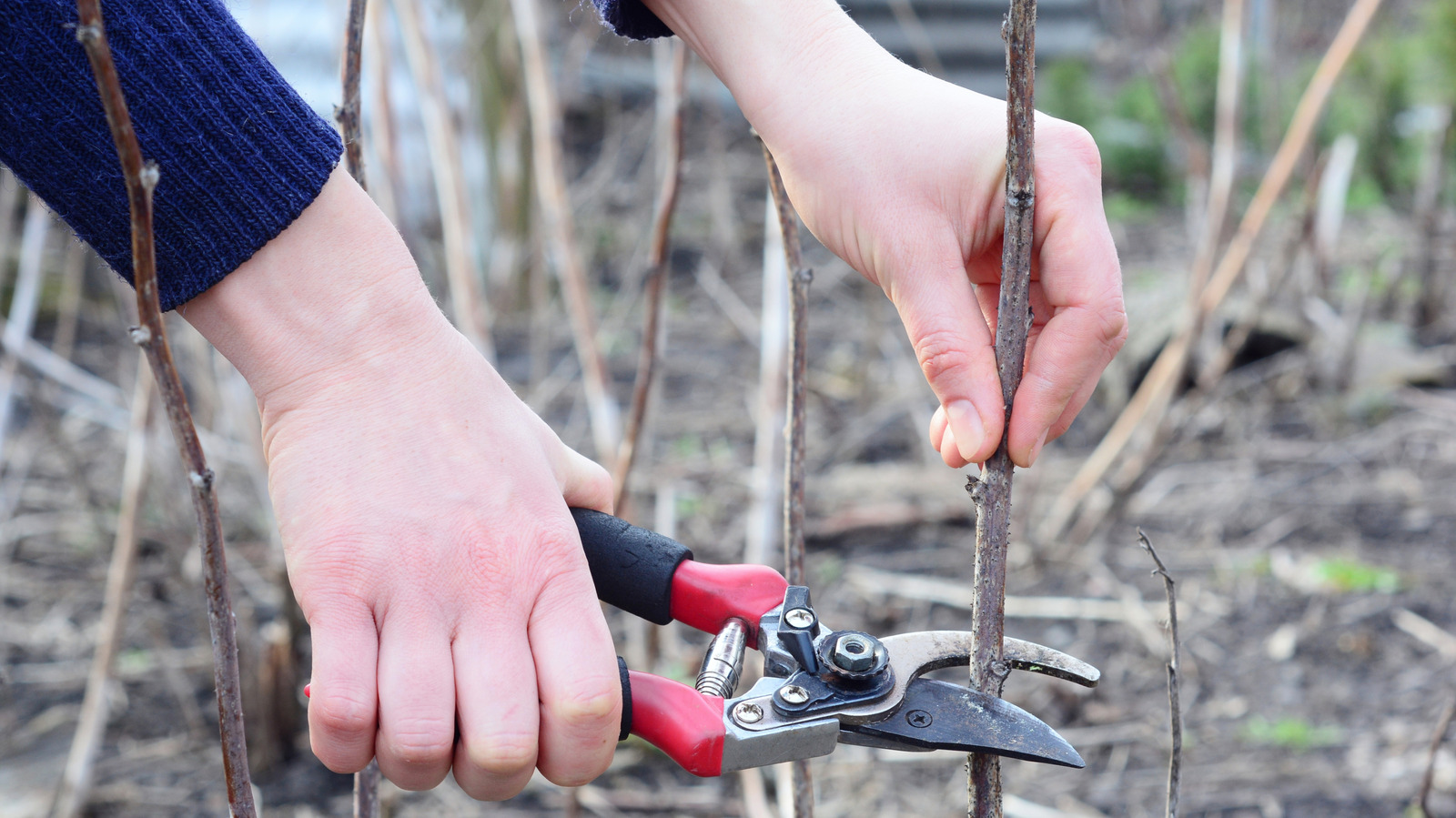
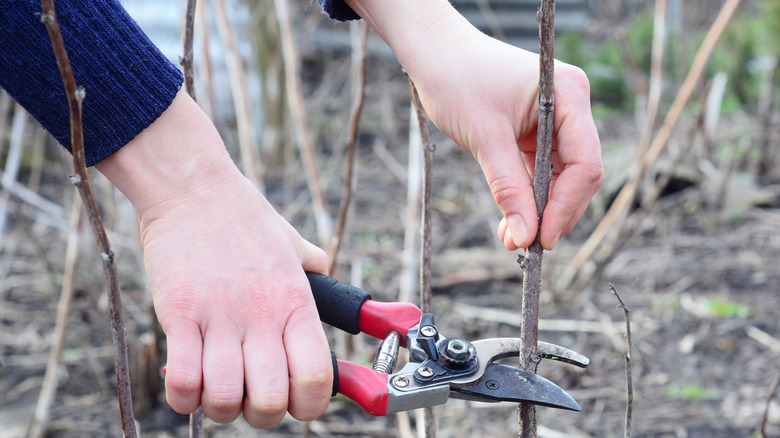
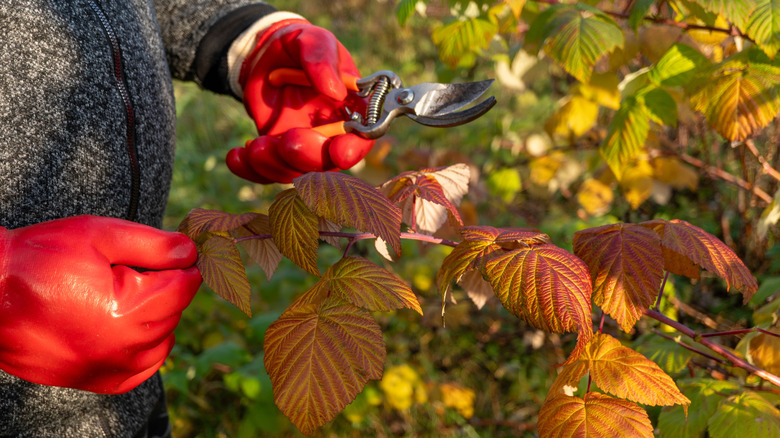
Whether you just planted a new raspberry bush in your garden last year or you’ve been nurturing one for years, it can be tricky to figure out exactly when and how to prune raspberries to ensure a juicy harvest. For primocane- or fall-bearing raspberries, the best practice is to cut back the canes in late winter or early spring, right before new growth begins. Since fruit emerges on new growth, there’s no need to leave old canes in place. In fact, some gardeners simply mow over their raspberries to quickly cut all the old canes to the ground. You can expect a single late summer or early fall crop with this method.
The one exception to this prune-in-late-winter rule is for gardeners dealing with hungry rabbits or other herbivorous wildlife that tend to munch on dormant canes during the winter. The chewing can damage your berry bushes, causing winter injuries that are more challenging for the plant to overcome. If nibbling mammals are a threat to your raspberry plants, mow down the canes in fall, right after they go dormant — signaled by lackluster growth and lost leaves — or in early spring, right before they sprout new growth.
Pruning needs for fall-bearing raspberries versus everbearing raspberries
ElenaYakimova/Shutterstock
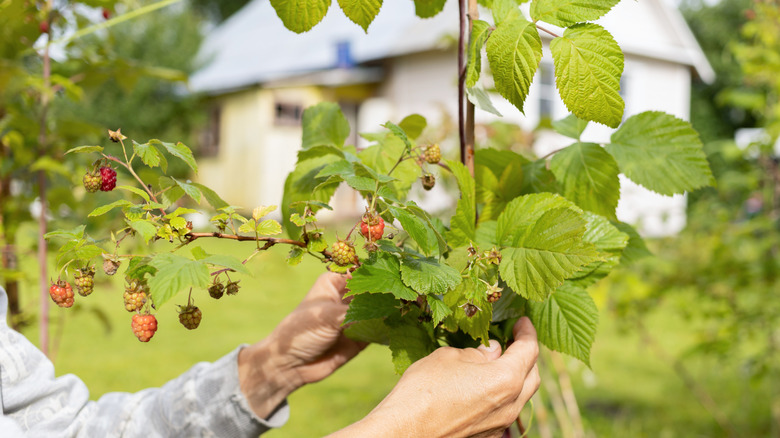
Within the primocane-bearing category of raspberries, you’ll see labels like fall-bearing, everbearing, or double-cropping raspberries. These labels are partly based on breeding, with certain cultivars developed to produce multiple crops of berries in a season. However, it might be better to think of it as a pruning technique — sometimes called double-cropping.
The reason is that all double-bearing or everbearing raspberries are actually primocane-bearing. If you have any primocane variety, regardless of its name, you can encourage multiple harvests by adapting your pruning technique. To do that, don’t hack off the entire cane as you typically would for fall-bearing raspberries. Instead, trim the top third or so of canes that have already fruited. The lower portion of those canes that didn’t fruit last season can produce a crop early in the coming season. Once they’ve fruited, be sure to prune them out to make more room for new growth. That new growth is what will give you your second crop in the fall.
Should you bother with double-cropping? Pruning for a single fall crop should result in a larger total yield than the double-crop technique produces. If your end goal is to get as many raspberries as possible out of your bush, you can stick to one hard prune in late winter. However, if your family can’t eat that large harvest fast enough, opting for the double-crop technique can be a good way to stretch out your harvest over the entire growing season.
Comments are closed.