
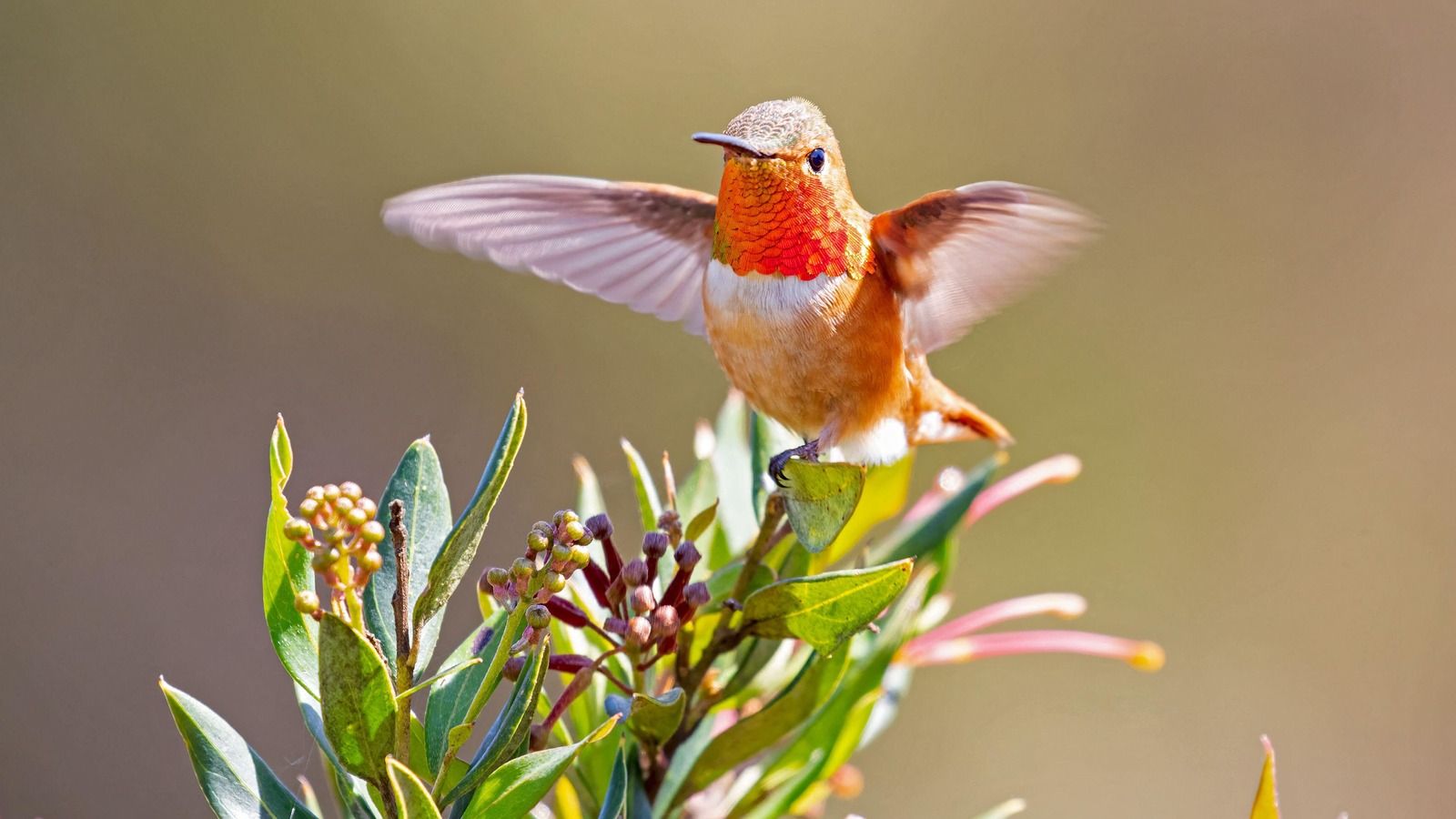
After over-wintering in warmer climes, like Mexico and Central America, hummingbirds have begun their long migration back to the United States.
With hundreds (and even thousands) of flight miles ahead of them, these tiny avian superstars require plenty of sustenance along the way. According to the National Audubon Society, hummingbirds double their body weight in preparation for the journey, and can fly hundreds of miles in a day before stopping to rest or feed.
Article continues below
You may like
When Hummingbirds Will Return to Your Garden

(Image credit: Daniel Dempster Photography via Alamy)
Timing when best to attract hummingbirds obviously varies according to where you live. Chad Witko, Specialist in Avian Biology at the National Audubon Society explains that across North America, hummingbirds occur in the four broad flyways most commonly referenced; the Pacific, Central, Mississippi, and Atlantic.
‘The type of species varies within each flyway,’ says Chad. ‘East of the Mississippi River, the Ruby-throated Hummingbird is the only regular breeding species and the expected hummingbird in spring and summer; most winter in Mexico and Central America, though a growing number now remain along the Gulf Coast.’
These petite powerhouses begin moving north in late winter, reaching Gulf states in February–March and the Southeast soon after, with arrivals in the Northeast and southern Canada by May.
‘The Southwest supports the highest diversity of hummingbirds in the US (up to roughly a dozen and a half species in places such as Arizona) including breeders, migrants, and occasional vagrants from Mexico,’ continues Chad.
‘Winter distributions are shifting as milder conditions and expanded plantings of nectar sources allow some hummingbirds to persist farther north and east, including the Black-chinned Hummingbird, Rufous Hummingbird, and Broad-tailed Hummingbird, among others in places like Louisiana and Florida.’
Treat yourself to a closer glimpse of these avian acrobats with a pair of these Nikon 42mm binoculars from Lowe’s.
 Chad Witko
Social Links Navigation
Specialist in Avian Biology at the National Audubon Society
Chad Witko is a Specialist in Avian Biology at the National Audubon Society, where he advances data stewardship, scientific communication, and ornithological review for the Migratory Bird Initiative. With over twenty years of field experience and a lifelong passion for birds, Chad is a nationally recognized ornithologist and birder with expertise in bird ecology, species distributions, migration, and vagrancy.
When To Expect Hummingbirds By Region
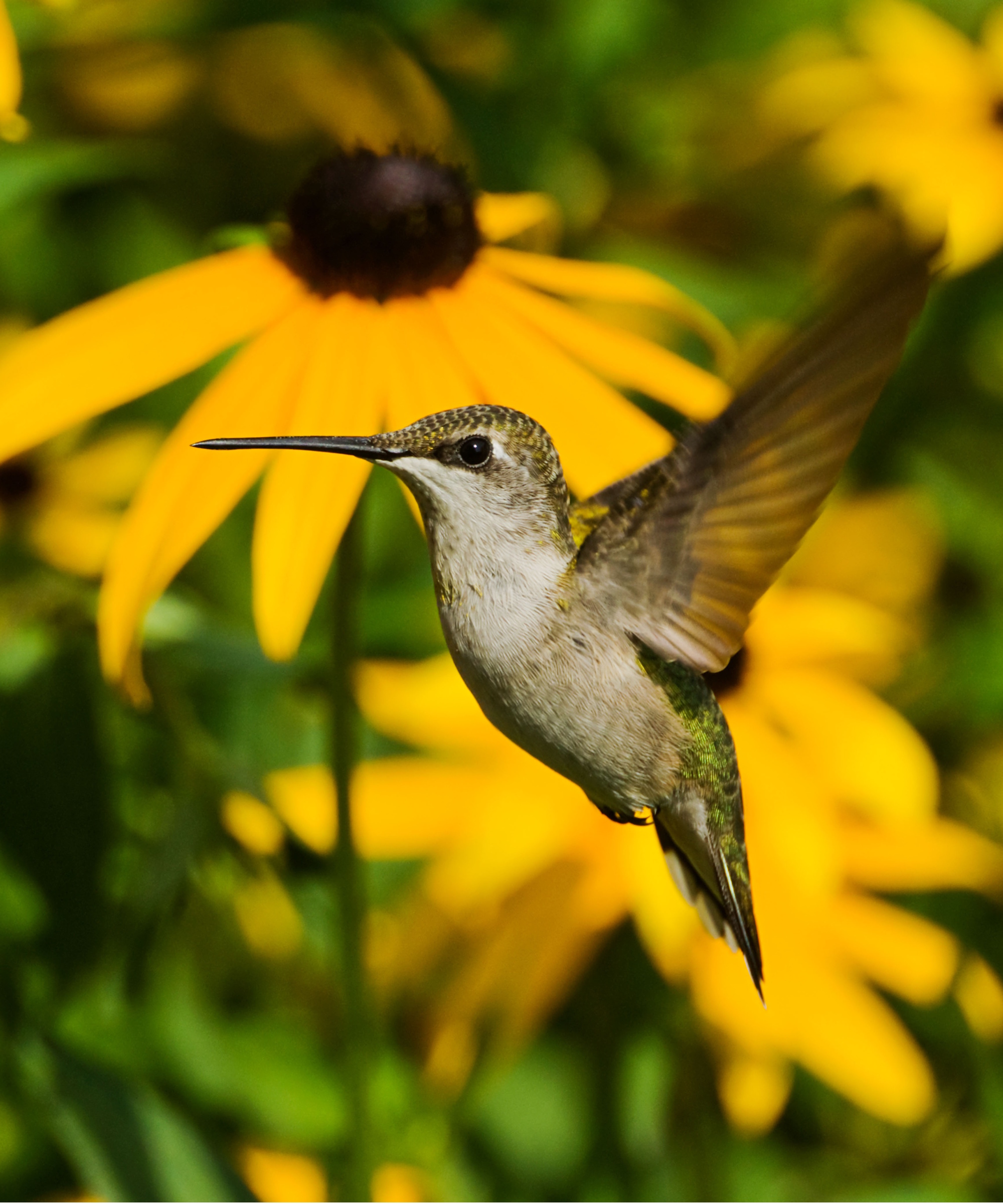
(Image credit: Brian Murphy via Alamy)
As outlined, the first hummingbird arrivals typically show up in the Deep South. ‘In places like Florida, Louisiana, and the Gulf Coast, Ruby-throated Hummingbirds can start appearing as early as around March 1st,’ says Sean Graesser, biologist and director, Wild Bird Research.
What to read next
Of course, migration timing can shift a little depending on weather patterns and climate conditions, so some years birds arrive slightly earlier or later. This year, they’re expected a little sooner than usual, so put out hummingbird feeders in 2026 a little earlier.
‘As March progresses, the migration moves north. South Carolina usually begins seeing birds by late March, and around the South Carolina–North Carolina border the first arrivals often show up right around April 1st.
‘Moving farther north, Virginia and Maryland tend to see hummingbirds arriving throughout April. Here in the Mid-Atlantic, including New Jersey, the first few individuals typically show up toward the end of April, with numbers increasing quickly.’
Sean goes on to explain that by late April into May, hummingbirds become widespread across the Northeast, and the migration continues pushing north until birds reach the northernmost parts of New England and Maine by about mid-May.
‘If you picture it on a map, the Ruby-throated Hummingbird migration moves steadily up the eastern US coast from early March through mid-May, following the progression of spring and blooming plants,’ he adds.
This spring-blooming Major Wheeler honeysuckle vine from Nature Hills is native to the eastern US and is loved by Hummingbirds.
Want to follow more closely? Audubon offer an online interactive map and an app, so you can track hummingbird migration and know when exactly to expect particular species.
 Sean Graesser
Social Links Navigation
Director, Wild Bird Research
Sean is a founding member and Director of Wild Bird Research Group. A biologist, conservation photographer, and storyteller from New Jersey, in his scientific research, Sean specializes in birds, particularly hummingbirds, studying their habitats and migration patterns. Sean has had the opportunity to work on projects with the National Audubon Society, The Nature Conservancy, Rainforest Alliance, National Geographic, and the Smithsonian Tropical Research program.
How to Keep Hummingbirds in Your Garden
With these beautiful creatures sadly in decline, there’s much you can do to increase their numbers and support successful hummingbird migration.
‘Even though millions of birds successfully make the journey each year, it is still a dangerous adventure,’ says Jen McGuinness, author, Bird-Friendly Gardening. ‘In order to successfully survive the migration twice a year, the birds need to find suitable habitat in between, as well as avoid collisions with buildings and bright overnight lighting.’
 Jen McGuinness
Social Links Navigation
Garden writer, author and photographer
Based in Connecticut, Jen McGuinness is a garden writer, photographer and author of Bird-Friendly Gardening from Cool Springs Press. She is also founder of the blog, FrauZinnia and champions organic and wildlife-friendly gardening. She holds a Home Horticulture Certificate from the University of Rhode Island Cooperative Extension and is a product tester for plant nurseries.
Hang Nectar Feeders
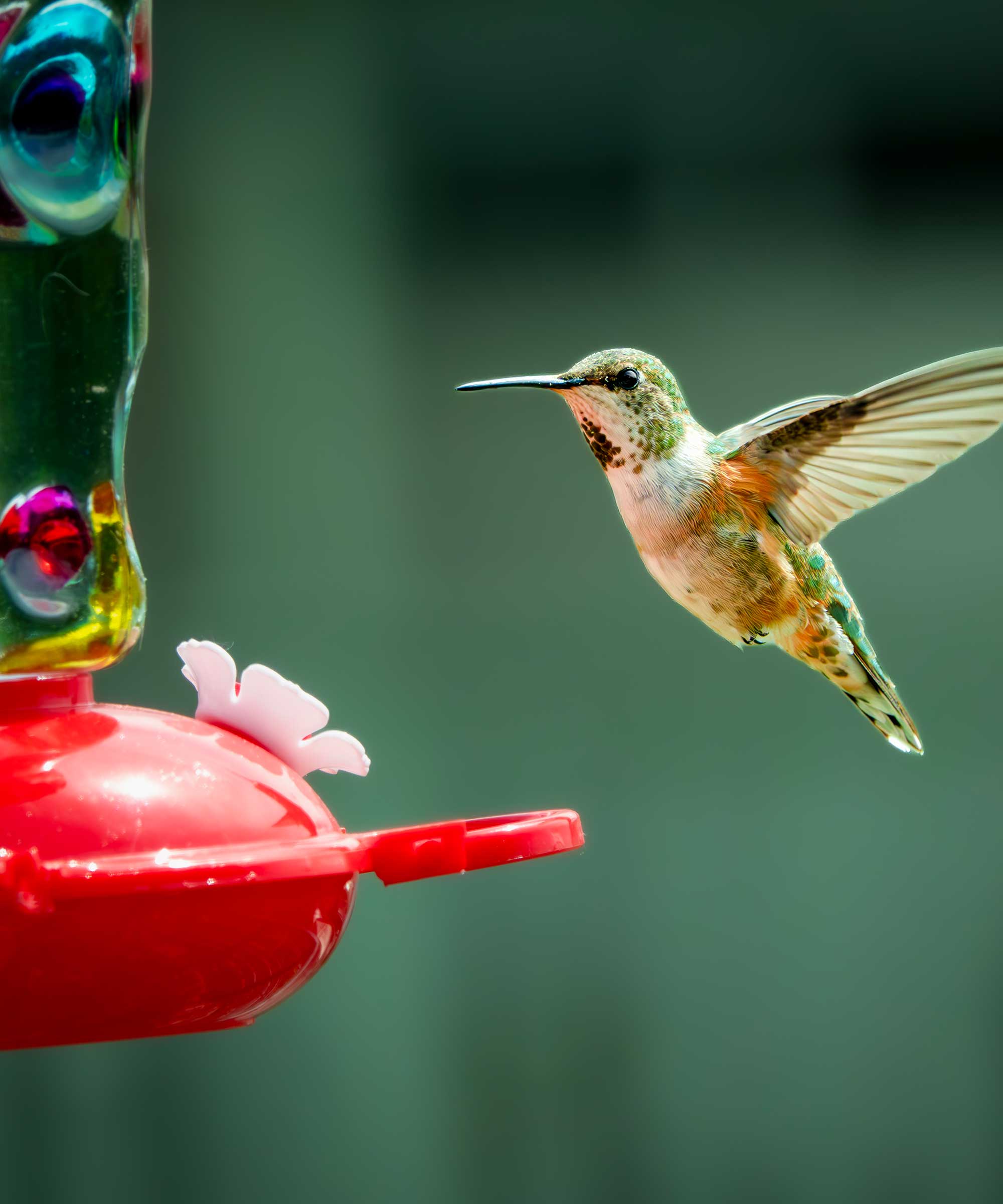
(Image credit: Joe Regan / Moment / Getty Images)
Planting flowers that attract hummingbirds is the best way to keep these tiny birds in your yard. However, at this time of year, supplemental feed is helpful, as not all of the hummingbirds’ favorite flowers will have bloomed.
Hanging a nectar feeder is a good substitute and it’s easy to make hummingbird food to pour into the feeder – doing so will also encourage the birds to return to feed.
‘Make your own “nectar” solution by using a 1:4 ratio of refined white sugar to tap water, such as ¼ cup of sugar in 1 cup of water,’ says Jen. ‘Although, do not substitute the white sugar with honey, corn syrup, powdered sugar (confectioner’s sugar), or raw, unprocessed sugars. These other sugars can be harmful to hummingbirds because they can ferment more quickly. And stay away from reddening chemicals and food dye.
Jen advises bringing the solution to a boil and letting it cool thorougly before filling the feeder. ‘You can also make a larger batch and refrigerate the extra solution,’ she says. ‘Although, discard any if it appears the sugar water has “turned,” which means that the sugar solution is looking cloudy.
‘Ant moats can be used to keep ants away from feeders. This is usually a cup that is filled with water and hung above the feeder to prevent access. Bee guards can help discourage yellow jackets and wasps from the hummingbird feeder too.’
Hummingbirds are attracted to the color red. This 16 oz red hummingbird feeder from Ace Hardware comes complete with an ant moat and bee guard (which can be easily removed for cleaning), and four ports for feeding, so ticks all the boxes.
Hang Feeders Safely and Strategically
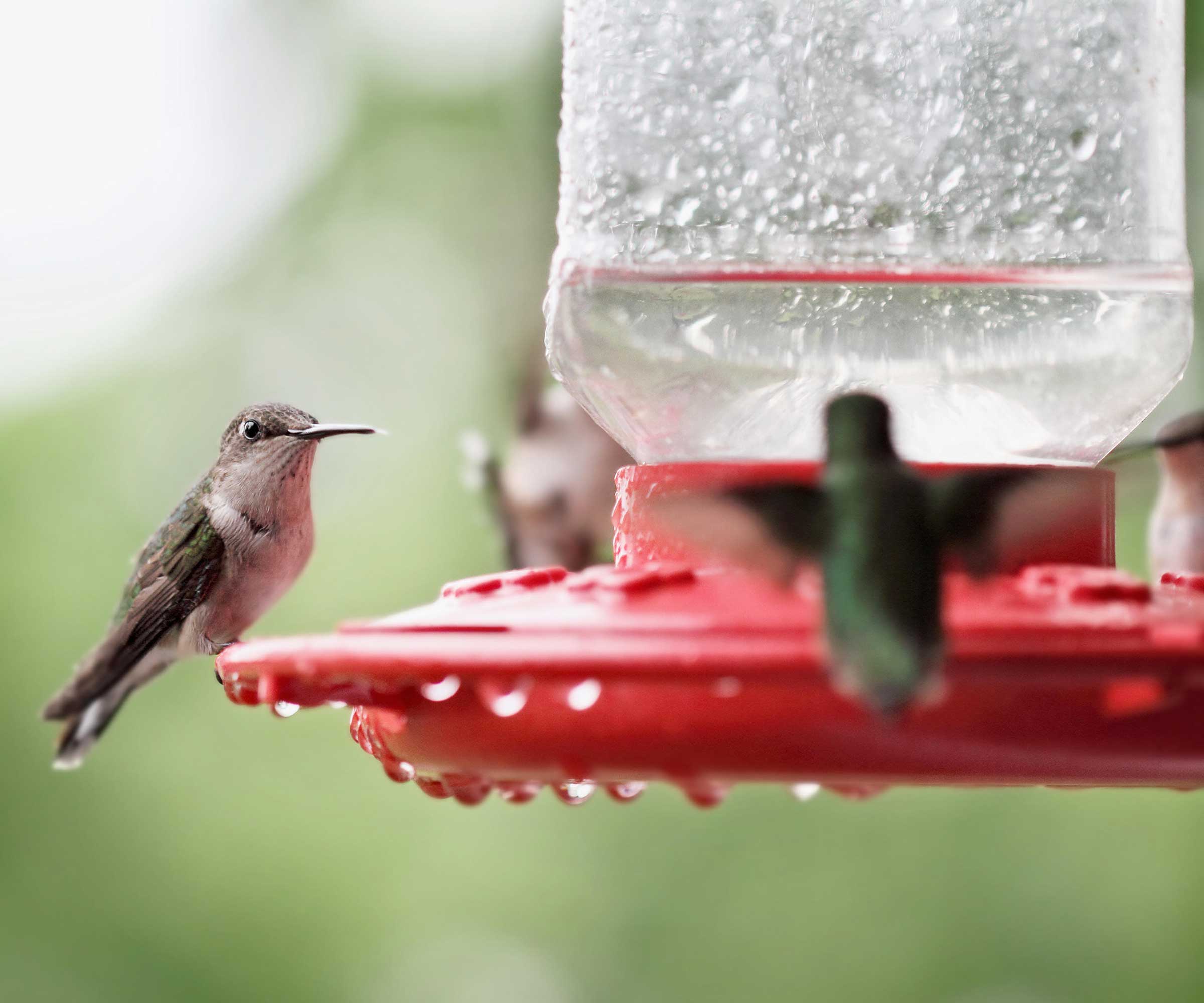
(Image credit: Stephanie Frey Photo / Alamy Stock Photo)
Deciding where to place a hummingbird feeder is important for several reasons. Firstly, you want these feathered foragers to be able to find the feeder easily, but access also needs to be safe (away from predators – and each other). To avoid hummingbird feeder mistakes, hang several in your yard, far enough away from where cats, racoons and other critters can pounce.
‘To attract hummingbirds to a new feeder, place it near blooming flowers early in the season,’ says Jen. ‘Once a hummingbird knows supplemental food will be supplied, it will return to the spot each year.
‘Depending on how many hummingbirds visit the property, you can use several small feeders or a few larger ones. Although, avoid placing the feeders in hot, direct sunlight which can make the sugar solution spoil faster.’
‘If using supplemental feeders, place several in different locations (out of sight of one another when possible) because hummingbirds are highly territorial and may monopolize a single food source,’ says Chad.
‘And position feeders at least a short distance from windows—generally under three feet—to reduce collision risk.”
This Perky Pet hummingbird feeder from Target is designed to hang on a hook, so can be placed wherever it’s convenient and safe for the hummers to feed.
Keep Feeders Clean
(Image credit: ChristiLaLiberte / iStock / Getty Images Plus / Getty Images)
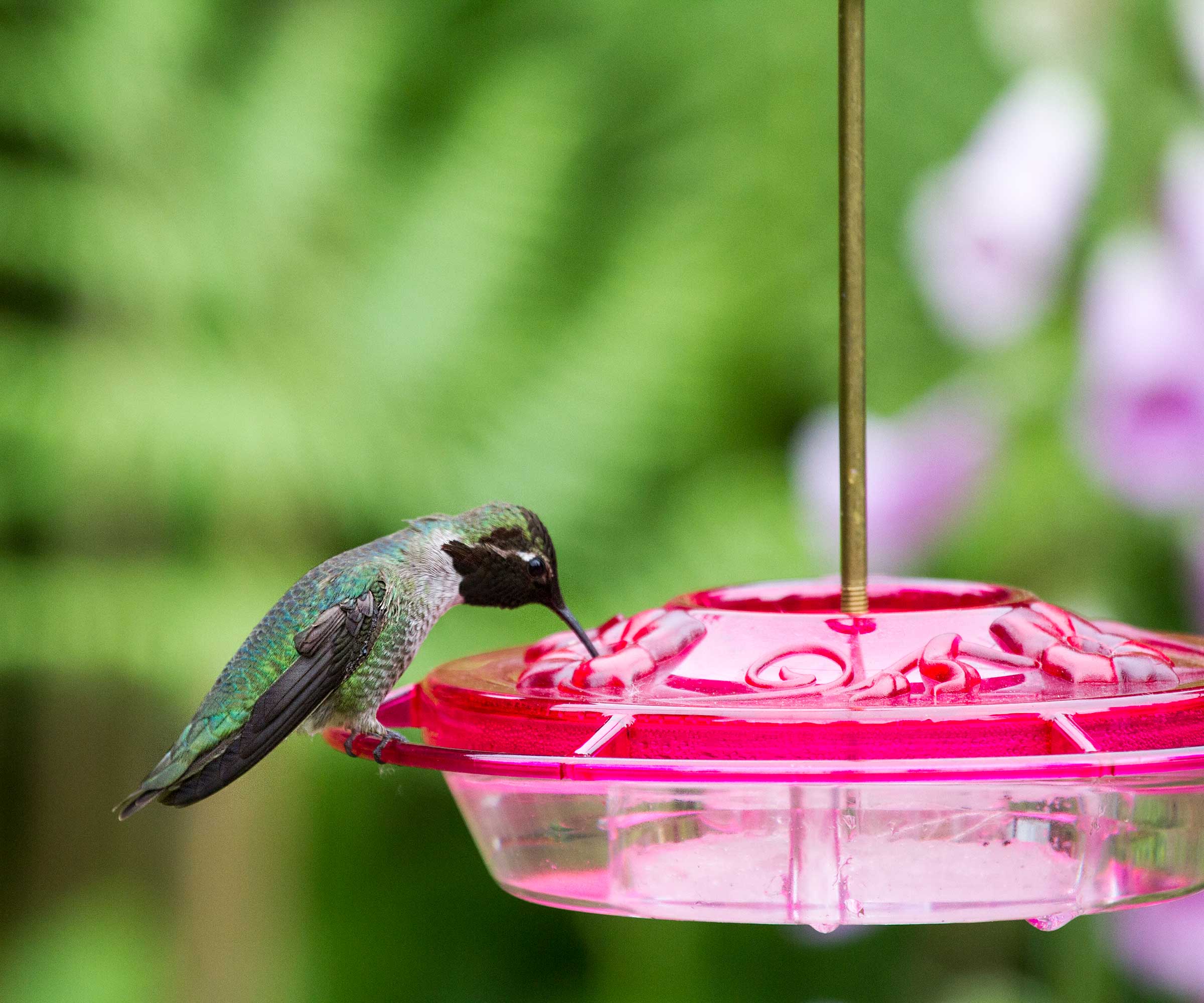
It’s important to keep all bird feeders clean, whichever species you’re wanting to attract, as harmful bacteria can easily build up, in a short space of time.
Jen McGuinness explains that Hummingbird nectar feeders come with specific cleaning requirements to keep birds healthy. ‘Moldy sugar water can be harmful and even fatal for hummingbirds,’ says Jen.
‘In cooler weather, cleaning the feeder once a week is recommended. However, in hot weather, the feeder should be emptied and cleaned at least twice per week. In both cases, the food should be discarded and replaced.
‘If the feeder is emptied very quickly by the birds in hot weather, clean the feeder every time it is empty. Cleaning with hot tap water works well, or use a weak vinegar solution.
‘Avoid using dish soaps, as this can leave harmful residue in the feeder. A small brush can help clean the feeding ports to ensure there is no residual mold that has built up inside.’
This distilled vinegar all-purpose cleaner from Ace Hardware is up to the task. Just make sure you dilute it and thoroughly rinse any residue away.
Avoid Pesticides

(Image credit: Getty Images/Robyn Wilson Photography)
Choosing natural pest control methods is better for our own health and that of our gardens. And birds eat bugs, so they are a wonderful pesticide – including hummingbirds.
‘Hummingbirds rely on small insects for protein, and insect declines reduce resources needed to raise their young,’ explains Chad. ‘Native plants are naturally resilient and support beneficial predators like lady beetles, lacewings, and parasitoid wasps.
‘Companion planting, mechanical pest control (hand removal), tolerance of minor damage, improved soil health, and plant spacing that enhances airflow can all reduce pest pressure while maintaining habitat value for birds and other wildlife.’
Making your own nutrient-dense compost in something like this Ms Tumbles compost tumbler from Burpee is a great way to improve soil health.
Whether you implement one of all of the above suggestions, there is so much gardeners can do to support wildlife, from planting spring flowers to attract hummingbirds to simply hanging a feeder.
Aside from the pleasure of watching these colorful creatures darting around, they and other pollinators, will be boosting the biodiversity in your yard too.
Love inspiring garden ideas, outdoor advice, and the latest news? Sign up for our newsletter and get the latest features delivered straight to your inbox.
Comments are closed.