
Dengarden and Yahoo may earn commission from links in this article.
As winter slowly loosens its grip, the first hints of spring begin to appear—longer days, warmer breezes and the quiet return of green pushing through the soil. Gardeners start to feel that familiar excitement, walking their yards with coffee in hand, imagining where new color and life will go. Spring gardening isn’t just about planting—it’s about dreaming ahead to the season of lush growth that’s right around the corner.
SIGN UP for the Dengarden / Parade Home & Garden newsletter for a weekly dose of our favorite house hacks, decor trends and shopping deals
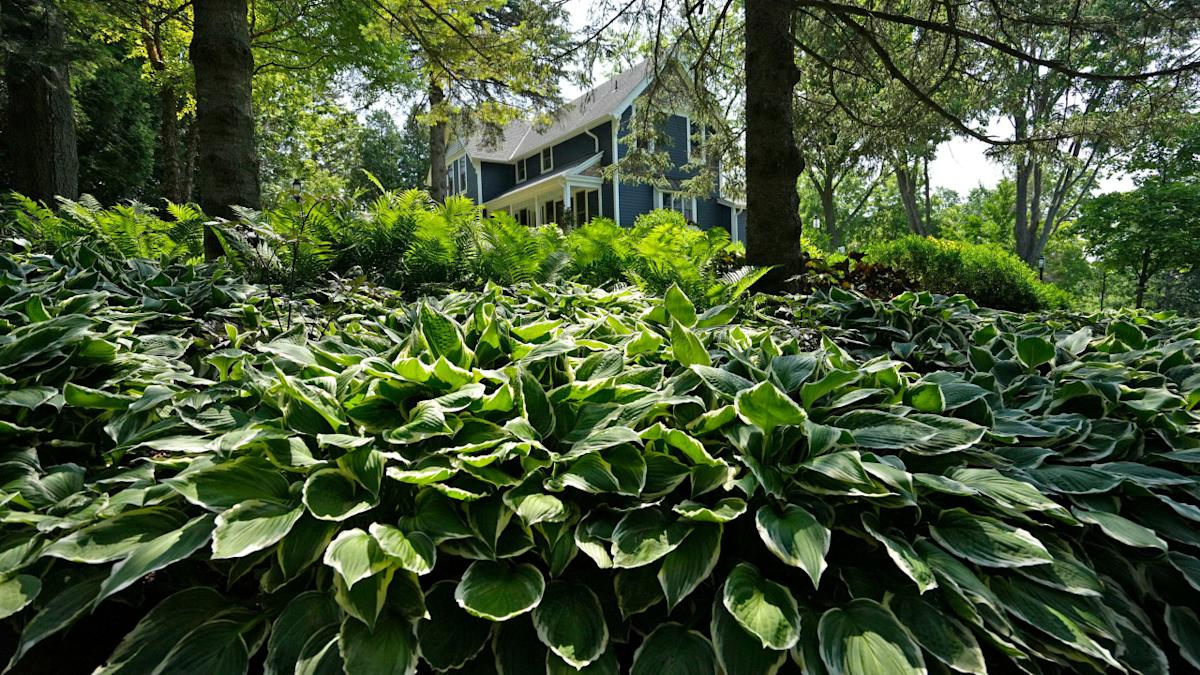
For those shady garden beds where hostas reign supreme, spring is the perfect time to think about companion plants that bring texture, color and seasonal interest before and after hostas unfurl their famous leaves. Hostas provide bold foliage and structure, but pairing them with the right plants transforms a shade bed into a layered, ever-changing display.
By mixing early bloomers, colorful foliage and graceful textures, your shade garden can stay beautiful from the first days of spring all the way through fall. Some of the best companions start shining before hostas even wake up, and the gardening account @bricksnblooms shares the nine best plants to combine with your hostas for the best results.
9 Perfect Companion Plants for Hosta Shade Beds1. Brunnera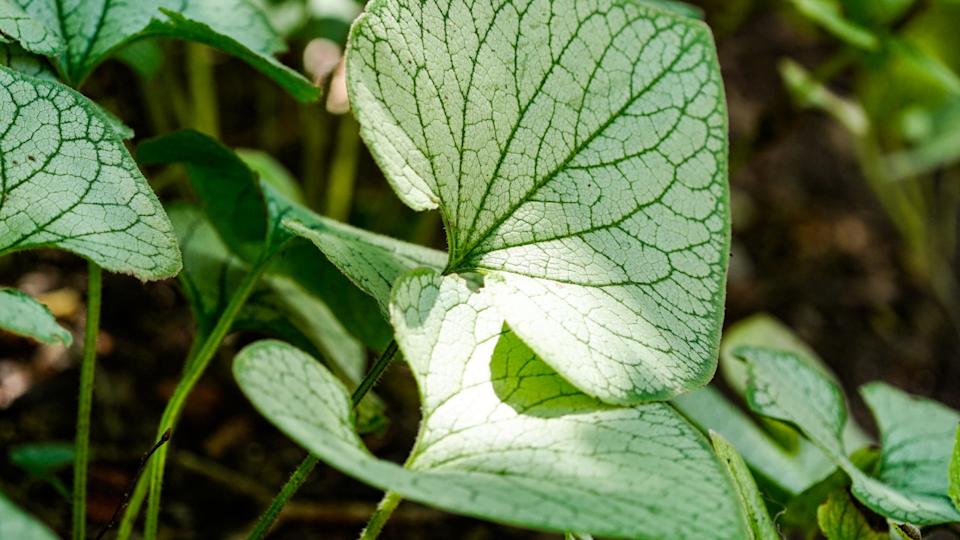
BrunneraBrianna Paciorka/News Sentinel / USA TODAY NETWORK via Imagn Images / Imagn.com (Brianna Paciorka/News Sentinel / USA TODAY NETWORK via Imagn Images / Imagn.com)
Brunnera is a shade garden favorite thanks to its bold, heart-shaped foliage and charming sprays of tiny blue flowers that appear in early spring, often resembling forget-me-nots. Many varieties have silvery or variegated leaves that brighten darker corners of the garden. Planted alongside hostas, Brunnera provides early color and striking leaf contrast that continues to look beautiful long after the blooms fade.
2. Bleeding Heart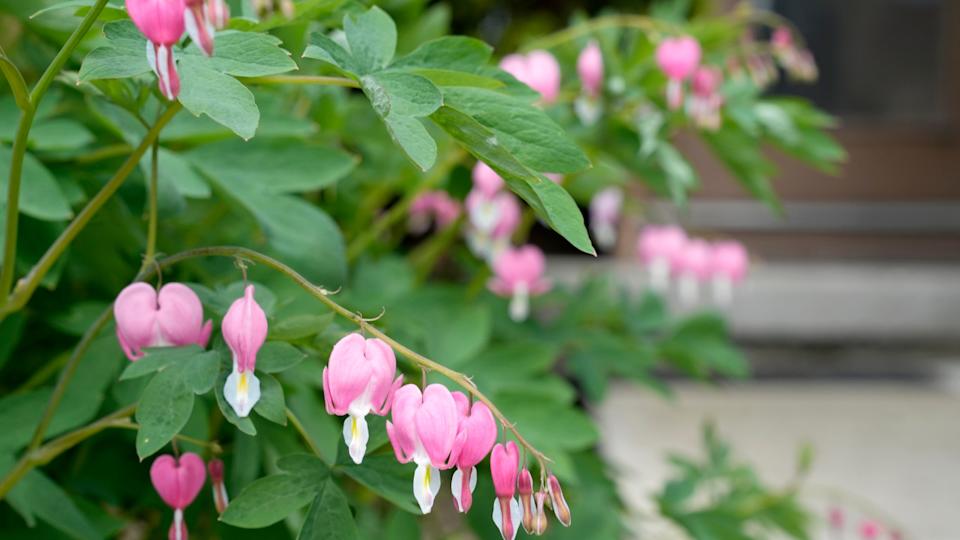
Bleeding HeartBarbara J. Perenic/Columbus Dispatch / USA TODAY NETWORK / Imagn.com (Barbara J. Perenic/Columbus Dispatch / USA TODAY NETWORK / Imagn.com)
Bleeding Hearts bring a romantic, cottage garden feel to shade beds with their graceful arching stems lined with delicate, heart-shaped flowers. Blooming in spring, they add soft movement and a touch of whimsy just as gardens are waking up. Their lacy foliage pairs beautifully with the broader leaves of hostas, creating a layered and elegant look.
Related: These 8 Cottage Garden Plants Practically Take Care of Themselves, According to a Pro
3. Virginia Bluebells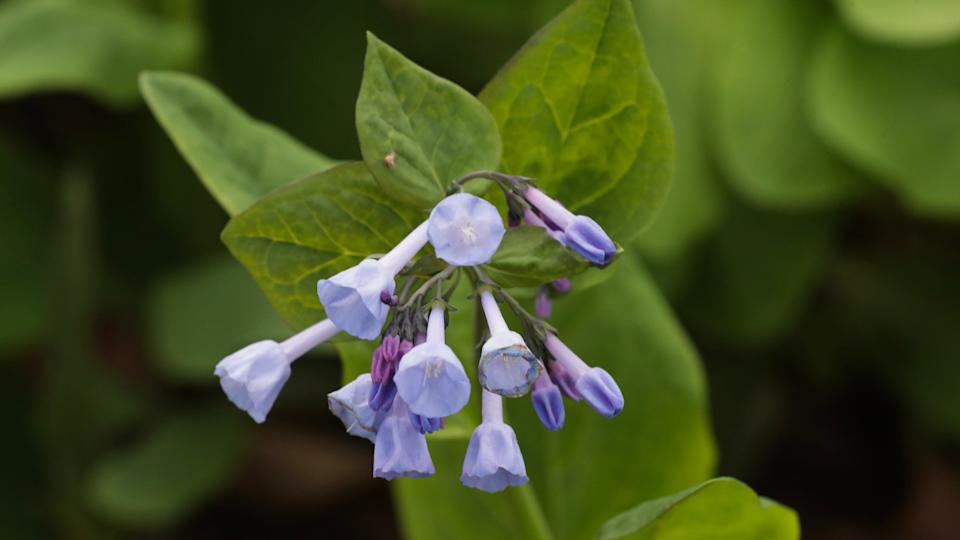
Virginia BluebellsSam Upshaw Jr./Courier Journal / USA TODAY NETWORK / Imagn.com (Sam Upshaw Jr./Courier Journal / USA TODAY NETWORK / Imagn.com)
Virginia Bluebells are beloved native woodland flowers that light up shady spaces with clusters of dreamy, bell-shaped blooms in soft shades of pink that mature into sky blue. They bloom early in the season and naturally fade as summer approaches, making them perfect companions for hostas that emerge later and fill the space they leave behind.
4. Astilbe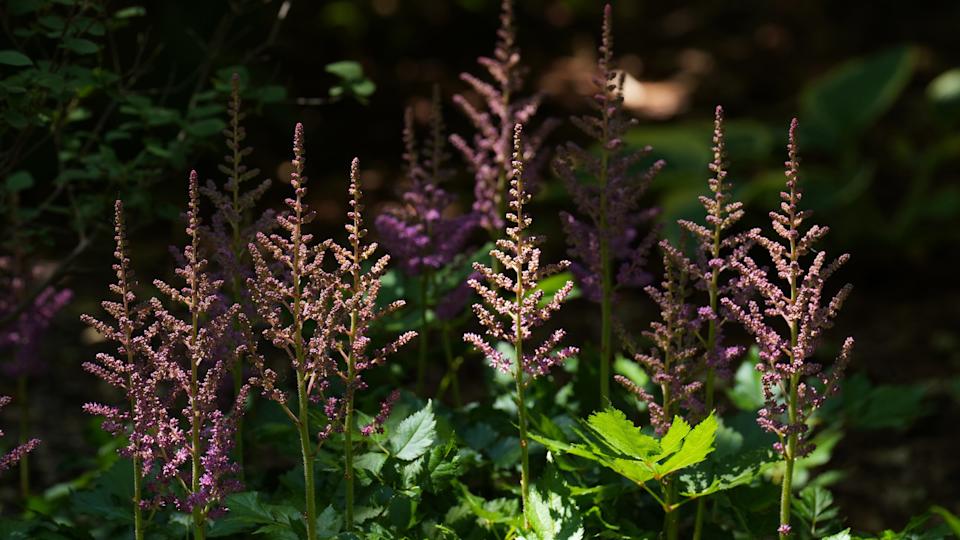
AstilbeSam Upshaw Jr./Courier Journal / USA TODAY NETWORK via Imagn Images / Imagn.com (Sam Upshaw Jr./Courier Journal / USA TODAY NETWORK via Imagn Images / Imagn.com)
Astilbe adds height, softness and summer interest to shade gardens with its feathery plumes of flowers in shades of pink, white and red. The finely textured foliage contrasts beautifully with the large leaves of hostas, creating a balanced look in layered plantings. Astilbe also thrives in moist soil, making it a natural partner for hostas in shady beds.
5. Hellebores
Often called Lenten roses, Hellebores are some of the earliest bloomers in the garden, sometimes flowering while snow is still on the ground. Their elegant, nodding blooms come in a range of soft colors from creamy white to deep burgundy. Since they bloom before hostas emerge, they provide early beauty and structure in shade beds when little else is awake.
Related: 10 Easy Houseplants You Can Grow in Water—No Soil Required
6. Coral Bells (Heuchera)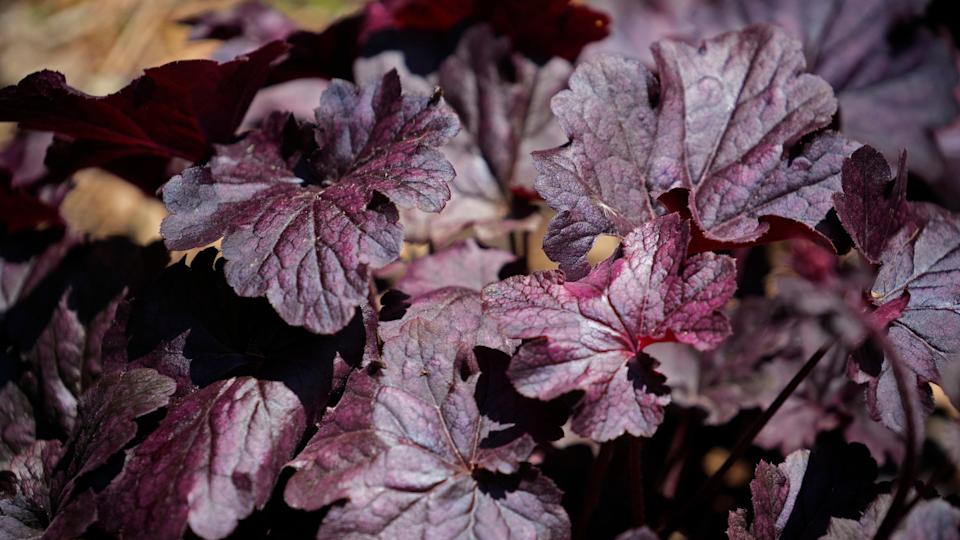
Coral BellsAngela Peterson/Milwaukee Journal Sentinel / USA TODAY NETWORK / Imagn.com (Angela Peterson/Milwaukee Journal Sentinel / USA TODAY NETWORK / Imagn.com)
Coral bells, also called Heuchera, is prized for its vibrant foliage, which comes in a wide range of colors, including deep purple, caramel, lime green and silver. The leaves stay attractive from spring through fall, adding year-round interest beneath taller plants. When planted with hostas, Heuchera brings bold color contrast and delicate flower spikes that attract pollinators.
7. Japanese Forest Grass (Hakone Grass)
Hakone grass brings graceful movement and cascading texture to shade gardens. Its soft, arching blades form elegant mounds that spill gently over edges and pathways. Whether in bright green or golden variegated varieties, it beautifully softens the bold structure of hostas and adds a calm, flowing feel to the landscape.
8. Ferns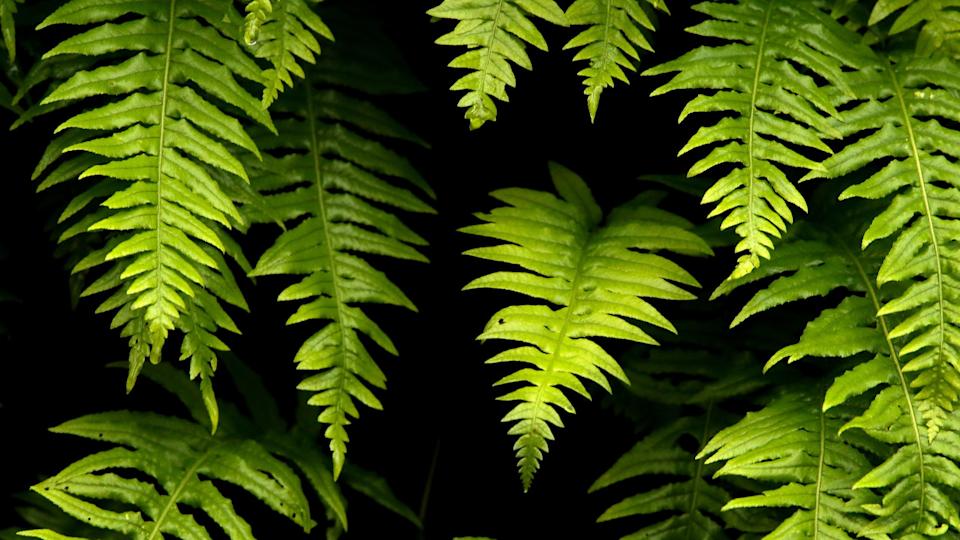
FernsMEEGAN M. REID/KITSAP SUN / USA TODAY NETWORK / Imagn.com (MEEGAN M. REID/KITSAP SUN / USA TODAY NETWORK / Imagn.com)
Ferns are classic companions for hostas, adding airy texture and a woodland feel to shady spaces. Their finely divided fronds create a soft contrast against the large, smooth leaves of hostas. With many varieties to choose from, ferns help fill gaps in shade beds while bringing a natural, layered look that feels lush and timeless.
9. Lungwort
Lungwort is a wonderful companion for hostas in shade beds because it adds both early-season color and interesting foliage. In spring, clusters of small blooms appear in shades of pink, purple and blue—often changing color as they mature—bringing cheerful color to the garden just as everything begins to wake up.
Even after the flowers fade, Lungwort continues to shine with its distinctive leaves, which are often speckled or dusted with silver. Its compact, low-growing habit makes it perfect for planting in front of larger hostas, where it helps fill gaps, brighten dark corners and adds texture beneath the broad hosta leaves.
Related: Aldi’s New $10 Springy Fabric Tablecloths Scream Vintage Charm
This story was originally published by Dengarden on Mar 10, 2026, where it first appeared in the News section. Add Dengarden as a Preferred Source by clicking here.
Comments are closed.