
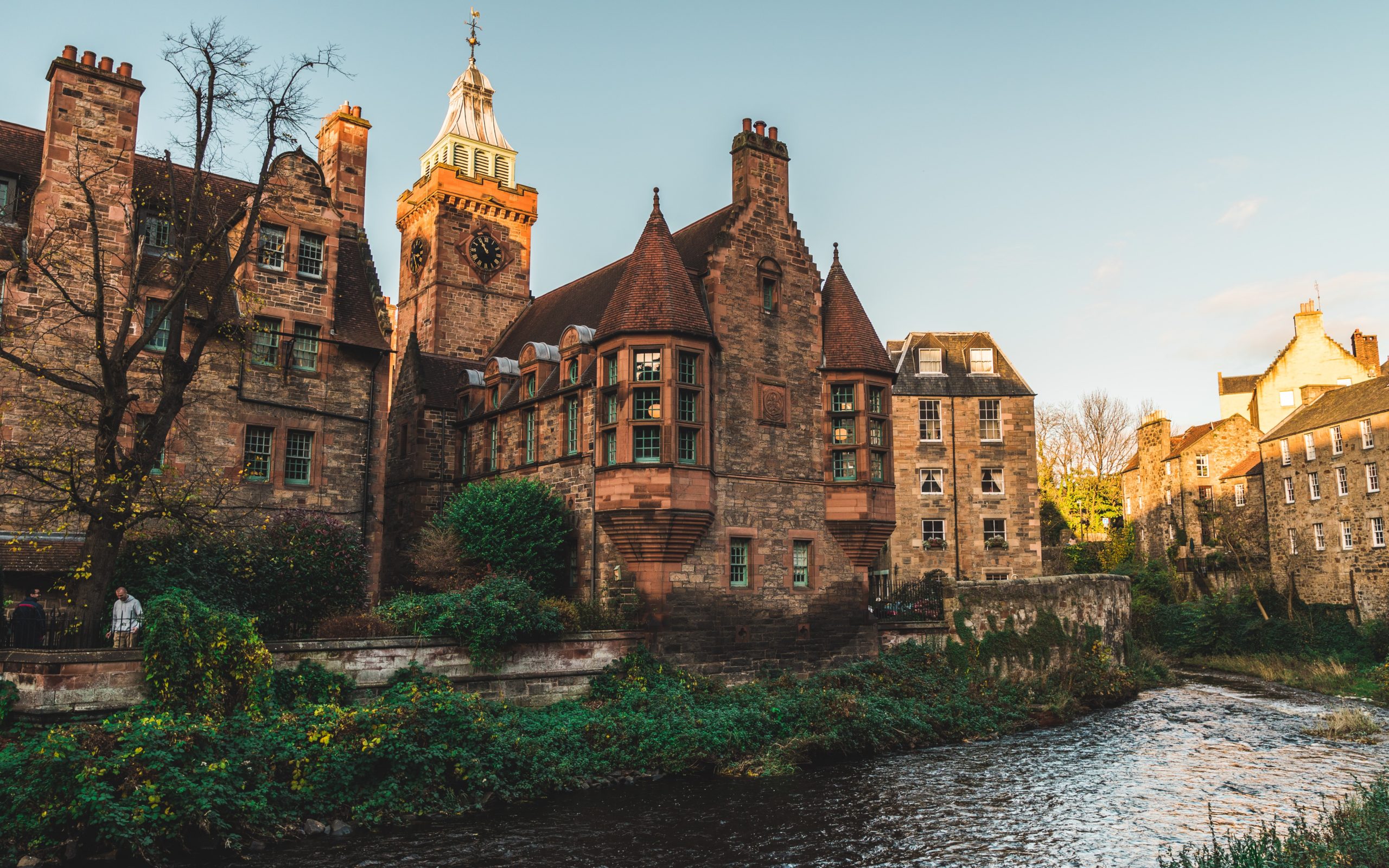
Edinburgh’s historic gardens are quietly remarkable things. They sit woven into the fabric of the city, offering a kind of breathing space against all that stone and those steep, shadowy closes. The layouts range from the crisp formality of Georgian landscapes to the looser, more romantic planting found in older private grounds, and together they tell a long story about how Scotland’s gardeners have worked with – and sometimes against – the country’s climate. If you’ve ever wandered through one of these spaces and found yourself wondering how to bring something of that feeling home, it’s worth looking closely at how they were actually planted, particularly when it comes to choosing the right flower plants for a more traditional style.
 Photo by Cameron Gibson on Unsplash
The influence of Edinburgh’s historic landscapes
Gardening in the Georgian and Victorian eras was never just about plants. It was considered a refined pursuit, a visual art with rules and intentions behind every decision. The best gardens of the period balanced strong, permanent structure with flowers that shifted and changed through the seasons – clipped hedges and neat pathways holding everything together while borders did the more expressive work. You get a layered effect from this approach. The bones of the garden remain interesting year-round, and the flowers provide the colour and movement on top.
What’s striking is that this sensibility didn’t belong exclusively to grand estates. Smaller historic gardens across Edinburgh follow the same principles at a more modest scale, which suggests the style is really about attitude rather than acreage.
Key features of traditional Edinburgh garden style
Structured layouts
Symmetry and straight lines appear again and again in classic garden design. A gravel path, some stone edging, clearly defined beds – these things impose a gentle order that stops a garden from feeling chaotic, even when the planting itself is quite abundant.
Layered planting
Traditional borders were arranged almost like a theatre set, with the tallest plants at the back, mid-height varieties filling the middle, and lower-growing plants spilling along the front. Every plant gets its moment. Nothing disappears behind something taller.
Seasonal succession
A well-planned heritage garden didn’t simply look good in June and give up after that. Bulbs, perennials and annuals were chosen and combined specifically to keep something flowering from early spring right through to autumn. It required some forethought, but the results were worth it.
Subtle colour schemes
Bold contrasts weren’t really the done thing. Softer palettes – dusky pinks, muted purples, clean whites, pale blues – were grouped together to create something calm and considered rather than visually loud.
Plants commonly seen in heritage-style gardens
Certain plants come up time and again in Scottish historic planting schemes, largely because they’re well-suited to cooler, damper conditions and have a visual quality that feels genuinely timeless. You’ll often find:
• Delphiniums bringing height and striking vertical interest
• Foxgloves lending that natural, cottage-garden character
• Roses for structure, fragrance and a long season of interest
• Lavender along borders and as low edging
• Sweet peas scrambling upwards and providing cheerful, scented colour
These aren’t fashionable choices in the trend-of-the-moment sense – they’re reliable, beautiful, and deeply embedded in British gardening tradition.
Recreating the look in a modern garden
You genuinely don’t need much space to capture this feeling. A compact courtyard or modest suburban plot can reflect exactly the same principles, provided the thinking behind the planting is sound.
Start with structure. Even a simple path or a piece of stone edging can make a difference. A small focal point – a birdbath, a clipped box ball – gives the eye somewhere to rest and makes the whole space feel more deliberate.
Choose a consistent palette. Limit your colour range and the garden immediately feels more cohesive. Whites alongside soft purples and pale blues is a classic combination that rarely goes wrong.
Plant in groups. Single specimens dotted about a border tend to look restless. Small clusters of the same variety create much stronger visual rhythm and are far closer to how historic gardens were actually planted.
Mix heights thoughtfully. Work from back to front, or from the centre of an island bed outwards. Getting this right means every layer earns its place in the display.
Adapting traditional ideas to Edinburgh’s climate
Edinburgh’s coastal position keeps temperatures fairly moderate, but wind and persistent dampness are genuine considerations – and historic gardeners understood this. They reached for hardy species and made good use of sheltering walls and hedges to give more vulnerable plants a fighting chance.
Practically speaking, that translates to:
• Choosing varieties with sturdy stems that won’t be flattened by wind
• Using mulch to hold warmth in the soil and improve its texture
• Placing anything delicate near a fence or wall where it gets some shelter
• Avoiding overcrowding, which in damp conditions can invite disease
These aren’t complicated adjustments, but they make a real difference to how traditional planting performs over time.
Drawing inspiration from local green spaces
There’s real value in simply visiting Edinburgh’s public gardens with your eyes properly open. Not just enjoying them, but noticing things – how colours are placed next to each other, how a border builds from low to high, how paths are used to move you through the space.
These observations accumulate into something useful.
Sketching a rough layout or jotting down plant combinations that appeal to you might feel a bit earnest, but it works. Over time you develop a feel for what makes a historic planting scheme look balanced rather than busy.
Blending heritage with personal style
None of this means slavishly copying what already exists. Most gardeners who take inspiration from traditional spaces end up mixing those influences with their own instincts – keeping the structured framework but adding in native wildflowers, or following a classic colour palette while playing with different textures and forms. That feels entirely right. The spirit of heritage garden design is about balance and intention, not rigid rules.
A timeless approach to planting
The reason Edinburgh’s historic gardens have lasted – in style if not always in their original form – is that the underlying principles are both sensible and beautiful. Structure, layered planting, seasonal variety, thoughtful colour: these things worked centuries ago and they still work now. They scale down, they adapt, and they suit the climate.
Whether you’re working with a proper garden, a walled courtyard or a collection of containers, there’s something genuinely grounding about drawing on this city’s horticultural past. You’re not just making a garden look nice – you’re participating in a living tradition that has shaped Edinburgh’s character for a very long time.
Like this:
Like Loading…
Related
Comments are closed.