
Key Takeaways
Boxwood thrives in full sun to part shade, loose, well-draining soil, and with proper spacing.
Prune selectively twice a year to maintain shape, promote airflow, and prevent pests or disease.
Prevent blight by planting tolerant varieties, avoiding overhead watering, and sanitizing tools.
Boxwood has a long history in garden design, from ancient Rome to modern-day suburbia. A tidy boxwood hedge is a staple in traditional formal gardens, but landscape designers are also using the evergreen in fresh ways. Paired with ornamental grasses and flowering perennials, these elegant shrubs can look informal and entirely new. To grow boxwood successfully, growers now recommend starting with a variety that naturally grows into your desired shape and size, and then pruning selectively as it grows. This technique keeps your plant healthier, ultimately making it less susceptible to blight, a fungus that can wipe out the shrub.
If you choose blight-tolerant varieties and treat them right, you can look forward to a long, happy life for the boxwood in your garden.
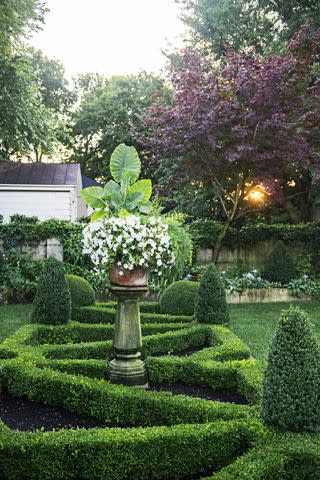
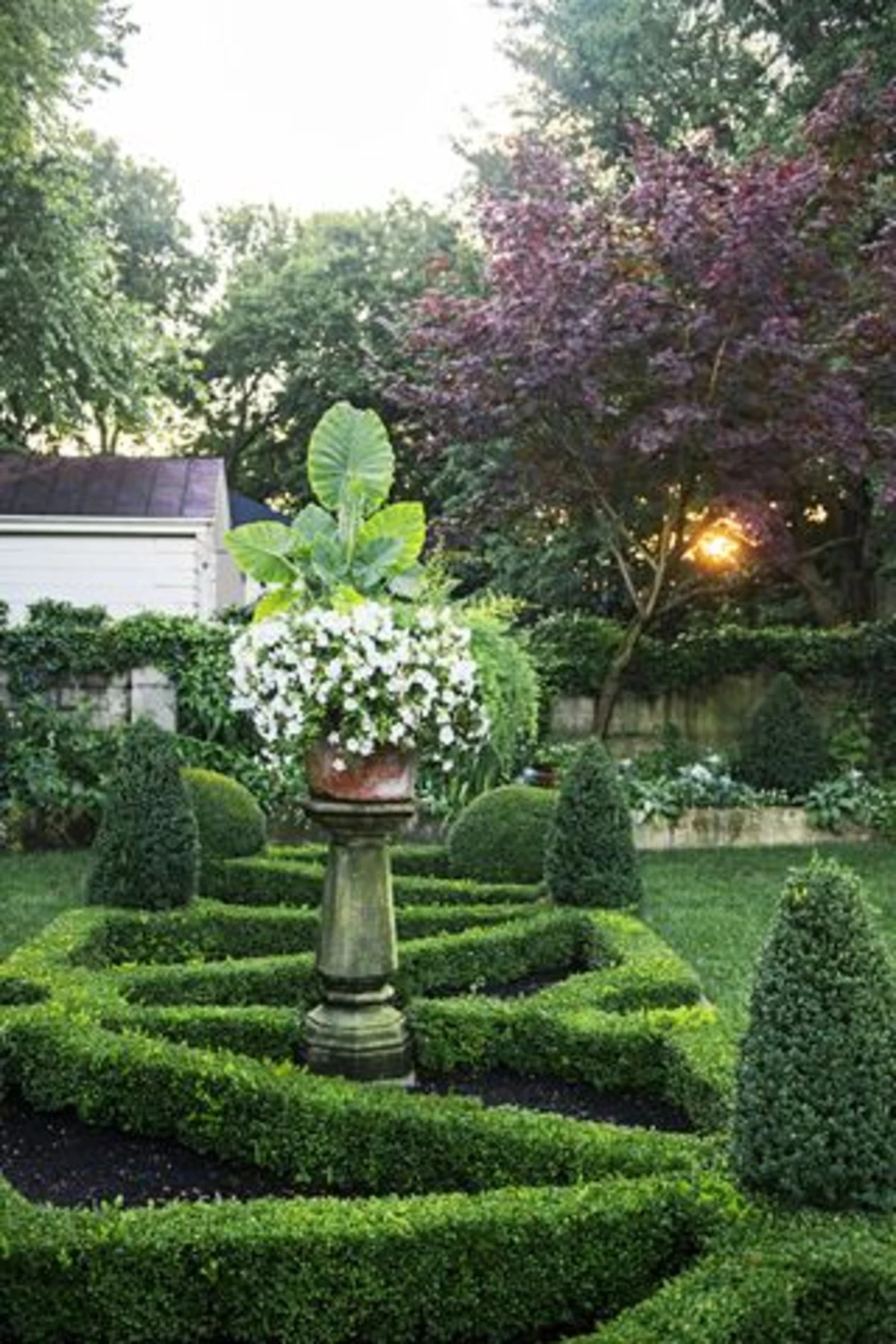
A combination of low-growing boxwood hedges, conical columns, and shapely globes gives garden designer Jon Carloftis’ Kentucky yard its traditional look.
Credit: Gabriela Herman
How to Grow Boxwood
Andrea Filippone, a landscape architect, boxwood grower, and former director of the American Boxwood Society, shares her essential care tips for growing boxwood.
1. Conditions
Boxwood prospers when it is grown in full sun to part shade. Plants in full shade don’t grow as vigorously, while those in full sun, especially in hot inland areas, risk scorching. Most varieties are hardy in Zones 5-9.
2. Drainage
It’s best to plant boxwood in loose, quick-draining soil, as they dislike soggy conditions. If your soil is heavy clay, mix in sand to improve drainage before planting.
3. Spacing
The spacing for boxwood depends on the mature size of the variety you choose for your garden. However, you should always avoid planting them too close together, as this crowds their shallow roots and reduces air circulation. Always refer to the plant tags and prioritize giving them plenty of space.
4. Water
During the first few months after planting, water your boxwood one to two times per week. Once these plants are established, monitor the soil and plant condition. In general, thoroughly water the root ball and let the soil dry between waterings. If possible, maintain potted boxwood on drip irrigation in order to prevent soil from drying out too fast.
5. Fertilizer
Filippone advises using organic fertilizers like compost or compost tea in order to promote healthy boxwood growth.
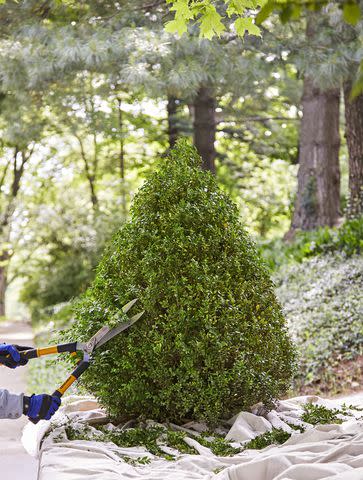
Laying a drop cloth or tarp down around the base of the boxwood before pruning will make cleanup easier.
Credit: Marty Baldwin
How to Prune Boxwood
Filippone suggests a minimalistic approach to pruning boxwood. Limit pruning to twice a year: once in the summer season and again in December, or wait until spring in colder climates.
Boxwood will push new growth where they are cut. Shearing, or clipping only the outer layer, forms a dense shell that blocks light and air from the center, which can attract pests and disease. Instead, use sharp pruning shears to gently and selectively clip a few inches by hand, shaping the plant and controlling its size.
Then make selective cuts at the outer six inches to allow more light and air into the center. Make sure to angle the pruners where the branches begin, removing any clipped branches and dead twigs.
“Boxwood are my building blocks for design, allowing me to create structure and outdoor rooms—that won’t be devoured by deer!”
Andrea FilipponeDealing with Boxwood Blight
Boxwood blight is a severe disease that begins as dark spots on leaves, which eventually turn brown and fall off. This disease can swiftly affect nearby boxwood. Prevent blight by avoiding moist conditions that the fungus favors; do this by not watering from above and avoiding shearing. You should also stick to planting cultivars that are less susceptible to blight and steer clear of especially vulnerable varieties like ‘Suffruticosa’ English boxwood.
To stop the disease from spreading between plants in your garden, dip your pruning tools in a 10-percent bleach solution (one part bleach to nine parts water) after each plant. Dispose of infected plants and surrounding soil in trash bags, and avoid composting any of them.
Best Garden Design Ideas for Boxwood
01 of 04
Hedgers and Edgers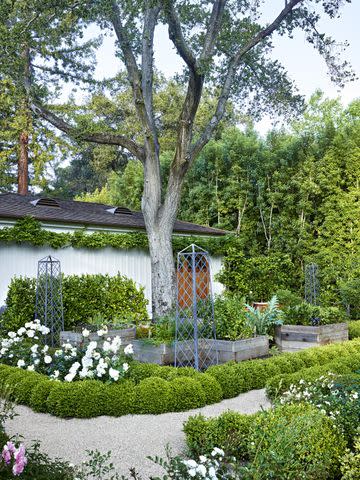
Credit: Marion Brenner
Create a charming, cottage-style hedge with a series of small boxwood balls around raised beds. This gorgeous design comes from the creative mind of garden designer Elizabeth Everdell in a kitchen garden.
02 of 04
Container Accents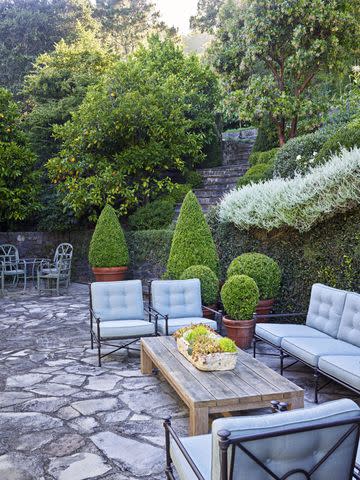
Credit: Marion Brenner
Keep it simple and elegant with topiary boxwoods in classic terra-cotta containers. In a garden designed by Denler Hobart Gardens, beautiful boxwood cones and globes are paired to enhance a stone patio’s charm.
Tip: Use tall potted boxwoods to elegantly frame a stairway or path in your yard.
03 of 04
Perennial Backdrop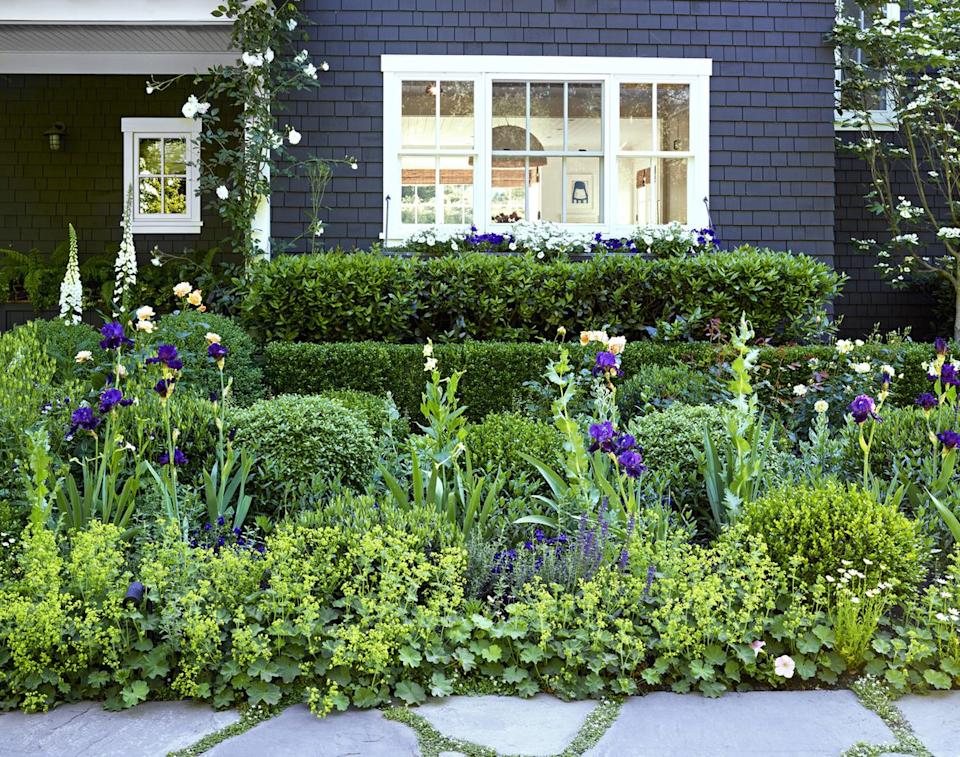
Credit: Marion Brenner
In a gorgeous garden crafted by Denler Hobart, a double layer of boxwood hedges provides structure and support to a stunning border of irises, roses, and lady’s mantle.
04 of 04
Architectural Shapes
Credit: Gabriela Herman
In a beautiful, inventive design by Jon Carloftis, robust pyramidal forms are artfully softened by grassy perennials, resulting in an unexpected and striking foundation planting.
Read the original article on Better Homes & Gardens
Comments are closed.