
 4 min read
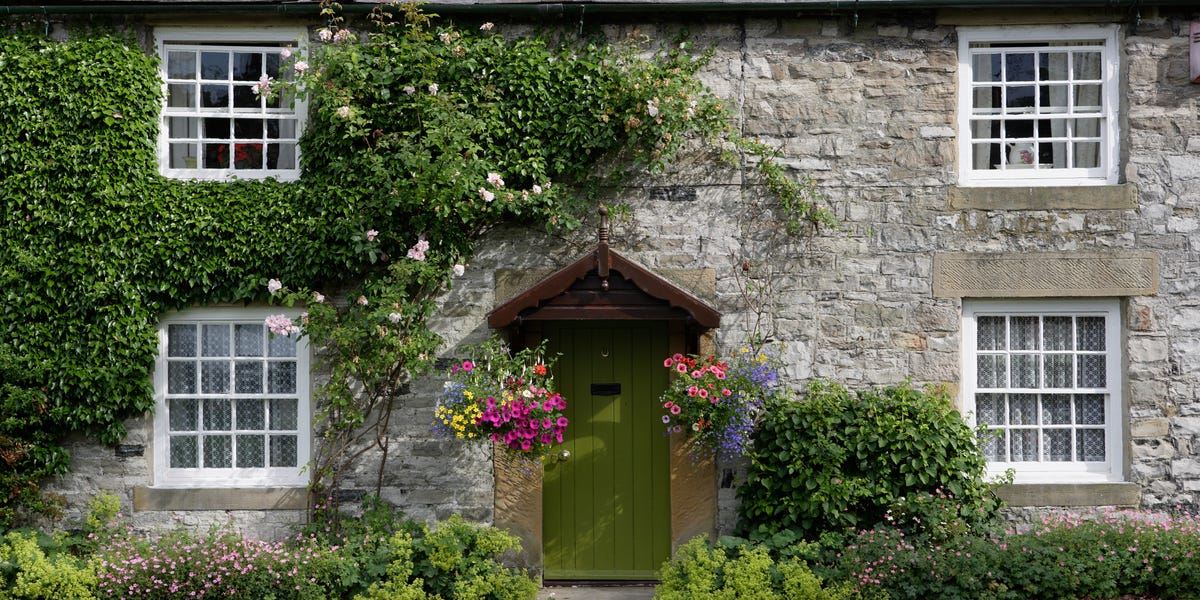
I’m a garden writer, so I consider myself a lover of plants. However, there’s one vine I’d never plant near my home: English ivy. This evergreen perennial vine has long been used as a groundcover in landscapes or to clamber over a trellis or climb up the walls of buildings. While there’s no arguing that it has a certain charming cottage garden or country estate aesthetic, English ivy (Hedera helix) can quickly take over your garden. “In much of the U.S., this plant is considered invasive,” says Colin Kirk, the Marjorie G. Rosen Manager of Outdoor Gardens at the New York Botanical Garden. “It grows everywhere from Canada to the southeast in dense shade to sun and in every type of soil.”
It’s also a fast grower that aggressively spreads. “It can quickly overwhelm a space and smother or suffocate existing plants,” says landscape designer Kat Aul Cervoni, founder and principal of Staghorn NYC and Cultivation by Kat. “It’s particularly damaging to trees, which it can overtake, as it blocks sunlight and is a nutrient and resource hog. While it’s not affected by much disease, it does harbor diseases, which can then infect the host tree it’s growing on.”
The sprawling stems root where they touch the soil. In addition, the small greenish-white flowers become fruits that birds love to eat, thus dispersing seeds of the plant far and wide, causing spreading well outside of its originally planted area, says Cervoni.
Unless you have a full-time gardener who can stay on top of this plant or love puttering in your garden every week, you should avoid planting English ivy in the landscape. If you love its look, you can always grow it indoors as a pretty houseplant. Or keep it in check outdoors by planting in pots. “There’s still a risk of it fruiting in a single season, but it is much easier to manage when it is planted in a container,” says Kirk.
Ahead, here’s what else you should know about this potentially invasive plant, how to get rid of it and what to plant instead:
jose carlos cerdeno martinez//Getty Images
Why You Shouldn’t Plant English Ivy
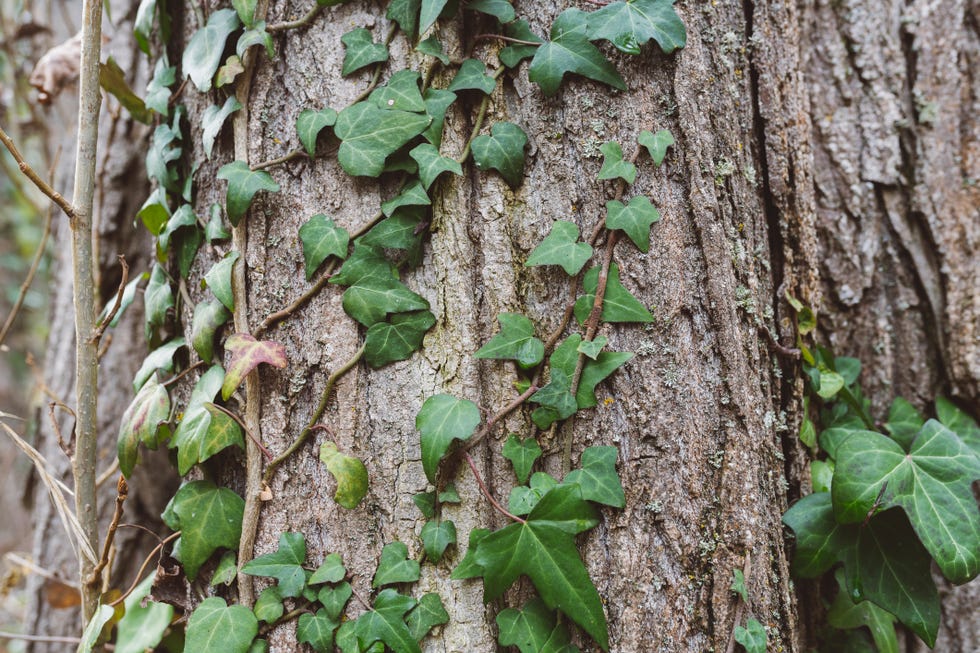
Besides its aggressive growth pattern, the plant itself can become quite cumbersome. “It’s a woody vine that becomes thick, bark-covered and heavy with time, so it can be a physical weight stressor on trees and other structures,” says Cervoni.
If allowed to grow unchecked, it can cause serious damage to surfaces such as brick or stucco. “It’s quite damaging if allowed to grow on masonry, as its rootlets can break through mortar, introduce moisture, and cause extensive structural and aesthetic damage. The weight can also be a significant stressor to masonry walls over time too,” says Cervoni.
The vine can grow up to 100 feet long, so it can grow up and cover trees. Not only does it compete for resources with trees, it also masks and obscures potential safety issues, such as a cavity that would make the tree structurally unsound, says Kirk.

Grace Cary//Getty Images
How to Remove English Ivy from Your Garden
If you’ve inherited a section of English ivy or want to get rid of an area of English ivy in your landscape, start by cutting it back from the edges of its growing area and keep trimming it back every time you see growth, says Kirk. Each time you cut the plants back, the root system must rely on its energy reserves to push new growth. Eventually, these reserves will be exhausted and the plants will die. But you must be persistent.
You also can dig up small areas of ivy because the plants are not deeply rooted. Be careful, however, because soil clings to the fibrous roots and you don’t want to pull up too much of your topsoil, says Kirk.
If the plants are climbing up trees, cut the vine at the base, being careful not to damage the tree. The vines will wither and die with time and eventually can be pulled down or will disintegrate, says Cervoni. You should not apply herbicide, since that will damage the tree, too.
For whatever pieces of ivy you remove, don’t throw them on the compost heap because they’ll just re-root there. Instead, bag them up and dispose of them, says Cervoni.
Regardless of the removal method chosen, keep a close eye on the area because the plant is quite persistent. Also, be sure to wear protective gear such as long sleeves, pants, and garden gloves when working around this plant because the sap may cause a skin rash.
What to Plant Instead of English Ivy
Kirk and Cervoni suggest these plants that aren’t bullies in the garden like English ivy:
Diane Macdonald//Getty Images
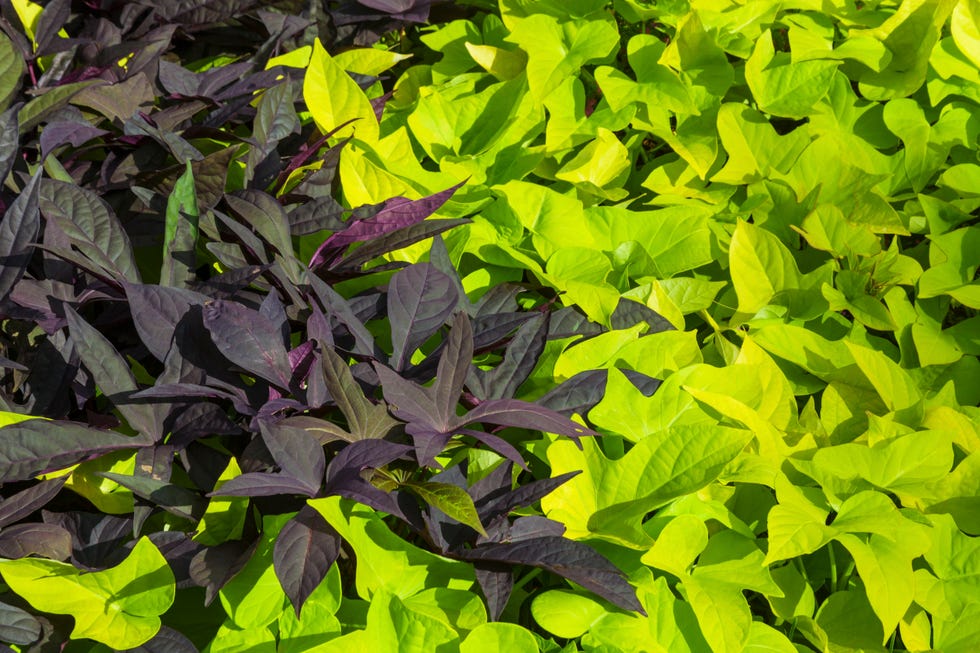
Sweet Potato Vine (Ipomoea batatas)
This annual vine comes in many hues from tricolor to deep burgundy to lime green. It grows fast in the heat of summer and does particularly well in containers or as an annual groundcover.
SHOP SWEET POTATO VINE
imageBROKER/Helmut Meyer zur Capellen//Getty Images
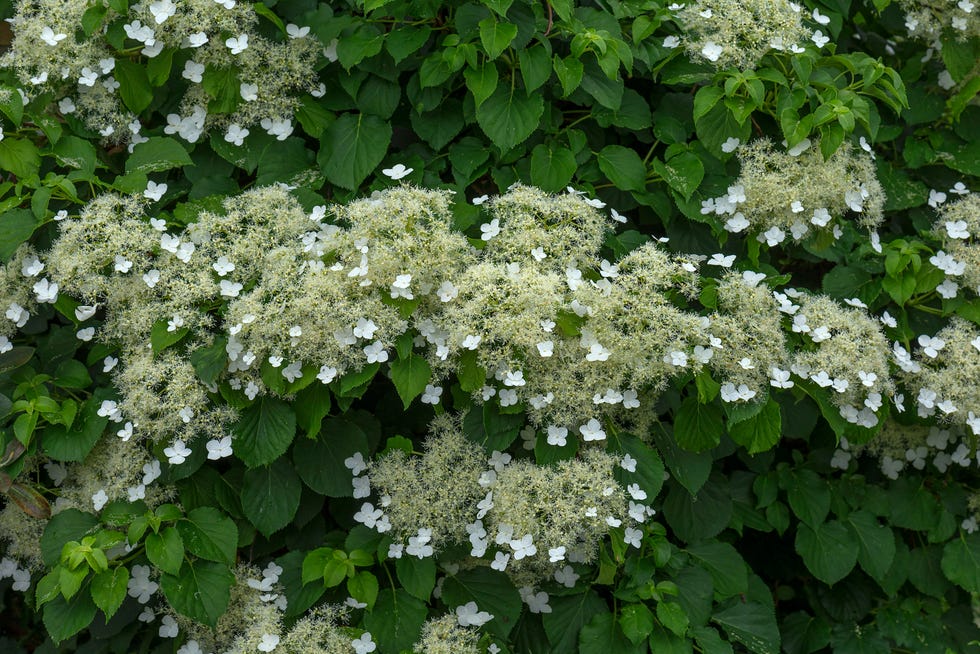
Climbing Hydrangea (Hydrangea petiolaris)
Although it starts slowly, this pretty plant takes off after year three in the ground. This shade-tolerant deciduous vine is self-clinging with tiny rootlets but doesn’t damage structures. It also has beautiful, lacy blooms in early summer.
SHOP CLIMBING HYDRANGEA
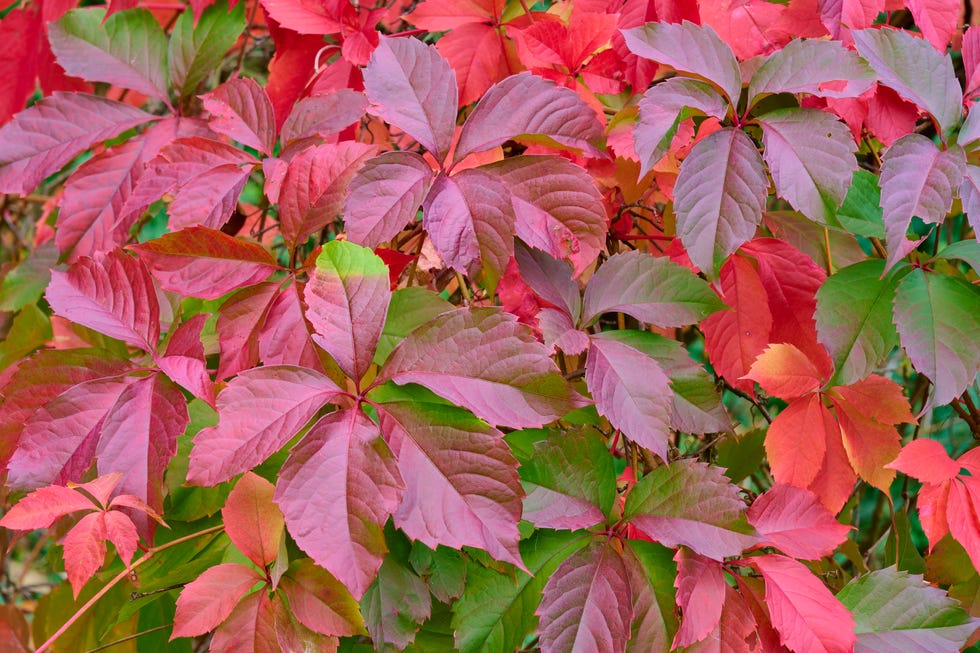
Raimund Linke//Getty Images
Virginia Creeper (Parthenocissus quinquefolia)
Virginia creeper is a fast-growing, native deciduous vine with spectacular fall color. It still needs monitoring so it doesn’t take over, but it doesn’t cause the destruction to masonry and structures English ivy does.
SHOP VIRGINIA CREEPER
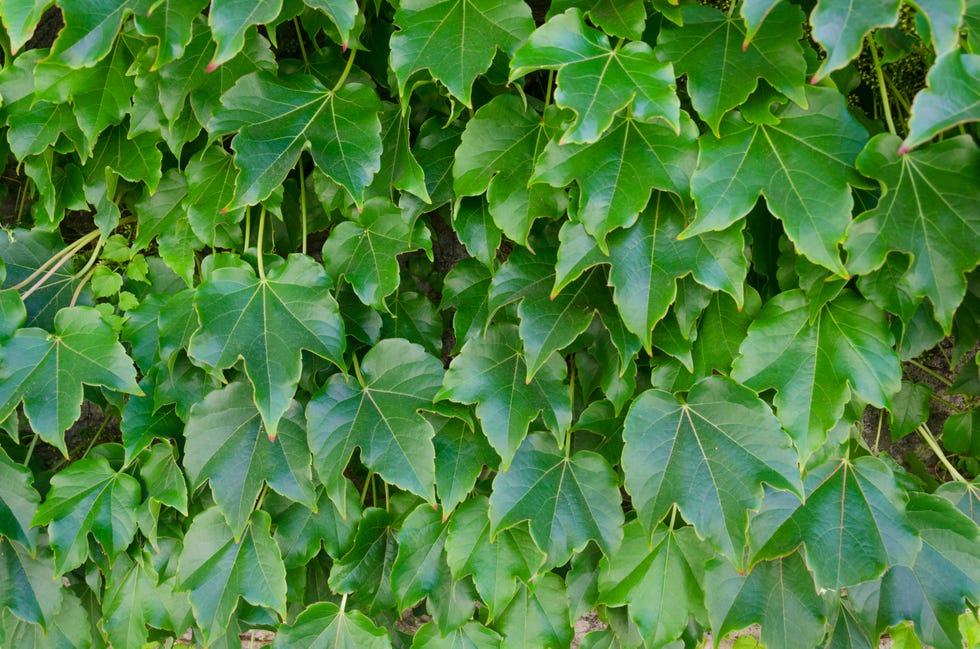
Elizabeth Fernandez//Getty Images
Boston Ivy (Parthenocissus tricuspidata)
This fast-growing deciduous vine is native to Asia. It’s easier to manage than English ivy, but it also can be an aggressive grower. It also may damage painted or brick surfaces, so plant this one with care and keep it in check to prevent it overtaking your garden.
SHOP BOSTON IVY
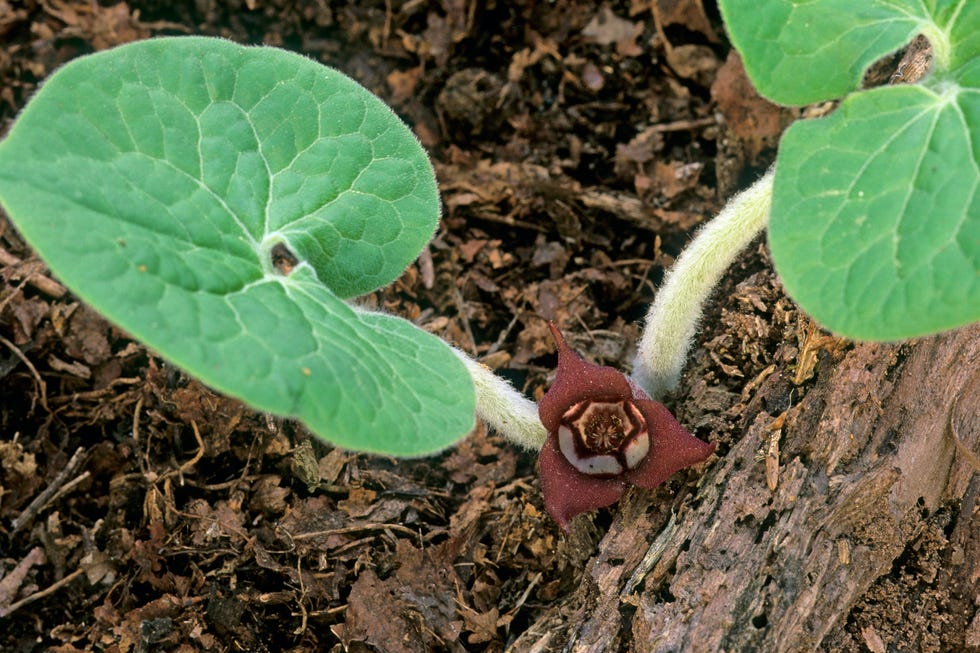
Ed Reschke//Getty Images
Wild Ginger (Asarum canadense)
Wild ginger is a native plant that spreads by underground stems to make a lovely groundcover. The heart-shaped leaves add texture and interest to moist, full shade areas of your garden.
SHOP WILD GINGER

Arricca Elin SanSone is a writer, editor, and content creator who specializes in lifestyle and gardening. With a background in health reporting, she applies these same research skills when writing about the science of growing things. She trials new plants in her expansive garden, and her houseplant collection consists of 60+ varieties. Arricca has written thousands of articles for publications such as Country Living, House Beautiful, Good Housekeeping, Prevention, VERANDA, Southern Living, and more. She’s happiest when digging in the dirt, baking, or spending time with the people and dogs she loves.
Comments are closed.