A few moths literally can’t live without this plant. The Orange Mint Moth, Hermit Sphinx Moth, Gray Marvel Moth and the Pyralid Moth are each hosted by Monarda didyma with the immature form, or larval stage, of each of these moths dependent upon this plant for food. Without the ability for these larvae to eat the foliage of this plant, these native moths would not be able to complete their lifecycle. As such, it is a crucial plant for any gardener to use if their goal is to support native pollinators
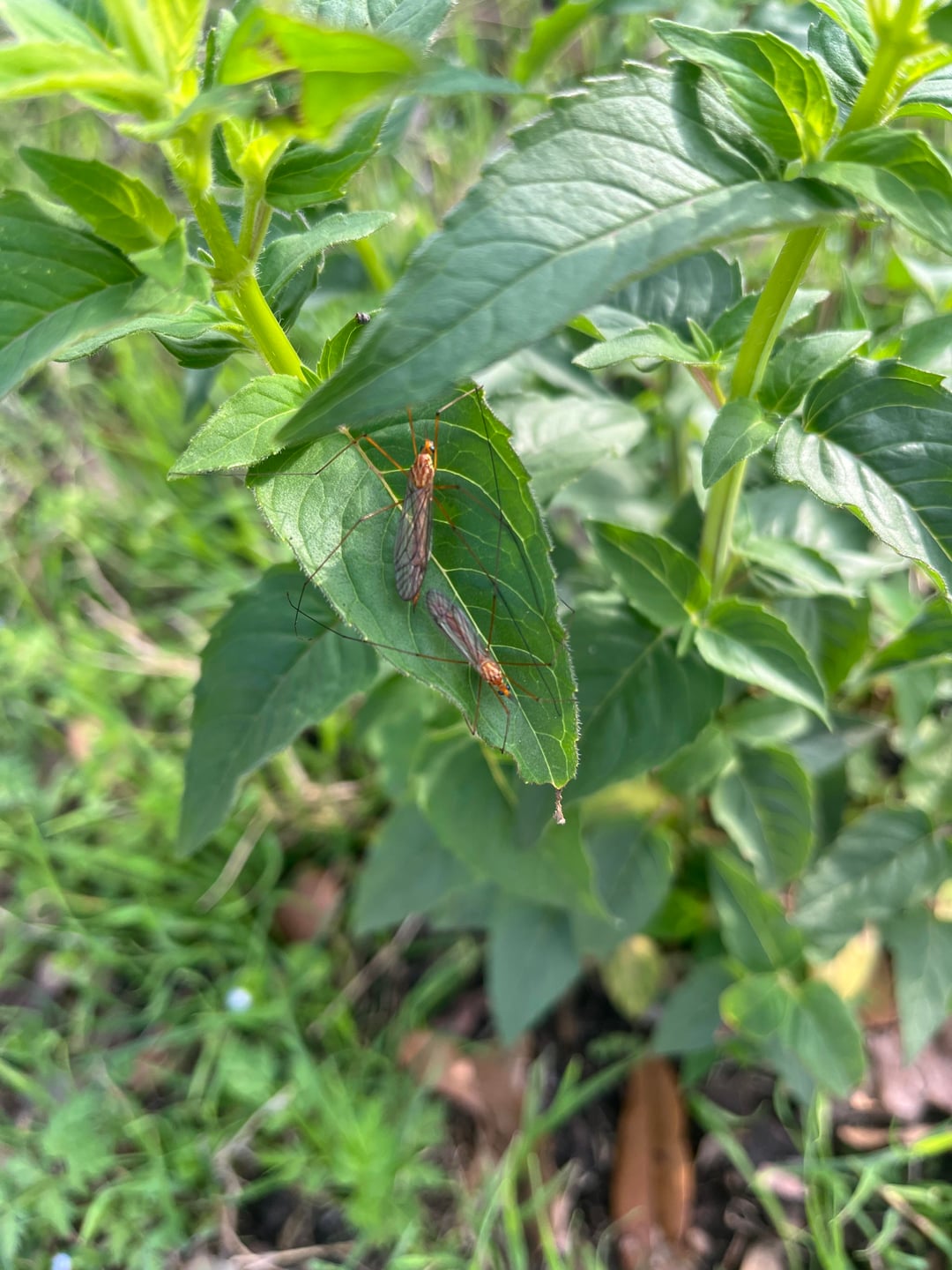
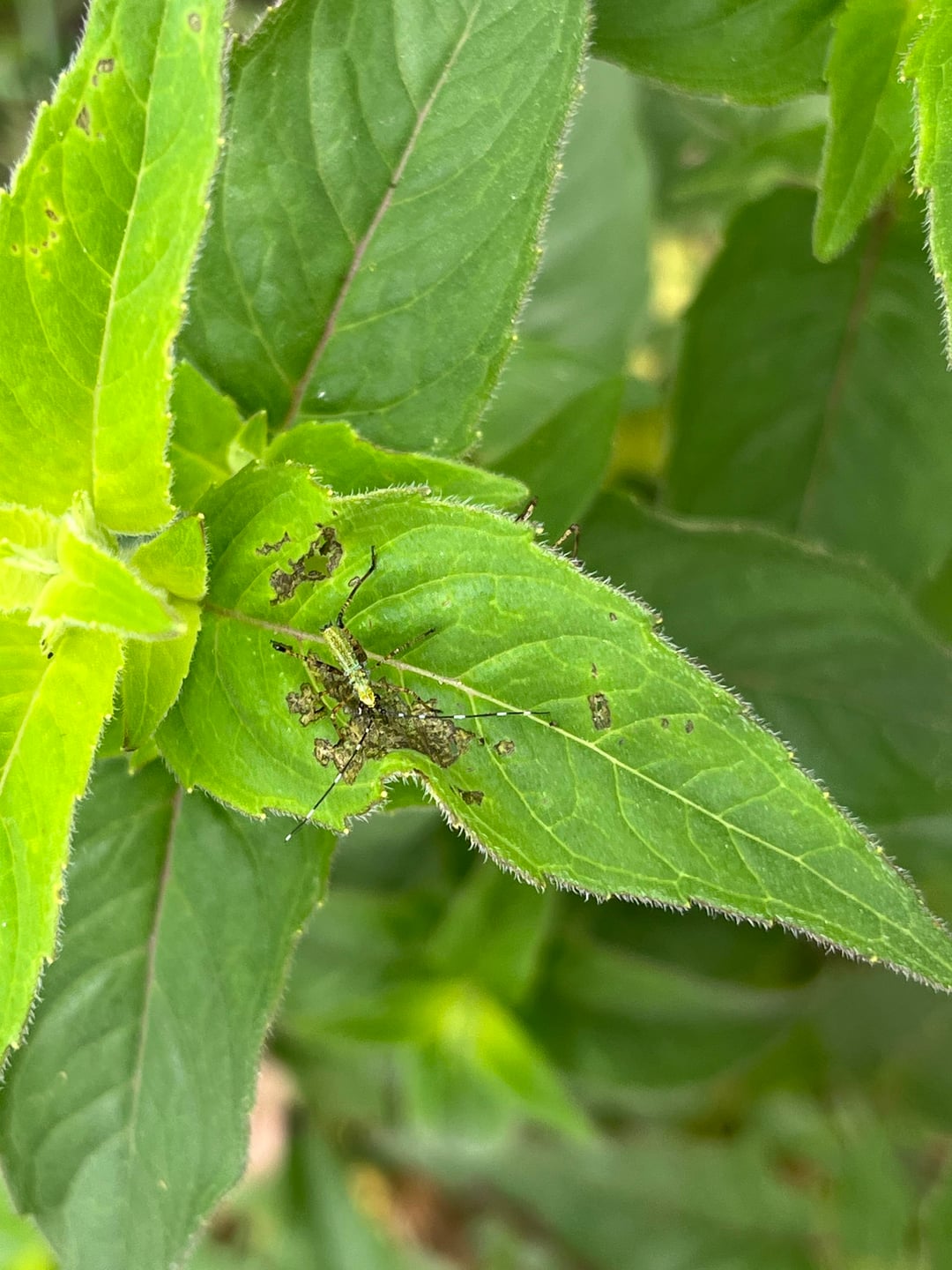
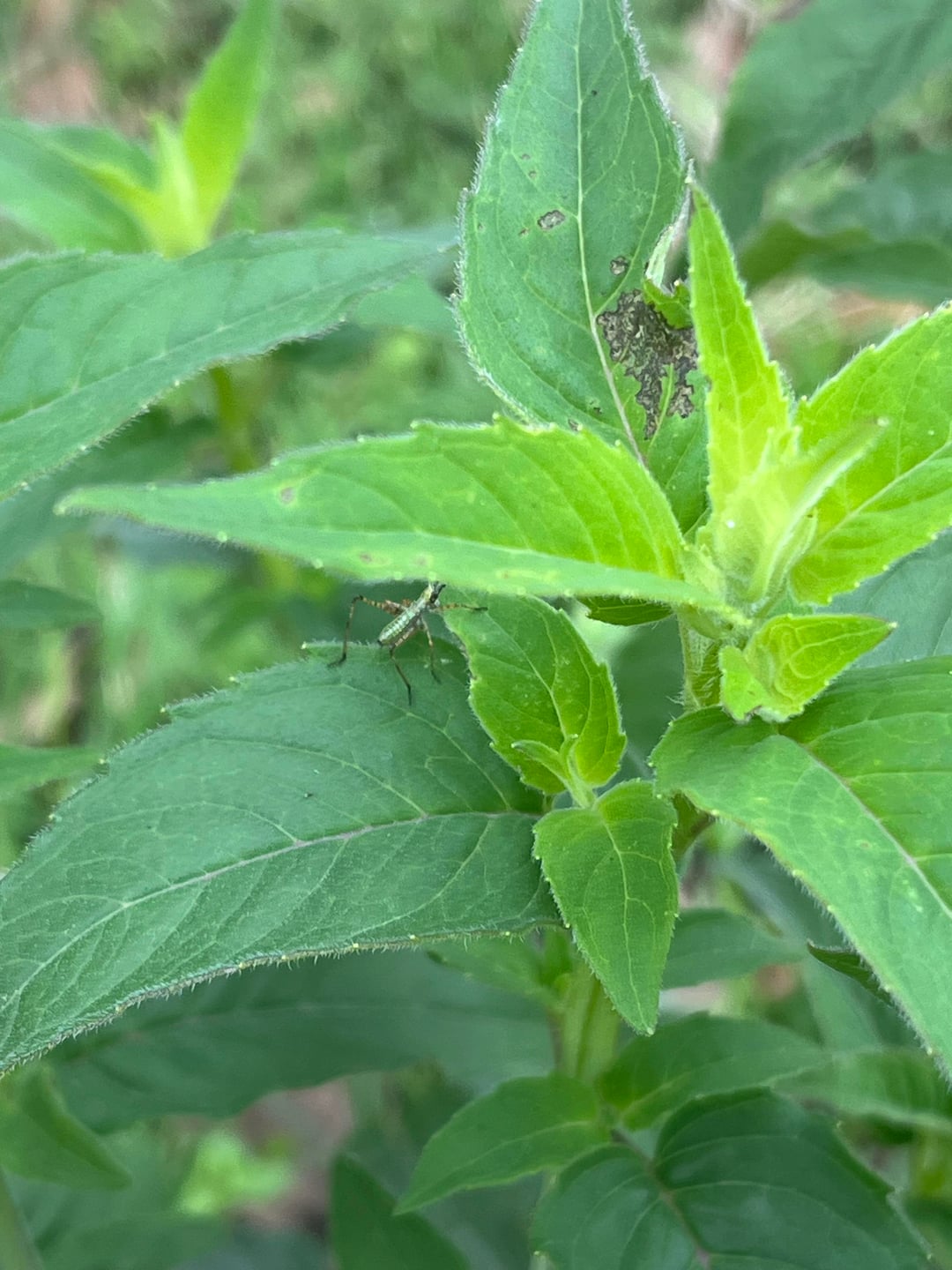
iNaturalist says fist pic is a tiger crane fly and second is some type of katydid
canisdirusarctos
Not sure, but that second one is one sexy insect. As the kids might say, “leave some rizz for the rest of us!”.
Hunter_Wild
The first pic is two craneflies mating lol. They also typically don’t have functioning mouthparts as adults, so its not them. Their larva live in leaf litter and either eat decaying matter or are predatory. Though some species do feed on the roots of turf grass and can be pests.
The second and third image shows the nymph of a katydid, likely a Skudderia species of some kind. They do eat leaves of plants, but not bee balm as far as I know. They feed on the leaves of several tree and shrub species as nymphs and adults typically.
But I really can’t tell what’s been eating your bee balm since I don’t see an image of the actual damage though. But I doubt its either of the two insects that you’ve pictured.

5 Comments
A few moths literally can’t live without this plant. The Orange Mint Moth, Hermit Sphinx Moth, Gray Marvel Moth and the Pyralid Moth are each hosted by Monarda didyma with the immature form, or larval stage, of each of these moths dependent upon this plant for food. Without the ability for these larvae to eat the foliage of this plant, these native moths would not be able to complete their lifecycle. As such, it is a crucial plant for any gardener to use if their goal is to support native pollinators
Source: [AB native Nursery website](https://abnativeplants.com/blogs/posts/all-about-monarda-didyma#:~:text=A%20Haven%20for%20Native%20Bees,that%20is%20more%20mildew%20resistant)
iNaturalist says fist pic is a tiger crane fly and second is some type of katydid
Not sure, but that second one is one sexy insect. As the kids might say, “leave some rizz for the rest of us!”.
The first pic is two craneflies mating lol. They also typically don’t have functioning mouthparts as adults, so its not them. Their larva live in leaf litter and either eat decaying matter or are predatory. Though some species do feed on the roots of turf grass and can be pests.
The second and third image shows the nymph of a katydid, likely a Skudderia species of some kind. They do eat leaves of plants, but not bee balm as far as I know. They feed on the leaves of several tree and shrub species as nymphs and adults typically.
But I really can’t tell what’s been eating your bee balm since I don’t see an image of the actual damage though. But I doubt its either of the two insects that you’ve pictured.
Me. I’m doing it I’m sorry.