
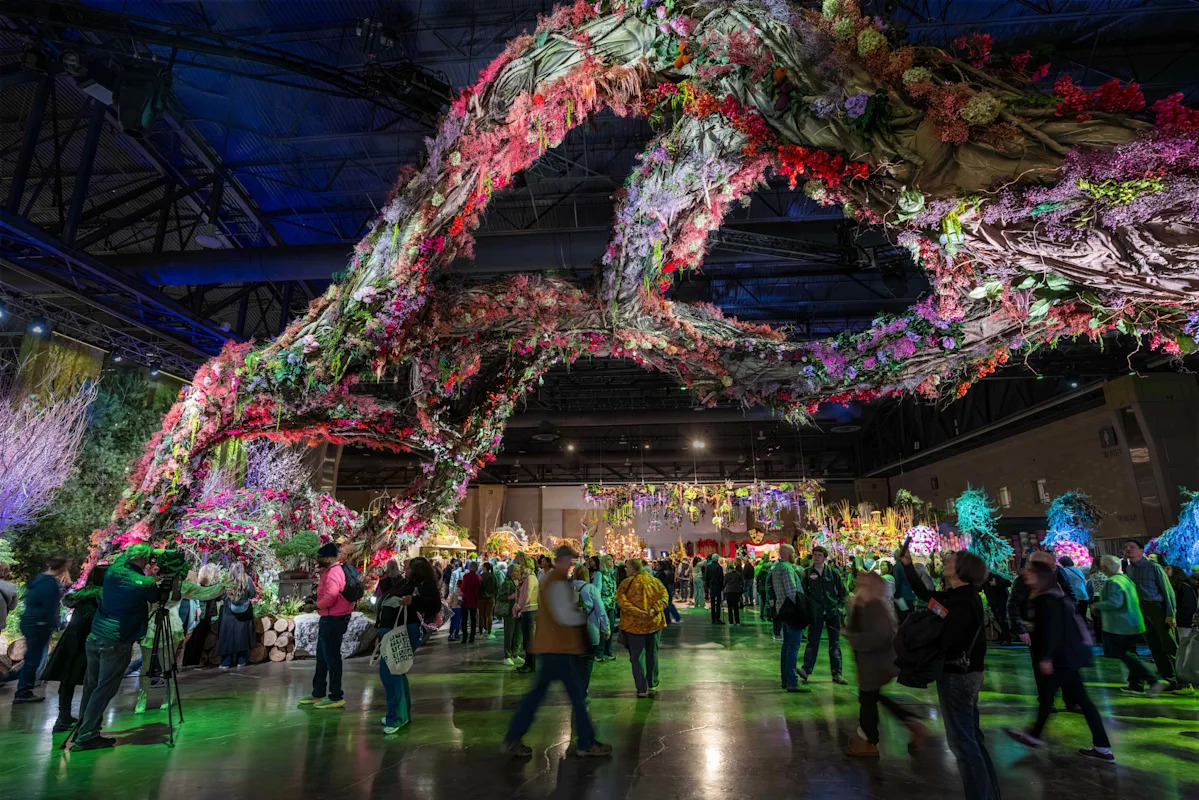
Every year, thousands of plant enthusiasts flock to Philadelphia to see the country’s largest and longest-running horticultural event, the Pennsylvania Horticultural Society’s (PHS) Philadelphia Flower Show. Starting in 1829, this historic event introduces diverse and sustainable plant varieties and garden concepts by the nation’s leading floral and landscape designers.
As an editor for MarthaStewart.com and a passionate gardener myself, I’ve been attending the show for years, and it continues to get better and better every year. This year’s theme, Rooted: Origins of American Gardening, was one of my favorite experiences yet. The concept honors the people, places, and traditions that have shaped gardening in the United States, exploring how personal stories, culture, and creativity are deeply connected through plants.
As is the case every year, the Philadelphia Flower Show is a great opportunity to see what floral and landscaping trends we can expect to see during the upcoming growing season and beyond. Ahead, are some of the trends I saw at this year’s show.
Meet Our Expert
Andrew Bunting, vice president of horticulture for the Pennsylvania Horticultural Society
Water Features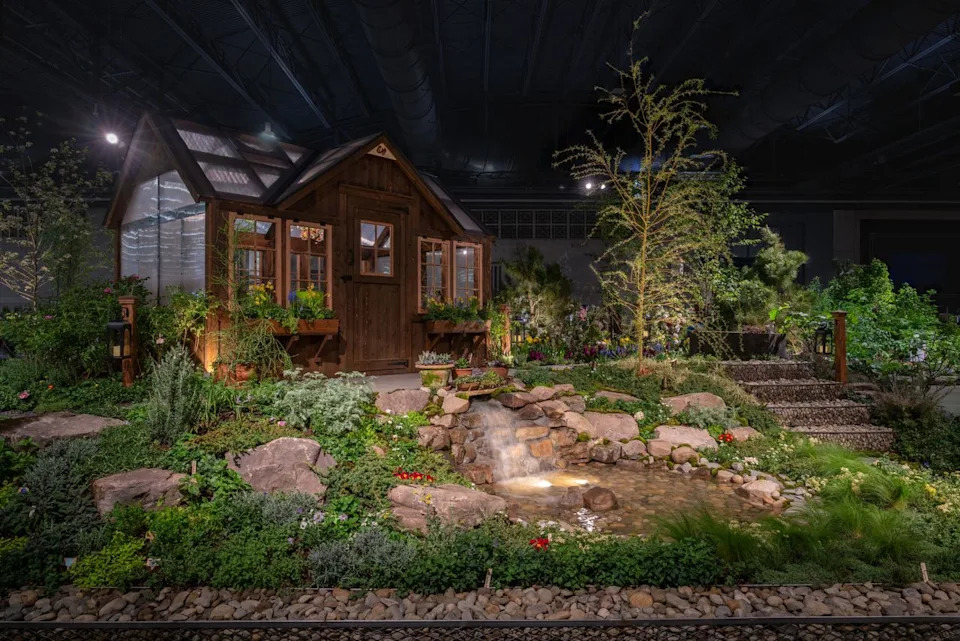
Credit: Rob Cardillo
Interest in sensory gardens, which are designed to stimulate all five senses, has expanded in recent years. This concept was prevalent at this year’s flower show, with many designers incorporating water features into their displays, from a simple dripping fountain to more formal pools, engaging visitors’ auditory senses. “The movement of water is also an important feature with bubbling fountains and recirculating waterfalls,” adds Andrew Bunting, vice president of horticulture for the Pennsylvania Horticultural Society.
This design, titled The Apothecary’s Path, by Irwin Landscaping Inc., offered a full sensorial experience. A celebration of the legacies of alchemists, herbalists, midwives, home cooks, and healers, this design incorporated various fragrant plants used to treat ailments, repel pests, and enhance the flavors of food. In the center of the design sat a running water fountain that spilled out into a pool below.
Relaxed Landscape Design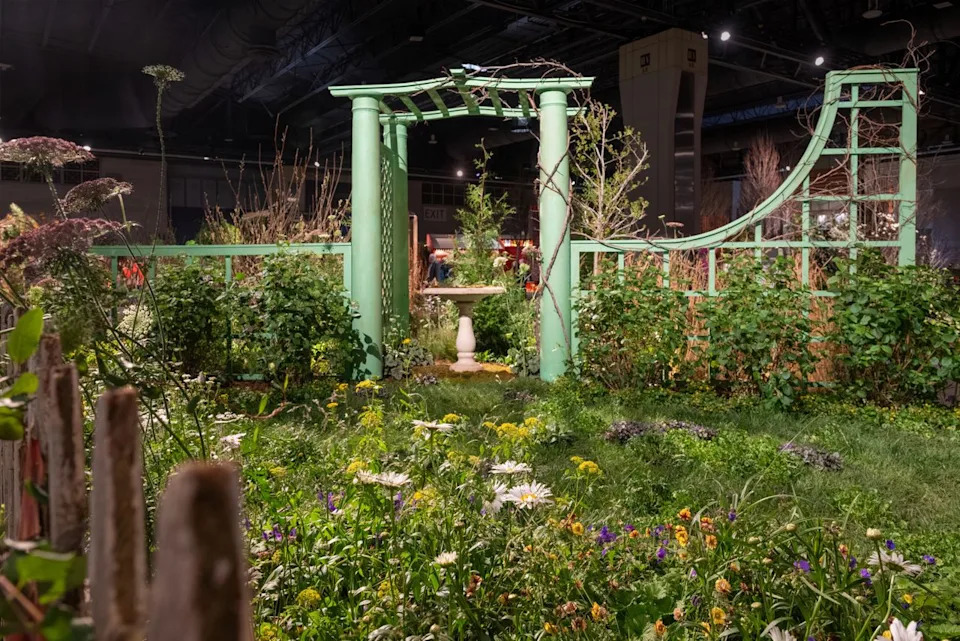
Credit: Rob Cardillo
Many gardeners have replaced their picture-perfect landscapes with natural designs that celebrate native plants and wildlife—a theme the Flower Show celebrated in abundance this year. “Several exhibits have blurred the lines from the manicured garden to the more naturalistic garden, where plants are allowed to seed around the garden in serendipitous ways,” says Bunting. “Old seed heads are left on plants and are allowed to commingle with lush foliage and current season flowers.”
Naturally, this led to many native plants being showcased in various designs, including native sedges, ferns, grasses, and flowering plants. “This has been a long-term trend that continues to evolve with more options and approaches to create an ecologically friendly garden by reducing turf and planting pollinators or ‘leaving the leaves’ to create a better environment for overwintering insects,” says Bunting.
In the above design by Kelly D. Norris, LLC, titled American Anemoia, we see what this landscape becomes in the absence of the gardener. “Overcome with abundance, the garden blurs the lines between past and present, revealing the tension and elasticity of gardening with native plants in America over the last 250 years,” the exhibit explained.
Unexpected Elements in Floral Design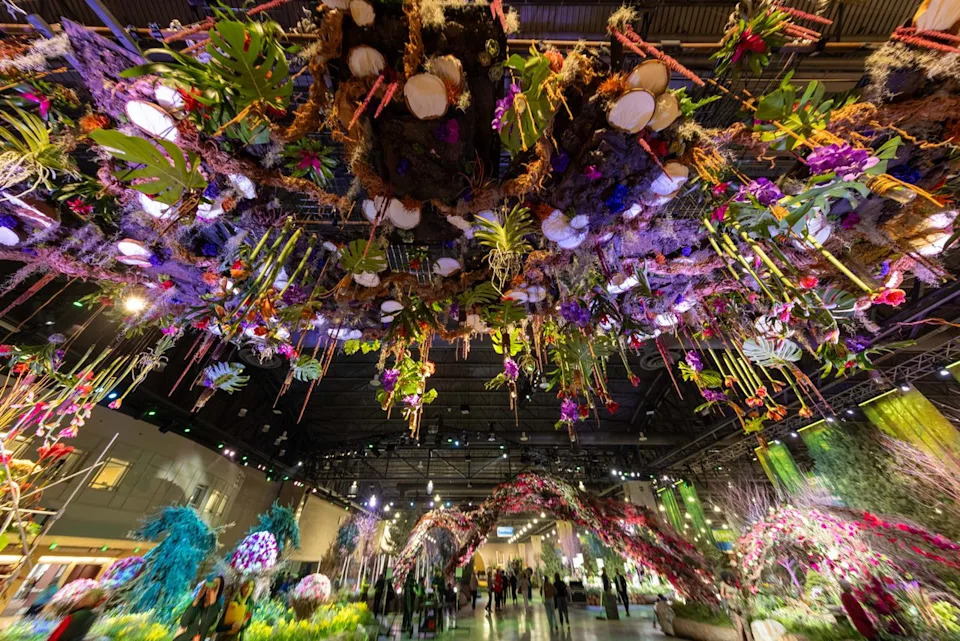
Credit: Peter B Blaikie
One of the most impressive aspects of the Flower Show every year is the various floral arrangements woven throughout the event space. This year was no exception, with designs that were bold and unexpected. Arrangements were taken to new heights with hanging and pendant features, such as hanging and inverted kokedama. “Other flowers were suspended with almost see-through filaments. This pendant aspect of design is amplified by the use of very pendulous flowers like heliconia, especially Heliconia vellerigera,” says Bunting.
Also surprising was that many arrangements featured a bold use of tropical plants, such as very large tropical leaves like Monstera deliciosa and Cecropia peltata. And many flower-heavy designs were softened with natural elements, such as the blending in of dried grasses, seed heads, woven willow, straw, and preserved shelf fungi, Bunting notes.
Terrariums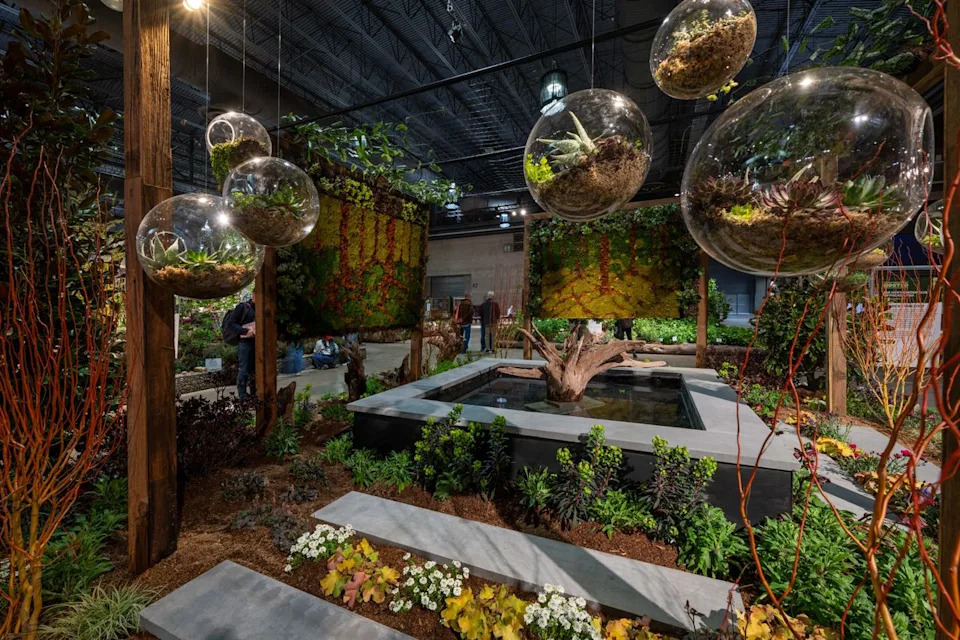
Credit: Rob Cardillo
If you want to take your houseplant hobby to the next level, consider starting a terrarium. These miniature, self-sustaining ecosystems were on full display at the 2026 Flower Show. Artists used everything from traditional fishbowl terrariums to more sophisticated Wardian cases, which were used to support a myriad of tropical plants, including begonias, gesneriads, and specialty carnivorous plants, says bunting. “Decorative terrariums are also being suspended by a filament and used to accessorize the home with a pendant, ornament-like quality,” he adds.
Garden Maximalism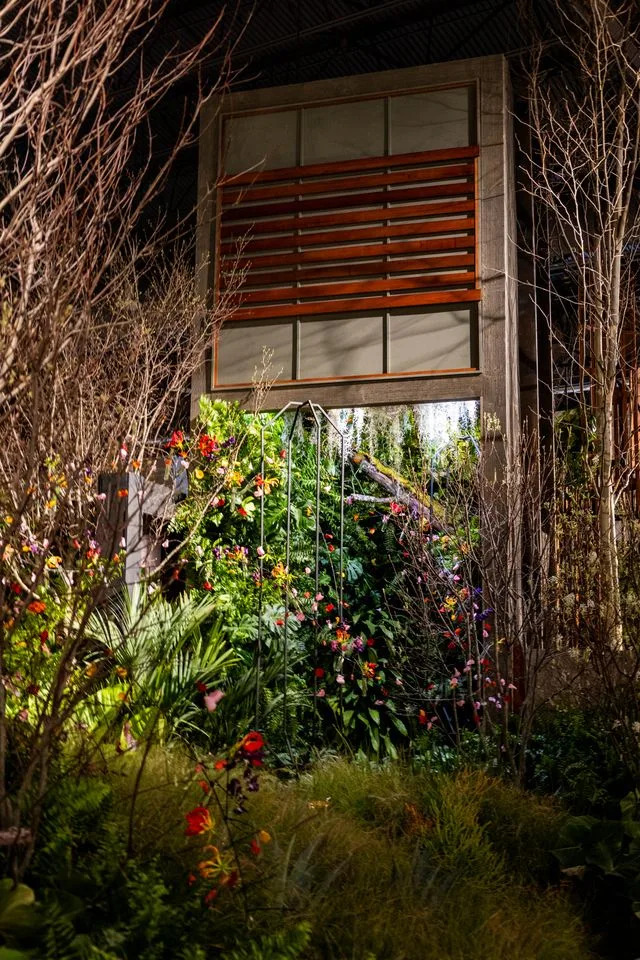
Credit: Morgan Horell
Gardens are becoming more self-expressive, with many people growing plants and flowers that they love rather than what’s trending. This had led to a rise in garden maximalism, the creation of vibrant, lush landscapes.
“Gardeners are doubling down on home gardens and creating spaces that have an opulence of color and textures,” says Bunting. “Ways to maximize the impact in the garden are being considered, like the use of tropical plants, adding water features to the garden, and adding strong architectural details like greenhouses, pergolas, and art in the garden.”
This beautiful exhibit by Mark Cook Landscape & Contracting, LLC, which won Best in Show in the landscape category at this year’s show, is a celebration of self-expression in the garden. Titled The Unseen Palette, it captures the essence of artistic creation through bold colors, layered plantings, lush textures, and expressive design.
Read the original article on Martha Stewart
Comments are closed.