
Plant identifier apps are incredible. Being able to just wander around anywhere, snap a photo, and learn about the fauna all around you is like the first time you use Shazam to figure out the song playing in the grocery store. It feels like magic. Had we showed this to someone from the 1700s, we might be burned at the stake.
Apps typically rely on databases filled with plants, which is great, but can AI do the same thing, and maybe even take it a step further? I pulled it out in our garden and, honestly, it was pretty astonishing.

Short answer: yes, with a but…
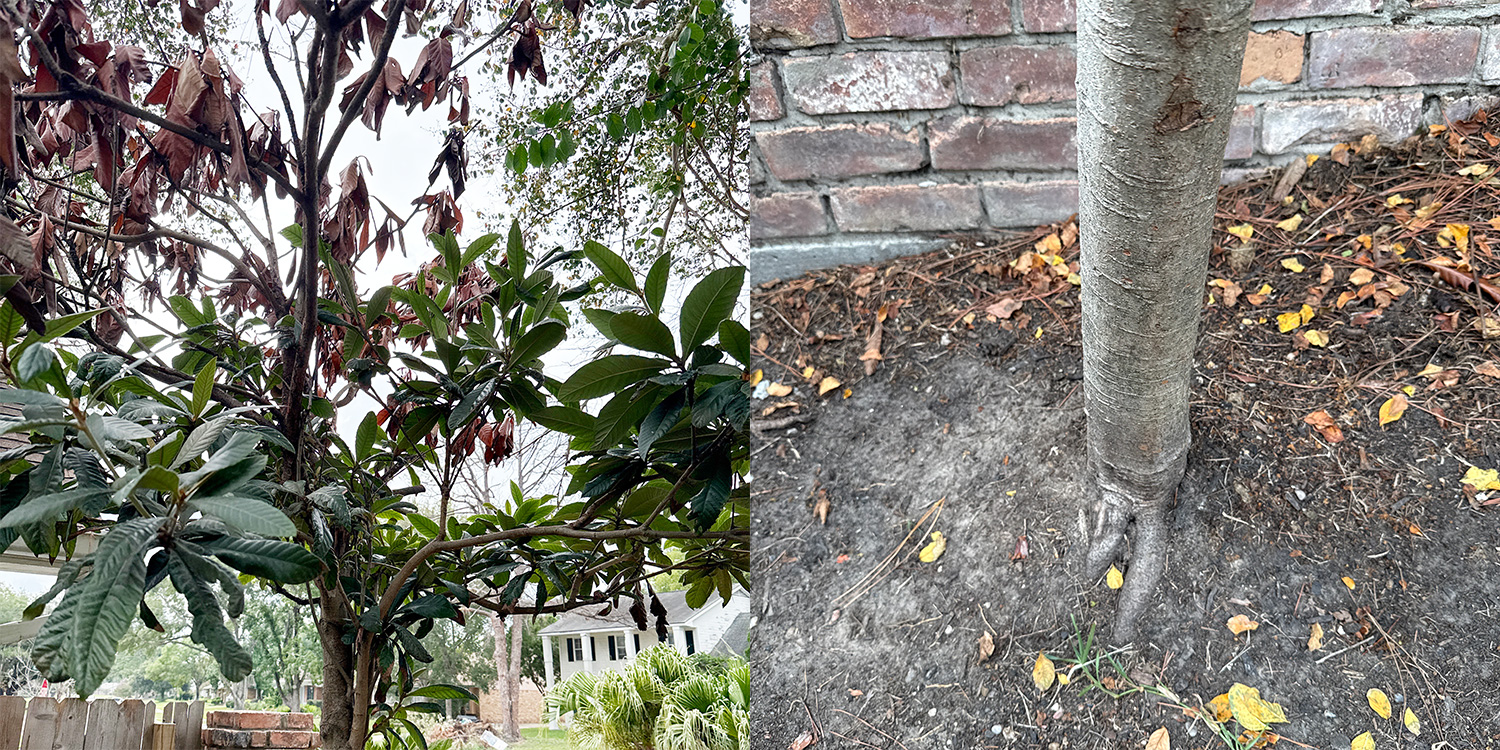
Last year, after harsh winters, derechos and droughts, a loquat tree in our backyard was fraying. Tree trimmers had been out recently to take down a pair of ash trees and a young red maple, the former from rot and the latter from a beetle infestation. Would the loquat be next?
Scouring Google and even using plant disease apps didn’t really tell the tale. Too many conflicting reports and questionable remedies. The tree trimmer said just to trim off the burnt brown parts and see what happens. He’s no arborist, but he’s a tree guy, right?
Time to consult ChatGPT since calling an arborist for a small loquat tree in a corner of the yard felt like overkill.
Next up, loading a photo of the top of the tree with the brown leaves and asking ChatGPT to diagnose what might be the problem. It provided a general review and some context as to what might be going on, but then it did something else. To my astonishment, AI had a suggestion: a photo of the trunk near the ground.
Part of the trunk was visible, but not all of it and I had just given it photos of a dead holly tree where the trunk told the tale. Upon getting the image:
“Thanks for adding this — the trunk and base give more context.”
ChatGPT then proceeded to provide a pretty solid diagnosis along with some remedies. My loquat wasn’t dying. It was stressed, but still in pretty good shape. It let me know that even though it had been a while since a freeze, it could show up months after. I could prune away the dead portion and take it from there.
That was last September. Today, I have an extremely healthy loquat with loads of new growth.
My only hesitation here is that I did not have a huge investment in this particular diagnosis. This tree was a “volunteer” we had nurtured, but if it had died, it wouldn’t have been like trying to preserve my ancient magnolia in the front yard.
So, as much as I found the diagnosis to be accurate, I’d still want a professional to advise me on anything more critical than damaged leaves. Just like I wouldn’t it trying to figure out my own personal health or trying to be a vet for my dogs, plants sometimes need human intervention.
Still, it was impressive considering attempts to figure it out through diagnostic apps and online searches weren’t terribly fruitful.
Like anything when it comes to AI, pursue at your own risk. But if you have a plant this is struggling, it might put you on the right path before calling a professional.
Related
Comments are closed.