


Monty Don has a six-word rhyme for pruning that he swears by (Image: Getty)
As gardens begin to wake up in March, many gardeners reach for their secateurs to tidy up plants and encourage new growth. But pruning at the wrong time can be a disaster, as you may accidentally cut away this year’s flowers.
According to gardening expert Monty Don, one simple rhyme can help prevent the mistake. His advice is summed up in a memorable six-word phrase: “Flowers before June, do not prune.” While it may sound overly simple, the rule helps gardeners distinguish between plants that bloom on old wood and those that flower on new growth.
Read more: My hydrangeas grow more flowers every year thanks to Monty Don’s March advice
Read more: Monty Don warns about cutting grass in March
As Monty explains on his gardening blog, “The old rhyme ‘if it flowers before June do not prune’ will get you out of most trouble.”
Many spring-flowering shrubs produce their buds on growth formed the previous year. This means the flower buds that will open this spring were already formed last summer.
If these plants are pruned in late winter or early spring, gardeners often remove those buds before they have a chance to bloom.
Instead, Monty Don advises pruning them after they have finished flowering, allowing the plant to produce new shoots that will carry flowers the following year.
This applies to several popular garden shrubs, including forsythia, lilac, philadelphus (mock orange), weigela and amelanchier. All of these produce their flowers on last year’s growth, so pruning them now could mean losing most of the spring display.
Once the flowers fade in late spring or early summer, however, they can safely be trimmed and shaped.
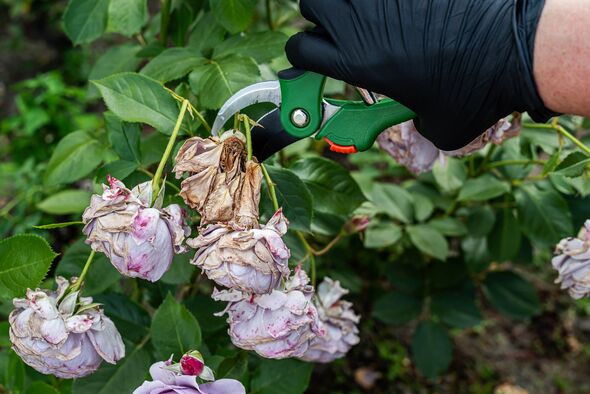
Monty has advice for pruning roses (Image: Getty)
Here are Monty Don’s pruning rules for four common garden plants and shrubs:
Roses
“There is a lot of mystique about rose pruning, whereas the reality is that they are all tough shrubs that can take a mauling by anything from secateurs to a flail cutter and bounce back,” Monty said in his blog. “However, there are three considerations to bear in mind when pruning roses.”
The first is for Hybrid teas, floribunda and Hybrid perpetuals which flower on the current season’s wood. “So they should be pruned hard each spring,” he said.
Shrub roses need minimal pruning, “I prune mine in winter and early spring.” Meanwhile, true climbers should be pruned in autumn or winter, and ramblers just once in mid-summer.
Buddleia
Not all plants follow the “do not prune” rule in spring. Some actually benefit from a firm cut at this time of year.
Monty said: “If you live in the south or a sheltered area, February is the best time to prune the Butterfly bush, Buddleia davidii, and it can be done any time in the coming month in colder areas. It produces its flowers on new growth so if it is cut back hard new, just before it begins growing, you will both stimulate extra new shoots and make sure that the shrub has as high a proportion of flower to wood as possible.”
Monty often advises gardeners not to be timid with buddleia pruning. The shrub can be cut back to a low framework — often around 30–60cm above the ground — removing weak or crossing stems.
Clematis
Clematis pruning can also confuse gardeners, but the rhyme offers a helpful guide.
Early-flowering clematis varieties bloom in spring on last year’s growth, meaning they should not be pruned before flowering. These include varieties such as Clematis montana, Clematis alpina and Clematis armandii.
Instead, they should only be pruned after flowering, once the blooms have finished.
Later-flowering clematis behave differently. Many summer-blooming varieties, such as Clematis viticella and Clematis jackmanii, flower on new growth. These can be pruned hard in late winter or early spring, often cutting the stems back to around 20–30cm above the ground.
Hydrangeas
Many common varieties, particularly mophead and lacecap hydrangeas (Hydrangea macrophylla), follow Monty Don’s rule because they also flower on old wood.
Pruning them too hard in spring risks removing the buds that will produce summer blooms. Instead, Don recommends a lighter touch, explaining that gardeners should remove the old flower heads and cut back to a pair of healthy buds below.
This simple tidy-up — known as deadheading — protects the developing buds while keeping the shrub neat.
However, some hydrangeas behave differently. Hydrangea paniculata and Hydrangea arborescens, including the well-known ‘Annabelle’, flower on new growth. These types can be pruned more firmly in late winter or early spring to encourage strong new stems and larger flowers later in the year.
Comments are closed.