
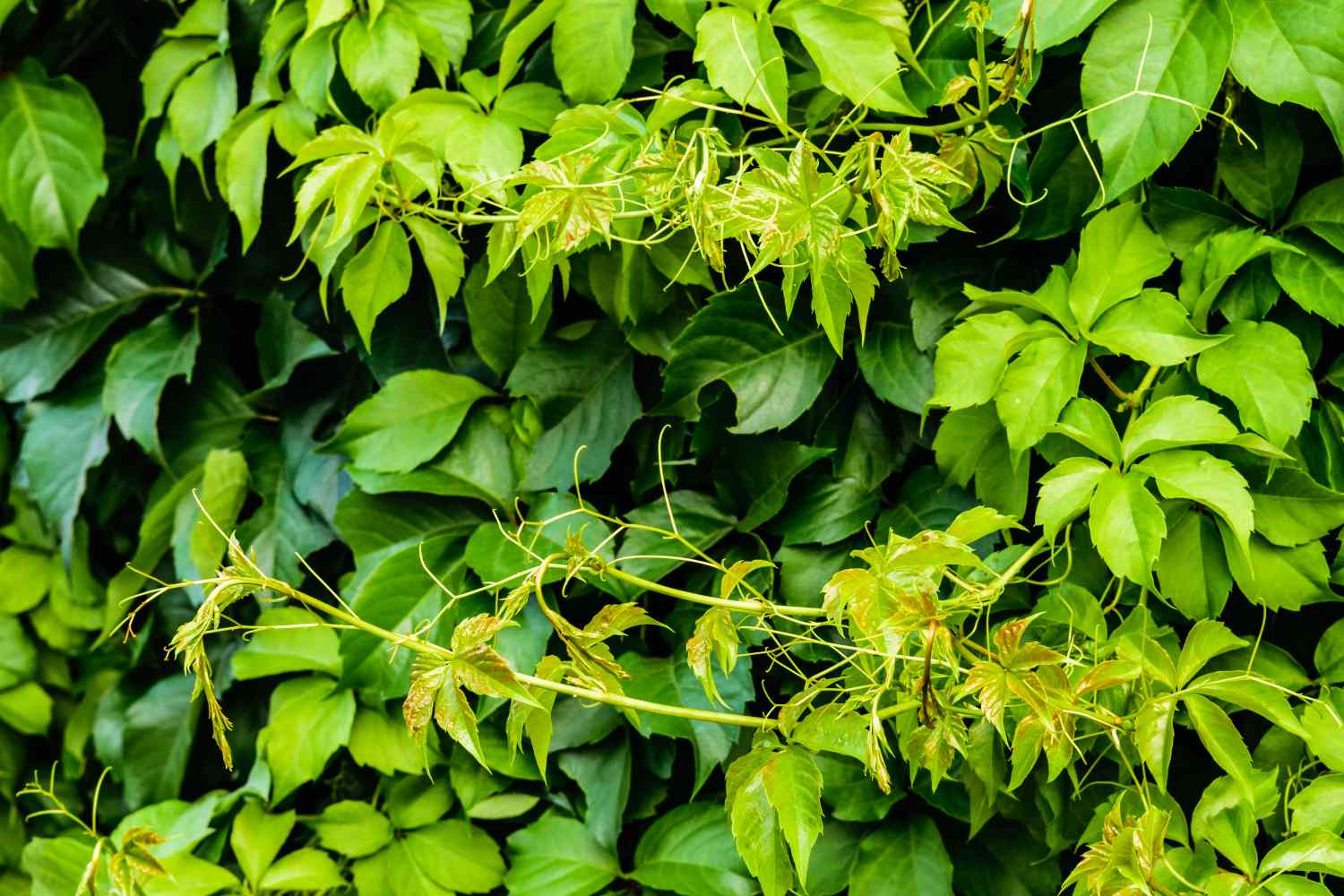
If vines have swallowed your azaleas and privet has overtaken your hollies, it’s not too late to wrestle back control of the garden. You can tame overgrowth around your shrubs without seriously damaging the roots or destroying the soil. In fact, you’re more likely to harm your bushes by leaving them to fend for themselves, according to a landscape designer and garden expert in North Carolina.
“If there’s ivy growing through, leaving it is going to disturb it more than removing it,” says Beth Rudd-Myers of Bright Leaf Landscaping in Durham. “If you don’t pull it out, it’s just going to be more competition for that plant, which is more problematic.”
We asked Rudd-Myers for her expertise on how to remove overgrowth around shrubs without causing damage. She also gave us a few tips on how to care for shrubs afterward. So grab your garden gloves and get ready to tackle the weeds growing through your bushes—you’ll be glad you did.
Beth Rudd-Myers is a landscape and container designer for Bright Leaf Landscaping, which provides landscape design and installation services in Chapel Hill and Durham, North Carolina.
How To Remove Overgrowth Around Shrubs
Shallow-Rooted Vines And Weeds
The best method for removing overgrowth around shrubs depends on what kind of plant has invaded. Rudd-Myers recommends handling shallow-rooted weeds and vines one way and deep-rooted woody plants another.
“If it’s something like ivy that’s low to the ground,” Rudd-Myers says, “I would say hand-pulling is best. You don’t need to dig it out with a shovel because the roots are shallow, but you need to pull it all out.”
Put on a thick pair of garden gloves and work on pulling out every last tendril. This job can be harder than you think, so assign yourself one area at a time.
Invading Trees And Shrubs
If a weedy bush or tree like privet is growing through your shrubs, you’ll need to be more aggressive. The plant’s stem may not look that thick, but woody plants can have a deep taproot.
Rudd-Myers advises clearing away debris around the base of the bush first. With really dense growth, you can tie the shrub’s branches together with a rope to make it easier to see underneath. Then, follow the trunk or stem of the invading plant all the way down to the ground to find out exactly where it emerges.
“Pull the soil away a little bit, and try to cut it out a little beneath the soil,” she says. “I usually try to get about 6 inches down.”
Rudd-Myers says she uses a mattock or sharp spade for this job. She finds that if she cuts the root deep enough, the weed usually doesn’t return.
But if the trunk has grown several inches thick, she doesn’t recommend trying to dig it out. “You can try to chop it out, but that would be a challenge to do,” Rudd-Myers explains. “In this case, what you do is cut it a little above the soil and paint it with Roundup.”
Rudd-Myers adds that herbicides aren’t her first choice, but she’ll use them for something like a large privet bush that would be too physically challenging to remove. “In that case, privet is a noxious weed, and you need to get it out of your yard,” she says. While spraying the foliage with herbicide could damage the other bushes, painting the cut ends of stumps with a paintbrush avoids that problem.
Overgrown Bushes
Many of us plant small shrubs that eventually overgrow their boundaries. After 10 years, you may have a holly or azalea that overshadows every other shrub in the garden. Rudd-Myers says that people often want to relocate those shrubs, thinking they’ll save money and effort. She discourages this unless the plant has sentimental value or you don’t care much about its survival. Even with religious watering, the shrub may not live.
“You’re going to have to dig a bigger root ball. You’re going to have to cut down the canopy,” Rudd-Myers explains. “If you’re going to be really upset about it, just buy a new plant.”
Rudd-Myers says that while you have to weigh the risks versus the benefits of transplanting an overgrown bush, removing it is usually helps the shrubs you leave in place. Prioritize keeping the shrubs you really want and dig out the ones you’re less committed to.
“If you’re moving something, you’re usually trying to solve a problem, so I wouldn’t overstress about it,” she says.
Caring For Shrubs Afterward
Rudd-Myers reassures us that most shrubs will be fine if you disturb the roots while removing weeds. There are some exceptions, like daphnes, which are notoriously sensitive and short-lived. But if you’ve exposed bare soil after removing a groundcover like English ivy, you may have another problem.
“A lot of times, dense groundcovers like that keep other weed seeds from germinating,” she advises. “Mulch that area and then over the next month or two, take the time to look and see what’s germinating there.” Most shrubs will benefit from a 2-inch layer of mulch around the base, pulled slightly away from the trunk.
Sometimes shrubs look bare and unattractive after living under the dominion of other plants, but many can be rehabbed by severe pruning. Rudd-Myers says if there’s a hope your shrub could “magically look fresh” again, it may be worth the risk of possibly losing it.
“I think it’s always worth trying something kind of aggressive,” she says. At least you’ve given those shrubs a fighting chance now that they have less competition for sunlight and moisture. Removing overgrowth around your shrubs almost always pays off.
Comments are closed.