
By Allisa Zurbuchen
Horticulture Specialist
This winter has been much warmer than usual. According to Colorado Climate Center, December 2025 was the warmest December on record throughout the state, with average temperatures 10.1 degrees warmer than the 20th-century average. January was also warmer than average but not record-breaking.
In El Paso County, it was a wetter-than-average January due to some parts of the county receiving more than a foot of snow Jan. 8-9. That said, snow pack that feeds the Arkansas River Basin has a snow water equivalent (SWE) that is less than 50% of average. SWE estimates how much liquid water is contained in the current snow pack and is one of many data points used for forecasting water supply. For more information regarding water supply from Colorado Springs Utilities, visit: csu.org.
As of Feb. 26, most of El Paso County was not in drought. This weekly designation is made by the U.S. Drought Monitor. You can view the current report at https://droughtmonitor.unl.edu/. Other parts of the state are experiencing moderate to exceptional drought. NOAA’s U.S. Seasonal Drought Outlook through May 31 predicts that areas of the state currently in drought remain in drought, and that drought will develop for the rest of the state, including in El Paso County.
Impacts of warm and dry winter weather extend beyond water supply, which is closely monitored. Evergreen trees, certain deciduous trees, perennials, and turfgrass lawns all have increased odds of making it through warm, dry winters with correctly timed supplemental watering. Only water when temperatures are above 40 degrees. For more guidelines, visit https://extension.colostate.edu.
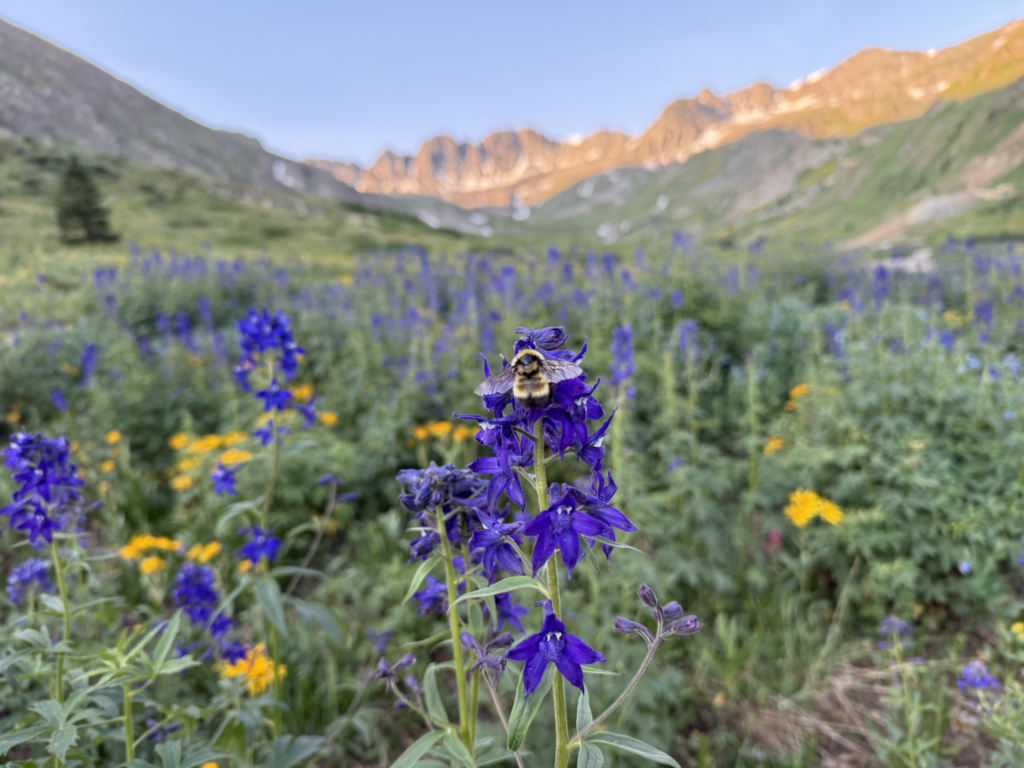
If you garden to attract and provide forage for pollinators, these weather conditions can lead to a phenological mismatch. This is when peak flower bloom is not synchronized with pollinators’ need for floral resources, including nectar and pollen. In addition to non-native, introduced honeybees, there are 1,006 species of bees that are native to Colorado. These bees, which are not hive-dwelling, have to compete with honeybees for limited nectar and pollen supply, further exacerbated during drought years.
Your garden can help our native pollinators survive these conditions if it includes groups of native plants that bloom at different times throughout the season. Contact our help desk if you would like a list of native plant species that meet your goals.
The in-person help desk is closed for the season. Submit gardening questions online at ask.extension.org or call 719-520-7684. Questions will be routed to El Paso County Master Gardeners and answered remotely and by phone.
Comments are closed.