
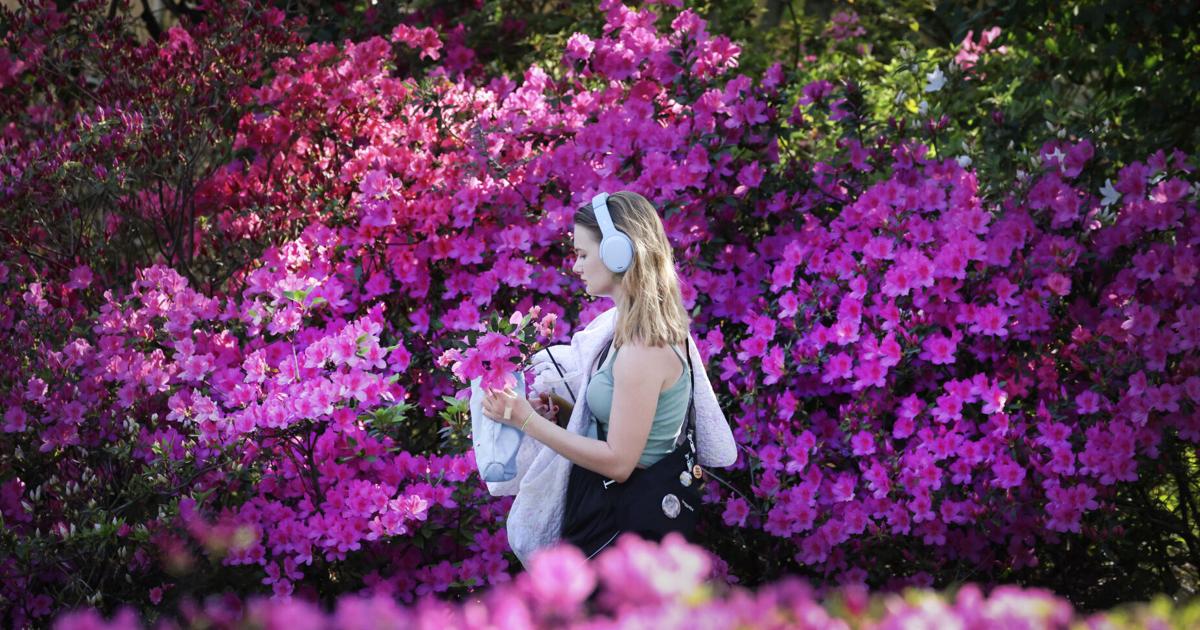
Is it spring yet? The short answer is yes. But some people don’t feel spring has fully arrived until late March, or even April.
You may consider the average last frost date as the beginning of spring. Average last frost dates range from early to mid-February in milder areas like New Orleans to mid-March across south Louisiana. But average last frost dates are simply the average of when the last freezes occur over the years. From year to year, freezing temperatures can end well before or occur well after the average last frost date.
We generally use mid-March as our “frost free date” on the south shore and the end of March as the “frost free date” across south Louisiana. That means that damaging freezes after those dates are unlikely. Although spring begins well before mid-March, this date is still significant. After the frost free date, we can begin to reliably plant tender vegetables and warm season bedding plants.
The calendar is no help. The calendar tells us that winter ends and spring begins on March 20 this year (the spring equinox). But although the date of the spring equinox is the same in New Orleans and Chicago, obviously spring does not arrive in those two cities at the same time. So, you can’t just look at a calendar to determine when the seasons change.
A big part of the problem is the preconceived notions we have about what “winter” means. I wish I had a dollar for every time I’ve heard someone comment on how extraordinary it is to have 70-degree weather in December, January and February. Even someone who has lived in New Orleans all their life may find it remarkable.
But days reaching the 70s during what we call winter are not exceptional here, and we should not find them remarkable.
Spring is supposed to be a dramatic reawakening of nature after the cold weather and bleak dormancy of winter. But, other than the periods of occasional pronounced cold, most of our winter weather is decidedly springlike.
Our evergreen trees, shrubs and ground covers and the planting of colorful cool season bedding plants keep our landscapes looking anything but bleak over the winter months. As a result, there is no obvious shift in weather or striking difference between late winter and early spring.

Shoppers throng the Spring Garden Show at the Botanical Garden in New Orleans in April 2024.
STAFF PHOTO BY SOPHIA GERMER
The fastest season?
Because of this, spring has a way of sneaking up on the unobservant gardener. For them, spring can seem to arrive and leave quickly.
These gardeners wait to acknowledge spring’s arrival until the weather is warm and settled, frosts are over, and the trees have all leafed out. They flock to the nurseries by the thousands in April, heavily infected with that rampant disease gardeners call “spring fever.”
When summer temperatures in the 90s begin to show up in May, it seems that spring ends just as it is beginning. This has led to a common perception that springs are short-lived in our area.
But let’s look at the reality that nature presents us. The most reliable plants to watch for signs of spring are deciduous trees and shrubs that go completely dormant for winter.
Some of the earliest native trees to wake up are maples and willows. Our native Drummond red maple (Acer rubrum var. drummondii) begins to bloom in late January in south Louisiana and a few weeks later is showing off the beautiful burgundy-red fruit that you can see now.
In early February, the willows (Salix nigra) begin to send out new leaves in vivid shades of green gold. It’s easy to miss the beginning of spring if you are not observant enough to catch dormant plants waking up in late January and early February.
Japanese magnolias herald the arrival of spring with their creamy pink blossoms.
STAFF PHOTO BY BILL FEIG
In the landscape, the Taiwan flowering cherry (Prunus campanulata, one of the best flowering cherries for southeast Louisiana) begins to bloom by late January or early February, quickly followed by other spring flowering trees such as Japanese magnolias (Magnolia x soulangeana), star magnolias (Magnolia stellata) and redbuds (Cercis canadensis).
A bee flies around a redbud tree Saturday, March 22, 2025, in Bossier City, La.
By JILL PICKETT | Staff photographer
By the time March arrives, signs of the advancing spring season are harder to overlook, particularly as spring bulbs and cool season bedding plants provide bright splashes of color, many types of shrubs begin to bloom, and deciduous trees leaf out.
Spring has sprung
So much of what we do in the garden, from planting, to fertilizing, to pruning and even pest control depends on us understanding when our seasons come and go.
In southeast Louisiana, spring begins to arrive in early to mid-February and accelerates into high gear in March. By April, when many people think spring has finally arrived, the season is actually in its latter stage.
April is the climax of spring, not its beginning. As we reach mid-May, summer is definitely here — I can’t consider it anything else when daytime highs begin to reach the 90s.
When you think of spring lasting from mid-February until early May, it doesn’t seem so short. And, if you begin some spring gardening activities in March instead of waiting until April, you won’t feel so rushed.
GARDEN QUOTE
“Ere man is aware that the spring is here the flowers have found it out.” Chinese proverb
Comments are closed.