

Editor’s note: Once a month, OSU Extension Master Gardener Volunteers in Franklin County profile a plant that occurs naturally in central Ohio.
As spring approaches, gardeners begin to plan for our gardens. If you have a shady yard, it can be a challenge to find new plants that enjoy the shade, and, if you have a deer problem as well, it can be even more difficult.
Consider American alumroot (Heuchera americana), a shade-loving Ohio native that has bitter-tasting leaves that repel deer and rabbits. As an added benefit, this plant is also tolerant of the toxic substance juglone that is secreted by the roots of black walnut trees and inhibits the growth of some plants growing beneath these trees.
Alumroot is a small mounding perennial related to the popular coral bells cultivars found in most garden stores. Native alumroot is widespread in eastern North America in rocky forests and rock outcrops.
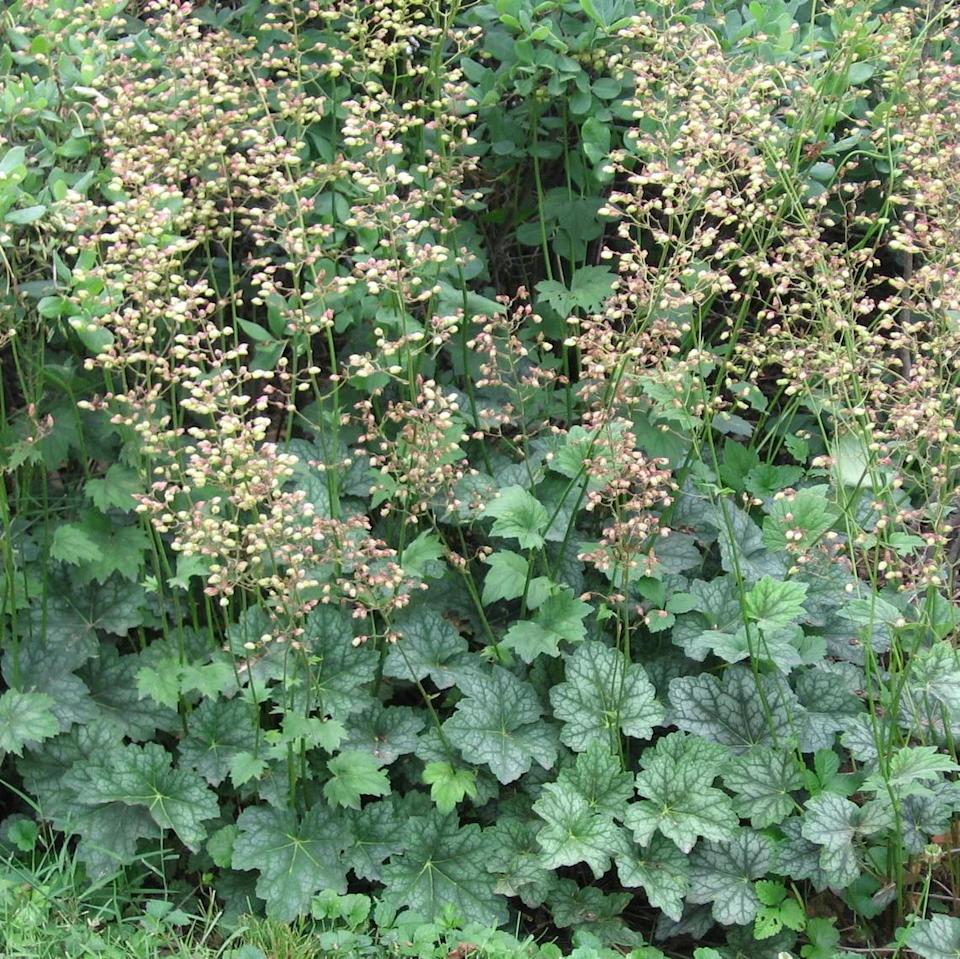
It grows 1-3 feet tall, making it a good ground cover or edging plant. Varying somewhat in color and degree of mottling, the leaves are heart-shaped and lobed, 3-5 inches wide and somewhat evergreen, depending on the severity of the winter. The foliage is high in tannins, producing the bitter taste that repels wildlife.
Out of the low mounds of basal leaves, the airy flowering stalks arise 1-3 feet, appearing May to July. The flowers on these stalks are tiny, bell-shaped and a greenish cream.
Despite their small size, the flowers attract native bees, butterflies and hummingbirds for their pollen and nectar. Alumroot is the larval host for the Epinotia heucherana moth.
To grow alumroot, plant it in a partial- to full-shade location in humus-rich soil with good drainage. Shade is preferred for hot summer afternoons. It needs average to dry moisture and will be drought-tolerant for short, occasional periods.
Because the roots are shallow, it’s important to mulch the plant in early winter after the ground freezes to prevent the roots from heaving. Divide the clumps every 3-4 years in the spring or fall.
The roots of this plant contain the mineral alum, a powerful astringent that once was used to treat wounds, sores, nosebleeds, and gastrointestinal issues.
Good companion plants for alumroot are other shade-lovers found in woodland gardens: heartleaf foamflower, golden ragwort, Jacob’s ladder, woodland stonecrop, wild blue phlox, and Pennsylvania sedge.
This native plant would be a worthy addition to any shade garden.
 Growing requirements
Hardiness zones: 4-9
Sun: Part shade to shade
Water: Medium to dry
Soil: Prefers humus-rich, well-drained; prefers acidic but is adaptable
Maintenance: Low
Propagation: Seed or division
Pests and diseases: None serious
This article originally appeared on The Columbus Dispatch: American alumroot is a deer-resistant Ohio native plant
Comments are closed.