
Mike Hogan
| Special to The Columbus Dispatch

How to propagate plants properly
Propagate indoor plants properly with these gardening tips.
Problem Solved, USA TODAY
Gardeners start seeds indoors to save money, access specific varieties and extend the harvest season.Vegetables like tomatoes and peppers are good for indoor starting, while others like cucumbers and squash are best direct-seeded.Seedlings require 12 to 16 hours of supplemental light and warm soil, often with a heat mat, for strong growth.
Gardeners have different reasons for starting certain vegetable seeds indoors to produce their own transplants for their garden.
For some gardeners, the motivating factor is cost, as you can typically grow your own transplants for less money than it will cost to purchase transplants in the spring.
For other gardeners, growing their own transplants allows them to select specific varieties of vegetables which may not be readily available for purchase as transplants locally.
There are other benefits to growing your own transplants, such as minimizing the potential for certain diseases and the ability to stagger plantings to allow for succession planting in order to extend the harvest season later in the summer.
And for other gardeners, the motivation for starting seeds indoors is the sheer joy of growing tender young seedlings while the snow continues to fly in Greater Columbus.
Lets take a look at some strategies to successfully grow your own vegetable seedlings indoors.
Know which vegetables to grow indoors
Vegetables which can be successfully started indoors include Brussels sprouts, eggplant, kale, lettuce, greens, onions, okra, pepper, tomato, broccoli, cauliflower, and cabbage. Other vegetables are more difficult to seed indoors and are best direct-seeded outdoors in a garden bed later in spring. This list of vegetables includes celery, chard, cucumber, melons, pumpkin, spinach, potato, and squashes.
Most culinary herbs can also be seeded indoors including basil, rosemary, parsley, and cilantro. Herb seeds tend to take a long time to germinate, so I tend to plant these seeds before I start vegetable seeds.
If you want to incorporate some annual flowers into your garden to attract pollinators, zinnia, marigold and cosmos are among the flowers which are easily started from seed indoors.
Light and heat are critical to success
Even if your home has some locations with large windows, seedlings started under grow lights tend to be more vigorous and acclimate quicker when transplanted outdoors.
The natural light from a window is seldom enough for strong seedling growth and will produce thin, spindly and stretched stems. Also, many newer windows contain glass which reduces the amount of ultraviolet light that penetrates through the glass.
A better approach for growing seedlings indoors is to grow them under fluorescent light fixtures or grow lights which will allow you to adjust the duration of time that the light is available and the quality of the light, including blue and red wavelengths.
Many different grow-light kits are available online and at garden centers. Plan to provide supplemental lighting for 12 to 16 hours each day.
An electric heat mat will evenly heat your planting media to 10 to 20 degrees above the ambient temperature in the room. This is especially important if you will be growing your seedlings in a cooler room, such as a basement. Heating mats can be removed after germination.
The temperature of the planting media is more critical than the ambient temperature in the room where you are growing. For optimum germination, the temperature of the planting media should be a minimum of 70 degrees Fahrenheit, particularly for warm-season crops such as tomato, pepper and eggplant.
Start seeds at the right time
Plan to start your seeds indoors so they are at the correct stage of development to move outdoors after the last frost. Growth rates vary quite a bit between different varieties of the same crop, so follow instructions on the seed packet and use the calendar to determine when you should plant different crops and different varieties of the same crop.
For example, if the instructions on a seed packet of tomato indicate that you should start seeds indoors four to six weeks prior to the last frost, you would want to start those tomato seeds around March 19, which is six weeks prior to the average last frost date of April 30 in Greater Columbus.
You may want to stagger seeding dates for some crops so that you can extend the harvest season for that crop through succession planting of your transplants into the garden bed.
Managing seedlings
Immediately after planting, cover the containers with plastic domes available online and at garden centers. This will create a small greenhouse to help maintain moisture and heat until the seeds germinate. In the absence of plastic domes, plastic food wrap can be used to cover planting containers.
Keep the planting media moist at all times, but not overly wet. Depending upon room temperature and light, you will need to water one to two times each week. Spray bottles should be used to moisten the planting media before and during seed germination.
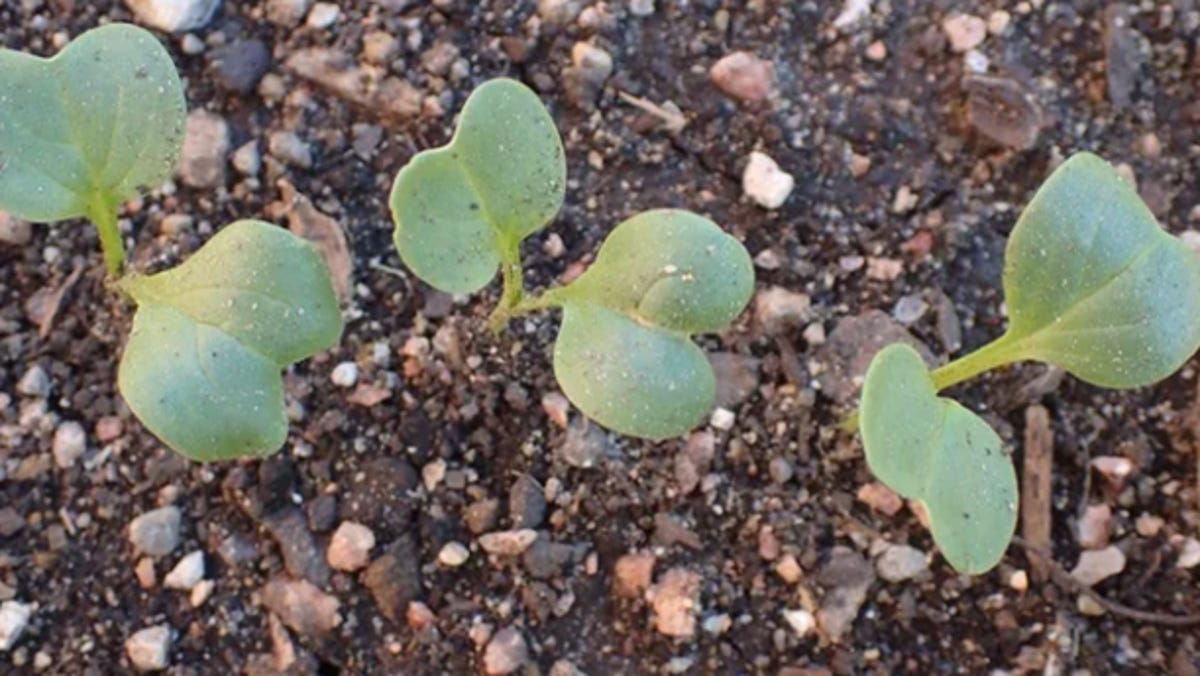
Once seedlings develop true leaves, soil moisture can be maintained by placing plant containers in a tray of water for bottom watering.
Once seedlings have gotten one set of true leaves, they can be transplanted into a larger container, with one plant per container. At this time, you can start to fertilize seedlings with half-strength water-soluble fertilizer.
When seedlings have three to four sets of leaves, full-strength water-soluble fertilizer can be used.
Seeds draw energy for germination from nutrients stored in the seed, so they do not require fertilization until they have one or two sets of true leaves.
Prepare seedlings for the great outdoors
Gradually introduce your seedlings to the outdoor environment after the threat of frost. Place them in an area with dappled sunlight in the warmth of the afternoon for a few hours each day for about two weeks before planting them in the ground. Bring the seedlings back indoors before the temperature cools each evening.
Each day, leave the plants outdoors a little bit longer, and expose them to more direct sunlight. By the end of two weeks, unless frost is forecast, the seedlings can remain outside in the sun until they are planted into the garden.
Mike Hogan is Extension Educator, Agriculture and Natural Resources and associate professor with Ohio State University Extension.
hogan.1@osu.edu
Comments are closed.