
I just purchased a new home and many of the shrubs in the backyard are overgrown. Is this a good time of year to cut them back?
— Glen Peltier, Oak Park
Pruning is my favorite gardening task by far. I prune plants that have gotten overgrown very aggressively, and I suspect that will be the best approach for you, too. Most gardeners are hesitant to prune hard enough to get good results. Overgrown plants have little value in your garden, so if they do not respond well to pruning, you will have an opportunity to add new plants to replace them. The dormant season is the best time of year to do this work, as healthy plants will respond with lots of new growth. I generally start this rejuvenation pruning in the middle of February and finish it before the shrubs start to grow in the spring. This date varies from year to year depending on the weather.
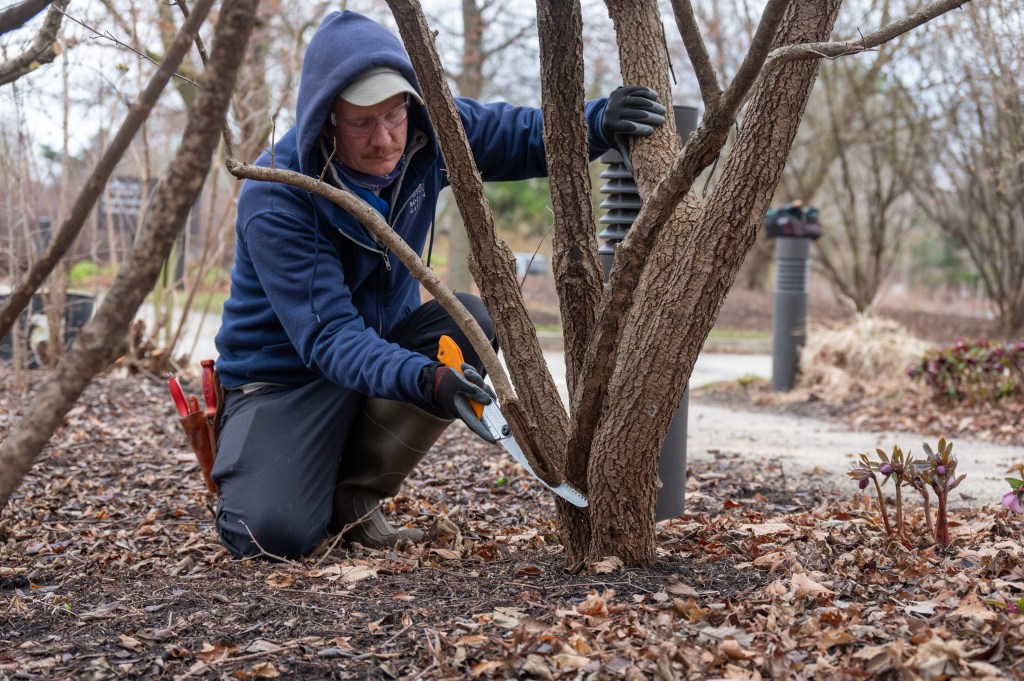
First, identify the shrubs in your garden to better understand how they might respond. Here are some general guidelines that should work for most shrubs. Start by removing large stems at ground level, especially if they have formed mature bark. A small folding hand saw is best for this task, and it will minimize damage to any remaining young stems. It is best to prune at ground level to avoid leaving stubs (which I often see in pruned shrubs). The remaining young stems will need to be cut back if they are spindly and flopping over. It is difficult to give exact height recommendations without seeing a picture of your shrubs, but you will probably end up cutting the remaining stems back to a height of 2 to 3 feet. Make the cuts at an angle 1/4 inch above a bud or side branch when possible. The goal is to encourage growth from the base of the plant, so err on the side of cutting the shrubs back lower than you think they should be. If you do not cut them back hard enough, you will end up with spindly growth rather than with a shrub that is densely branched from the base. This type of pruning is dramatic.
If your shrubs do not have young stems to work with, cut back the thick old stems to about 2 feet, just above the point where there is a young stem. This results in an ugly shrub, but there will be new growth from the old stems and base in most situations. There have been very few occurrences in which I did not get good results from this pruning approach. Since the goal is to remove most of the old stems, prune back thick remaining stems to new canes that develop lower on the stem over the next couple of years. Cut back to shorten any young stems that remain. Once you get these thick old stems to a couple of inches from the ground, you should be able to stop cutting them back, providing you have developed a good-looking shrub.
It’s OK to be much less aggressive when pruning most evergreen shrubs, trying not to cut beyond green foliage. Spreading yews respond to drastic pruning that goes into woody stems with no leaves, but they can be very slow to fill back in. The more aggressive the pruning, the longer it will take for yews to look good again. Plan on at least two to three years for yews to recover. Replacing severely overgrown yews may be the best strategy. Arborvitaes do not respond well to aggressive pruning.
Monitor these shrubs in spring and cut out any dead portions of stems. It is likely that you will have some follow-up pruning to do. Cut back any new growth that is shooting around the other stems to encourage the shrub to develop more densely. Spring-flowering shrubs like lilacs and viburnums that formed flower beds the previous year will not flower until next year. It may also be beneficial to fertilize your shrubs in spring and provide extra water during dry spells throughout the growing season.
For more plant advice, contact the Plant Information Service at the Chicago Botanic Garden at plantinfo@chicagobotanic.org. Tim Johnson is senior director of horticulture at the Chicago Botanic Garden.
Comments are closed.