
Seedy Saturday is set to sprout today at the Millennium Library.
Organized in partnership with the Spence Neighbourhood Association, the event runs from 10:30 a.m. to 3:30 p.m. at the downtown library located at 251 Donald St.
“We have a really great mix of vendors for this year’s event,” says Stephen Kirk, environment and open spaces co-ordinator for the SNA.
Norfolk Healthy Produce photo
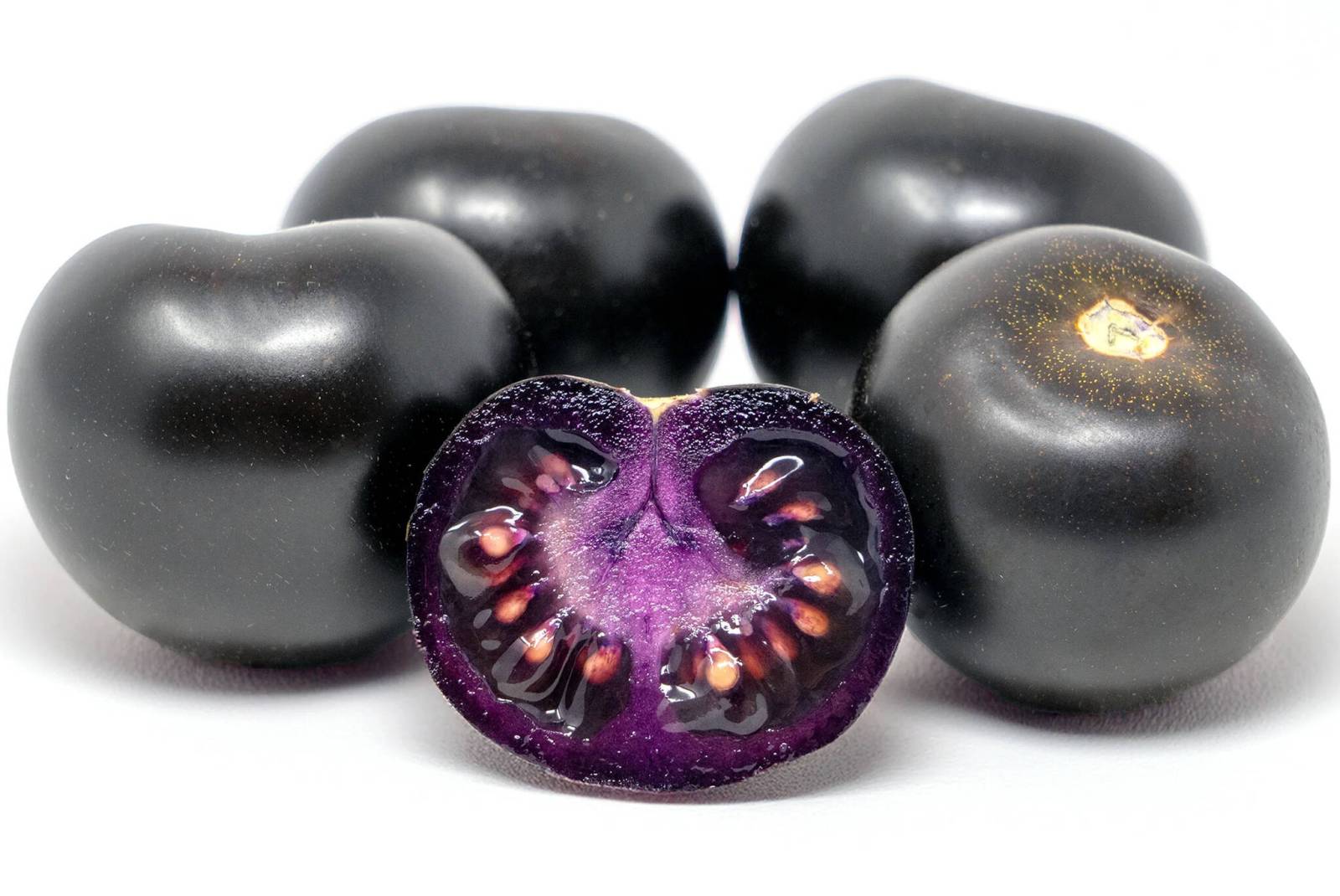
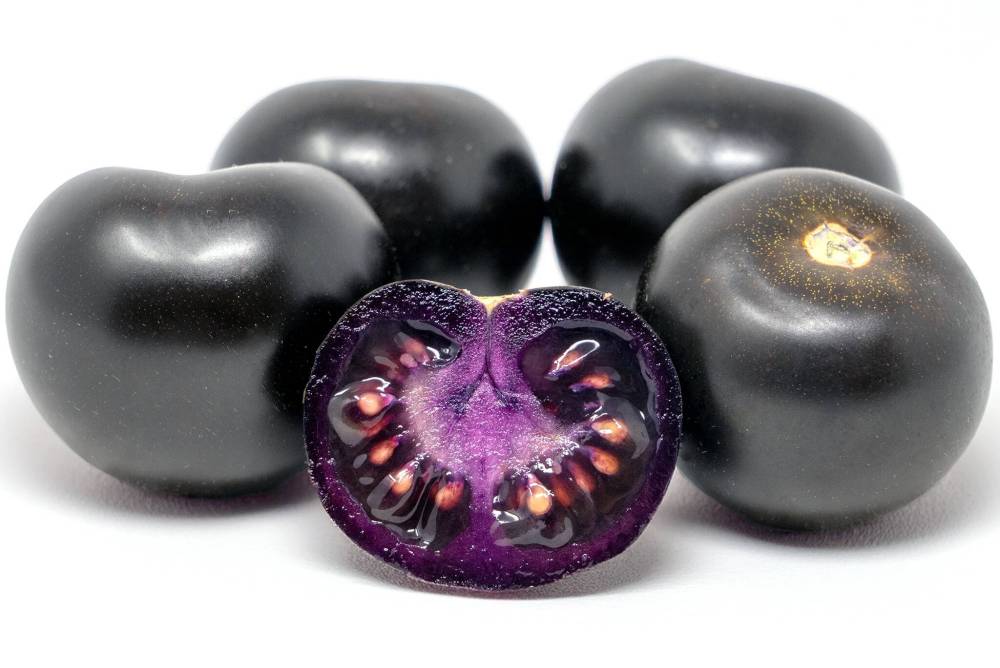
The genetically modified seeds of the Purple Tomato are the first GM seeds to be marketed to home gardeners in Canada.
“This year’s event is shaping up to be our largest one to date at Millennium Library,” says Laura Rawluk who has been involved in organizing Winnipeg Seedy Saturday events for more than 25 years.
One of the highlights of Seedy Saturday is the swap component where gardeners can exchange diverse vegetable, fruit, herb and flower seed varieties, many of which are often not available commercially. Seed saving, seed exchanges and growing more plants from seed are time-honoured practices to support and ensure homegrown biodiversity.
“Trading seeds freely is a definite antidote to purchasing new seeds every year,” says Kirk. What’s notable about Seedy Saturday, he says, is the growing number of young people who are interested in plant breeding, growing their own food and seed saving. Kirk says there is also an increasing demand to learn the basics of how to start a food garden.
This year’s event features Alyssa Kostek, owner of Grand Rising Gardens, who will present a workshop called Kitchen Gardens for Beginners.
Kostek, 27, has a degree in athletic therapy, but says, “I just felt this big pull to gardening and farming since the pandemic.” Kostek began working at Jonathan’s Farm, an organic operation in Lockport which grows fresh vegetables for CSA (community-supported agriculture) members and farmers’ markets.
“I grew up gardening with my grandparents and absolutely fell in love with it all over again,” says Kostek. “Working at Jonathan’s Farm inspired me to start my own business and to educate and share the gift of gardening with other people.
“The workshop I’m giving at Seedy Saturday will focus on the basics of seed-starting, planning and maintaining your garden space, and how to enjoy your homegrown harvest all year long,” says Kostek.

Alyssa Kostek photo
Alyssa Kostek, owner of Grand Rising Gardens shows off tromboncino squash and other garden vegetables. Kostek is slated to present the workshop Kitchen Gardens for Beginners at Winnipeg’s Seedy Saturday event today.
Funky food
Kostek enjoys turning people on to gardening by introducing them to some of the funkier food varieties like the tromboncino summer squash. “It’s technically a pale-green summer squash, so is very similar to zucchini,” she says. “But when it turns orangey-beige, it can be cured and stored for several months. It grows up to six-feet long in really funky shapes.”
A lot of people are looking for entry-level information, says Kostek. “But much of the info online is not relevant to our short growing season. You might be searching for information on how to grow peppers, but learning from someone who lives in California.”
In addition to workshops, Kostek offers one-on-one garden coaching. “You don’t need a big backyard to grow your own food. Anyone can start with a bucket garden. I will often look for five-gallon buckets on Facebook Marketplace and show clients how to make them work in their type of garden space.”
This year, there are more than 170 Seedy Saturday (or Seedy Sunday, as the case may be) events being held across Canada. Each one is supported by Seeds of Diversity, a national non-profit organization dedicated to preserving, documenting and cultivating agricultural biodiversity in Canada.
“Where will you get your seeds this year?” asked Seeds of Diversity in a recent e-bulletin sent to its members across the country.
Seeds of Diversity has put organizers of every event on high alert because of a new strain of produce — the trademarked Purple Tomato.
Alyssa Kostek photo
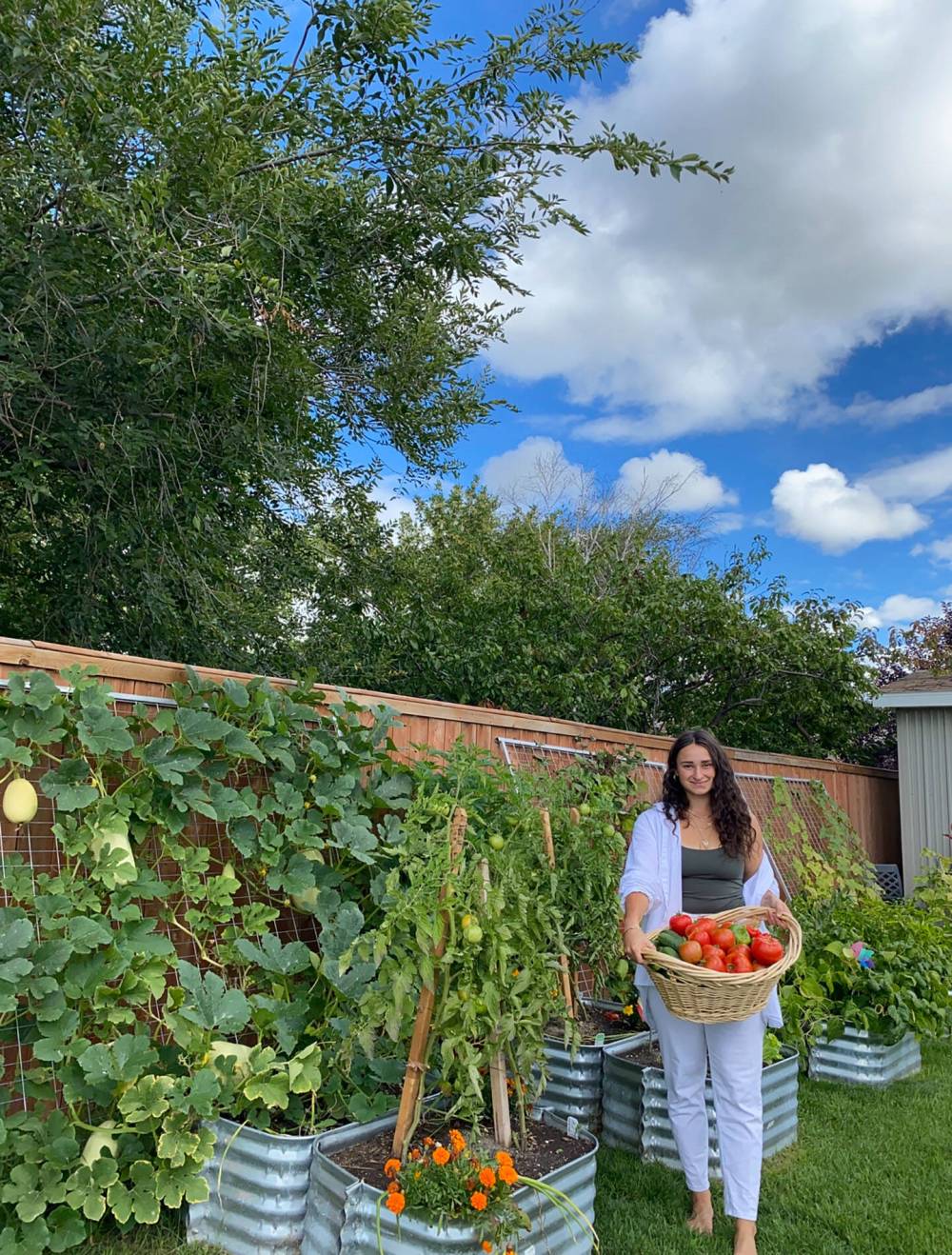
Anyone can be a backyard seed-saver or grow their own food, says Alyssa Kostek, owner of Grand Rising Gardens.
“The Purple Tomato is a big story because it is a genetically modified tomato that received approval by Health Canada in August of last year,” says Jane Seniw, chair and founder of Eastman Seed Savers, which will host its Seedy Saturday event on March 14 in Beausejour at St. Paul’s Church, located at 630 James Ave.
‘Seed sovereignty’
Genetically engineered with genes from snapdragon flowers, the Purple Tomato was developed by U.S.-based Norfolk Healthy Produce. As of January, says Seniw, the genetically modified seeds of the Purple Tomato are the first GM seeds to be marketed to home gardeners in Canada.
They are being sold directly from Norfolk Healthy Produce’s website, but could also soon be available at local garden centres and other retail outlets.
“The concern is that gardeners will grow, save and share the genetically modified seeds which will then contaminate seed stocks and be a threat to our seed sovereignty,” says Seniw. “We want gardeners to be aware of this risk and will be showing an eight-minute film at our Seedy Saturday event, followed by a discussion.
“It’s important for people to understand the difference between regular seeds, hybrid seeds and GMO seeds,” says Seniw.
Often, seed packets include the terms “F1 hybrid” or “F2 hybrid.” F1 stands for “filial 1,” indicating the seeds are not genetically modified. F1 hybrid seeds are the first-generation offspring created by crossing parent plants from two distinct lines. F2 hybrid seeds are created by crossing plants from two F1 hybrid lines.
Glenda MacPhee photo
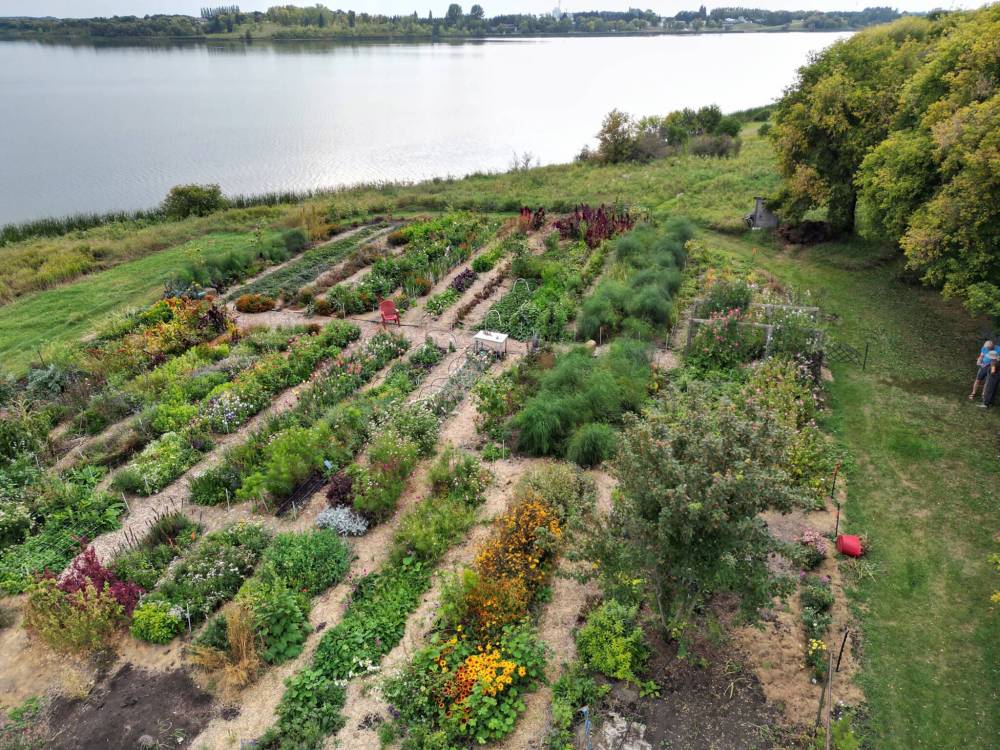
Gardenview Farm is a seed-grown flower operation located in Neepawa.
“If the seeds are hybrid, they may not produce the same plant,” says Seniw. “It’s important, as well, to understand the nutritional value of the seed you are growing.”
Interestingly, what to do with old seeds is one of the most frequently asked questions by visitors to Seedy Saturday events, says Seniw.
“Don’t throw out your old seeds,” she says. “Proof (test the germination rate of) your seeds. They may still be viable.” Seniw planted seeds in 2002 that had been left behind by her mother in 1978. “I took a handful, soaked them and planted them. Every one of them grew.”
Many gardeners attend Seedy Saturday events in search of unique flower seeds.
Glenda MacPhee is a flower grower who owns Gardenview Farm in Neepawa. This year she was a vendor at Brandon’s Seedy Saturday event which took place in February. Hosted by the Assiniboine Food Forest, MacPhee was amazed at how many people attended.
Winnipeg Free Press | Newsletter
Winnipeg Gardener
Monthly
What you need to know now about gardening in Winnipeg. An email with advice, ideas and tips to keep your outdoor and indoor plants growing.
Sign up for Winnipeg Gardener

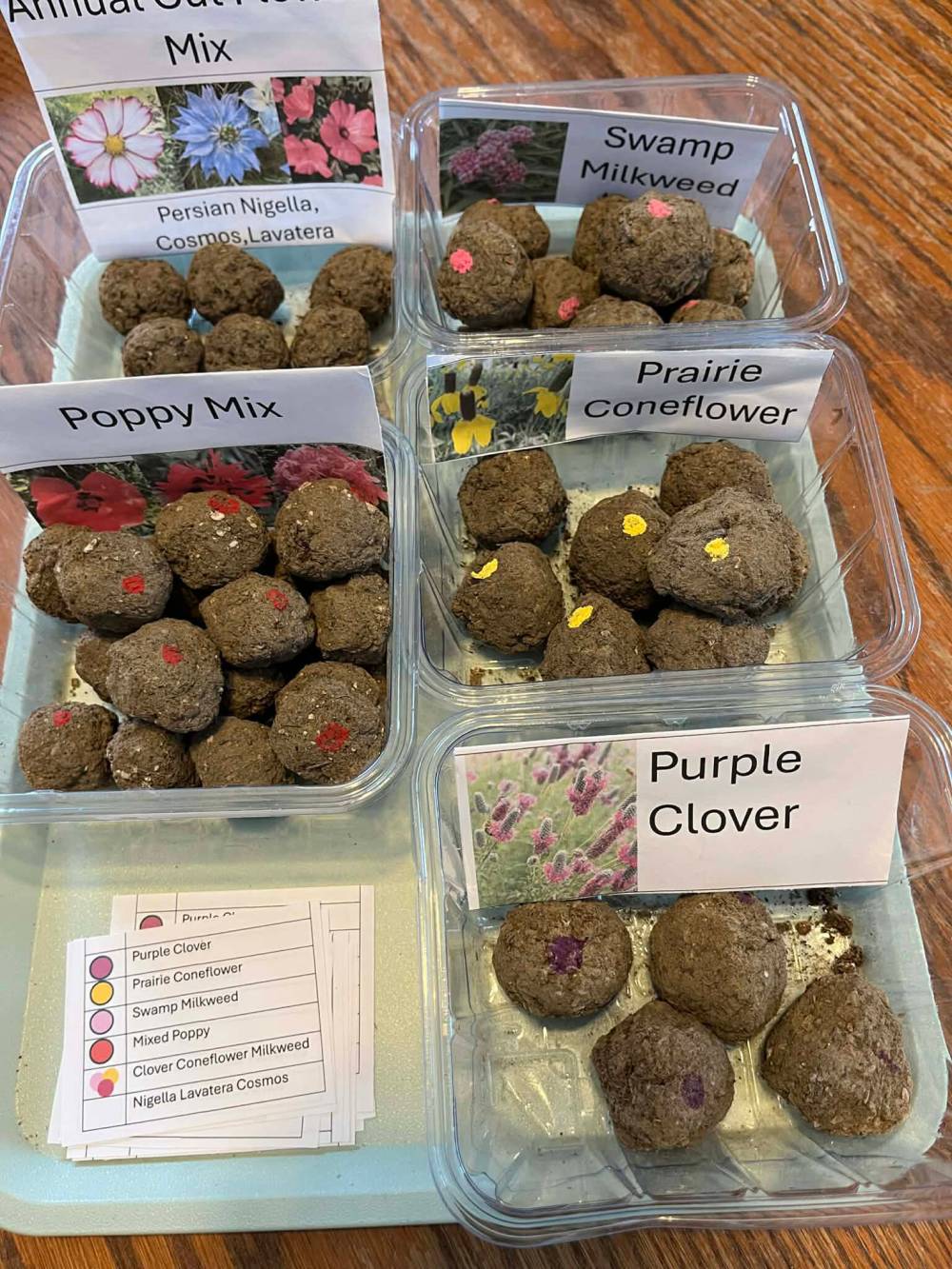
MacPhee sold seed bombs consisting of clay soil and peat moss to which she added native seeds collected from swamp milkweed, Prairie coneflower and purple clover plants she grew in her flower garden. She also made seed bombs that contained a mix of annual seeds collected and saved from Nigella love-in-a-mist, lavatera and cosmos.
Seed bombs are perfect for this time of year because they benefit from cold stratification. MacPhee handed out instructions to place seed bombs on the snow as soon as possible. The cold weather and moist snow naturally break down the clay soil and cease seed dormancy. Once outdoor temperatures start to warm, the seeds germinate.
Glenda MacPhee photo
Seed bombs can be placed directly on snow or stored in your fridge for a later date.
“Alternatively, the seeds can be stored in the refrigerator before planting in spring,” says MacPhee.
Plan to take in a Seedy Saturday event — you never know what you will find, who you will meet or the amazing things you will learn.
colleenizacharias@gmail.com

Colleen Zacharias
Gardening columnist
Colleen Zacharias writes about many aspects of gardening including trends, plant recommendations, and how-to information that is uniquely relevant to Prairie gardeners. She has written a column for the Free Press since 2010 and pens the monthly newsletter Winnipeg Gardener. Read more about Colleen.
Every piece of reporting Colleen produces is reviewed by an editing team before it is posted online or published in print — part of the Free Press‘s tradition, since 1872, of producing reliable independent journalism. Read more about Free Press’s history and mandate, and learn how our newsroom operates.
Our newsroom depends on a growing audience of readers to power our journalism. If you are not a paid reader, please consider becoming a subscriber.
Our newsroom depends on its audience of readers to power our journalism. Thank you for your support.
Comments are closed.