
Frequently Asked Questions
Why should I use a raised bed?
There are many reasons raised beds are the way to go, chief among them that they provide the “perfect opportunity to engineer the soil that you want for what you’re planning to grow,” explains Lamp’l. He says it’s rare to have perfect soil conditions in your yard, as most regions of the country have soil that is either too heavy and filled with clay or too light and sandy. Also, many backyard soils contain contaminants, lead being chief among them (a particular hazard in post-industrial areas and near older homes that once had exterior lead paint).
James Prigioni, creator of The Gardening Channel with James Prigioni on YouTube, gives a couple additional reasons. Raised beds are more ergonomic and can be built at different heights to accommodate people with various mobilities. But, also, the physical framework is such that it’s easy to shield a vegetable garden from pests and rodents or weather by attaching nets and hoops. Since there’s less soil area than the ground in general, and since it can be made level, the soil in raised beds heats up quicker in the spring and is easier to water.
What should I grow in raised garden beds?
To start, it’s important to consider your location and growing season since not all vegetables can grow in each area. Figure out your plant zone by typing your zip code into the USDA’s Plant Hardiness Zone Map. This number will help determine what’s best to grow where you live. Prigioni also strongly suggests growing things you like to eat because you’ll be more invested in their success. And as for flowers, Tyler Francis, cofounder and co-CEO of April & Ashley, says: “Roses do well in raised floral beds.”
Where’s the best place to put my raised bed?
Situate your raised beds where you’ll most easily interact with them. If your garden is in a spot that’s out of sight, taking care of it may slip your mind. So find a nice, sunny spot that you pass on the daily. Observe and take notes to learn how much sun it gets and from which direction. South-facing garden beds do best with the shortest plants on the north side and the tallest plants on the south to assure that no plant gets shaded, Prigioni explains. Though most edible plants need at least six hours of full sun, there are plenty of crops that need less. Greens for instance, will wilt in full summer sun. If you have a shadier spot, try salad greens and kale. Maybe you’ll have wild success with kale or cucumbers and not with tomatoes.
Beyond the issues of sunshine, remember that proper raised garden bed placement is also about your own ease of access and comfort. “Leaving at least 30 to 36 inches of space between garden beds will allow you to work in them comfortably and move equipment through easily,” says Francis. “If you can manage to place them farther apart with the space you have, even better!”
If you can place raised beds in the middle of a sunny yard, great, but if you can’t, “my rule of thumb is to build beds that are two-feet wide when accessible from one side only—for example, if the bed is placed against a fence,” says Urban Farm and Kitchen founder Luay Ghafari. “Two feet is a comfortable length for adults to reach without straining or injuring themselves.”
And always remember: If you fail the first year, take notes, observe what happened, and try something different in year two. Learn what’s worth repeating and what needs to change. Use the following raised garden bed ideas to get your garden ready today.
What is the ideal size of a raised garden bed?
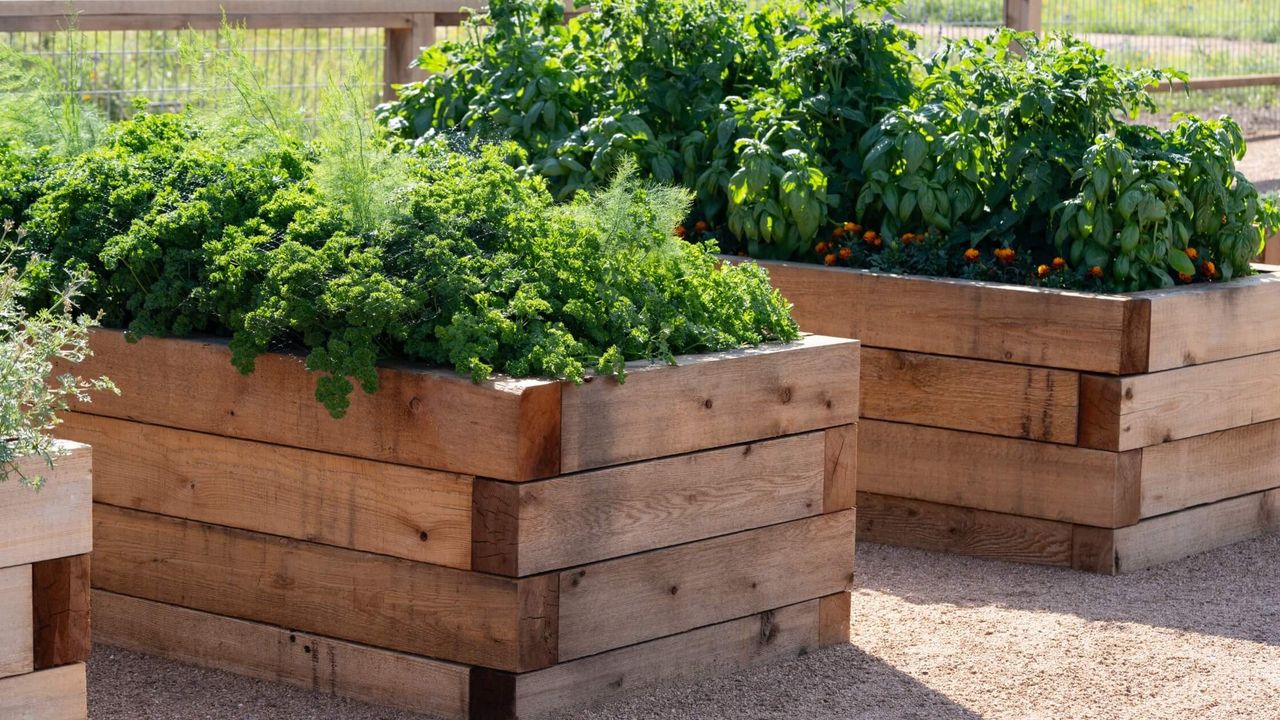
You can make a garden bed as large as you want, within reason, so long as it fits your space and your needs. “Avoid making the bed too wide or too long, so you avoid having to step into your garden beds at all costs,” says Francis. “This can cause soil compaction, and your soil won’t get the oxygen it needs. An eight-by-four-foot bed will allow you to comfortably reach into the center and easily walk around it.”
As for depth, Francis says: “For most gardeners, an ideal garden bed depth is about 18 to 24 inches—especially for larger crops. This will ensure they have enough high-quality soil to grow in and prevent it from drying out too quickly in summer heat or drought.”
And don’t forget about the space in the middle of your beds. “If being able to bring a wheelbarrow in between your beds is important, make sure that the paths are designed accordingly. In small urban gardens, 12-inch or 18-inch paths are recommended. Wood chips, pea gravel, and upcycled bricks are all great options for creating pathways between raised beds,” with these ground coverings helping with weed control.
What are raised garden bed mistakes to avoid?
“Making beds too wide is a common mistake,” says Amy Grigg of Richardson & Associates Landscape Architecture. “It’s generally not recommended to make a bed wider than four feet. You should be able to reach the center from either side without stepping into the bed.”
“And lack of irrigation planning is another common issue,” Grigg says. “One of the most overlooked aspects of raised bed gardening is water management. Because these beds sit above the natural water table, they tend to drain and dry out faster than traditional gardens. Planning for consistent hydration—whether through a simple drip system or a thick layer of organic mulch—helps keep plants hydrated throughout the growing season.”
What are the best plants to use in raised garden beds?
“The best plants to do in raised beds include veggies like tomatoes, peppers, lettuces, herbs, and compact perennials,” says Amy Hovis, owner of Barton Springs Nursery Design Studio. “Root veggies and shallow-rooted plants also do especially well.” And don’t forget companion planting. “We’ve had tremendous success planting companion plants alongside vegetables, not only because they bring year-round beauty and structure to the beds, but because they actively support the health of the garden,” Hovis explains. “Certain plants help return nutrients to the soil; some act as natural deterrents to common pests, and others attract beneficial insects and pollinators that keep the garden ecosystem in balance. Companion planting can also help shade soil, retain moisture, and improve the overall resilience in the garden. “The result is a vegetable bed that is not only productive, but vibrant, diverse, and thriving season after season.”
Comments are closed.