
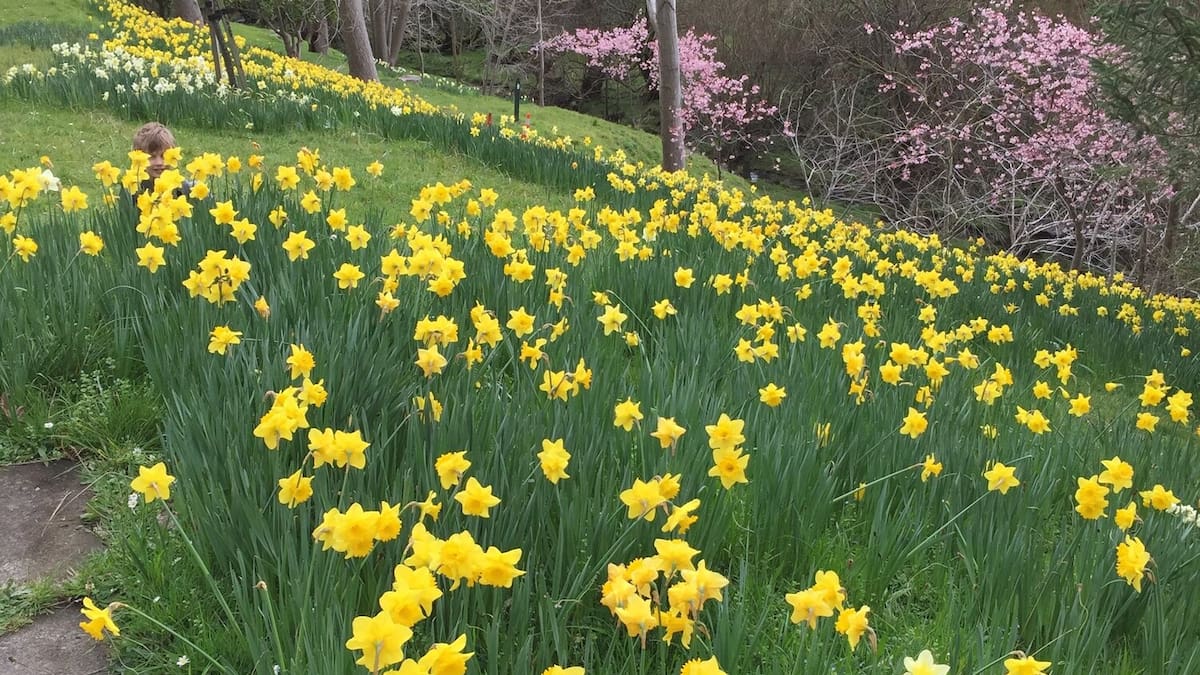
Daffodils, jonquils, anemones, freesias, ranunculus, crocus and Dutch iris can all be planted straight away. With the first proper autumn rain arriving and cooler nights settling in, the planting season is officially underway.
Here are some favourites:
Freesias are one of the darlings of the spring garden, prized as much for their fragrance as for their value as cut flowers. Available in a wide range of colours, in both single and double forms, the cultivated types originate from South Africa. They are perfect planted in clumps at the front of borders or near the house where their scent can be fully appreciated.
Freesias also thrive in pots on patios, either on their own or underplanted with pansies, violas or polyanthus. They prefer well-drained, light, fertile soil in a warm, sunny position and can grow happily for many years without lifting. Incorporate bulb fertiliser at planting time to encourage strong growth and abundant blooms. When planting in pots, use a quality bulb potting mix that already contains the appropriate fertiliser blend.
Ranunculus and anemones are equally rewarding and are excellent for borders, garden edges, pots and tubs, as well as for cutting.
Ranunculus corms resemble small claws and should be planted with the “claw” facing downwards, 3–4cm deep in a sunny, well-drained position. Their double blooms come in rich reds, rose pinks, gold, lemon, yellow and white on sturdy stems 30–50cm tall. They are most effective planted in bold clumps, 6–8cm apart, or used as ribbon plantings in pots.
Anemone corms produce brilliant single or double flowers from mid-winter through to late spring. Plant them 3–4cm deep and 10–15cm apart, ensuring the flatter side faces upwards. They grow well in sun or part-shade and appreciate a cool position if planted early. Anemones look particularly striking threaded between roses.
Anemones and ranunculus can sometimes be slow to get going. To improve success, chill the corms in the fridge (not the freezer) for five to six weeks, then soak them in fresh water for 10–12 hours before planting. This simple preparation significantly boosts germination and vigour.
Bluebells, or scilla, are available in blue, white and pink forms. They prefer semi-shade and are ideal beneath deciduous trees where they can naturalise over time, forming charming drifts of colour.
Dutch irises flower in late spring to early summer, just as daffodils and tulips finish. Unlike many irises, they grow from bulbs rather than rhizomes and perform best in a full-sun position. Their elegant blooms are excellent for cutting.
Iris reticulata are smaller than Dutch irises and flower earlier — often in late August and early September, around the time of snowdrops. Their compact habit makes them especially suited to pot culture where their delicate detail can be admired up close.
Gladioli nanus, commonly known as painted ladies, produce arching stems 60–80cm tall with several exotic-looking blooms per stem. They provide strong vertical interest and pair beautifully with other spring bulbs.
Daffodils remain the most popular spring-flowering bulb, and for good reason. Available in an enormous range of forms and colours, jonquil types can begin flowering in late autumn or early winter, with others carrying the display through late winter into spring. Their reliability in both large gardens and small spaces, as well as their success in pots, makes them indispensable.
Hyacinths are treasured for their intensely fragrant spikes of star-shaped flowers. Native to the cold mountainous regions of southern Europe — and extensively bred in Holland — they benefit from a period of chilling before planting. Storing bulbs in a cool, dry place and refrigerating them before planting in May helps replicate the winter conditions of their natural habitat and improves flowering performance.
Hyacinths also respond best when gradually introduced to warmth and light once growth begins. Growing them in pots filled with bulb mix works well. After planting, exclude light by covering the pot and placing it in a cool, shaded position. Once shoots emerge, remove the cover and slowly move the pot into brighter conditions. Gradual exposure produces stronger stems and better flowers; rapid growth often results in floppy leaves or flowers sitting too low in the foliage.
Hyacinths can also be grown in special hyacinth glasses. Fill the glass so the base of the bulb just touches the water and keep it in a cool, dark place until roots develop. When buds begin to show colour, move it into a warm, bright room to finish flowering. After blooming, discard the bulb, as it rarely performs well again.
Tulips also benefit from chilling — more on those when they arrive in store in April.
Now is the time to select your spring-flowering bulbs while the range is at its best. Plant them, forget them and let the buried treasure reveal itself when spring arrives.
For more gardening information visit www.springvalegardencentre.co.nz.
Gareth Carter is general manager of Springvale Garden Centre.
Comments are closed.