
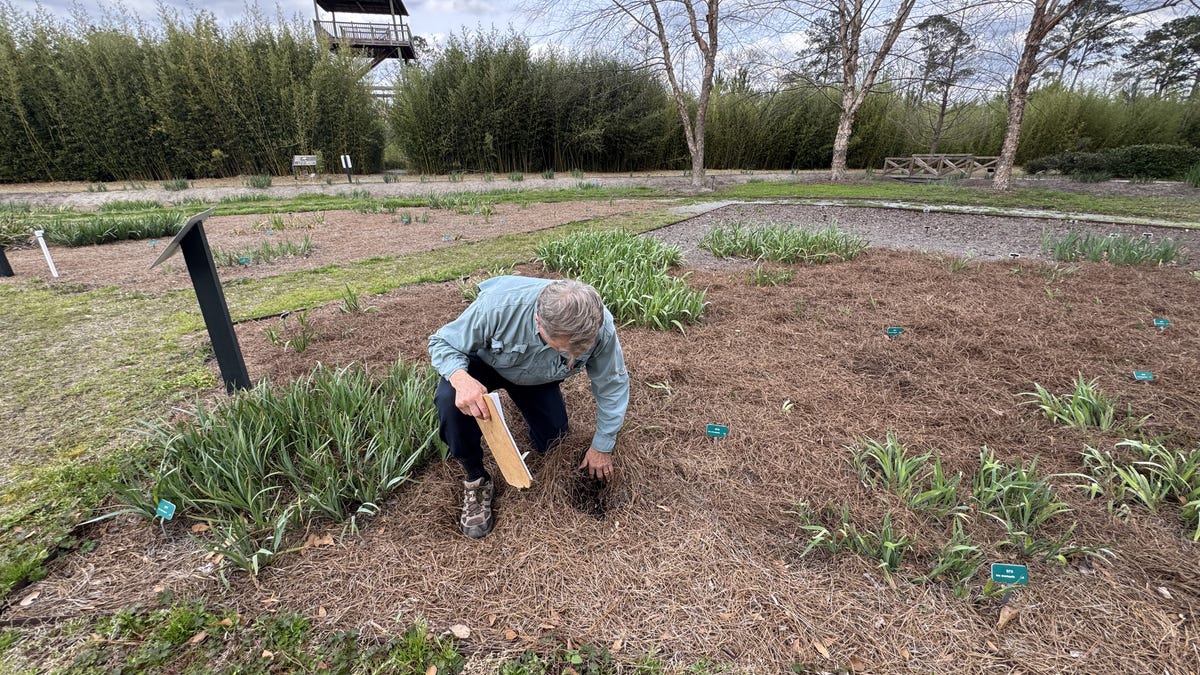
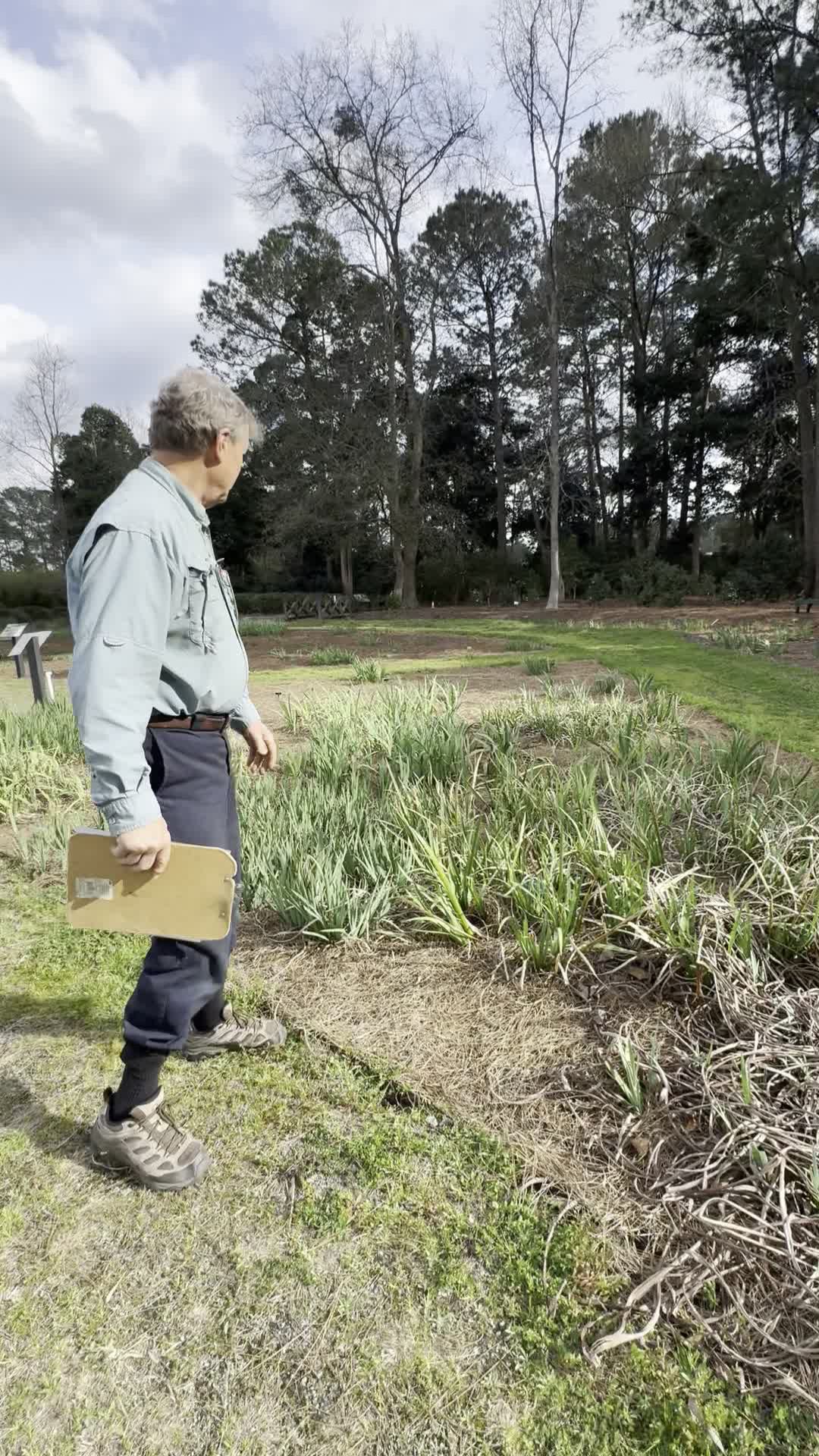

Stan Gray’s iris garden at the University of Georgia Botanical Garden
Stan Gray shows some iris varieties that were affected by cold snap at the University of Georgia Botanical Garden in Georgetown, south of Savannah
Rising temperatures are causing a decline in “chill hours,” which are critical for plant dormancy.A lack of chill hours can prevent plants like irises and peaches from blooming and fruiting properly.Gardeners and farmers are now experimenting with plant varieties that require fewer chill hours to adapt.
In 2007, Stan Gray planted his first iris at the University of Georgia (UGA) Botanical Garden, south of Savannah. It was a bearded iris north from New Jersey, among the most popular irises gardeners plant, known by the purple petal hanging off of its “chin.”
They were thriving in Savannah soils, he said. But in 2012, that changed.
“I had almost nothing,” said Gray. He recalls other gardeners asking him why their irises weren’t blooming well.
Figuring out the answer wasn’t so simple.
He tried plotting his observations against average temperatures, but that didn’t line up.
But then he looked at chill hours, the number of hours critical for plant dormancy between 32˚F and 45˚F, accumulated during the winter starting Oct. 1.
“I found a direct correlation between the number of chill hours and the number of bloom stalks I would get out of my bearded irises,” said Gray.
As temperatures rise, there are fewer hours below 45˚F over the winter, wrote Agricultural Climatologist Pam Knox in an email, pushing gardeners and growers in Georgia to consider different varieties and management tactics.
Chill out!
Most fruit plants require a certain number of chill hours to produce flowers that will eventually fruit, said Knox. It helps the plant enter a dormancy period, like getting enough rest before a rigorous spring marathon.
“If [plants] are not getting enough chill hours, it’s almost like we’re keeping them awake,” said Gray.
UGA’s chill hour database indicates a decline in those rest hours since 2014.
And it’s not just gardeners noticing the changes.
Growers across the U.S. including Georgia peach farmers are noticing a change in chill hours that has caused earlier blooms, and thus greater susceptibility to frosts and freezes that can kill off flowers and crop yield.
The reason is likely warming temperatures wrought by climate change.
“Scientists generally agree on greenhouse gas emissions as being the cause of that,” wrote Knox.
And with the cold spurts of freezes this winter from slippages from the polar vortex, sometimes that’s not obvious.
Some of Gray’s early-blooming varieties were even “burnt” from the cold snaps.
Fluctuations between below and above average temperatures in one winter season, as is occurring this year, can cause temperatures to average out, and look relatively normal.
“It’s almost like we quickly forget the fact that the climate is changing,” said Gray.
This year’s La Niña-driven drought isn’t helping the irises much either. This year, the botanical garden has received less than half of its average rainfall.
Changing climate, changing varieties
Gray has tested around 800 different cultivars since 2012, while keeping track of chill hours every year with UGA’s weather database. One university weather monitor resides just yards away from his irises in the garden, equipped with its own solar panel and weather vane.
From Gray’s analysis, it seems that some iris varieties are able to withstand less winter chill hours than others.
“There are some bearded irises that don’t really need much [chill] for whatever reason. That’s just the way genetics work,” said Gray. “Those are the ones that I have identified as being ones that are happy here in Savannah.”
Farmers including peach growers have also been experimenting with different varieties requiring less chill hours.
“Growers are moving more onto the low [chill hour] requirement varieties,” said UGA Cooperative Extension Horticulturalist Srijana Thapa Magar.
Jillian Magtoto covers climate change and the environment in coastal Georgia. You can reach her at jmagtoto@usatodayco.com. This reporting content is supported by a partnership with Journalism Funding Partners.
Comments are closed.