
Key Points
Peace lilies are tropical plants that produce white or pink flowers in spring and summer.Peace lilies start to flower regularly after they reach maturity (1-3 years).If peace lilies fail to flower, try adjusting light, fertilizer, and/or water.
Although peace lilies are a relatively low-maintenance plant, they have a few issues they sometimes have that should be addressed with proper maintenance. One common issue is the plant’s failure to produce blooms reliably.
Once a peace lily plant reaches maturity (1 to 3 years of age depending on variety), they should bloom twice a year, once in mid-spring (April) and again in late summer or early autumn.
If your peace lily is mature and still fails to bloom, it might be due to any number of reasons, but there are four important care tips to pay attention to.
Best Growing Conditions for Peace Lilies
Because the peace lily is a tropical plant, it likes a fairly warm and humid environment.
Humidity should ideally be around 50% but a little lower or higher is fine. The best temperature range for your peace lily is between 65 and 80°F.
The plant goes into a slower growth period in winter, but still needs proper temperature and humidity levels to thrive.
Try to avoid placing your peace lily next to heat sources, which may cause them to dry out too quickly. Also keep them away from drafty windows or doorways, to avoid any stress from cold air.
Tips to Get Your Peace Lily to Bloom
Peace lilies may take some time reach the stage of maturity when they bloom regularly, but once they reach that point they usually bloom reliably in season.
They are famously low-maintenance as houseplants, but if their growing needs aren’t met, they may not bloom, or the blooms may be infrequent or small. Here are a few tips to get your peace lily to bloom again.
Proper Light Exposure
Peace lilies need bright but indirect light.
Too little light may delay or prevent flowering, cause leaves to turn yellow, and lead to leggy growth as the plant struggles to get more sunlight. Too much much bright light is also a problem, and can scorch the leaves.
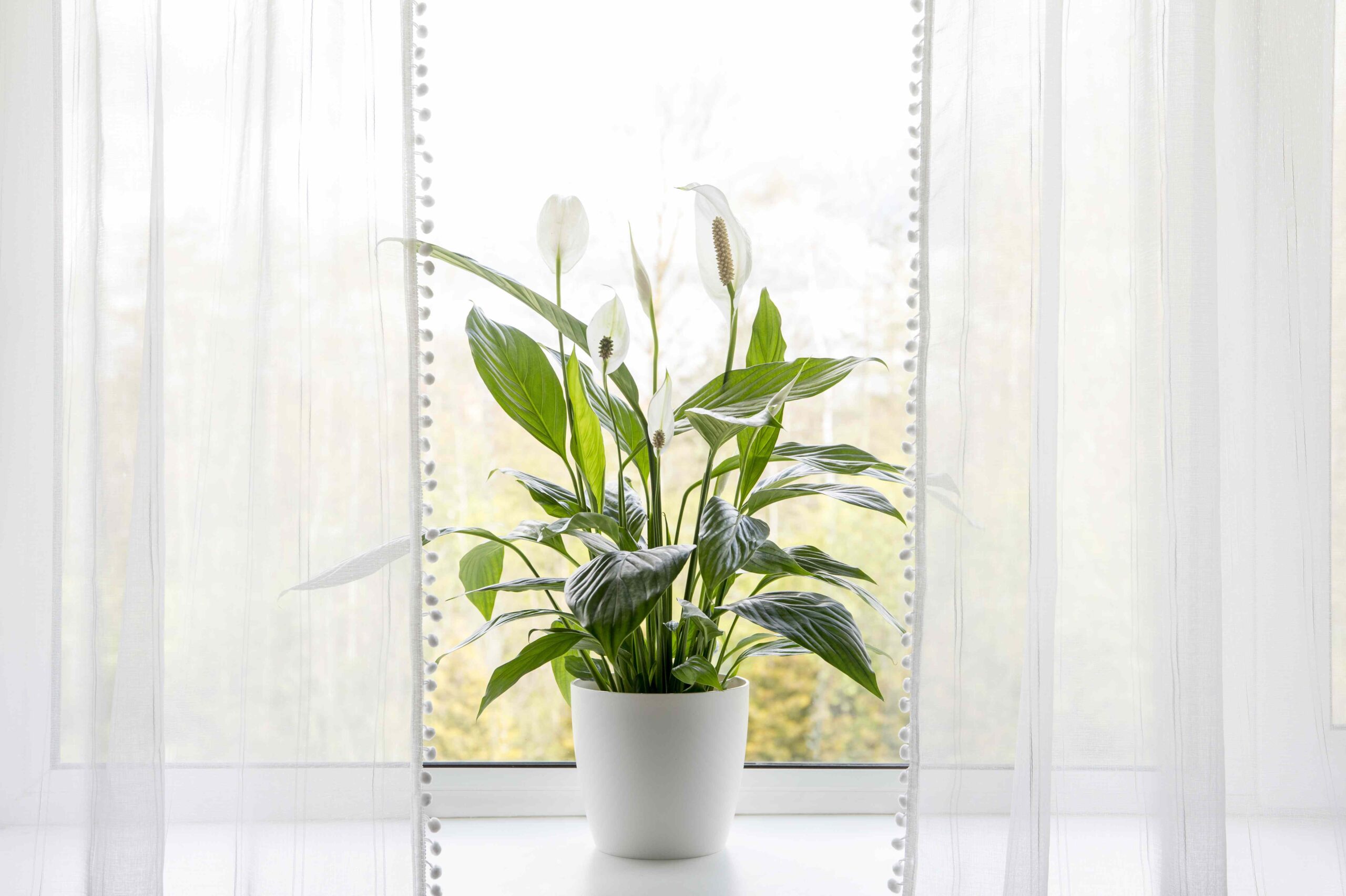
Place your peace lily by a sunny window that has sheer curtains or slatted blinds, or to the side of the window opening so it gets indirect sun exposure.
Adequate Nutrients
Peace lilies benefit from moderate but regular feeding. A basic 20-20-20 balanced NPK fertilizer is sufficient, and should be applied two or three times during the height of the plant’s growing season from spring through summer.
Follow package directions for application, and be sure to avoid getting fertilizer solution directly on the plant’s stems or leaves.
Water Consistently, and Avoid Overwatering
Credit:
Ludmila Kapustkina / Getty Images
Too much or too little water may cause your peace lily to struggle a bit and cause it to skip its bloom period.
Too much water usually results in yellowing leaves, while too little water may result in leaves that feel dry and crispy to the touch.
Water it well when the top inch layer of soil is dry to the touch. Pay attention to how your peace lily responds to water.
Repot as Needed
Like many houseplants, peace lilies need repotting regularly to keep them healthy and thriving.
If your peace lily is root bound, this means the plant won’t get adequate nutrients or moisture, and this may cause it to stop blooming or produce very small blooms.
Repot after the active growth period begins to slow down a bit in autumn. When repotting, be sure to choose a new pot that is slightly bigger than the current one, and add fresh potting soil.
Comments are closed.