

All gardeners know that it pays to know your enemy, especially when it goes under the innocent sounding (if hard to pronounce) name of Cydalima perspectalis. That’s the proper name for the box tree caterpillar, which is a bit of a looker with its black head and greenish-yellow body that is emblazoned with black and white stripes. In two weeks it can grow to 4cm (1.6in), by which time it may also have devoured your lovely box ball.
The first thing to remember is this: there is never just one box tree caterpillar. The second? They eat only box. Their moth mother lays 5-30 pale yellow eggs at a time on box leaf undersides. After hatching, they munch away at those, giving the leaves a “peeled” appearance. They progress to eating the whole leaf except for the midrib and then web over their feeding areas. When leaves are gone, they start on the bark. They eat up to five times their weight a day and, overnight, can strip a plant.
Box tree caterpillars arrived in Europe from east Asia in about 2007, probably in the form of eggs on a plant. Populations of them were established in the UK in 2011 and, since then and starting in the south, they have been munching their way through formal gardens with alarming ease. These days you can see the “box ghosts” everywhere: hedges, balls, pyramids that were once a vibrant green reduced to spindly grey skeletons. The caterpillars have two to four generations a year, every year, starting from March. They have no natural enemies in the UK and they aren’t going away.

A caterpillar eating box wood leaves
ALAMY
Nick Turrell, horticultural adviser to the RHS, which has been trialling box alternatives at its garden at Wisley, says that it’s got to the point now that we should start rethinking our relationship with box and accept that, if we want to grow box, we are going to get either box tree caterpillar or possibly blight. “It’s more of a case of outwitting the box tree caterpillar. We are smarter than it. We can work it out. It only eats one plant. It’s not fast moving. You can get out there — they don’t hide themselves — and pick those caterpillars off. In the same way you pick off slugs when you have dahlias.”
In their native China, Japan and South Korea, their natural foes include parasitoid wasps and flies as well as birds. Some here also believe that some birds here have begun to realise that there is a feast to be had. “The blackbirds are finally now picking up on it,” noted Marian Boswall, designer and author of The Kindest Garden: A Practical Guide to Regenerative Gardening.
• The best advice for lazy gardeners
Other (not so kind) gardeners say that their go-to solution is products such as XenTari that use the bacterial insecticide Bacillus thuringiensis to kill the caterpillars. Gardeners may not realise that, as you can buy these products (from abroad) online, they are illegal to use in the UK unless you have a professional licence. Turrell also notes that the whole idea is, at best, a time-consuming business. “All you are doing is preventing it momentarily. If you start, go down that route, you will be using it constantly. Then what is the environmental impact? It’s not going to be great for soil or other organisms and all that work. Is it really worth doing all of that just to grow box?”
Guy Watts, owner of Architectural Plants in West Sussex, said his first move ten years ago when he took over the business was to stop selling box. “The writing was already on the wall,” he says. He adds almost wistfully: “Box clipped beautifully, could be persuaded to form an infinite number of shapes and wobbled wonderfully. Box was hard to beat.” This is why, he says, he approaches box alternatives as if he is buying a pension. What is the risk of alternatives? How best to future proof? One strategy, he says, is to spread the risk by using mixed planting such as balls of, say, honeysuckle (fast growing) and yew (slow).
But how can we box clever without, er, box? Here are some alternatives:
Osmanthus x burkwoodii (Burkwood osmanthus) 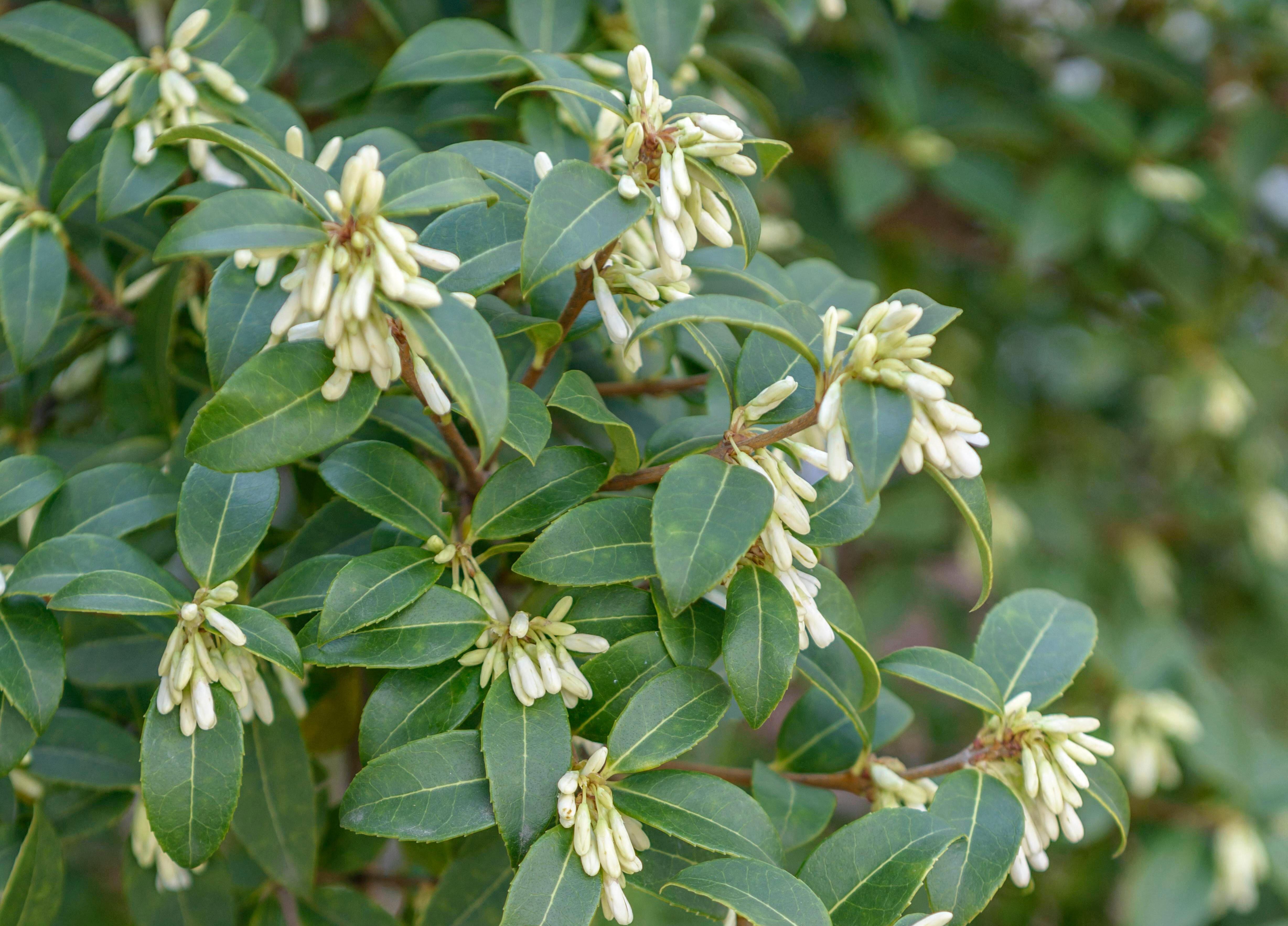
Broadleaf evergreen that is useful if you want to grow large pyramids and domes. Extra plus are fragrant white flowers (but you need to be careful when you clip).
Euonymus japonicus ‘Green Spire’
Small leaves with dense foliage. Clips well into low hedges.
Taxus baccata ‘Repandens’
Low (and slow) growing evergreen with short dark green needles that will give a sharp clipped effect.
Lonicera nitada (box honeysuckle) 
Shrubby honeysuckle that is fast growing with small rounded leaves. If clipped regularly (up to four times a year) it can be dense, thick and lush.
Ilex maximowicziana (Maximowicz’s holly)
Sometimes called “maxi balls” for short. Seems to be more robust and faster growing than the more unreliable Ilex crenata.
• Read more from Ann Treneman
Comments are closed.