
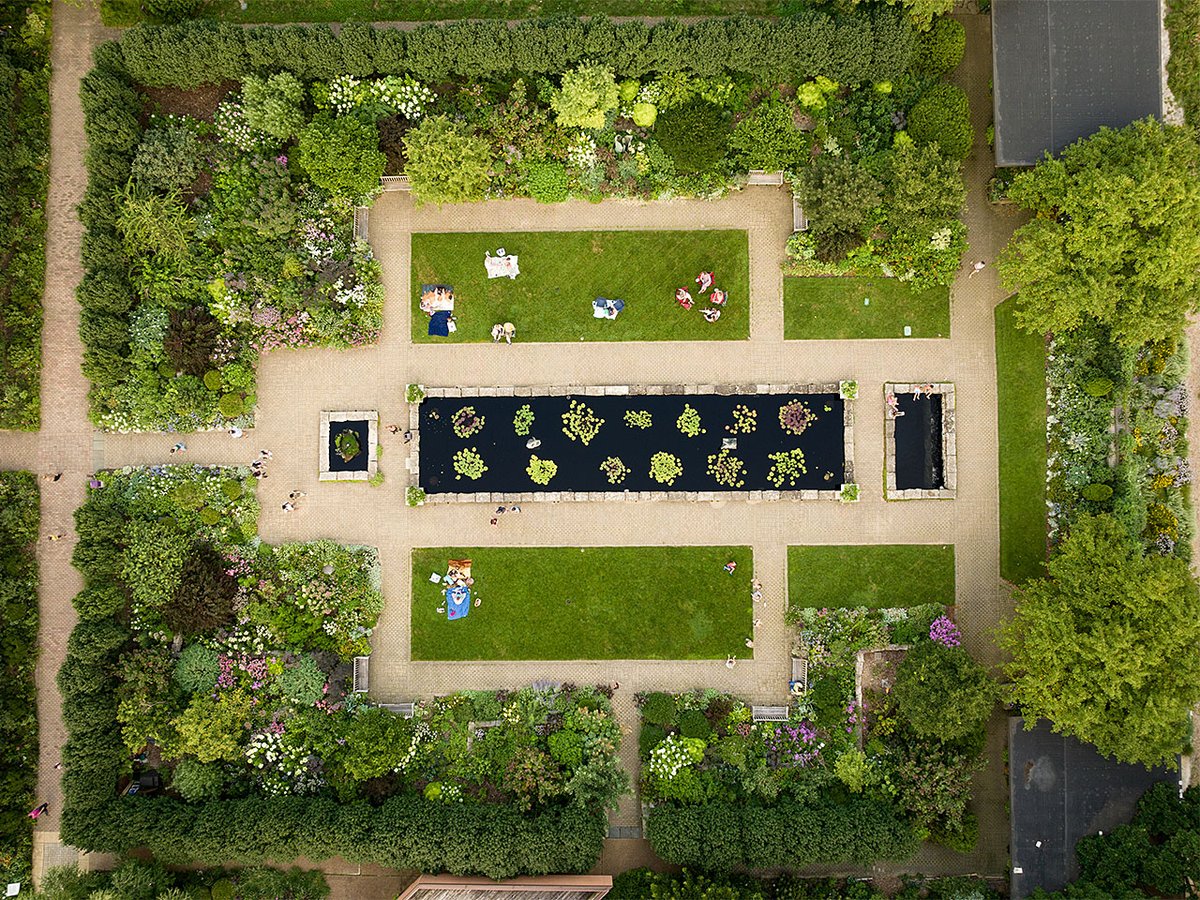
Olbrich Botanical Garden’s visitor center, built in the 1970s, was originally designed to handle 150,000 visitors annually. Today, attendance is double that.
Tanya Zastrow, director of the gardens, tells Isthmus the decades-old building can no longer keep pace with record attendance rates — a key factor prompting Olbrich’s new master planning process, which will guide expansion plans for the garden over the next two decades.
Staff are floating plans that could bring expanded children’s play areas, additional gathering and garden space, art installations and parking improvements. Over the coming months, Olbrich will host multiple opportunities for Madison residents to share and comment on proposals for the garden’s long-term future.
“We’re part of the Madison Parks Division, and it’s part of Olbrich’s history that all of our big plans have involved public comment,” Zastrow says. “We’re here for Madison and the community, and we want to know what people want. We don’t want to put in a garden that isn’t of interest to the community.”
There are no fully formed proposals on the table at the moment, she says. “Nothing’s set in stone.”
The design team, led by landscape architecture firm Reed Hilderbrand, collected community input at the first workshop on Jan. 22 to prepare scenarios for presentation at the second public workshop March 17. Madison residents can preview final plans on May 20, which will conclude a nine-month design process.
Attendees on Jan. 22 explored the commons area of the visitor center at their own pace, engaging with members of the design team and reviewing display boards that highlighted Olbrich’s history, the garden’s most pressing developmental needs, and potential design scenarios under consideration.
The design team is gathering input from a range of demographics, hosting pop-ups at places like Garver Feed Mill, located across the railroad tracks from Olbrich, and meeting with focus groups of community partners connected to the gardens, including Goodman Community Center.
“We’ve had a long-running relationship with some of their teen programs,” Zastrow says. “They come out every year and help us plant in the herb garden, and we’re working with that group to get their input.”
For those who can’t attend workshops or community events, an online survey is also available.
“Comments [so far] range from everything to ‘we wish you had a cafe’ to ‘we wish you didn’t have a cafe,’ people saying they wish we had more parking and other people wishing we didn’t,” Zastrow says. “Some people love the winding paths and the little nooks we have, and some people would like a more straightforward pathway.” Staff will eventually publish public comments on the garden’s planning site.
At the first workshop, the design team presented early ideas for updating the garden’s aging visitor center and easing its often-crowded parking — two areas under pressure as attendance continues climbing.
Where could Olbrich grow?
Ald. Dina Nina Martinez-Rutherford, whose district includes Olbrich, says she has not yet heard any concerns from constituents who live by the gardens. But, she adds, “I’m happy to listen to and address any concerns that folks may have and work to see how we are able to address them or relieve some of them.
“The plans for expansion will give more people the joy that so many of us get to experience every day and, considering the increase in visits since 2020, we’re excited to have it continue to be a destination for people all around the country and indeed the world to enjoy and share with family and friends.”
Olbrich’s last major expansion was in 2000, and many events and programs have outgrown the space since.
“We’ve had concerts where the great lawn was packed with people, and people were sitting in the pathways and in the garden beds,” Zastrow says. “It just wasn’t a safe situation.”
Olbrich operates through a partnership between the city of Madison Parks Division and the nonprofit Olbrich Botanical Society. In 2009, the city and Olbrich completed a land swap that identified specific areas for potential future expansion, rather than extending the gardens across the Atwood railroad tracks.
Those areas — including two softball diamonds in Olbrich Park and the nearby boat launch — remain designated as possible expansion sites, but no changes have been proposed formally. Any decision would follow public input gathered during the master planning process, Zastrow says.
While parking expansion is one option under consideration, Zastrow says staff are also looking at ways to ease congestion by encouraging visitors to walk, bike or use public transit.
Planning materials also outline a redesigned Starkweather Creek corridor, with winding boardwalks and pedestrian bridges, expanded viewing platforms and the possibility of kayak or small boat access.
The March 17 workshop will be offered at noon and 6 p.m. in Olbrich’s Evjue Commons. Instead of open house style, the workshop will begin with a presentation followed by Q&A with the design team. An online survey will also remain open for those unable to attend in person.
Following the March session, the design team will review public input and narrow multiple scenarios down to a single final draft plan, with another opportunity for public comment before the plan is adopted by Madison Parks and OBS at the end of May 2026.
Long-term implementation of changes and construction has no set end date, as timing will depend entirely on the finalized master plan. Zastrow emphasizes that the plan will offer a “roadmap for many years of work” at the gardens.
“We’re here for the community, so we don’t want to do something that the majority of the community doesn’t want,” she says. “[We] want to do things that benefit Madison and Dane County…and are appealing. That’s what this process is all about.”
Comments are closed.