
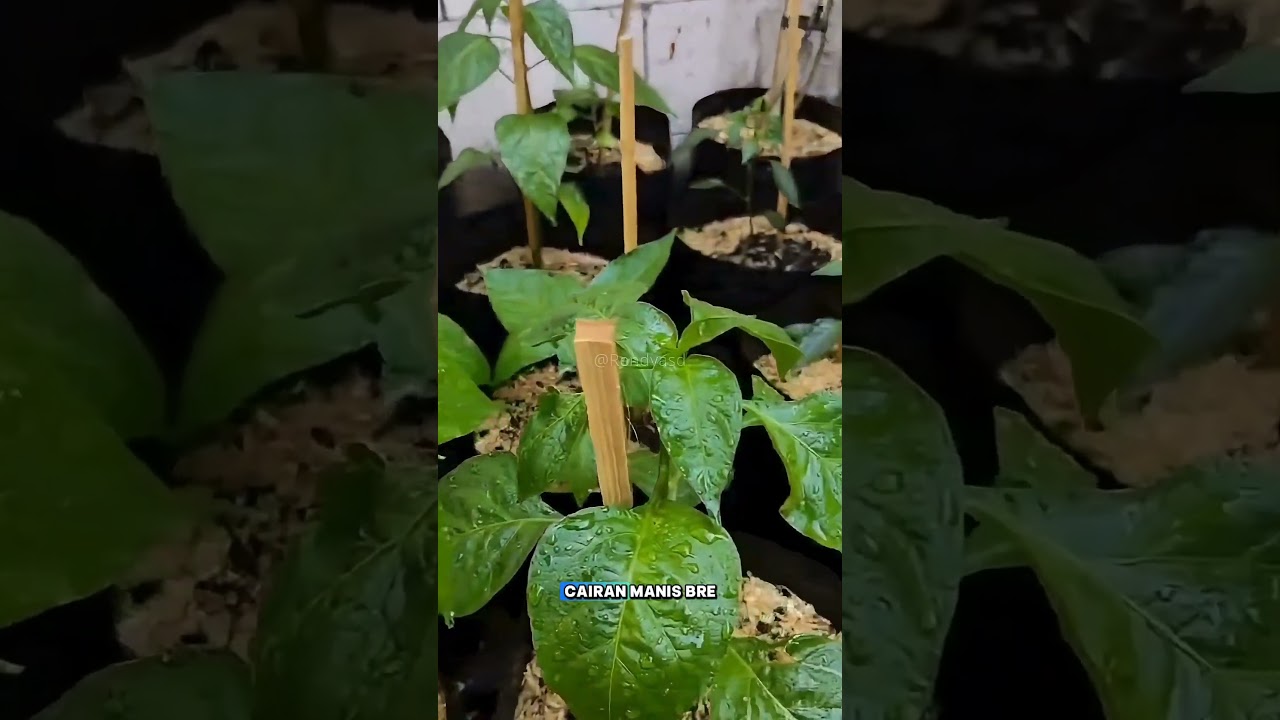
Dealing with Aphids? Here’s Everything You Need to Know!
Are you noticing tiny yellow or green clusters under your chili plant leaves? Do you see ants crawling all over your stems? If so, you might be dealing with Aphids (Kutu Daun). While they may look harmless because they don’t fly or run away, these tiny pests can wreak havoc on your garden if left unchecked.
In this video, we break down how to identify these sap-sucking insects, understand their symbiotic relationship with ants, and—most importantly—how to get rid of them effectively using the right treatments.
What Are Aphids?
Aphids are small, soft-bodied insects that suck the vital fluids from your plants. Unlike Thrips or Whiteflies, Aphids are slow-moving and usually cluster in large groups on the undersides of leaves or near new growth (shoots).
Key Identification Signs:
Physical Appearance: Tiny, pear-shaped bodies, usually yellowish or green.
Location: Primarily found on the underside of leaves and young shoots.
The “Ant Connection”: Aphids secrete a sticky, sugary substance called “honeydew.” Ants love this liquid and will actually “farm” and protect aphids from predators just to harvest it. If you see ants, aphids are likely nearby!
The Damage: What Happens to Your Chili Plants?
If you don’t intervene, aphids will slowly drain the energy from your plants. Here are the common symptoms:
Curled Leaves: The leaves will start to wrinkle and curl inward.
Stunted Growth: New shoots (pucuk) will look dwarf or deformed.
Fruit Failure: Your chili peppers may fail to grow to their full size or drop prematurely.
Viral Transmission: Aphids are notorious for spreading plant viruses that can kill your entire crop.
How to Treat Aphid Infestations
In this video, we demonstrate a highly effective method using Abamectin-based insecticides. Abamectin is a powerful tool for controlling a wide range of pests, including aphids and mites.
Step-by-Step Treatment:
Step 1: Prepare your sprayer.
Step 2: Mix the Abamectin solution according to the dosage instructions on the packaging (usually a very small amount per liter of water).
Step 3: Spray thoroughly, focusing on the underside of the leaves where the aphids hide.
Step 4: Repeat the process if necessary, following the safety guidelines on the product label.
Preventative Tips for a Healthy Garden:
Regular Inspection: Check the underside of your leaves at least once a week.
Control Ants: Since ants protect aphids, managing ant populations can help natural predators (like ladybugs) do their job.
Watering: Sometimes, a strong blast of water from a hose can knock aphids off the plants and reduce their numbers.
Timestamps:
0:00 – Identifying Aphids vs. Other Pests
0:15 – Why are there ants on my chili plants?
0:25 – The impact of aphids on plant growth
0:33 – How to use Abamectin for pest control
#Shorts #GardeningTips, #OrganicPesticide #PlantCare #GardeningHacks
Comments are closed.