
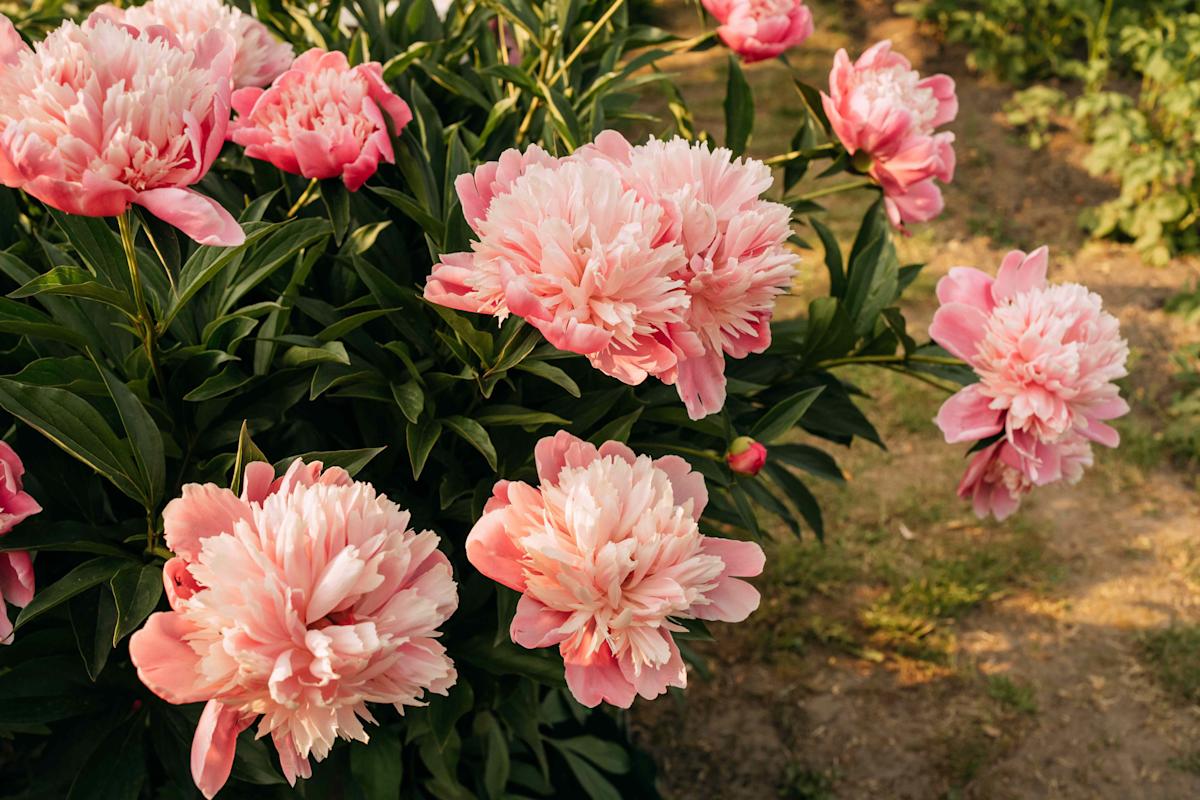

Credit: Getty Images / Svetlana Repnitskaya
Lush peony blooms are the showstoppers of the spring garden. There’s nothing prettier than their fluffy, romantic flowers. But they’re a short-lived bunch and, most of the time, half the blooms end up in vases in your home (who wouldn’t want to have all that hard work displayed inside?).
That limited bloom season means peonies are best planted with flowers that will keep the color going throughout the spring and summer. “When I design around peonies, I’m really thinking about what happens before and after their bloom, because they’re spectacular for a short period and then they’re just a green mound for the rest of the season,” explains Alli Gulleria is the founder of Gardenalia Home in Reston, Virginia.
Want to make sure your peony garden is surrounded by long-blooming flowers? Here are 10 peony companion plants to draw out your spring and summer color.
01 of 10
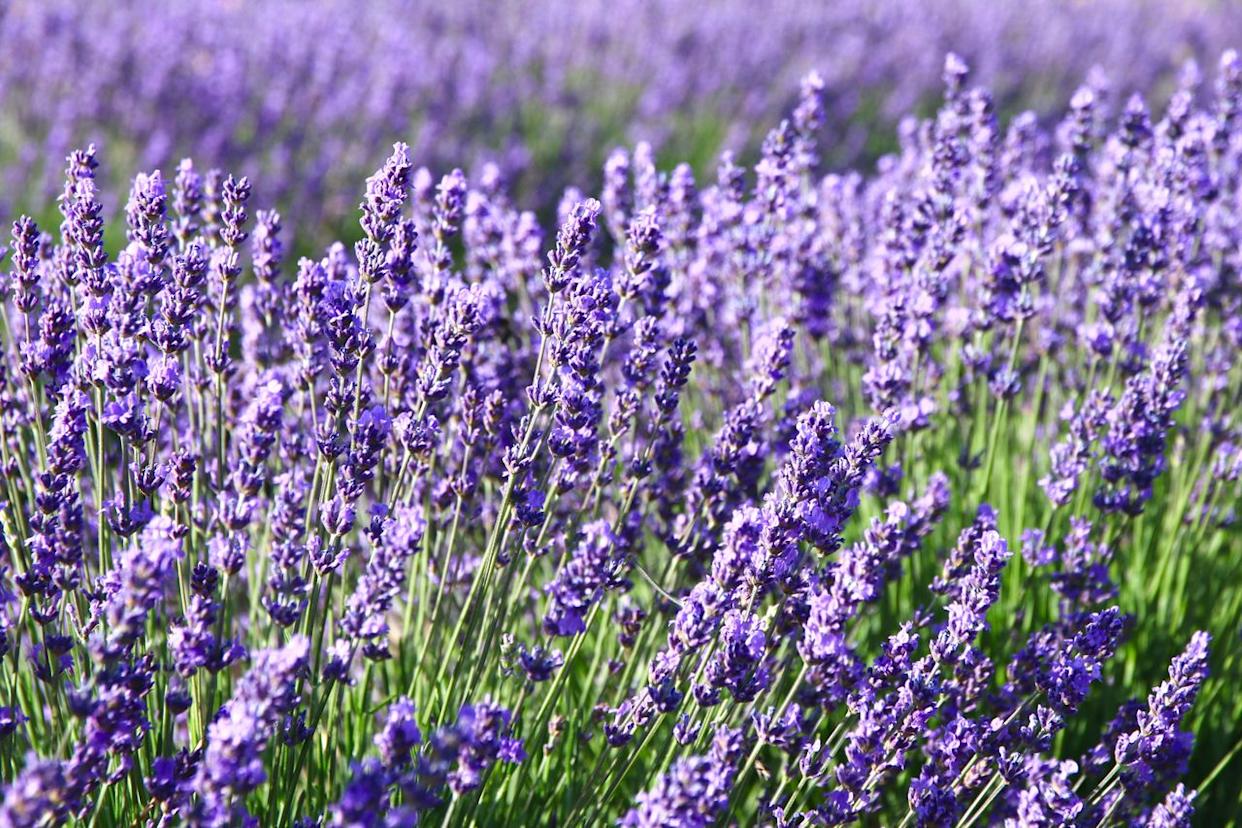
Credit: Getty Images / Caroline Gauvin
Botanical Name: Lavandula spp.
Soil Type: Dry to medium, well-draining, average
Soil pH: Neutral to alkaline (6.5-8.0)
Peonies look lovely when planted with flowers that will provide a different silhouette. Lavender’s tall, thin flowers are a stark juxtaposition next to the big, luscious peony blooms. “I love pairing peonies with lavender. The taller spikes give architectural contrast to the round peony flowers,” says Gulleria.
Pair pink peonies with the purple lavender for even richer contrast.
02 of 10
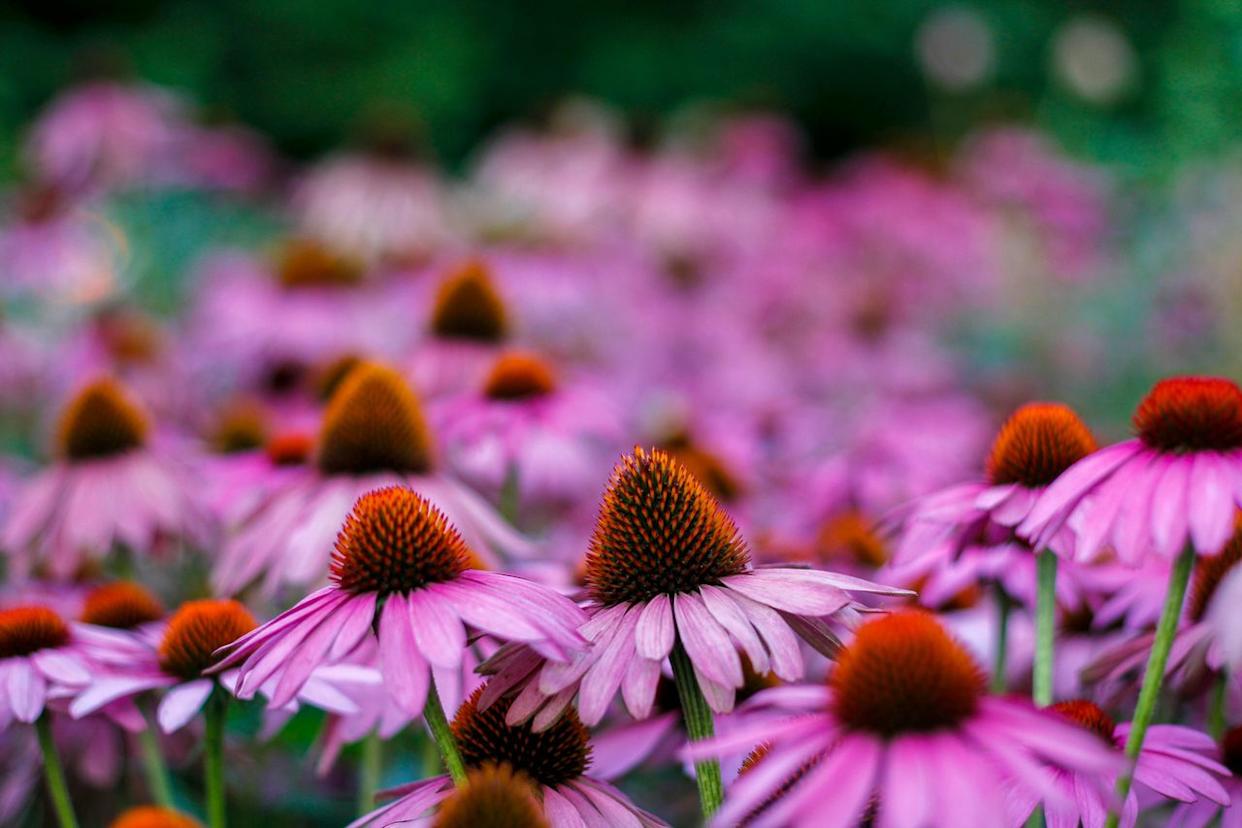
Credit: Getty Images / CHARLES Grafer / 500px
Botanical Name: Echinacea spp.
Sun Exposure: Full, partial
Soil Type: Organically rich, well-drained
Soil pH: Slightly acidic, neutral (6.0-7.0)
Coneflower is a favorite of gardeners regardless of what else is planted in the garden for two reasons: they’re excellent native pollinator plants and they have vibrant, long-blooming color. “Coneflower, or echinacea, carries everything into summer, and comes in tons of colors and single or double blooms. These flowers still have energy long after the peonies are finished,” says Gulleria.
03 of 10
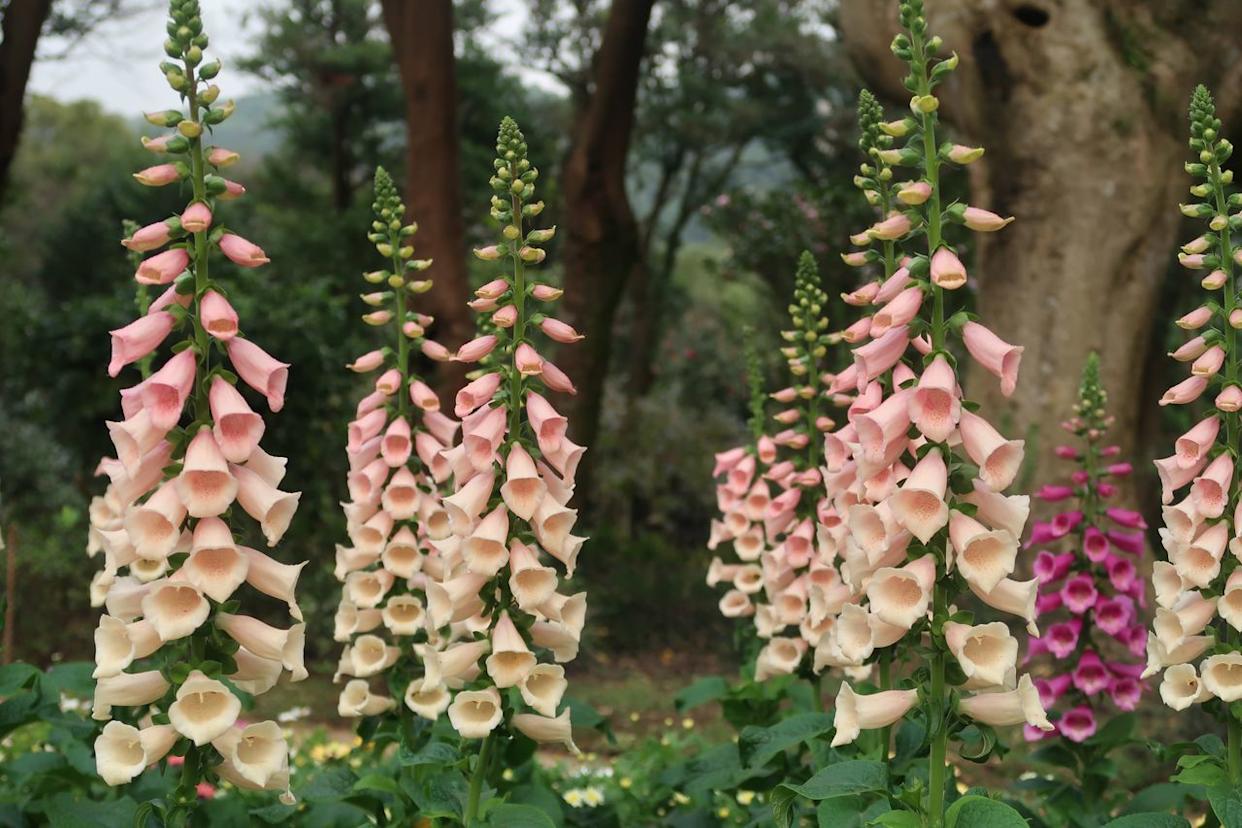
Credit: Getty Images / `Andrea Jhang / 500px
Botanical Name: Digitalis purpurea
Sun Exposure: Full sun to part shade
Soil Type: Medium to moist, well-draining, average
Soil pH: Acidic, neutral (6.5-7.0)
If you want a flower that does double duty, plant foxglove near your peonies. Not only will they add a contrast to the bushy foliage of peonies with their slender blooms that reach towards the sky, but they’ll also bloom starting in late spring, just as peonies are beginning to fade. Gulleria says, “I bring in foxgloves because they flower during that in-between lull, so the garden never feels empty.”
04 of 10
Bleeding Heart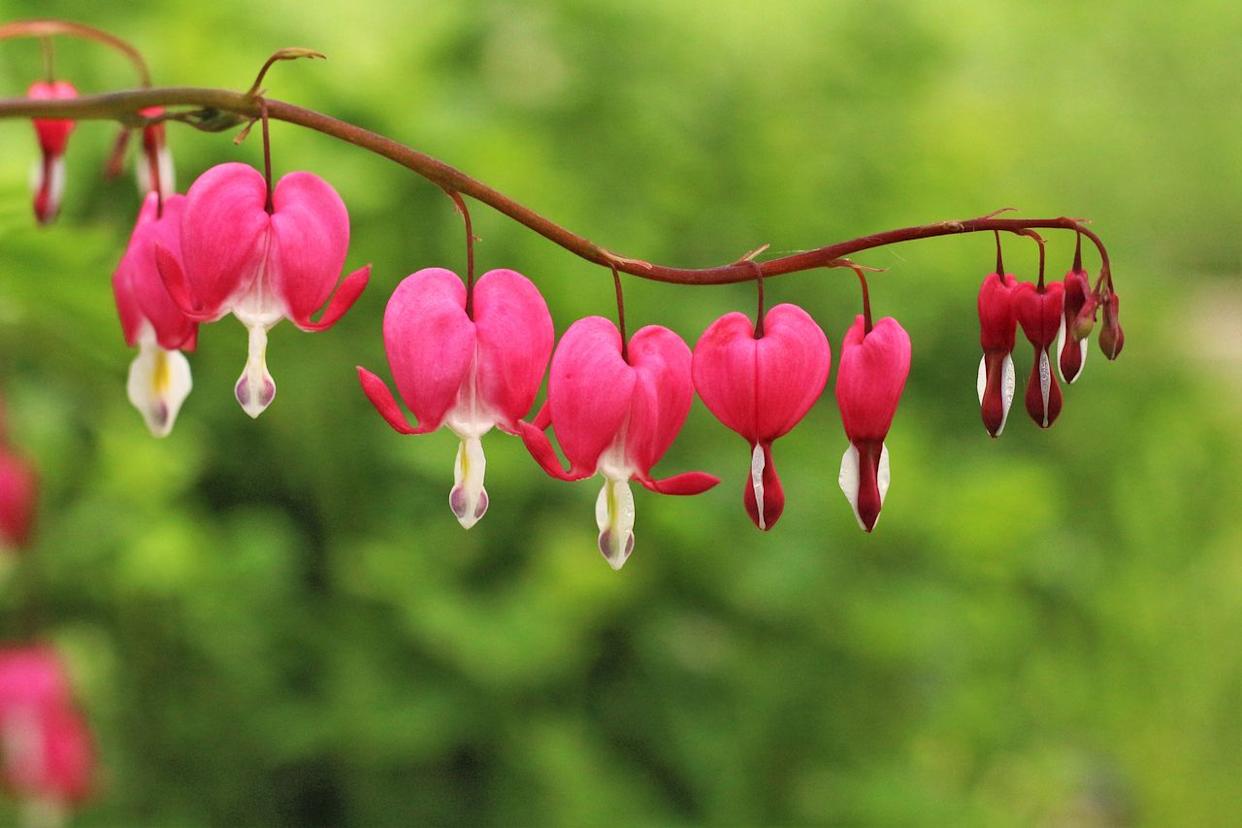
Credit: Getty Images / Tsun Sanake / 500px
Botanical Name: Lamprocapnos spectabilis
Sun Exposure: Deep to partial shade
Soil Type: Clay, loamy, sand
Soil pH: Neutral to slightly alkaline (5.5-7.5)
The striking shape of bleeding heart is one of the most unique in the garden, but it’s not known for creating a full look. That’s why it’s perfect when planted with peonies, which will add a more abundant feeling to the garden, while bleeding heart brings the sculptural touch.
“Also, peonies like full sun and the bleeding heart likes a little shade. Plant them on the shady side of the peony and they help each other out,” explains Lindsey Chastain, who is the Oklahoma-based founder of The Waddle and Cluck.
05 of 10
Roses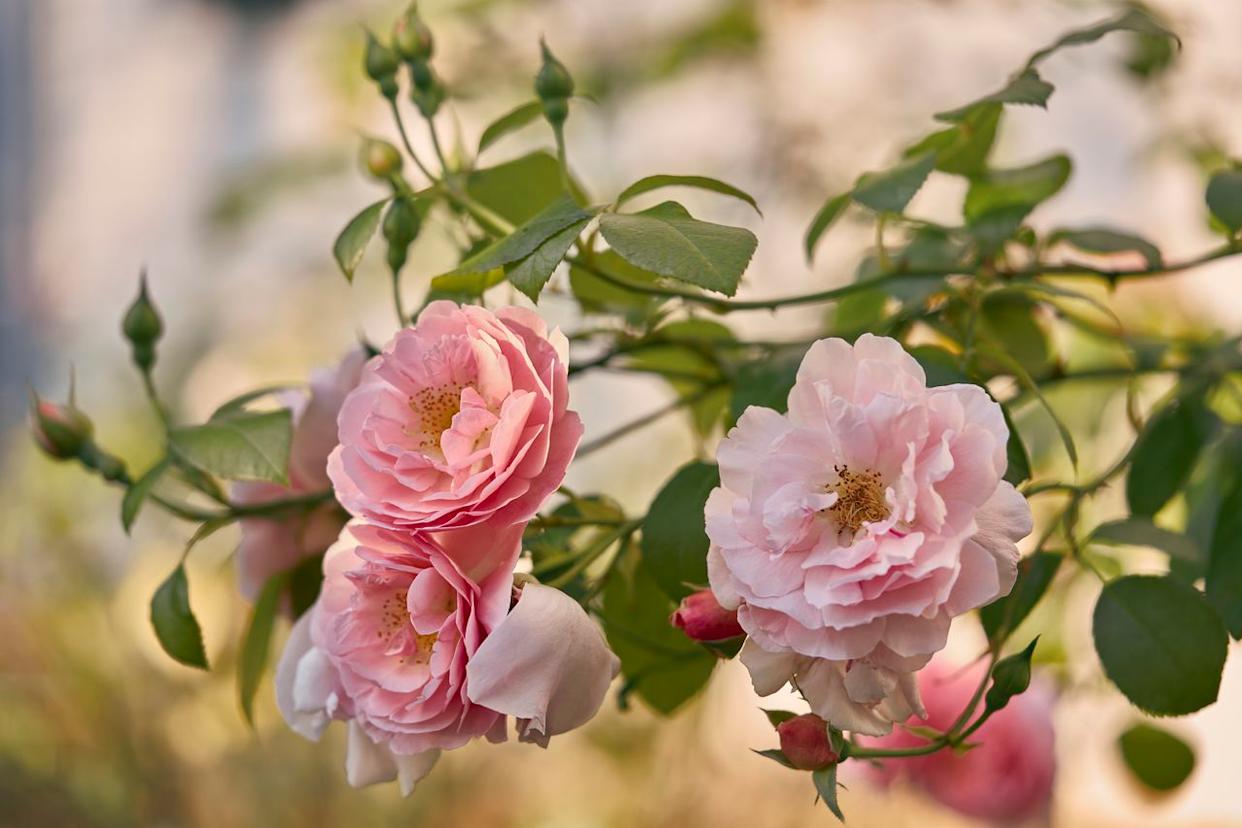
Credit: Getty Images / Norman Posselt
Soil Type: Rich, loamy, well-draining
Soil pH: Slightly acidic (6.0-6.5)
“Roses and peonies together make your garden smell delicious. And peonies are often called the roses of spring,” says Chastain. You’ll first get the flush of gorgeous peonies in the spring, then roses will take over throughout the rest of the spring and summer season, continuing the color in your garden.
06 of 10
Credit: Getty Images / Ventura Carmona
Botanical Name: Geranium spp.
Sun Exposure: Full sun to part shade
Soil Type: Average to poor, well-draining
Soil pH: Slightly acidic (6.0-6.5)
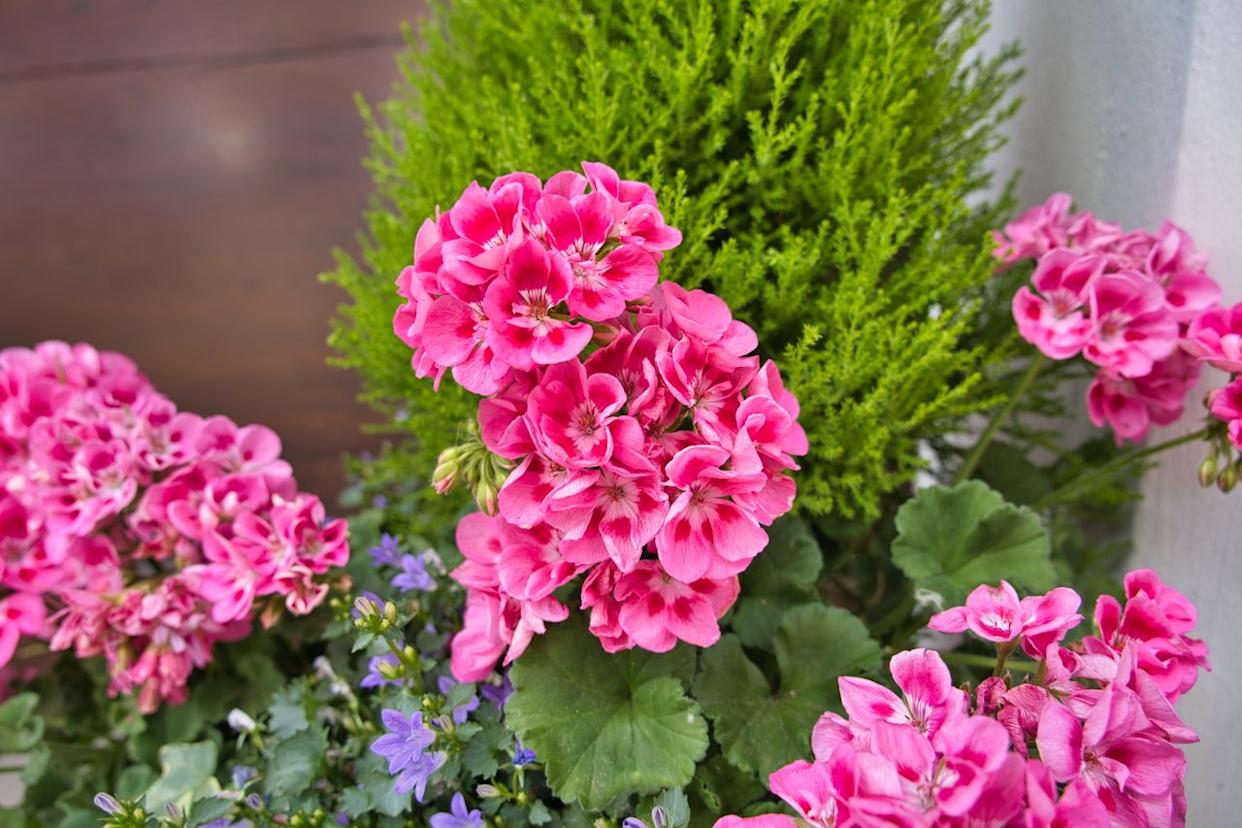
Easy-to-grow geraniums are a wonderful companion plant for most spring and summer flowers. They’re long-blooming and easygoing, while their vibrant colors add a cheerful touch to flower beds.
They also serve a functional purpose when planted with peonies. “Peonies can get a bit leggy as you get closer to the soil and their stems can become weak in wind and storms,” says Chastain. “Geraniums can fill in some gaps around the base of the peony and provide some ground support.”
07 of 10
Lady’s Mantle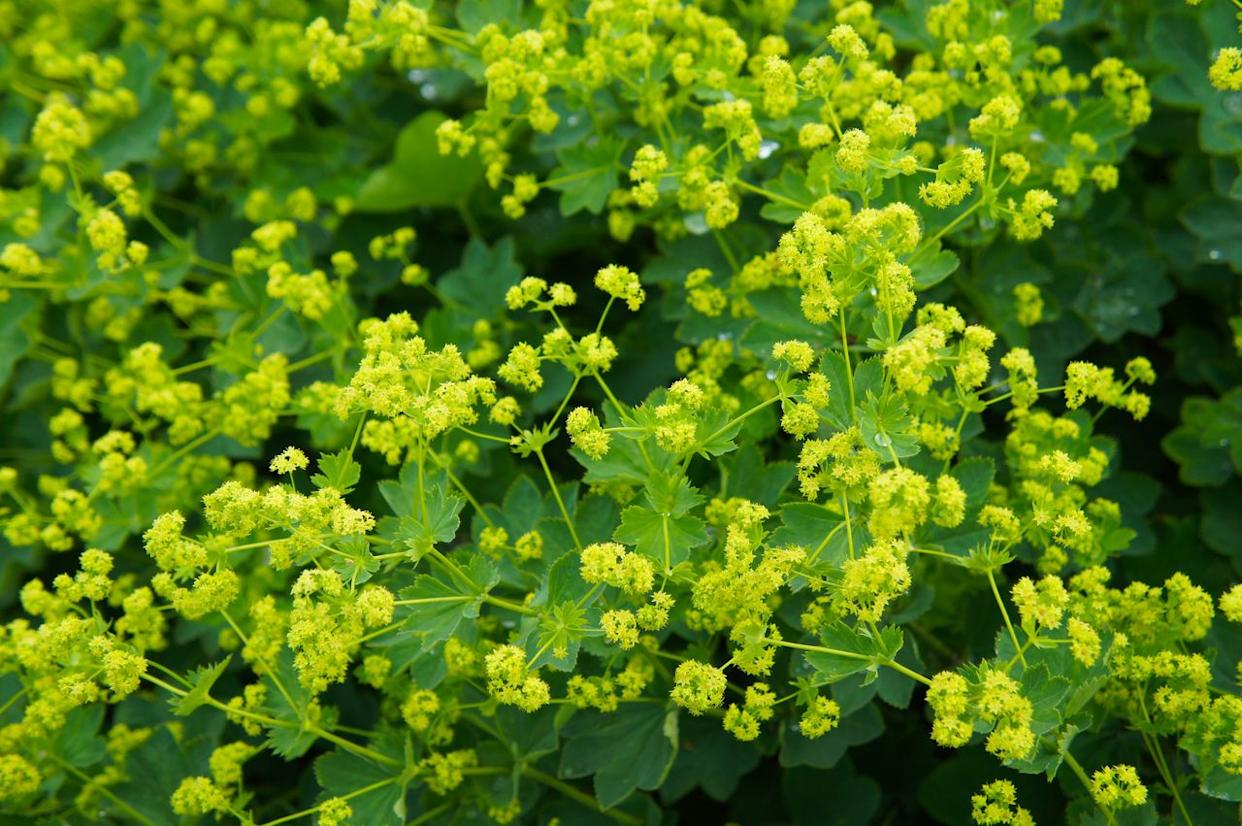
Credit: Getty Images / skymoon13
Botanical Name: Alchemilla mollis
Sun Exposure: Partial to full shade, dappled sun
Soil Type: Moist, well-draining, rich
Soil pH: Acidic to slightly alkaline (5.5-7.5)
Because peonies are going to be the center of attention, it can be a nice complement to plant something less showy next to them. The restrained green and yellow palette of lady’s mantle has a pretty cottage look without adding more color. Chastain explains, “Lady’s Mantle is much more subtle with light green and yellow blooms, creating a contrast that helps the colors of the peony pop even more.
Plus, they’re practical next to peonies. “They have big, broad leaves that can catch rain and funnel it down to the soil, aiding with keeping the entire bed more thoroughly watered,” says Chastain.
08 of 10
Alyssum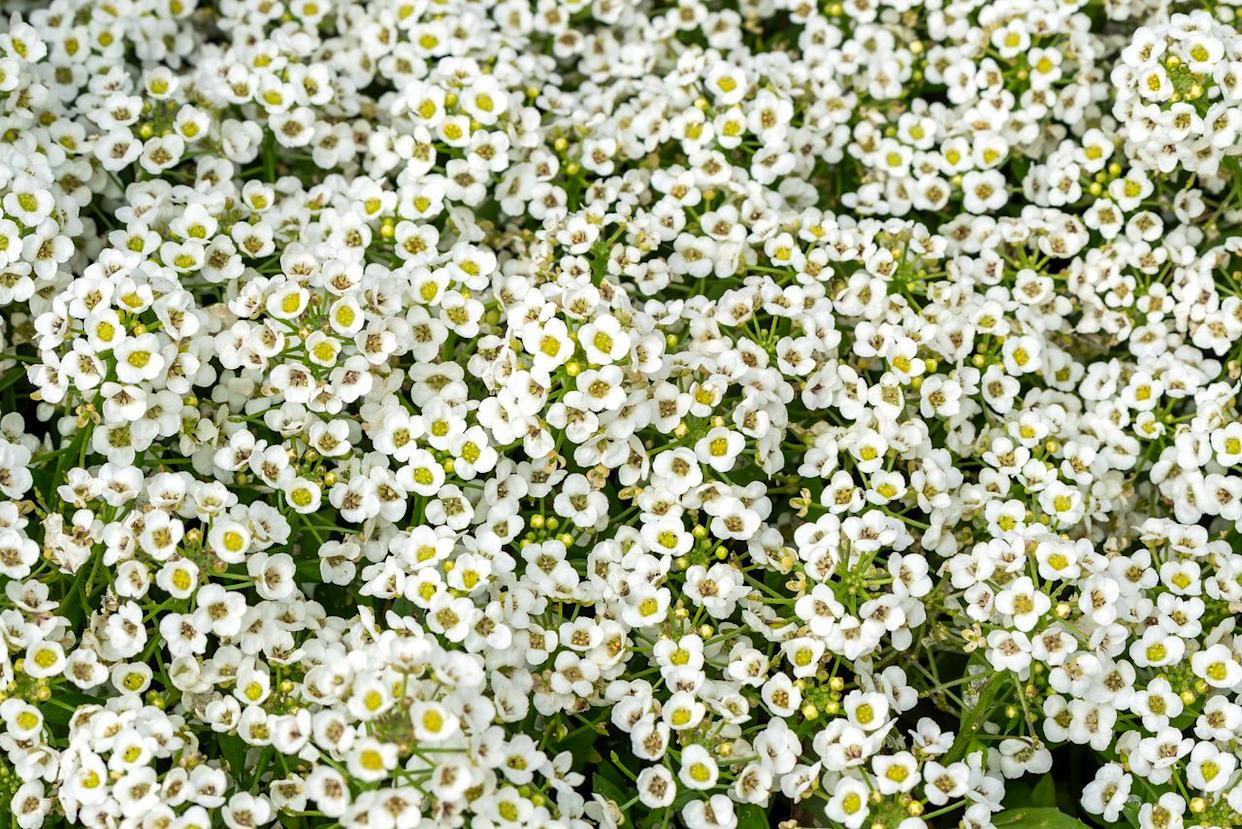
Credit: Getty Images / TonyBaggett
Botanical Name: Lobularia maritima
Sun Exposure: Full sun to part shade
Soil Type: Medium to moist, well-draining, average
Soil pH: Acidic to Neutral (5.5-7.0)
Peonies have a shrub-like behavior, which means they’re lovely with a low-lying groundcover. The petite white flowers of alyssum will spread beneath peonies as a border plant, adding the softest touch of ivory tufts. They also smell absolutely delicious as they bloom.
09 of 10
Credit: Getty Images / Katrin Ray Shumakov
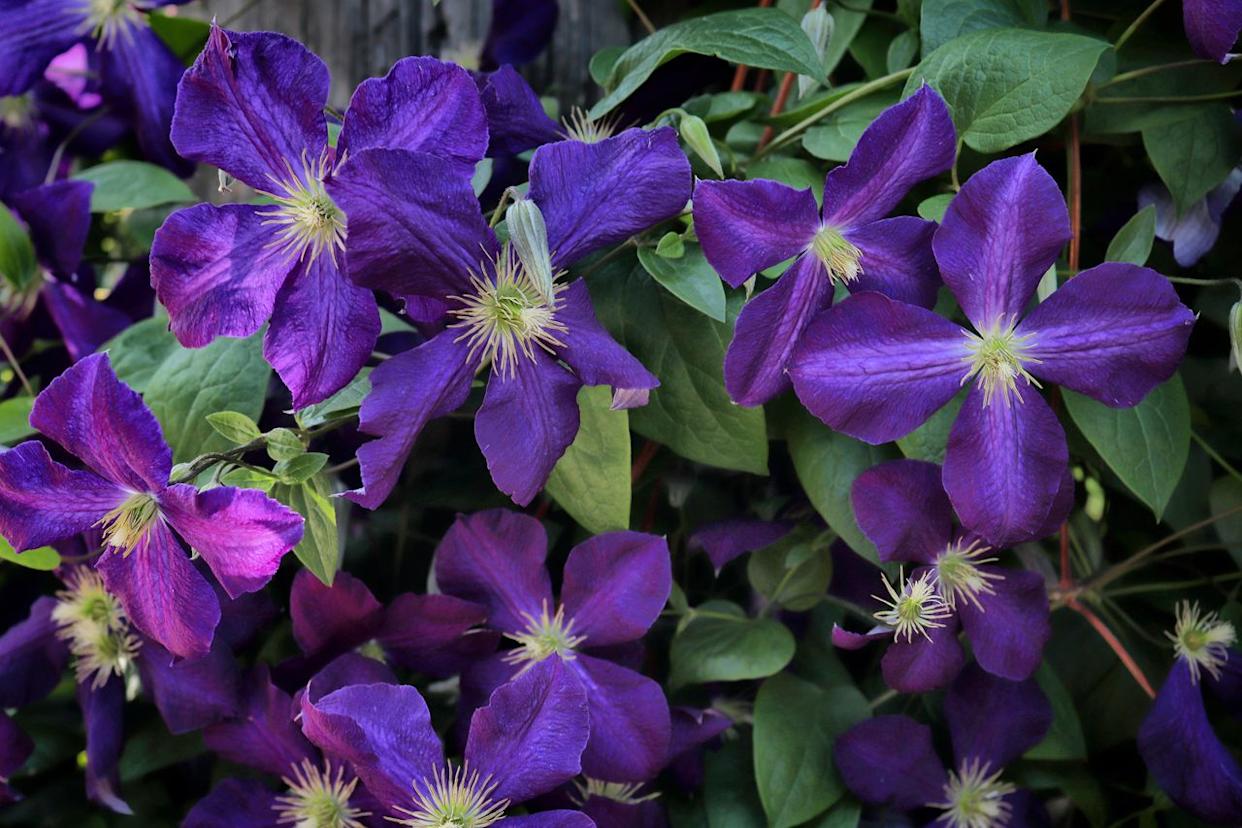
Botanical Name: Clematis spp.
Sun Exposure: Full sun to part shade
Soil Type: Moist, well-draining
Soil pH: Neutral to slightly alkaline (6.5-7.5)
If you’re planting peonies in front of a fence or wall, then adding a trail of clematis making its way up the background is one of the sweetest, most cottage-inspired looks. These long-blooming perennials will also continue to add color throughout the season.
10 of 10
Credit: Getty Images / Stacy Pochtar / 500px
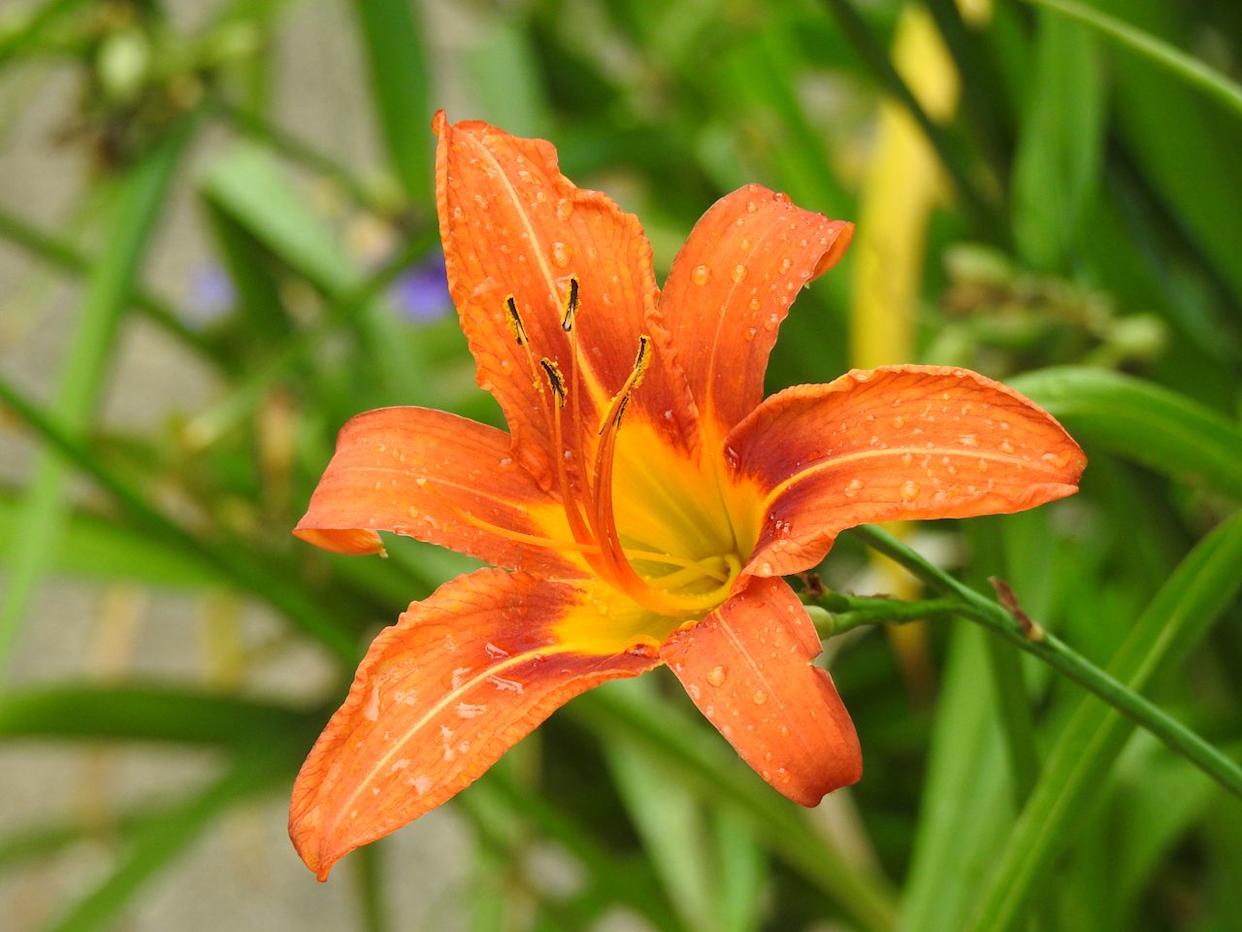
Botanical Name: Hemerocallis spp.
Sun Exposure: Full to part sun
Soil Type: Medium to moist, well-draining, rich
Soil pH: Slightly acidic (6.0-6.5)
The warm orange, yellow, and red colors and mound-like foliage of daylilies are a stunning complement to peonies, particularly since they pick up their bloom season just as peonies begin to fade.
Read the original article on Southern Living
Comments are closed.