

When Sasha York first stood in what would become her walled garden at Hutton Wandesley Stables, there was almost nothing there. Just an overgrown expanse that had been a pony paddock for 30 years, with weeds up to her waist and a single tree in the middle. The three Victorian brick walls still stood – weathered witnesses to generations of use and neglect – but the garden itself had disappeared.
For a couple of years, she simply mowed it. She needed to walk into the space every day, to understand its scale, to let it speak to her. She had an extraordinary advantage: the original 1874 plan drawn by her husband’s great-great-great grandfather, showing exactly how he’d planned to build this productive space. A Peach house, heated walls, potting sheds; a proper Victorian kitchen garden designed to feed a grand household.
What Sasha has created over the past several years honors that history while bringing her own vision to life: a walled garden with four distinct zones, and running through it all, a sense of peace. This restoration is about more than design and planting. For Sasha, this garden – and the act of gardening – is a sanctuary.
You may like

Stipa tenuissima and Russian sage bringing soft drama to this autumnal section of the walled garden
(Image credit: Sasha York)
Growing Up in Gardens
I grew up in Northumberland, in a family where the garden was everything. My parents had a beautiful garden, and we were always in it.
When you were home for a weekend or on holidays, half the time you’d be in the garden; weeding, edging, helping Mum, always doing something.
They had a really beautiful vegetable garden, and my biggest memory is shelling peas on a Sunday afternoon. That’s such a special memory for me. And the smell of broad beans – that velvety touch when you open the pod, then the smell when you’re blanching them to put in the freezer or having them with your sausages in the evening.
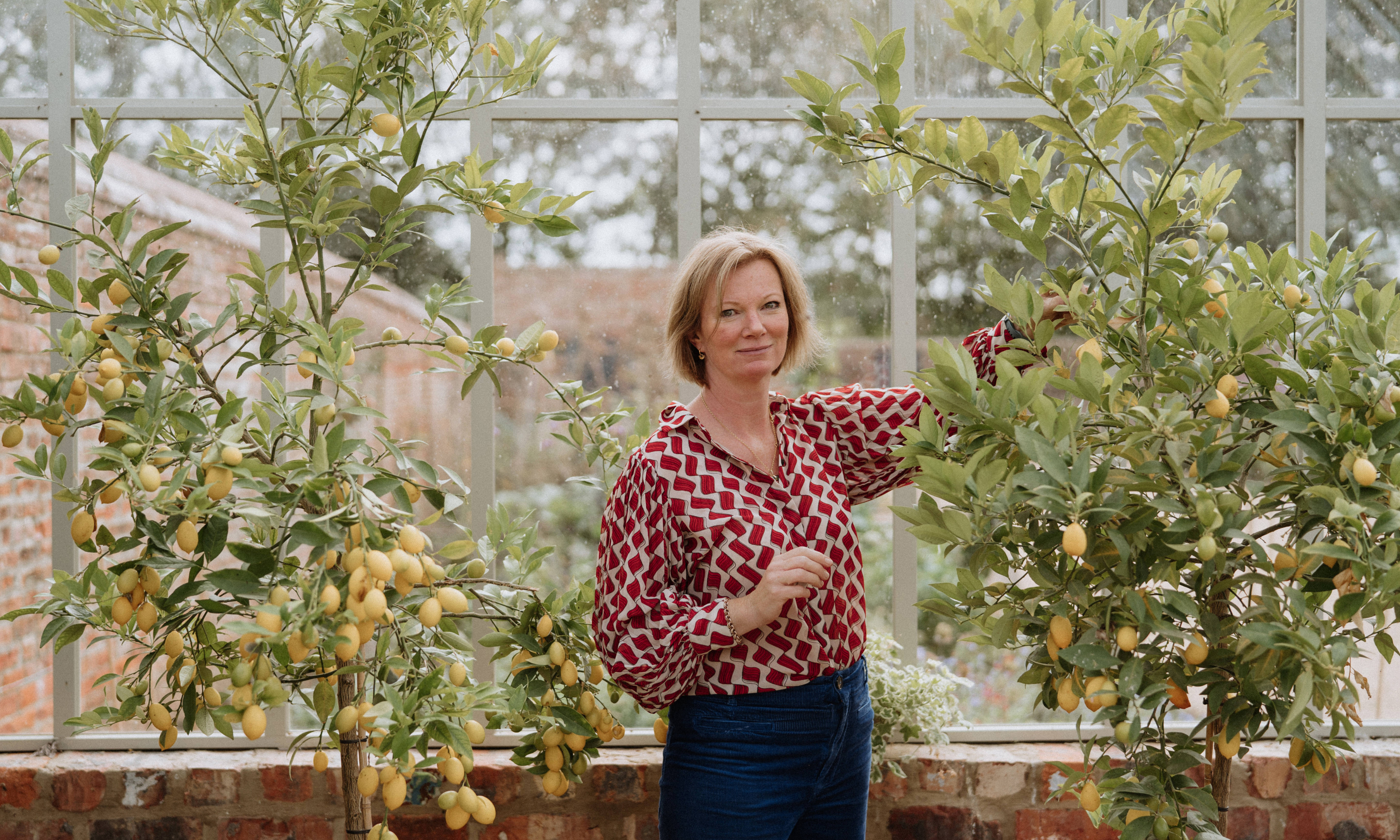
After two years of feeling the land, Sasha York knew how she was going to reimagine her family’s walled garden
(Image credit: Andy Matheson Photography/Sasha York)
From the City to Yorkshire, and Starting from Scratch
I moved to London to begin my career and I became a bond trader. The City in those days was a really full-on place. It was very aggressive, and male-dominated. You had to really stand up for yourself as a woman. And I became very thick-skinned.
But gardens and flowers and fresh air were a total tonic. The complete opposite of that environment. So I gardened constantly. It was my sanctuary.
Once we had children, we came to Yorkshire. The house we moved to had no garden at all, so I created it from scratch. I designed it, I planted it, and I add something every two or three years. It’s really beautiful and amazing.
I realized this was what I really loved. And it gave me confidence, so when people began asking, ‘Will you come and design my garden,’ I could say, ‘Yes!’
What to read next
Designing a garden idea doesn’t happen sitting at a desk. It’s much more about being in it and saying, ‘Right, you need something there. Where do you look out from your window? How often do you spend time here? What times are you in the garden?’
Because it’s not just about how to create a beautiful-looking garden; it’s how you use it.

Each area of this walled garden has a distinctive layout, feel and purpose
(Image credit: Sasha York)
The Walled Garden – Honoring History, Creating Sanctuary
When I first got the go-ahead to start on the walled garden here at Hutton Wandesley Stables, I just mowed. And I continued to mow it for two years just so I could get the scale of it. I needed to walk into it every day and feel the space.
I have the original plan from 1874. It shows how my husband’s great-great-great grandfather wanted it to be, complete with a peach house, a potting shed, a melon house, and a cucumber house. The walls were heated at one time, and the boiler houses are still there. That’s how they could grow such amazing fruit. A peach house in Yorkshire – the thought is incredible.
I wanted to honor him and that plan, but when we were doing the work, I didn’t really find much evidence of exactly what had been planted. So whether he drew it and didn’t necessarily complete it all, I’m not entirely sure.

(Image credit: Sasha York)
So with those plans in mind I began to craft my own interpretation, and decided on the best plants for this walled garden.
I divided it into a traditional English long border and four distinct quadrants: a floral cutting garden bursting with romance, color and fragrance; a manicured lawn; a perennial meadow garden with beds planted around a central water feature; and an Italian-influenced garden with 16 parterres, bursting with swathes of Verbena bonariensis in summer.
I knew I wanted a July into November garden, which had to include grasses, and this became my perennial garden.
Now, grasses came late to me. If you’d asked me ten years ago, I would not have put grasses in a garden. But now I love them. I would put them in any garden because they give you so much in winter and also in spring and summer when they’re growing up.

(Image credit: Andy Matheson Photography)
Then I needed to find drought-tolerant plants, because even through we are in Yorkshire this is a dry pocket. I needed plants that would really survive anything. It had to look wonderful, but not be too high-maintenance.
I knew straight away I wanted an Acer in the middle, with beautiful jagged leaves, absolutely stunning. Then I created the soft underplanting with lots of astrantia. (You can find astrantia seeds to start yourself at Amazon). I added Perovskia (Russian sage) for the height that would come up afterwards, then I added deep orange grasses for contrast.
I’ve got Stipa tenuissima planted outside to give that lovely soft flow against the structure of the box edging. And beautiful, frothy Filipendula (meadowsweet) around the acer.
Some of my most favorite plants in this garden are the hebes and lavender for evergreen interest, euphorbia for height and structure in the outside beds, and Cimicifuga (Actaea) to keep upright and overlook; they’re my soldiers.
To me, Actaea simplex has to be in everyone’s garden. The deep crimson color is unbelievable, and the fragrance in the evening is extraordinary. It’s one of the most wonderful night-scented plants. (Starter plants of Actaea simplex are available from Amazon.)

(Image credit: Sasha York)
Finding Peace Through Difficulty
Life brings challenges we can’t always control or fix. Gardening has been the one place where I can go and just touch the soil, dig, plant, take a cutting and process whatever needs processing.
For me personally, it just makes me able to go back out and do whatever I have to do. It’s a mindful practice.
I think there’s something about a walled garden design that is quite magical. I think some of it is because it a safe place. You’re enclosed. Once you’re in a walled garden, it’s a bit like when you close your front door to your home – you feel safe and at peace.
You’ve only got what’s in there. You don’t need to worry what’s on the other side of the wall. It’s very special, very peaceful. I love to think about how many people have worked that soil? How many people have been in there, tending and caring for this land?
I think they just offer such a place of peace and solitude. It’s like a big hug around the outside. A sanctuary.
Now I try to share that feeling in all the workshops I offer here, from willow weaving and botanical painting to cutting garden masterclasses. I’m also launching a plant fair here in May, to spotlight some of the best plants for walled gardens.

Focal points in the walled garden are also achieved through mindful sculpture and gentle water features
(Image credit: Andy Matheson Photography)
The Magic of Walled Gardens
The walls give you so much. They give you heat in the summer, and trap it beautifully. But equally in winter, they can trap the cold in. That’s why they would have been heated.
A walled garden traditionally would have had a slatted gate to let the air and frost out. They’d have little holes in the bricks to let the frost out, otherwise it becomes a real frost pocket.
I would say to anyone: don’t be afraid of gardening. It doesn’t matter if it goes wrong. It doesn’t matter if something’s in the wrong place. You learn all the time.
Sometimes I don’t listen to anything when I’m gardening. I literally just listen to the birds. I’m probably having a few conversations in my head, but I’m simply there.
And I think that’s what this walled garden has taught me most: that no matter what life brings, there’s always the garden. There’s always soil to touch, plants to tend, seasons to honor. There’s always that sanctuary waiting, enclosed and safe, ready to help you reset and face whatever comes next.
You can follow Sasha @sashinthegarden on Instagram.

(Image credit: Sasha York)
Garden Diaries is our series where we share inspiring stories of designing and cultivating a stunning garden space. We explore how creatives, designers and tastemakers have grown a deeply personal space, inviting creativity, learning and happiness in their gardens, and how they live in these spaces.
Love inspiring garden ideas, outdoor advice, and the latest news? Sign up for our newsletter and get the latest features delivered straight to your inbox
Comments are closed.