

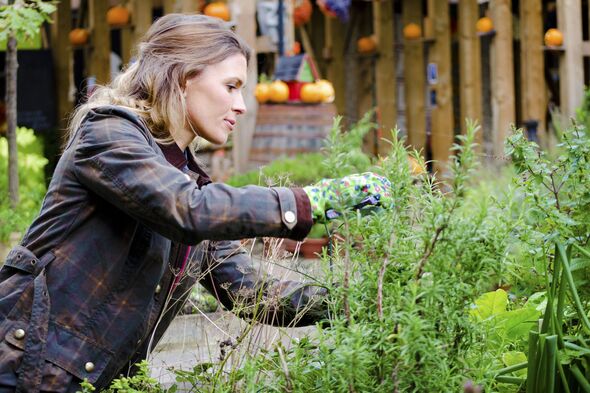
There are a few tasks you should be doing in the garden in March (Image: Getty)
The spring season is just around the corner, so there’s only a finite amount of time to prime your plants ready for spring. Gardening expert and TikTok creator Ish recently shared his list of all the gardening tasks you should be carrying out in March, ahead of spring arriving.
While it’s a great time for planting, there’s an important job you need to do to prep plants like wisterias and acers ready for beautiful blooms to grow later on this year. Ish said: “In the next month or so you’re gonna start to see huge amount of growth on your wisterias, your acers, and even deciduous plants, like your cherry blossoms and apple trees. So, now is the final time to give them one really good prune if you want to make sure they’re in a nice shape ready for this year.”
READ MORE: 3 beautiful houseplants that boost your sleep
READ MORE: ‘I’m a gardening expert and there’s job you shouldn’t do in March’
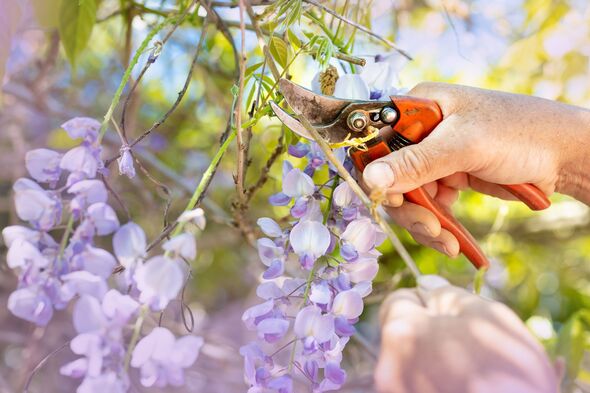
Prune wisteria and remove ‘whippy’ stems (Image: Getty)How to prune wisterias and acers
When it comes to pruning wisteria plants, you want to make sure that it’s first planted in the optimal location in the garden for sunlight. Look out for whippy stems and snip off above around three buds where the stem has become “whippy”.
By pruning wisteria, it increases the chance of growing flowers back bigger and developing more sideshoots for blooms to appear. Trimming back while dormant will also help to keep the plant in shape and prevent the flowers from growing to a massive and out of control height.
Pruning wisteria not only will help it keep its shape once in bloom, but it’s also beneficial for the plant’s health. Be on the lookout for damaged stems (to cut right back), diseased stems that have signs of fungal infection, and dead stems that will have a grey-ish colour.
Ensure our latest headlines always appear at the top of your Google Search by making us a Preferred Source. Click here to activate or add us as your Preferred Source in your Google search settings.
Once pruned, make sure you give the wisteria a good feed, ideally a slow-releasing feed into the ground or pot, depending on how your wisteria is planted.
For acers, much like wisteria, look out for dead stems. The stems and branches that are dead if they have wood that looks greyer, in comparison to the dark reddish brown the acers should usually be.
Sometimes if dead stems are too weak, you may be able to flick them off with your finger. These dead bits can be cut as close to the base of the stem as possible.
By cutting these stems back to the base, you avoid the risk of developing any infections in your plants, and you won’t waste energy going to those dead parts of the plant.
Next, you want to find any branches that are overlapping or look like they will overlap as they grow. It’s important to focus on making sure the plant isn’t crowded by getting rid of any of these “overlapping” branches.
Keep an eye out for any branches that are rubbing together or getting too close, and cut those back. If the branches do rub together, they can shed their bark and run the risk of developing infections, which can be encouraged by the moist air. Trim the branches back just above the next node on the stem and cut away.
The third thing you should be on the lookout for is any diseased parts of the acer. Identifying diseased acers involves sudden leaf browning, curling, or shriveling as well as wilting branches, especially at the base.
The Royal Horticultural Society noted that extra care should be taken during late winter and early spring as the seasons’ cold winds – and potential frost – as these can scorch the leaves of the acer.
Comments are closed.