
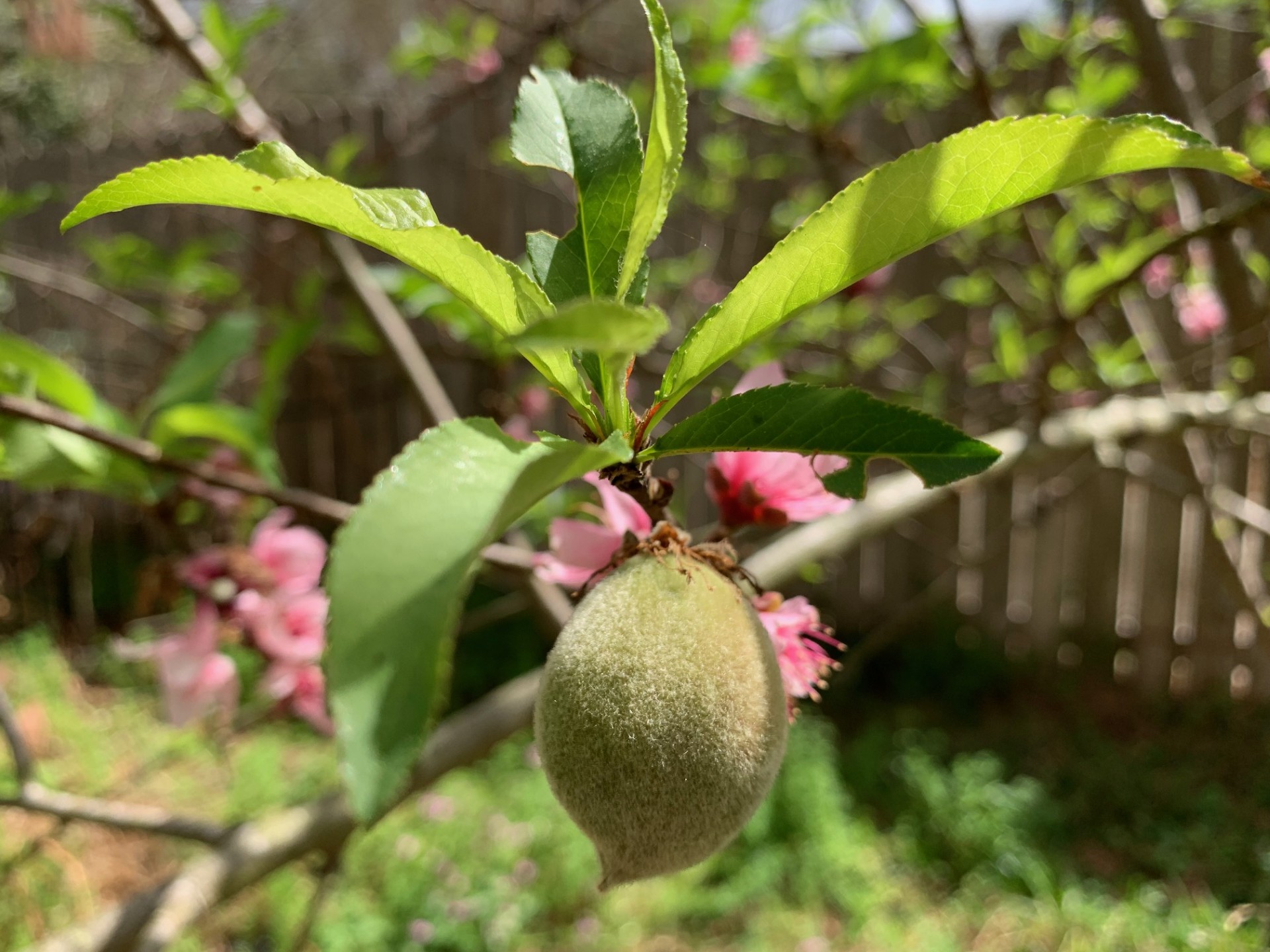
This week it seems like we skipped right over spring and headed into summer. Fall and winter were much warmer than usual, then we got hit with a couple of freezes in late January, right as many garden plants were reacting to the warm weather by setting blooms. Peach trees, azaleas and roses were all starting to bloom much earlier than normal, only to be stopped in their tracks by below freezing temperatures.
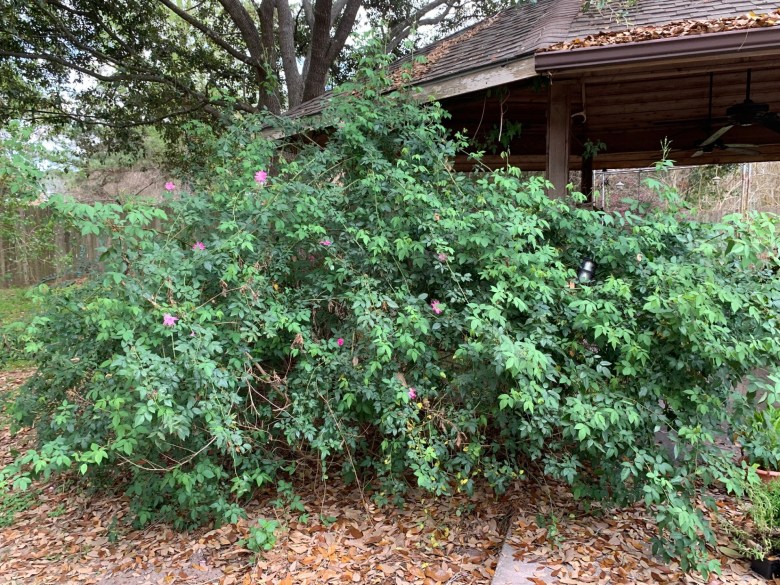 Where have all the flowers gone? Credit: Lorretta Ruggiero
Gardening in Houston is tough much of the year, especially when our weather doesn’t stick to the rules of nature. I was surprised to see tomato and pepper plants at one of my local nurseries in mid-February. Excited, I loaded up a dozen seedlings and headed home, expecting to plant them the next day. I felt a little smug, thinking I was going to beat my record of getting tomatoes in by February 22. But, Mother Nature had other plans. That weekend, the lows dipped into the forties, so I had to keep my veggie babies inside for a few more days.
I was patient and got them into the garden before the end of February. However, the temps shot up into the upper 80s, which means I am now trying to coddle them through the heat and drought. But time waits for no man, or late-planted tomato.
Here’s a guide to this month’s to-do list. It’s a lot, so clear your weekends for working. March madness in the garden is real.
Clear Out and Clean Up
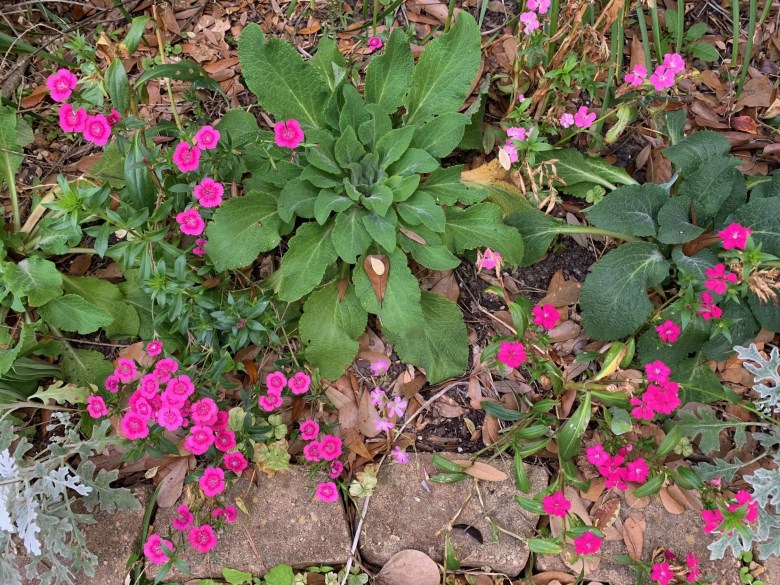 Dianthus overwinters some years. Credit: Lorretta Ruggiero
The January freezes, though brief, took their toll. In my yard, oleanders died back and sago palms are now mottled with brown. Mexican heather, angel’s trumpet and bougainvillea also died back, but most are coming back up from the roots. Unless we get a freak freeze, it is safe to cut back the dead bits. It’s also important to water well and it’s probably a good idea to hit them with a little organic fertilizer. I am not a gambling type, except when it comes to the garden. We may get some more cold weather, but I am taking my chances.
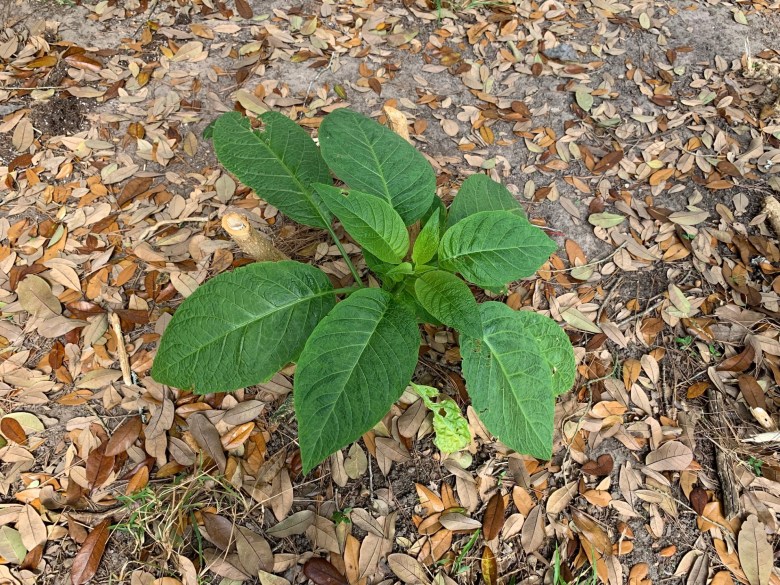 Many plants come back from the roots. Credit: Lorretta Ruggiero
If we get the promised rain this weekend, it will be a blessing for our lawns and plants. If not, we Houstonians will have to do quite a bit of watering to make up for the deficit.
I do not feed my lawns or put down pre-emergent herbicides or chemical pesticides. I pull weeds by hand, but I am also not bothered by a dandelion here and there. However, there are those who dream of weedless expanses of green. The first mow of March needs a sharp blade. This month is also a good time to aerate the lawn. My husband, Classic Rock Bob, uses an inexpensive manual aerator. It helps de-thatch the lawn and also allows for more nutrient and water absorption.
According to AggielandGreen, mid-March is the time to start feeding the lawn. With our extra-warm weather, it may be okay to begin now. Watering in the morning is also important, because it allows the water to be absorbed into the soil rather than evaporated into the air.
Shrubs and Trees
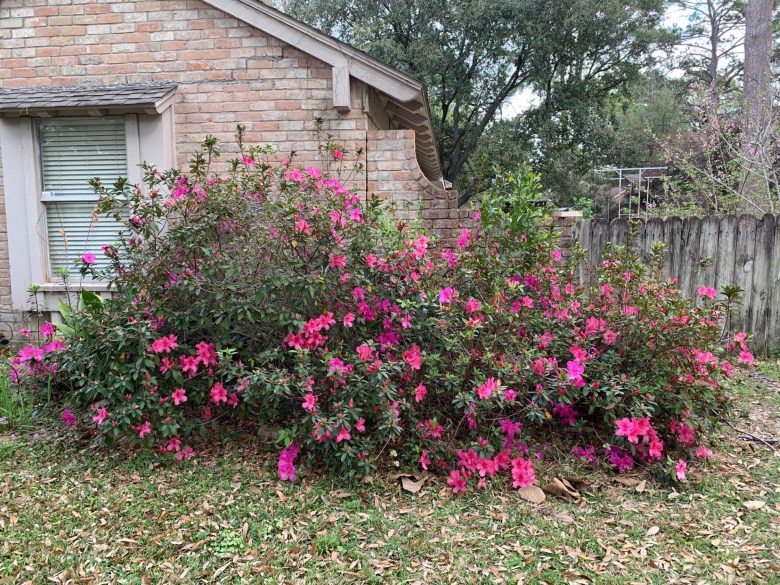 Azaleas aren’t blooming as well as last year. Credit: Lorretta Ruggiero
Azaleas started blooming in my neighborhood in January, so they look a little half-assed right now. Instead of bursting forth with color, they’re sort of staggering the blooms. They received a lot of rain over the summer, but there were more drought-like conditions over this past fall and winter. They will need plenty of water while blooming, and should be fertilized after the blooms finish.
This is a pretty good rule of thumb for most blooming shrubs. Pruning can be done after blooming as well, but it doesn’t need to be harsh. Cutting back dead limbs and pruning the specimen to be attractive is all that’s needed. Except for lantana. You want to cut those monsters down to the ground. I have learned my lesson.
Looking for Volunteers
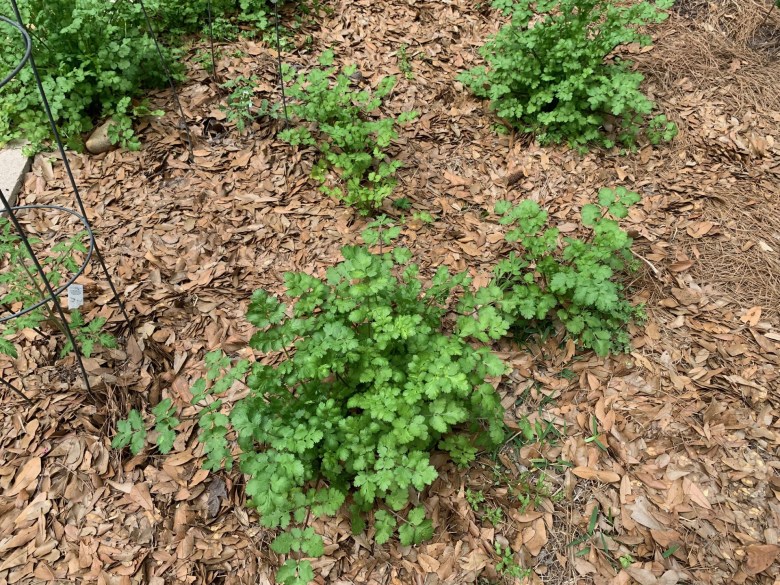 Cilantro self seeds, for those who love it. Credit: Lorretta Ruggiero
By volunteers, we don’t mean trying to rope in people to help in your yard, though it would be great if it worked. We’re talking about the seedlings that appear in places that you may not have intended. Volunteer seedlings come in two types: wanted and unwanted. For those of us who let some plants go to seed, we may find tiny sprouts in the flower and vegetable gardens.
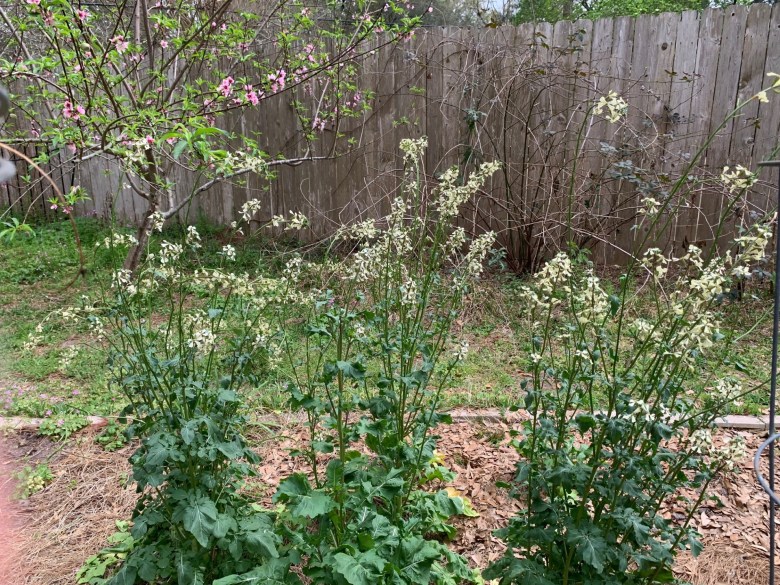 Lots of arugula. I hate arugula. Credit: Lorretta Ruggiero
I let my vegetable garden lay fallow this fall. I didn’t have the spirit for it. However, seedlings from the lettuce mix I planted last year came up in December. Unfortunately, it was all arugula. I could have kept the Obamas supplied with plenty of of it. I was happy though to see a dozen cilantro plants come up. They may bolt soon due to the warm weather, but because I had nothing to do with their arrival, I won’t be as sad to see them go. I am making pico de gallo, though, every chance I get.
The bad volunteers, of course, are the weeds. March is the time to get a head start on them. Some folks lay down black plastic or weed cloth. Others stick to mulch for a more natural deterrent. Mulch has several benefits. It deters weeds, keeps in moisture and eventually breaks down, adding nutrients to the soil. Avoid mulches from treated wood. I prefer a natural mulch, but some landscapers and homeowners like the colored mulch. The dyes are not supposed to be toxic, but I wouldn’t use it around vegetable plants.
Flowers and More Flowers
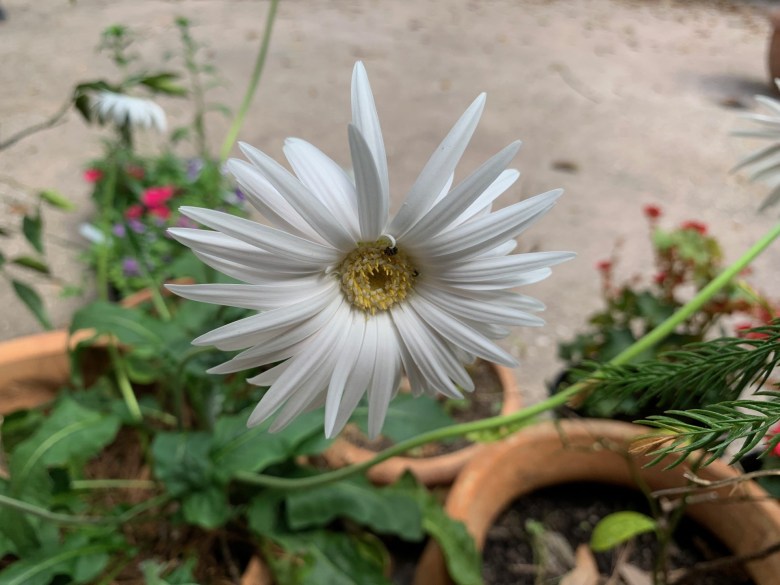 Gerbera daisies are expensive but last for years. Credit: Lorretta Ruggiero
A trip to the garden center in March can make one’s head spin with choices. Go ahead. Splurge.
Sometimes you just need a pricey hydrangea full of blue or pink blooms to raise your spirits. I have several hydrangeas, but they never look as amazing as when I first buy them from the store. No matter. I enjoy the huge blooms for a while, then get excited as they return year after year.
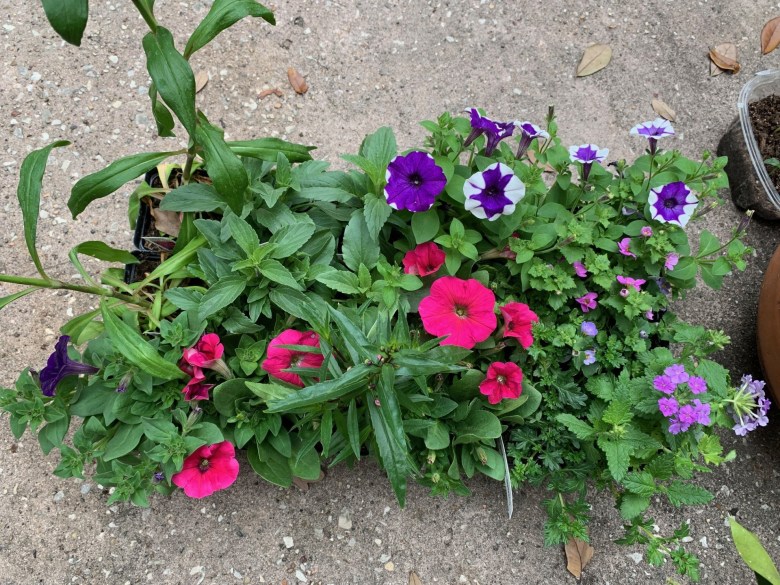 A flat of flowers awaits a lazy gardener. Credit: Lorretta Ruggiero
The nurseries are overflowing right now with annuals, so gardeners can give their flower beds and containers a quick pick-me-up of color. I started early with cold-weather biennials like delphinium, lobelia and foxglove and I am being rewarded for my forward-thinking. Now, it’s time to plant sun-loving petunias, verbena, dianthus, salvia and angelonia. There are also many partial shade workhorses such as impatiens, begonias and torenia (wishbone flowers). Some, like vinca (periwinkle), do well in both.
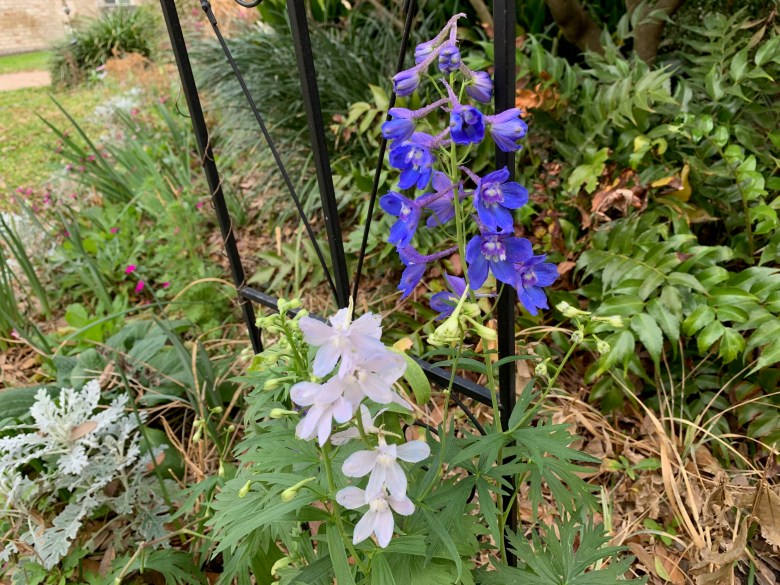 Delphiniums got an early start this year. Credit: Lorretta Ruggiero
Roses should be planted now, too. Buyers will find expensive blooming pots, but the instant gratification can be worth it. There are also bare-root versions which are much cheaper, but take longer to come up to speed. However, the potted roses are often displayed very close together, so diseases like black spot are easily spread.
Veggies and Fruits
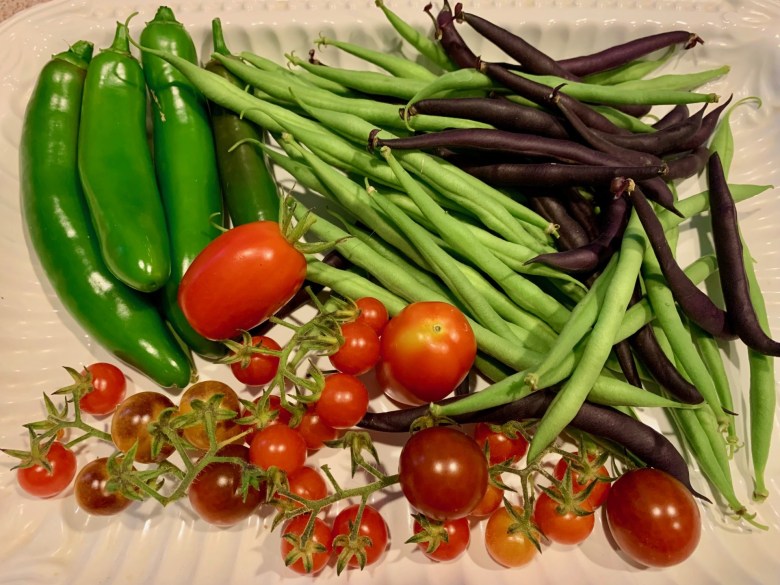 We’re dreaming of a spring harvest. Credit: Lorretta Ruggiero
If you haven’t planted your tomatoes yet, what are you waiting for? It’s time to hustle. Serious growers began sowing seeds indoors in January for planting out in February.
I stopped growing tomatoes and eggplants from seeds because it was too much of a hassle. If plants that I nursed for two months succumbed to one of the million things that can kill a tender seedling, I was devastated.
Yes, veggie plants can be much pricier, but it’s worth it sometimes to let nursery folks do the early nurturing for tomatoes, peppers and eggplants. And this year I was so determined to get tomatoes in quickly, I picked ten varieties from my favorite garden center as soon as they were available.
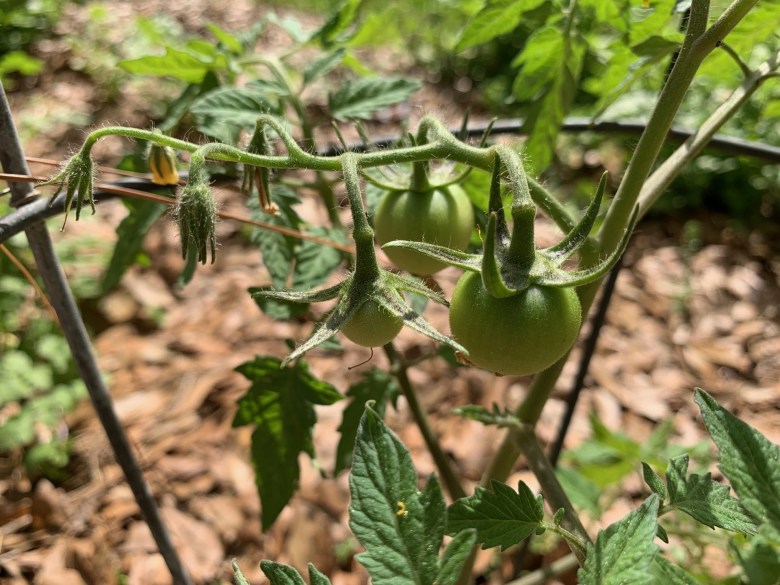 The early gardener gets the tomato. Credit: Lorretta Ruggiero
Which means I won’t be growing as many heirlooms as usual. And that’s okay this year. I need some immediate success in my life and the tomatoes I planted, thanks to the weather, are already fruiting. Here’s my list and we’ll see how they do. Some are old favorites, others are newbies to me. They are mostly disease-resistant hybrids.
Beefmaster (hybrid) Indeterminate, 80 days, slicer
Bella Rosa (hybrid) Determinate, 76+ days, small slicer
Cherokee Carbon (hybrid) Indeterminate, 78 days, slicer
Darkstar (hybrid) 70 days, slicer
Premio (hybrid) Indeterminate, 60 days, small slicer
Bellatrix (hybrid) Determinate, 68 days, paste (Roma-type)
San Marzano (heirloom) Determinate, 75+ days, paste (roma-type)
Juliet (hybrid) Indeterminate, 60 days, grape-type
Sungold (hybrid) Indeterminate, 65 days, cherry-type
Yellow Pear (heirloom) Indeterminate, 75 days, cherry-type
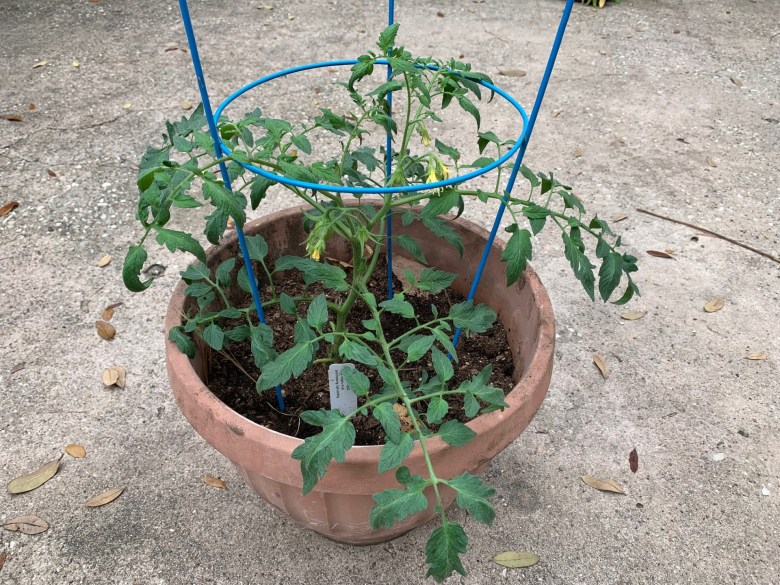 The Bellatrix tomato can grow in a container. Credit: Lorretta Ruggiero
I am growing the Bellatrix (love the name!) in a large container because it doesn’t get very tall. My friend grew a Juliet tomato in a container last year. I told her that it was too big for a container, but she let it sprawl everywhere and she got buckets of large, grape-style fruits. And she let me know it.
Other than tomatoes, I have just planted a Megatron jalapeno and an Early jalapeno. I have plans for more as the season goes on, as well as eggplants in a couple of weeks, though they should be safe to plant now.
For sowing, beans and cucumbers are an easy option for children’s gardens or for impatient gardeners. Bush beans are so simple, everyone should grow them. I used to plant Contender and Dragon’s Tongue, which work well in Houston. This year, I’m sticking to my favorite, Calima. It is a stringless green bean with exceptional flavor and is easy to grow, yielding in about 55 days. Purple Teepee is also a good choice. Make sure to sow seeds every two weeks for a continuous harvest.
For cucumbers, I am sowing China Jade, a seedless type, and Early Fortune. Gardeners can sow seeds now and continue to do so every couple of weeks to ensure success and to extend the season.
In the next couple of weeks, summer squash and zucchini can be sown or planted. I am debating on whether I want to give up any of my garden space for squash since I have very little luck with the harvest. Houston’s farmers markets overflow with yellow squash and green zucchini in the early summer. I may stick to buying from them.
As for fruit trees, now is the optimum time to get them in the ground. I have little success with citrus, though my Key lime gives me a dozen or so little fruits several times a year. It’s only hardy to 40 degrees, so I keep it in a portable container. I have a seven-year-old peach tree that is covered in blooms and even some fruit right now, due to the warm winter weather. I am hopeful that I will get some ripe fruit before the critters steal them all.
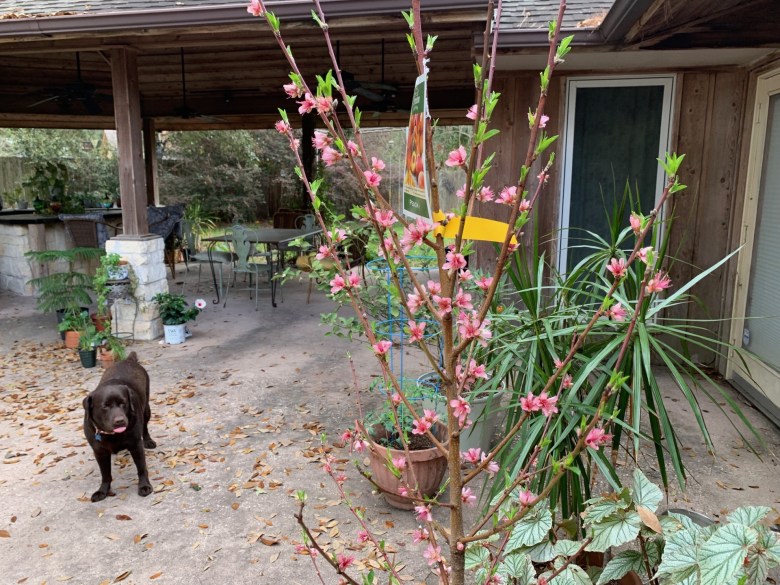 We’ve got a new peach tree and a new pup this year. Credit: Lorretta Ruggiero
For my Cypress garden, peaches, thornless blackberries and figs are the best suppliers of fruit. Blueberries were good last year, but again, the varmints beat me to most of them. The upfront investment can be a lot, but I found a La Feliciana peach tree at the grocery store for $26 that I am taking a chance on. The squirrels will thank me for it.
So, that’s the plan for March.
Let the madness begin!
Related
Comments are closed.