
Key Points
Thin fork prongs inserted near the base of the plant easily get into the soil to reach and pull up the roots.For best results, use gloves and tackle the weeds when they’re small to ensure you’re getting the entire root system.Keep weeds from returning with barriers like landscape fabric, cardboard, or mulch, by encouraging dense plant growth, or spraying weeds with a vinegar solution.
There are so many great gardening hacks to create a stunning outdoor space with plenty of things you can’t buy at your standard garden center. One we heard of recently that we loved? Using a fork to pull weeds.
It’s immediately easy to see the appeal. Forks are small, easy to handle, and not so sharp that they’ll harm surrounding plants—plus, you definitely have one already on hand.
Does weeding your garden with a fork really work, though? We turned to a few gardening experts to find out.
Meet the Expert
Marek Bowers is a self-taught sustainable landscaper, gardener, and the founder of Bolder Green.
Gene Caballero is the co-founder of GreenPal, a company that connects you with local lawn care services.
Rob Palmer is the brand president of Lawn Squad, a fertilization and weed control company.
The Answer? Experts Love This Hack
Credit:
The Spruce / Jason Donnelly
One of the most critical parts of weeding is ensuring you pull out the entire root system, otherwise, the weed will grow back quickly.
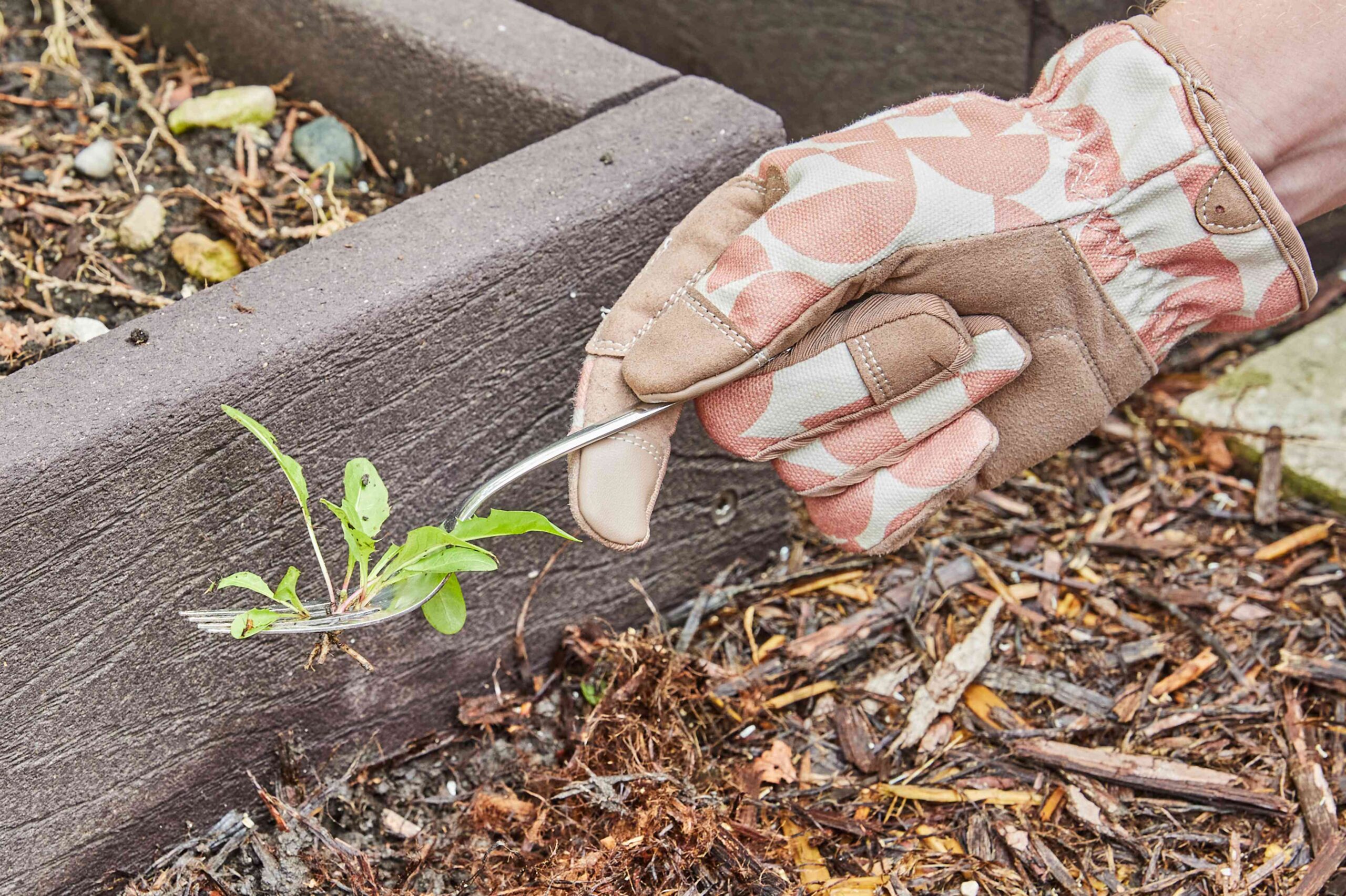
According to Marek Bowers, the founder of Bolder Green, a fork is actually a great option because of its thin prongs. Bowers explains that fork prongs can easily get into the soil and reach the roots—as long as you insert the fork near the base of the weed. Then, simply push down on the handle and lift.
How to Use a Fork to Pull Weeds
Credit:
The Spruce / Jason Donnelly
Tackle Weeds When They’re Small
In order to target weeds that are easiest to remove with a fork, Rob Palmer of Lawn Squad says it’s best to target them when they’re small.
Small weeds are easier to pull up, as they haven’t developed large root systems anchored deep into the soil. Pulling smaller weeds also increases your chances of getting rid of the weed for good.
“Pull them before they produce seeds and create more weeds for you to pull later on,” Palmer says.
Wear Gloves
Gardening gloves are a necessity, especially if you’re using chemicals or potentially running into any poisonous plants. But according to Gene Caballero of GreenPal, they’re especially important when using a fork for weeding.
Unlike other gardening hand tools, forks aren’t exactly designed to be used for manual labor. Without gloves, Caballero warns you’re more at risk of getting blisters—“I learned this the hard way,” he says.
5 Other Great Methods to Keep Weeds Away
Credit:
The Spruce / Jason Donnelly
Landscape fabric: Once you’ve pulled out the weeds with your fork, keeping them away is important. Bowers states this can best be done with a weed barrier or landscaping fabric.Cardboard: Bowers personally has used cardboard topped with a layer of fabric and mulch, and he says this truly prevents weeds from popping up in his yard.Mulch: Another option for weed management, according to Caballero, is to use a thick layer of mulch in your beds. Mulch blocks sunlight and retains soil moisture, which keeps weeds from growing while benefitting your plants. Healthy plant growth: Caballero says another option for fighting back weeds is to focus on cultivating healthy, dense plant growth that naturally crowds out weeds. This will reduce the space available and, as long as you keep on top of weeding early in the season, Caballero assures it will prevent weeds from seeding and growing. Vinegar: “Vinegar, when combined with a squirt of dish soap and a pinch of salt, can effectively kill weeds on a sunny day,” Caballero says.
Comments are closed.