
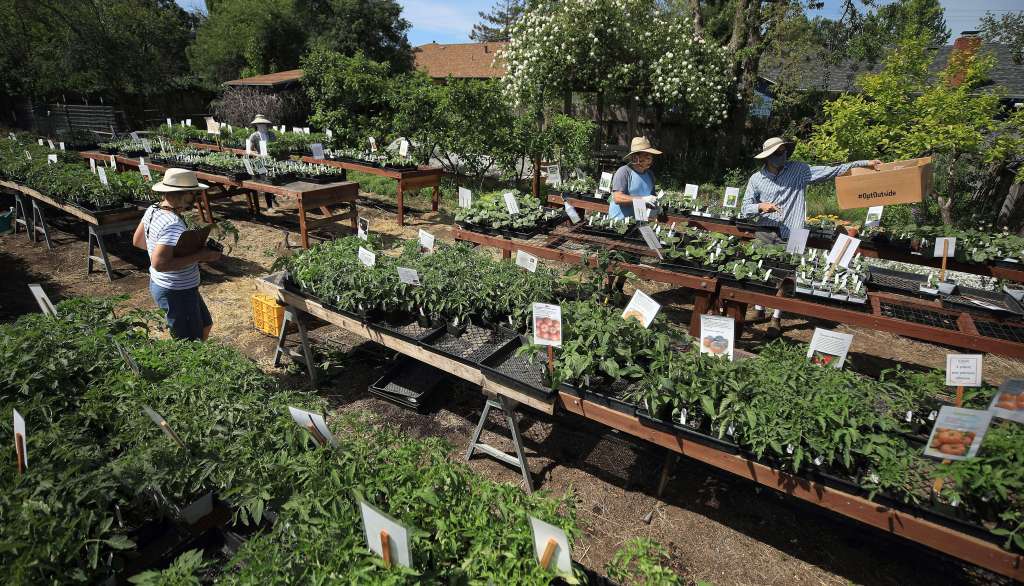
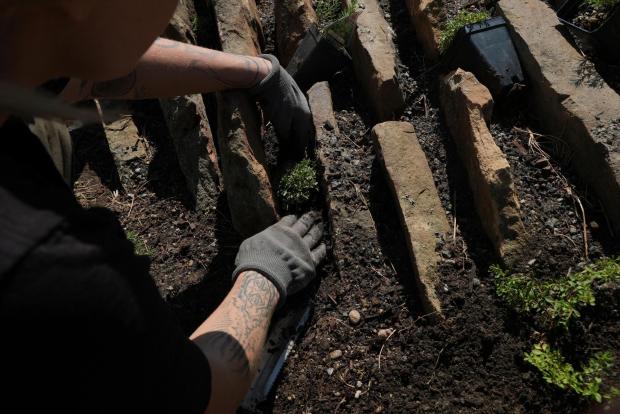
 March is the beginning of the growing season. Here’s what you should be doing in the garden this month. (Brittany Peterson/Associated Press, 2025)
March is an exciting time in the garden as it marks the beginning of the growing season. As the temperature starts to rise and the days grow longer, there’s a lot to do outside. This is the time for essential maintenance and planting, setting the foundation for a vibrant spring garden.
Weed
It’s time to start tackling the weeds that are popping up in our landscapes. These invaders become aggressive garden competitors if you don’t control them early in their life cycles. Plus, they’re easier to pull while the soil is soft and before they set seed.
Don’t add seed-bearing weeds to your home compost; instead put them into your municipal green waste bin. High temperatures are required to kill weed seeds and commercial compost piles get up to 190 degrees.
Unsure if something is a weed? To help you identify the common springtime weeds you may find in your garden and how to manage them without using chemicals, visit our website for photographs of common Sonoma County weeds and information on how to remove the: https://bit.ly/3uqmGBG.
If you want to discourage unwanted weeds over a large area, cover the space with a few layers of newspaper or cardboard and top with mulch. By the end of the season, the paper barrier, along with dead grass and weeds, will decompose and enrich the soil below.
Chop and drop
If you planted cover crops in your garden last fall, this is the time to “chop and drop” them. Chop the plants into small pieces, leave them on the soil, and cover them with a layer of compost. As they decompose, they enrich the soil with nitrogen that will be available for uptake by your spring and summer crops. For more about cover crops see https://bit.ly/3JYwbgX.
If you planted fava beans as a cover crop, cut them down at ground level before the flowers produce seeds. You can also add them to your home compost pile. If you want fava beans for cooking, allow some of them to ripen to maturity.
Plant
Get your food garden started. March is the time to plant broccoli, cabbage, cauliflower, kohlrabi, beets, carrots, collard greens, bunching onions and kale.
Consider adding potatoes to your food garden this year. Potatoes are well suited for growing in containers and ideal for those of us with limited gardening space. To ensure they’re free of disease, look for seed potatoes from a nursery with a Certified Seed Potato tag. Avoid grocery store potatoes; they’re often treated with sprout inhibitor.
March is also optimal for planting bulbs such as amaryllis, gladioli, dahlias, calla lilies and daylilies for a pop of color in your summer garden.
Sow wildflower seeds now for blooms throughout summer and fall. Sonoma County favorites include baby blue-eyes, five spot flowers, gilia, California poppies, clarkias and Chinese houses — all low-maintenance and well adapted to local conditions.
Fertilize
Feed roses and other flowering perennials that are emerging from winter dormancy with an organic fertilizer at bud break and then once a month thereafter.
Fertilize fruit trees. Applying 2 inches of aged compost is ideal. Alternatively, apply a 7-1-7 organic fertilizer in the spring. If mature fruit trees did not put out sufficient shoot growth and/or good fruit set last year, the University of California Agriculture and Natural Resources recommends applying half of a nitrogen fertilizer in March or April and the second half of the treatment in July or August.
When fertilizing, feed the soil, not the plant. Plants get their nutrients from minerals and organic matter in the soil or from added fertilizers, amendments and compost. Always read labels and follow manufacturers’ directions when applying fertilizer.
If you have a lawn, you should fertilize it now. The most important nutrients for lawns are nitrogen, phosphorus and potassium. But most lawns only regularly need nitrogen. To give your lawn the nitrogen it likely needs, decide between a slow-release fertilizer that lasts eight to 10 weeks (typically marked on the package as water-insoluble nitrogen or WIN) or a soluble fertilizer that lasts about four weeks.
Repot and feed houseplants. Their growing season begins in early spring.
Irrigation
Check your irrigation system to see if it needs maintenance. Adjust your irrigation controller for the appropriate season. Plants don’t need as much water in late fall, winter and early spring as they do in the summer months. Adjusting your irrigation schedule can save water and rescue plants from being overwatered. Do a walkthrough to check for any leaks or problems.
Common irrigation problems include clogged nozzles, broken sprinkler heads, leaking pipes/valves, incorrect scheduling and poor water pressure (high or low). These issues often cause uneven water distribution, wasted water, dry spots or overspray onto hardscapes. Routine maintenance, such as checking head alignment and adjusting controller schedules, is crucial for efficiency.
For more information on installing and operating a drip watering system, join Sonoma County Master Gardener Dennis Przybycien on March 21 at the Windsor Regional Library from 11 a.m. to 12:30 p.m. for an informal presentation that will allow time for questions and answers. Registration encouraged: Go to our website https://sonomamg.ucanr.edu/ and click on Upcoming Events to complete your registration. Research resources: Previous monthly garden tips and UC website
Contributors to this week’s column were Diane Judd, Joy Lanzendorfer and Debbie Westrick. The UC Master Gardener Program of Sonoma County sonomamg.ucanr.edu/ provides environmentally sustainable, science-based horticultural information to Sonoma County home gardeners. Send your gardening questions to scmgpd@gmail.com. You will receive answers to your questions either in this newspaper or from our Information Desk. You can contact the Information Desk directly at 707-565-2608 or mgsonoma@ucanr.edu. To receive free gardening tips and news about upcoming events, sign up for our monthly newsletter: https://tinyurl.com/y3uynteb
Comments are closed.