
I am counting down the days to spring, and the first thing I’m going to make from my seasonal farmers’ market haul is Strawberry-Rhubarb Biscuit Cobbler. Made from spring’s earliest offerings, the divine pairing of sweet and tart is greater than the sum of its parts—which is impressive when you consider how delicious a ripe, locally grown strawberry is all on its own.
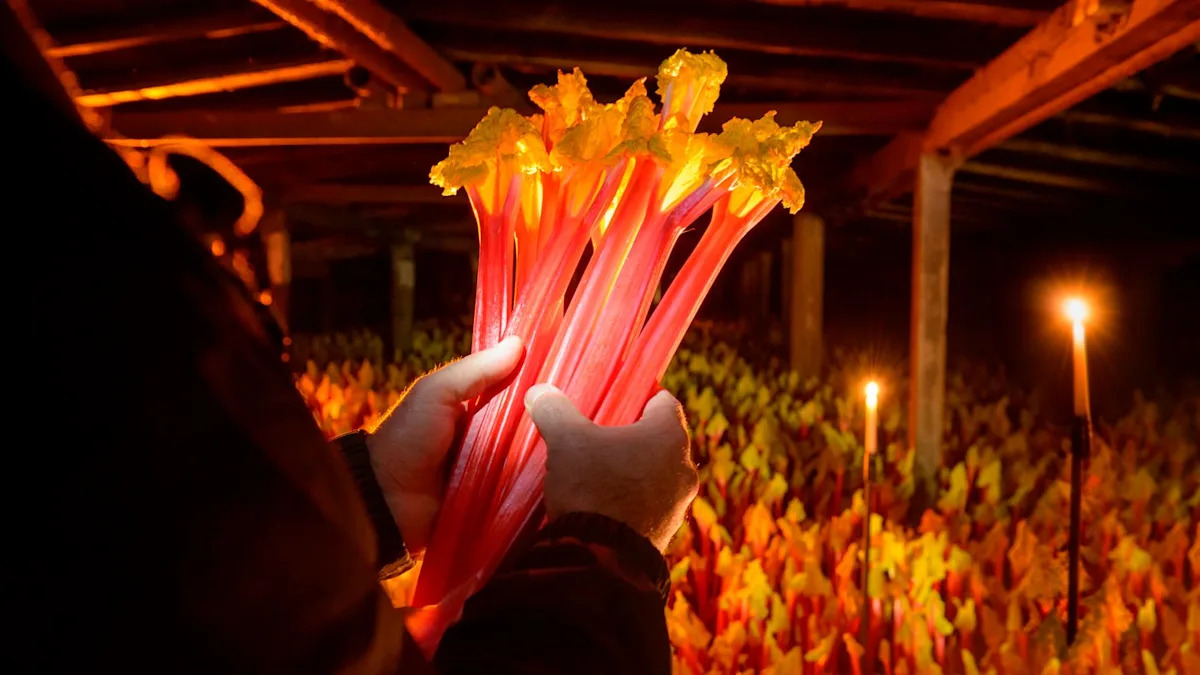
But let’s talk for a moment about the second part of that equation—rhubarb. You might know it’s a spring delicacy, but did you know that there’s a dark side to its growing process? And I don’t mean anything unsavory; I mean literally. Limiting light exposure is the secret to getting the earliest, tastiest, most tender, jewel-toned stalks around.
Country Living’s guide to growing rhubarb explains:
“In early spring, rhubarb can be grown in the absence of light—a technique known as forcing. This produces tender, sweet, deep red stalks that are ready to harvest earlier than those from a plant left uncovered.”
While farmers may do this on a large scale in dark barns, home gardeners can achieve the same effect with a simple setup. If you already have an established patch of rhubarb, here’s what you do:
As soon as the stalks start poking up in early spring, give the plant a boost with a balanced fertilizer around the base and gently work it into the soil. Then comes the slightly dramatic part: cover the entire plant with a large, opaque container. An upside-down trash can or big nursery pot does the trick. Just be sure no light sneaks in. (Even a little sun can cause the stalks to twist instead of growing tall and straight.) Weigh the cover down so a strong wind doesn’t undo your efforts.
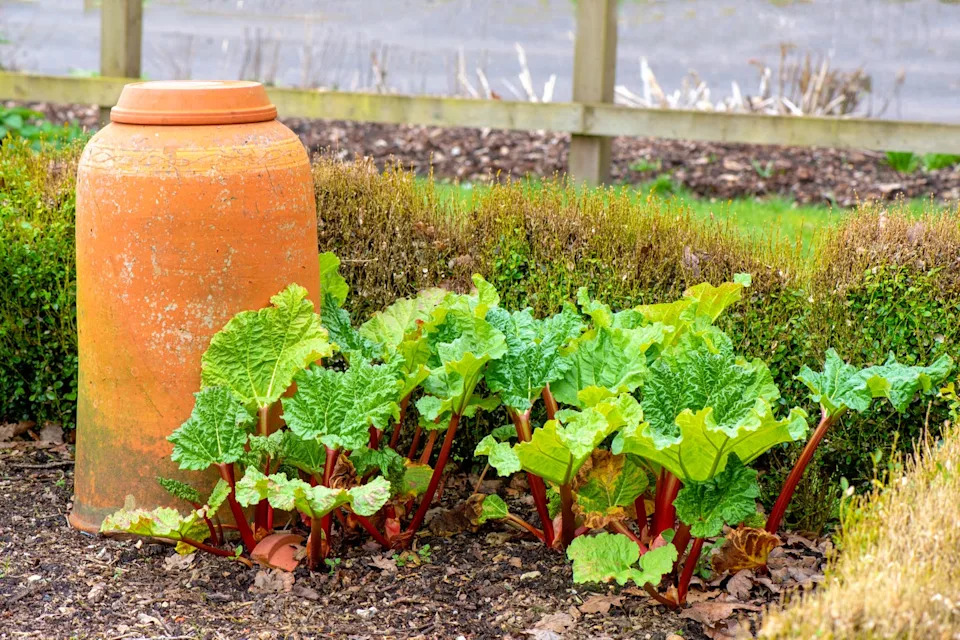
Spring rhubarb emerging in the garden. On the left, an upside-down terracotta pot blocks the light, creating the dark conditions needed for forcing. Jacky Parker Photography – Getty Images
In about a month or two, you’ll lift the cover to find vibrant red stalks topped with pale, almost buttery leaves—ready to pick earlier than usual. Harvest as you normally would, then let the plant return to life in the sunshine for the rest of the season.
One important note before you try this time-honored gardener’s trick: forcing takes a lot out of a plant. Only try it on well-established crowns—at least three years old—and give each plant a year off in between.
Just remember, when it comes to rhubarb, timing is everything. If learning about the dark side of growing it has inspired you to add it to your veggie garden, late winter to early spring is the best time to plant this hardy perennial in most parts of the country. As soon as you can work the soil, get to planting!
You Might Also Like
Comments are closed.