
 by Jude Hsiang
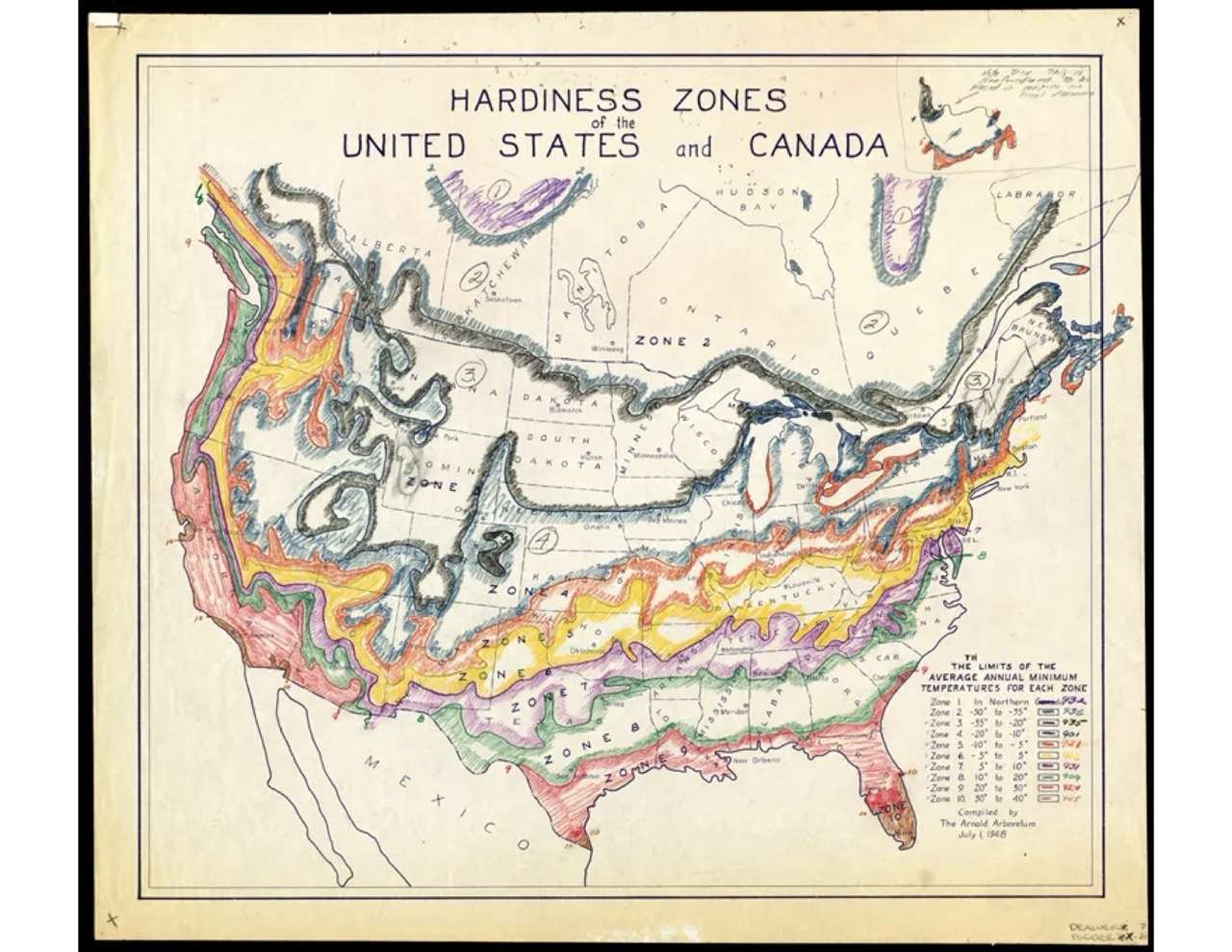
Most people who garden in North America are familiar with the map known formally as the USDA Plant Hardiness Zone Map, 2023. Agricultural Research Service, U.S. Department of Agriculture. Central Maine folks are generally living in Zone 5, except for a thin strip along the coast designated as Zone 6.
The zones marked on the colorful maps are based on the average lowest winter temperatures and give us a rough baseline for which plants will survive. The lower the zone’s number, the colder the winters. Zone 5 covers the areas where the average lowest temperatures are -10 to -20 degrees Fahrenheit. Zone 6 lows, where ocean currents moderate the temperature, are 0 to -10. To be extra particular, the zones are divided into a and b, 5 degree zones.
This guide for planting is just one of the many ways that our national, and state, agriculture departments make the results of scientific research available at no charge.The United States Department of Agriculture (USDA) began with an act of Congress in 1862 under President Abraham Lincoln, the son of poor Kentucky farmers. Even as the Civil War raged, his administration also established the Homestead Act and the first intercontinental railroads. The Land Grant colleges were begun, too, including the University of Maine, and brought higher education to more people, In addition to the classical subjects taught at the earlier American colleges founded to produce lawyers, ministers, and teachers, these schools offered training in agriculture and engineering.
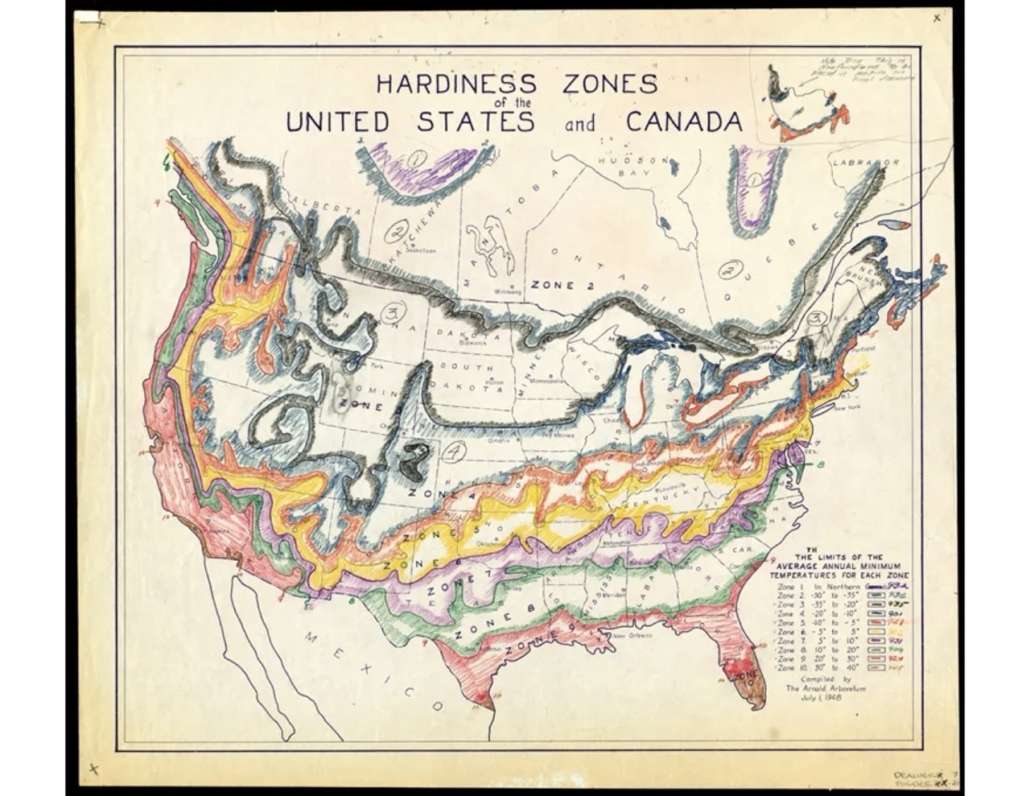
The first USDA Plant Hardiness Zone Map was published 98 years ago by researchers at the Arnold Arboretum, in Boston. (By the way, the Arboretum, with its wonderful collection of woody plants from temperate zones around the world, is free and open every day.)
That first planting zone map of 1927 was compiled with information that had been recorded for about 100 years. It has been revised from time to time as our scientific understanding of plants has increased and the climate has changed. The most recent map was released in 2023, but many Mainers will find that comparing the newest map to older ones from favorite gardening books of the last 50 years won’t show significant changes.
While the USDA zones focus on the coldest likely temperatures, there are other maps that have been developed for high temperatures. And, of course, there are many other factors that affect the plants’ resilience. The length of the frost free growing season is important as a severe frost can occur even as spring or fall temperatures appear to be steady. The available groundwater and rainfall can change seasonally. The soil chemistry is of great importance and our University of Maine’s soil lab offers excellent testing services for home gardeners and farmers alike.
Gardeners learn their property’s microclimates from experience. There may be a warmer, or more protected, area where a plant from a more southern zone will thrive. Another spot may be your very own Siberia. If you live in a “frost dip” you’ll notice your plants leaf out and bloom later than those of your neighbors on the nearby hills and the first frosts and snowfalls come earlier. My old lilacs are in a cooler microclimate of our already frost dip cool property. They were planted on the north side of the house and get frequent strong breezes across the field on the west. The lilacs I see along the road to the village are growing in higher, sunnier locations and reach full bloom a week to 10 days earlier than mine. I can enjoy a longer lilac season, just by going out to do errands.
© Judith Chute Hsiang
Jude Hsiang is a retired Extension Master Gardener Program instructor and a member of the China Community Garden.
Responsible journalism is hard work!
It is also expensive!
If you enjoy reading The Town Line and the good news we bring you each week, would you consider a donation to help us continue the work we’re doing?
The Town Line is a 501(c)(3) nonprofit private foundation, and all donations are tax deductible under the Internal Revenue Service code.
To help, please visit our online donation page or mail a check payable to The Town Line, PO Box 89, South China, ME 04358. Your contribution is appreciated!
Comments are closed.