
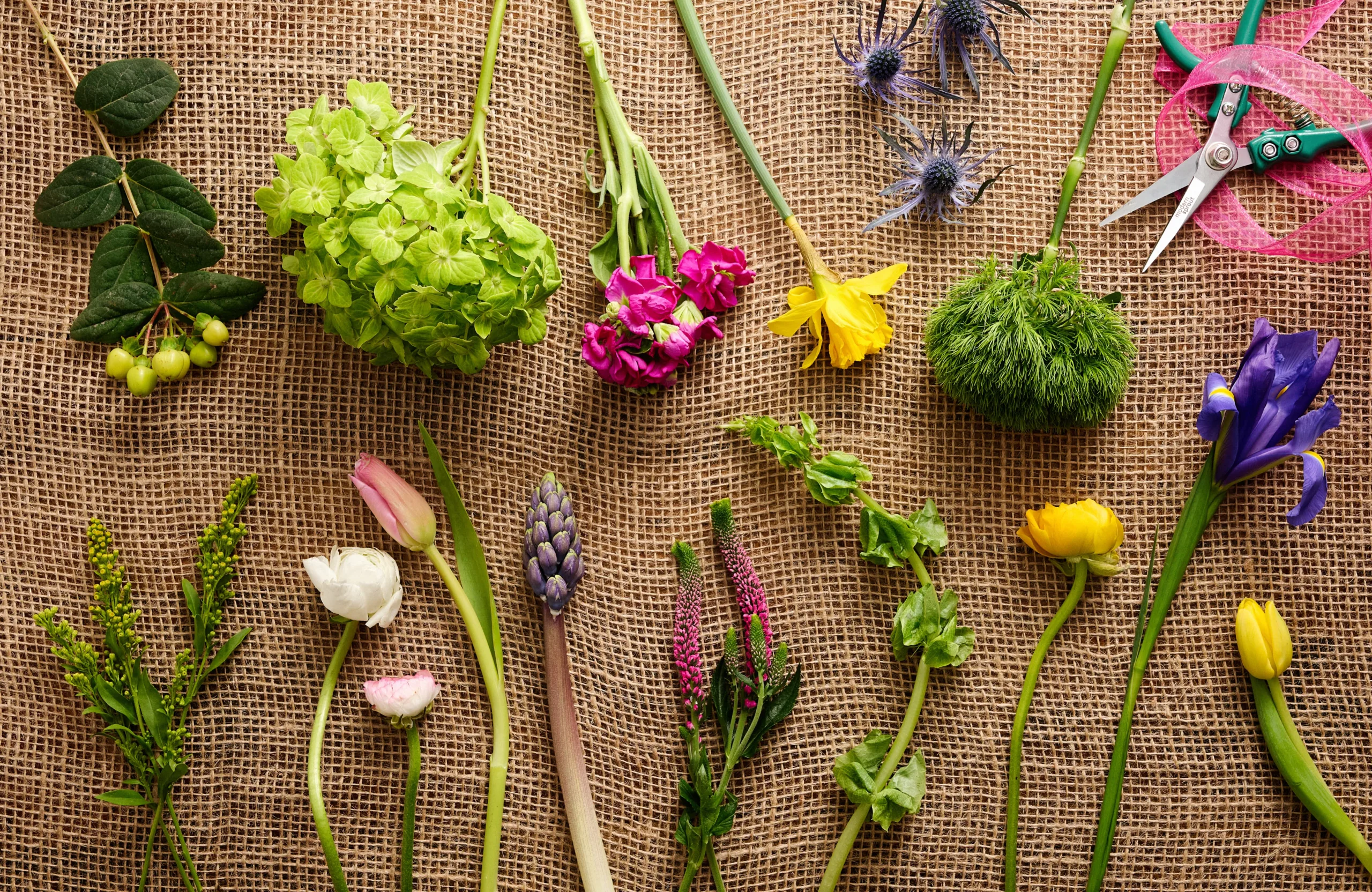
Sure, nearly 130 of Virginia’s most stunning private homes and gardens open their gates each spring for Historic Garden Week, the biggest and oldest house and garden tour in the country. Yes, 29 tours across eight days raise funds to preserve historic landscapes statewide. But in addition to the gorgeous homes and gardens on each tour, here’s what also stops visitors in their tracks: over 1,000 jaw-dropping floral arrangements created by members of the Garden Club of Virginia’s 48 clubs around the state.
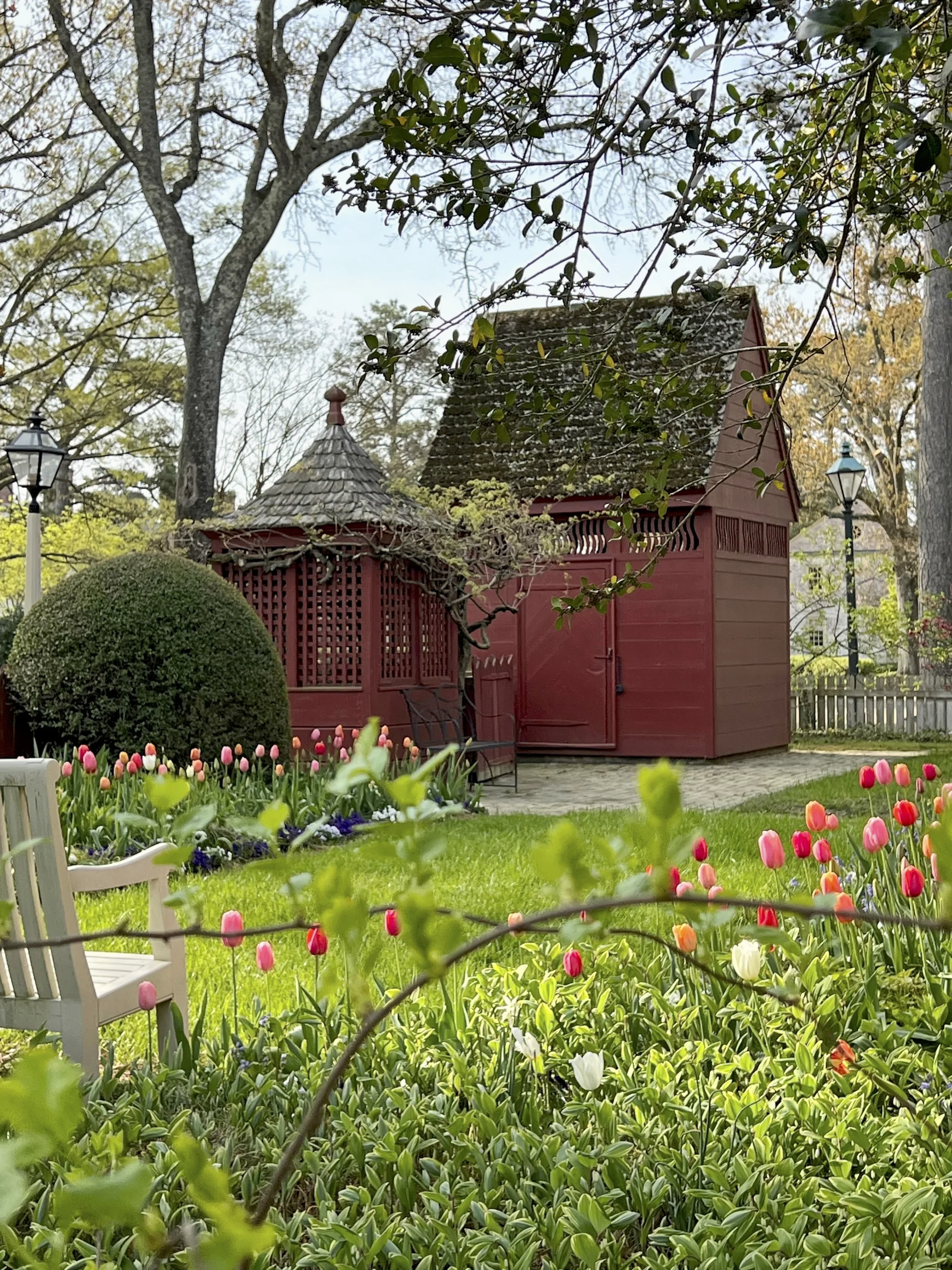
Tulips in bloom at Colonial Williamsburg. Photo by Joyce Feder

Yellow baptisia, peonies, viburnum, Solomon’s seal, and tulips make an exquisite arrangement. Photo by Terri Lowman; Photos courtesy of the Garden Club of Virginia
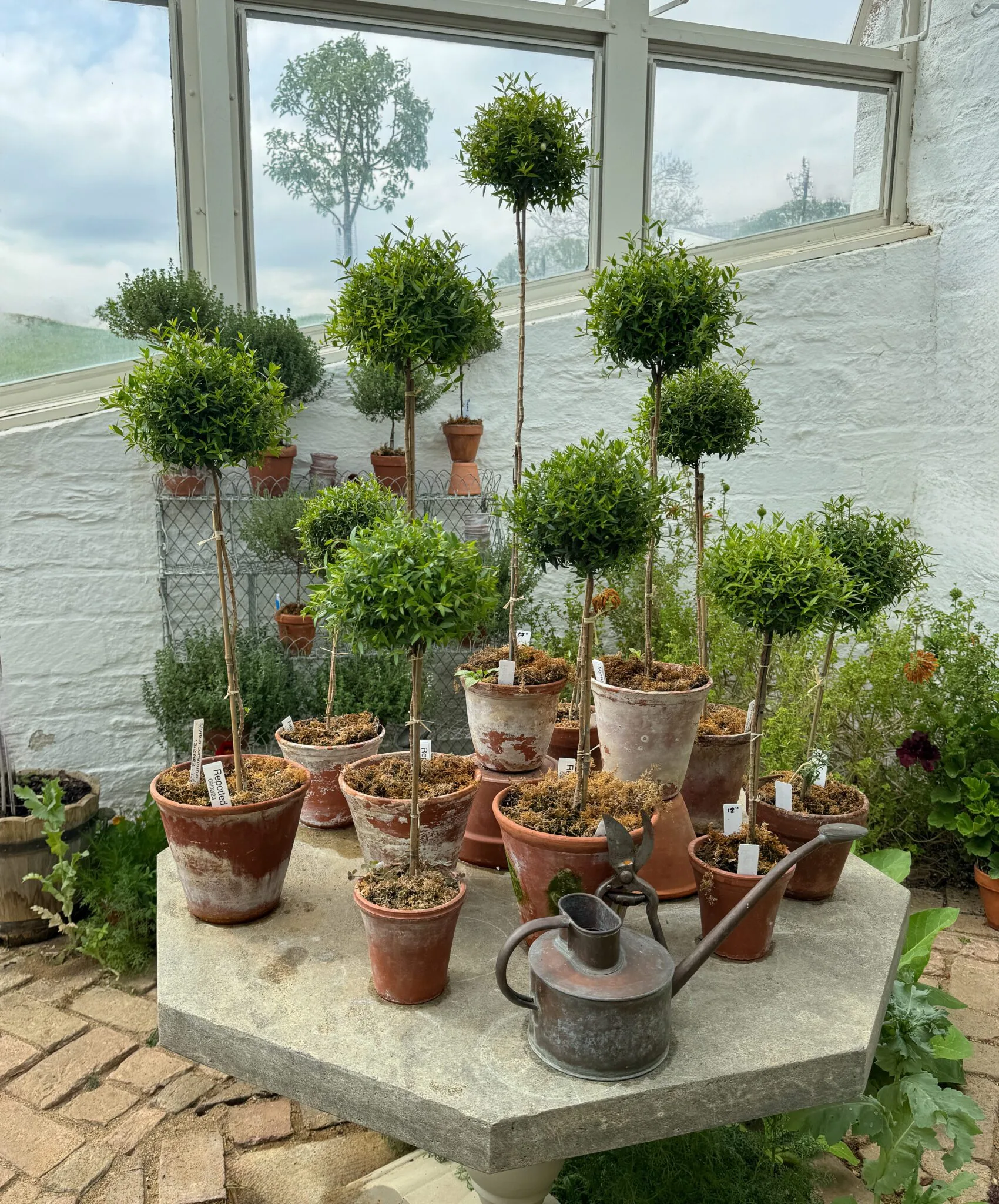
Bunny Mellon’s topiaries
at Oak Spring Farm. Photo by Georgiana Watt
“Arranging day is everyone’s favorite,” says Virginia Gillock, HGW state chairman and member of the Augusta Garden Club in Staunton. The day before each tour opens, buckets and buckets of garden-grown blooms appear—meticulously conditioned, carefully selected. Experienced arrangers mentor novices. Homeowners offer treasured vases. From Cape Charles to Chatham and Leesburg to Lexington, hours vanish as thousands of GCV members perfect their designs.
“The level of creativity is nothing short of miraculous,” Gillock explains. “They range from a single stunning stem in crystal to massive arrangements covering an entryway.”
These aren’t your grandmother’s centerpieces. Some GCV arrangers are competitive flower show veterans; others are complete newbies, happy to jump in and flex their creative juices. They all treat Historic Garden Week like their own Super Bowl. They raid their own gardens for seasonal blooms and native plants, then transform grand entryways and intimate parlors into Instagram-shattering works of art. Think outside-the-box designs that complement 18th-century architecture one moment and modern interiors the next.
“The flowers are what people remember,” says one longtime volunteer. “They come for the houses. They leave talking about the arrangements.”
Last year, 24,000 visitors from 42 states and 16 countries made the pilgrimage. This April, Williamsburg’s tour celebrates Colonial Williamsburg’s 100th anniversary with access to the Governor’s Palace gardens and thousands of crimson ‘Kingsblood’ tulips, HGW’s flower of the year and guaranteed to make even Thomas Jefferson swoon.
The real magic? It’s all volunteer-driven, garden-grown, and unapologetically spectacular.
“It’s like seeing a beehive at work,” says Gillock, “producing beautiful creations for an unforgettable experience.
Tool Time
Tools can make or break an arrangement. These will bring you one step closer to success.
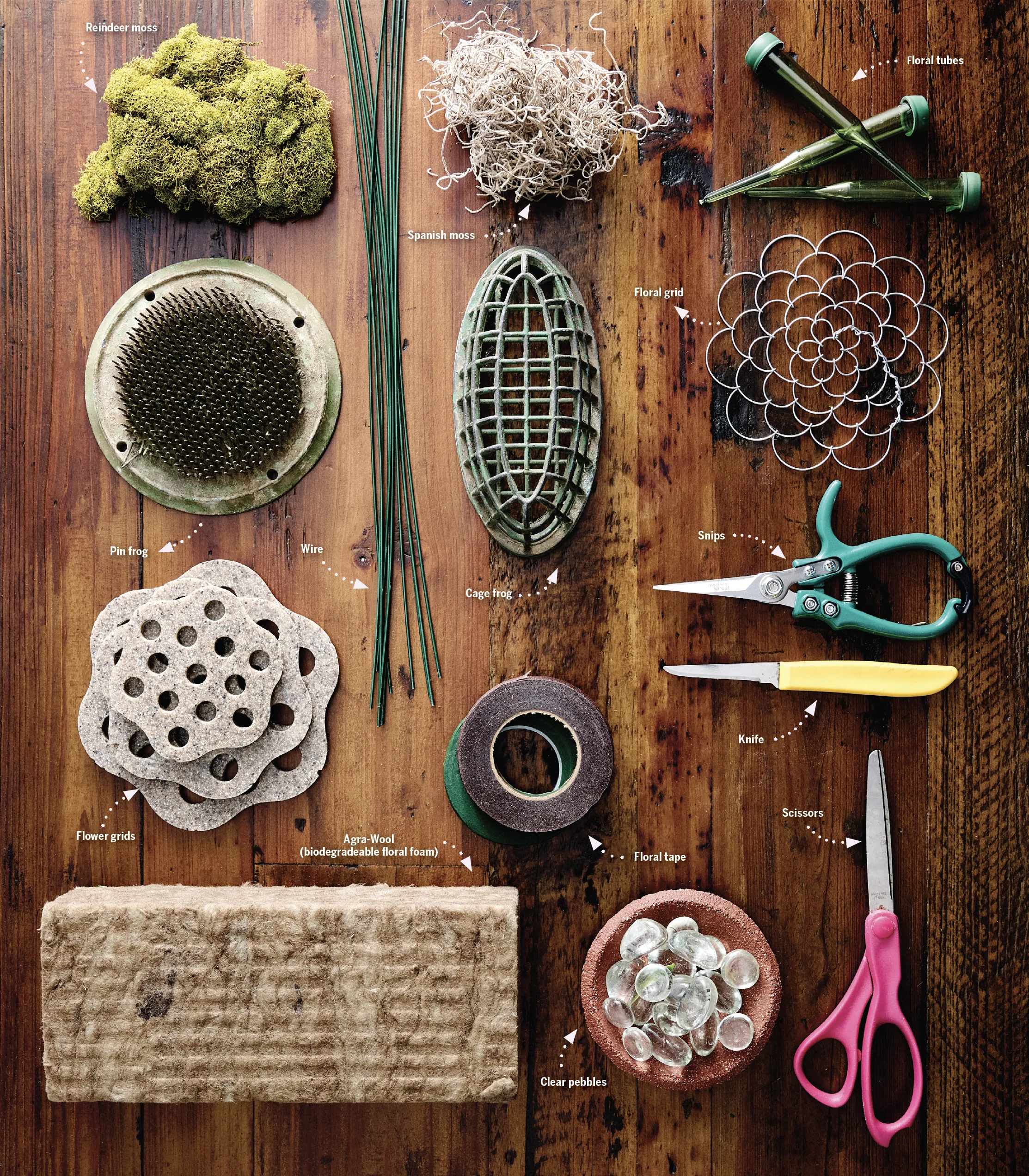 Photo by Fred + Elliott
Info to Know
Historic Garden Week • April 18–25
✿ Access to nearly 130 of Virginia’s most beautiful private properties and historic landmarks
✿ 29 tours—from the Blue Ridge Mountains to the beaches of the Atlantic
✿ Proceeds benefit garden restorations at historic public properties throughout the state and support a historic landscape research fellowship program.
✿ 2026 Historic Garden Week Flower: Kingsblood Tulip
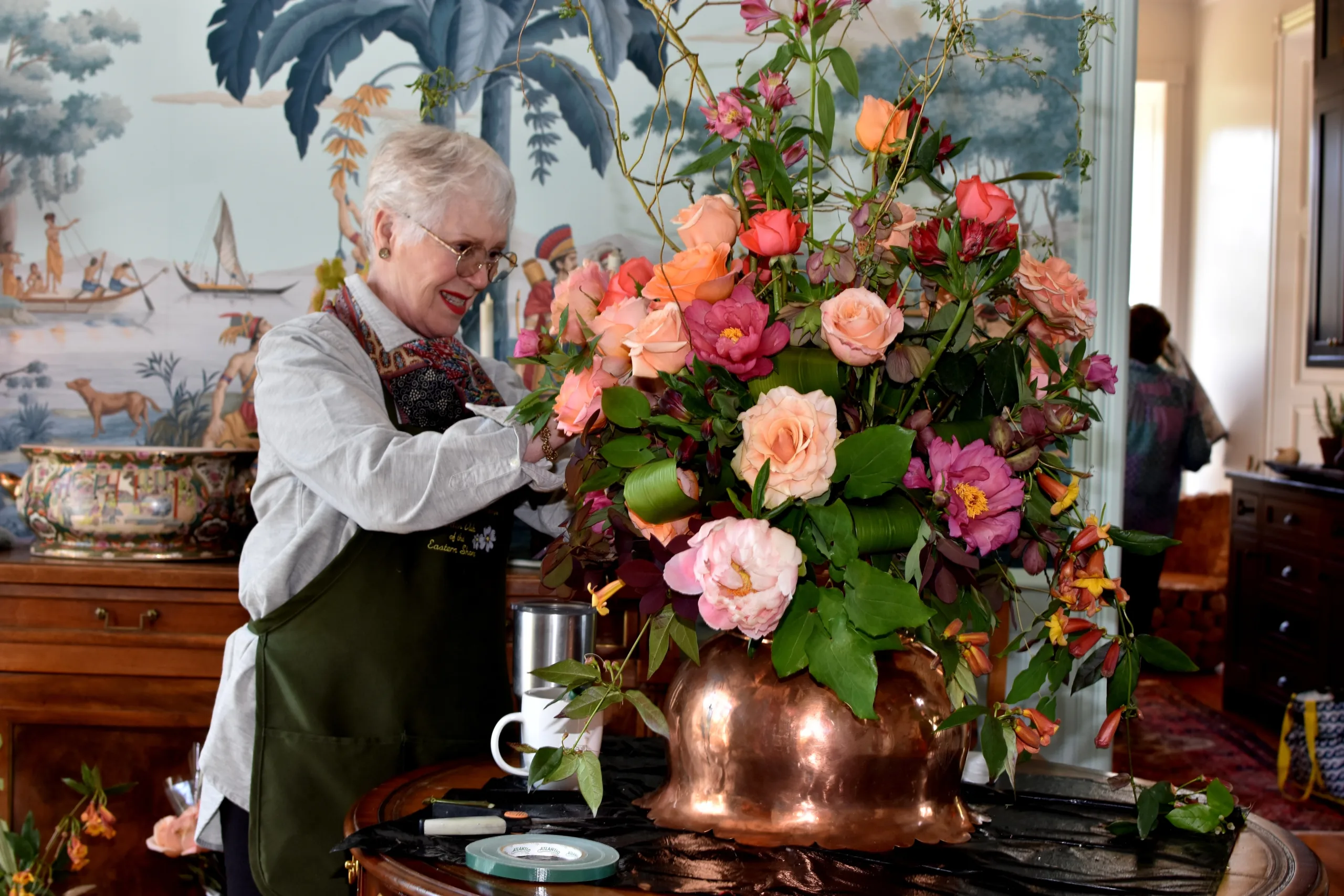 Photo by Debbie Coole
The Mellon Touch
Step into Bunny’s rarified world at Oak Spring.
During this year’s Historic Garden Week, prepare for something extraordinary: Oak Spring, the storied Upperville estate where Bunny and Paul Mellon perfected the art of gracious living, opens its doors April 23–24. Lose yourself in the extensive gardens, discover the formal greenhouse, and wander through parts of the main residence, where beauty was cultivated in every corner.
The timing couldn’t be more perfect. The Enchanting Interiors of Bunny Mellon (Rizzoli, 2026) has just arrived, offering an unprecedented look inside the philanthropist’s rarified world through artist Snowy Campbell’s luminous paintings that bring the Mellons’ private sanctuaries—their homes in Virginia, Washington, D.C., and New York—to life.
Bunny (1910–2014), the ultimate aesthete, took decorating to new heights, creating an entirely new vision of sophisticated American living—one that married priceless collections with genuine warmth. In the pages of The Enchanting Interiors of Bunny Mellon, Richmond-born style icon Charlotte Moss, Oak Spring Garden Foundation president Peter Crane, and society chronicler James Reginato unlock her secrets.
Tour the estate in person, then take the magic home. It’s your chance to experience the legendary taste that continues to influence generations. For tickets, visit GCVirginia.org.

Photos courtesy of Oak Spring Garden Foundation
by terri lowman | courtesy of the garden club of virginia
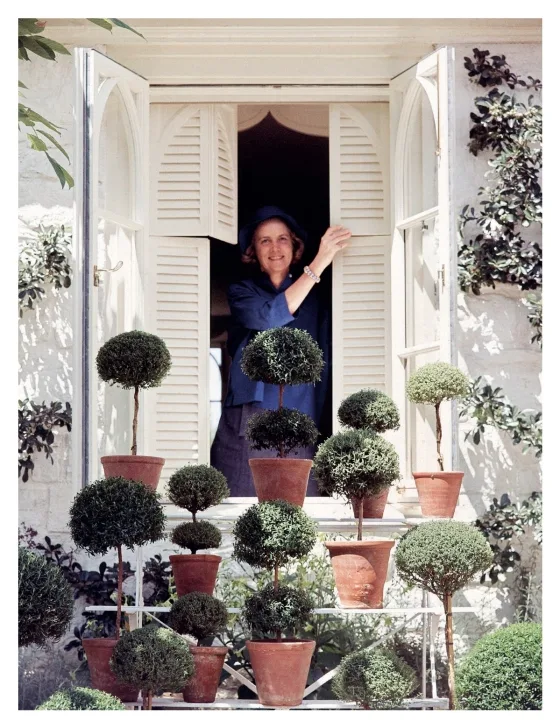
Bunny Mellon
Tried & True
Arranging tips from the Garden Club of Virginia.
✿ To stabilize stems and blooms, the GCV recommends using flower-arranging mechanics like chicken wire, flower frogs, or pebbles. Non-biodegradable floral foam is discouraged, but new products like Agra-Wool, made from basalt rock fibers and a sugar-based binder, make great alternatives.
✿ Avoid using invasive species in flower arrangements, including butterfly bush, nandina, privet, wisteria, and bittersweet. Refer to PlantVirginiaNatives.org for more information.
✿ Opt for native Virginia plant material when you can. Scan the QR code for the GCV’s top picks for flower arranging and showstopping additions to your garden.
✿ Compost leftover flowers and foliage, as well as spent arrangements after they have been enjoyed. Or consider donating them to senior centers or hospitals
for residents and patients to enjoy.
✿ Choose seasonal, local, or garden-grown flowers to reduce the cost associated with transporting exotic flowers. If you don’t have a garden of your own, purchase flowers at farmers’ markets and support local businesses like flower farms.
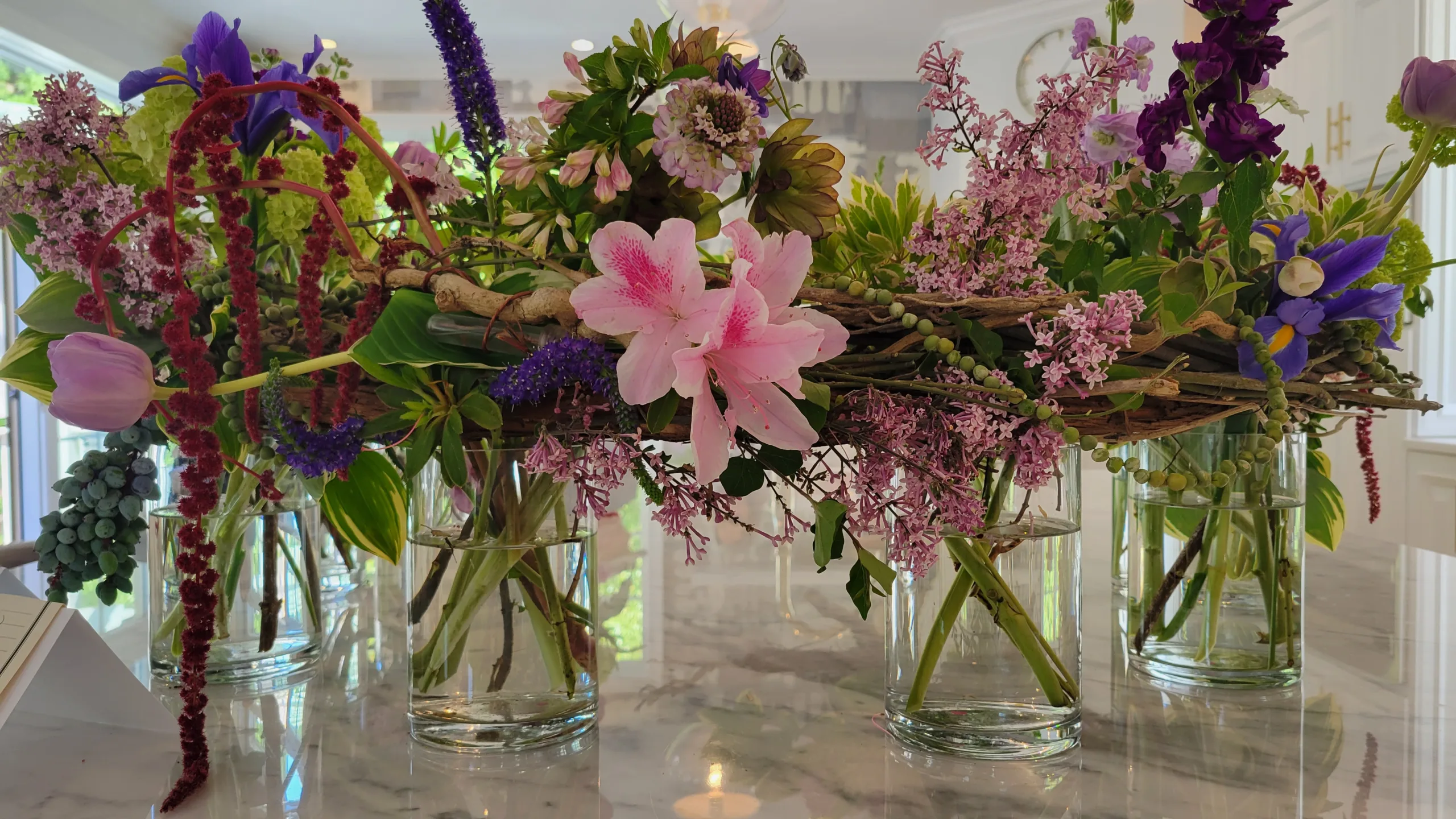 A cleverly constructed woven twig bridge connects glass cylinders with lilac, azalea, hellebores, hosta, hanging amaranthus, and viburnum.
Spring-blooming plants that work especially well in arrangements—from native columbine to Virginia bluebells—recommended by the Garden Club of Virginia:
Native columbine (Aquilegia canadensis): Nodding red and yellow flowers reach up to 3 feet tall and one of Thomas Jefferson’s favorites. An easy and prolific reseeder.
Amsonia: One of the first plants to bloom in many spring gardens, with pale blue star-like flowers and fringy foliage that provide a dynamic contrast to bigger, bolder blooms.
Virginia bluebells (Mertensia): This is Virginia’s state wildflower and a harbinger of spring, blooming in great swaths in woodlands. Pink buds emerge in early spring, opening to blue bell-shaped flowers. An ephemeral beauty, it’s hardy in cut flower arrangements.
Bleeding heart (Dicentra spectabilis): Delicate, but surprisingly long-lived as a cut flower.
Foam flower (Tiarella): Easy to grow and happiest in partial shade, these dainty plants bloom in the spring, offering short-lived flowers on delicate stems.
Ferns: Native ferns such as sensitive fern and hay-scented fern provide beautiful texture to cut flower arrangements.
Solomon’s seal (Polygonatum): Dense colonies of stems with rows of bell-like flowers that dangle below. Particularly loved by arrangers for their graceful arching stems that provide structure and support in large floral designs.
Bee balm or wild bergamot (Monarda): Makes a great cut flower in springtime. Flowers are generally lilac to pink.
Coreopsis: Colorful, daisy-like flowers that bloom for months if they’re happy. Many varieties.
Baptista (Baptista australis): GCV’s 2026 Native Plant of the Year, which looks fabulous in arrangements. Its elegant flower spikes can be blue, purple, or yellow, and its graceful foliage resembles eucalyptus. The seed pods in the spring are pale green and add unexpected interest and ornamental value to arrangements.
Mountain mint (Pycnanthemum), especially Blunt Mountain mint: Stems hold up well in arrangements, although it’s a vigorous spreader, so it should be placed in gardens with care.
Beardtongue (Pentstemon digitalis): Resembles snapdragon. Like so many natives, these are attractive to both butterflies and hummingbirds.
Coral honeysuckle (Lonicera sempervirens): This native vine adds color, fragrance, and whimsy.
Jacob’s Ladder (Polemonium reptans): While short-lived, this woodland plant and its dainty leaves and blue flowers make a great filler in smaller arrangements.
Viburnum: This shrub with lacy white flowers is superb for filler flowers, foliage, and berries, especially Arrowwood and Mapleleaf.
Virginia sweetspire (Itea virginica): Drooping racemes are particularly unusual in an arrangement and provide visual movement.
Mountain laurel (Kalmia latifolia): An evergreen shrub that’s underused in floral arranging, even though its star-shaped flowers, born in adorable clusters, are long-lasting.
Serviceberry (Amelanchier): This small tree or large shrub has it all—delicate white flowers in the spring are some of the first to bloom, followed by berries beloved by birds. In the fall, the foliage puts on quite a show.
Eastern Redbud (Cercis canadensis): This early-blooming tree makes an excellent food source for pollinators and can add drama and height to a large floral display.
Dogwood (Cornus florida): State tree of Virginia; woody branches in spring are tricky to condition properly, but can be stunning in a large display, especially if combined with azaleas.
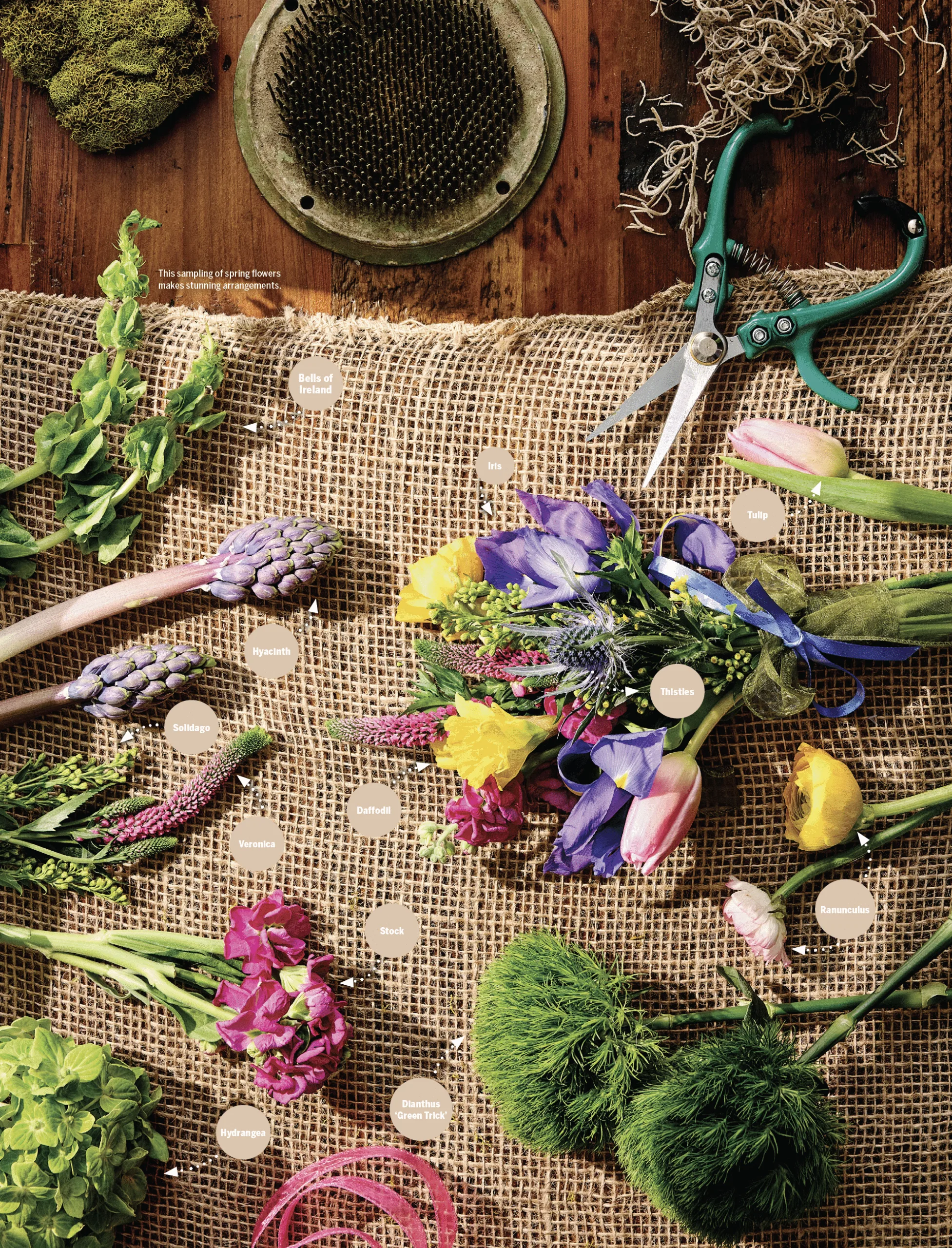 Photo by Fred + Elliott
Featured photo by Fred + Elliott. This article originally appeared in the April 2026 issue.
Comments are closed.