
By Mike Ellis
One of the big problems with gardening is all that work.
It can be relaxing, sure, but also annoying to pluck the weeds, dose out the fertilizer, pluck the weeds, remember to water and then pluck the weeds again.
And again.
There’s no magic fix for doing some work but there’s a big hack that anyone can do even in a small yard: move toward native plants.
It means less watering and fertilizer, a lot less: around zero.
And a lot less weeding.
There still will be, regretfully, more than zero weeding, but in just a short time the difference will be night and day.
After a few years, or less, there will be more wildlife even in Lansing and East Lansing neighborhoods. Plant it and they’ll come, from birds and bees to what the experts call ‘charismatic megafauna’ like deer and hawks.
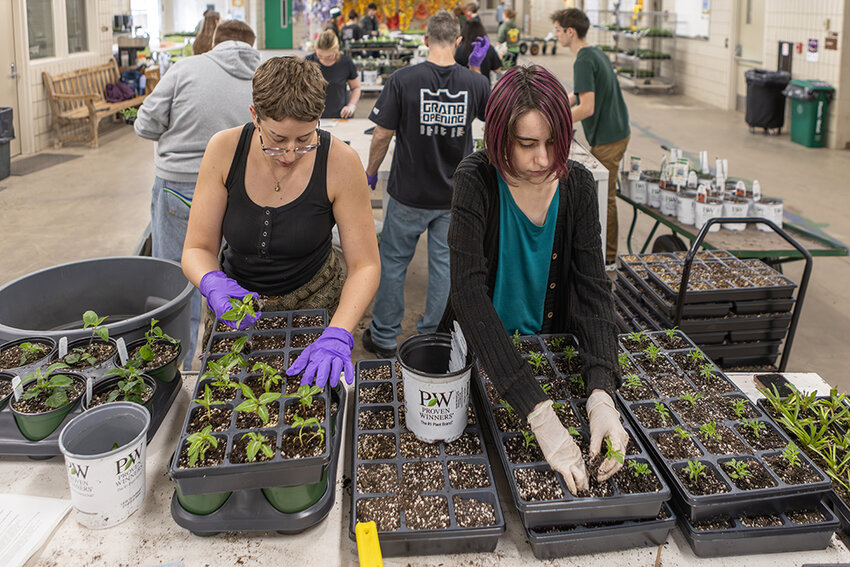
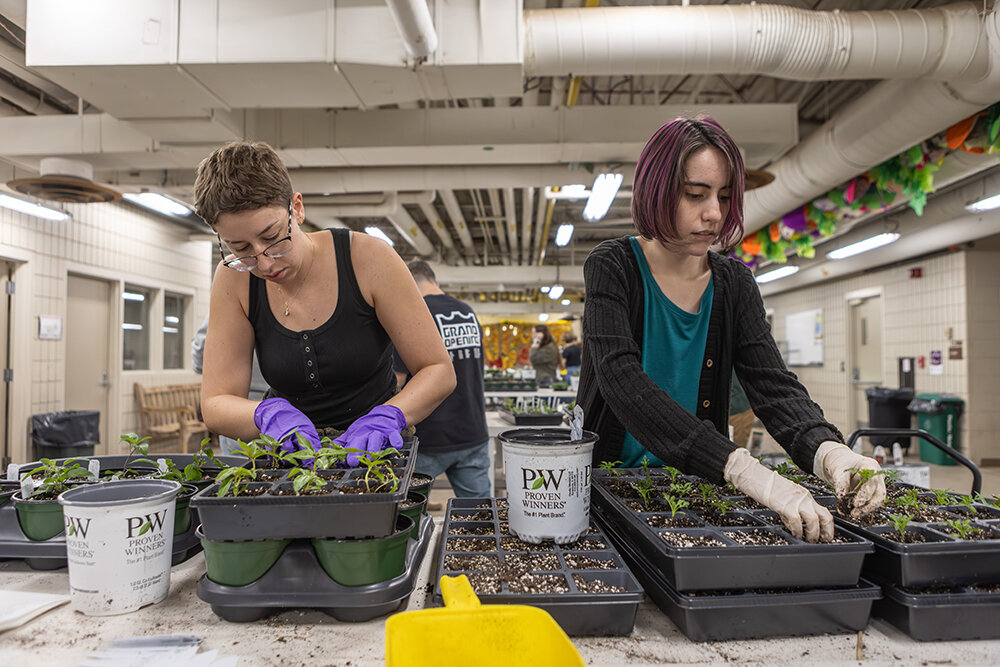
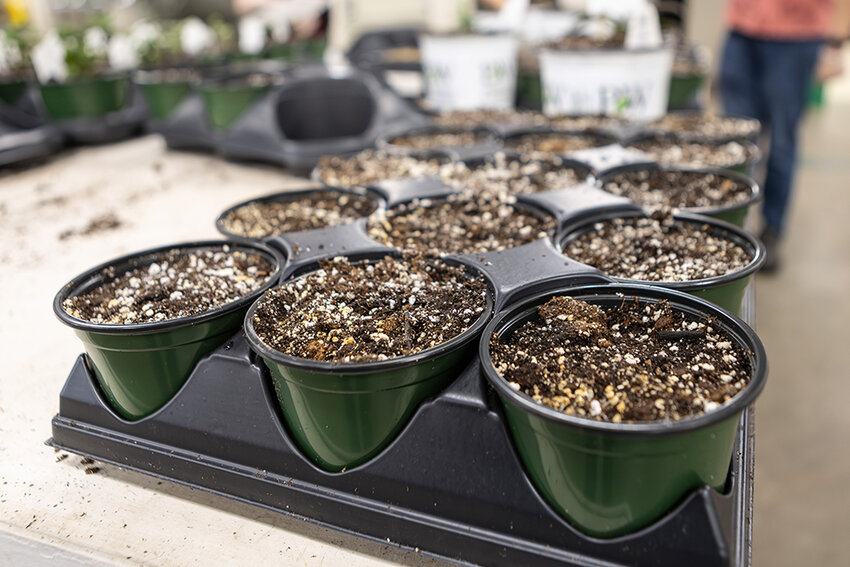
MSU horticulture students pot seedlings for their floriculture production course in February.
Raymond Holt
The kicker is that native plants are usually less work than what most people are used to doing, using non-native or alien species, which are super common and often the default plants at stores.
Sometimes those default alien plants are labeled pest-free, and one of the big shifts in using native plants is to start seeing ‘pest-free’ plants as useless NPCs, or non-player characters in a video game, something that’s just part of the decor.
Any plant that has no pests is a giant freeloader, sucking up sunlight and space and your time while giving back nothing to the ecosystem. No pests means no pollinators and no insects and that means no birds and no bigger animals.
The non-natives take a lot of resources but are just empty calories.
They make for a sterile garden: plants that live and breathe and provide shelter but no sustenance. Pest-free makes for a garden with a natural nutritional value close to plastic for most of the ecosystem.
Do less
There’s a way to enlist suburban and urban yards to help make up for the loss of wild spaces, and it can be easier than what you’ve been doing already.
One of the key books for today’s native gardeners is Douglas Tallamy’s Bringing Nature Home (2007), which urges anyone with a yard to start to switch over to native plants as a bulwark against insect and animal food source losses.
Tallamy is the keynote speaker at this weekend’s Wildflower Association of Michigan conference at MSU. Tickets are already sold, so try dressing up like a native shrub and sneaking in.
Tallamy says that without modifying our spaces – homes, work, play – to accommodate plants, insects and animals, “nearly all species of wildlife native to the United States will disappear forever.”
His case for laziness: “The sterile garden’s continued existence depends entirely on the frantic efforts of the gardener alone.”
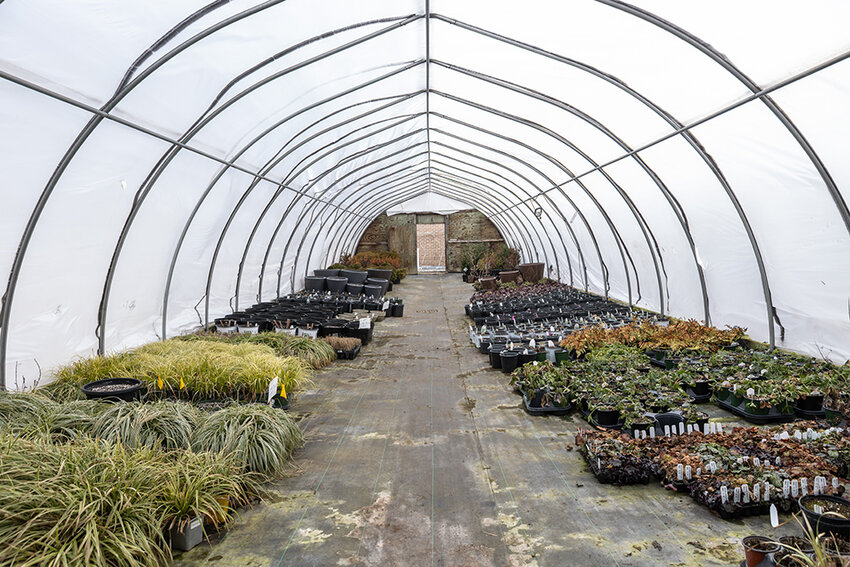
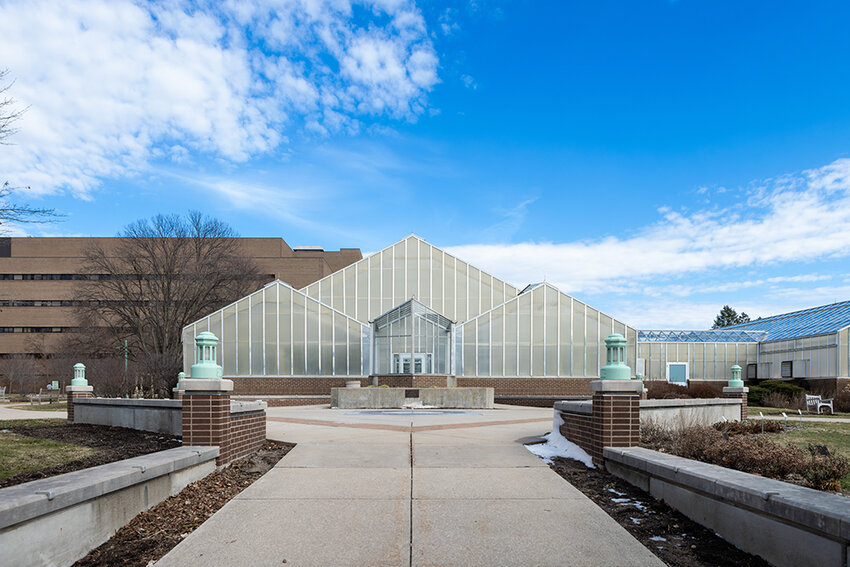
Michigan State University Department of Horticulture greenhouses.
Raymond Holt
Growing movement
For decades, the native plant movement has been growing across America, including in Michigan, with mid-Michigan native plant advocates like Bill Schneider, founder of Wildtype Native Plant Nursery, and Esther Durnwald, owner of Michigan Wildflower Farm.
After 30 years of working on natives, they said it feels like native plants have grown from a fringe to being widely accepted today and are now on the cusp of becoming the standard.
“It used to take four or five years to get some of the plants I wanted,” said Carolyn Miller, arboretum and invasive species coordinator at MSU’s Beal Botanical Garden. “Now we have more native plant growers growing and there’s native plant growers where I can order online and pick up in a couple of days and now I’m not driving as far. The access to native plants has never been better in Michigan.”
Chill out and garden
The traditional, well-maintained suburban and urban gardens of the 60s, 70s, 80s and 90s take so much work to maintain and have become too expensive for most families, said Schneider.
When he grew up in metro Detroit, his parents and neighbors would each buy five, 10, 15 flats of annual flowers and plants and invest several weekends each year. Today, that’s more rich people stuff.
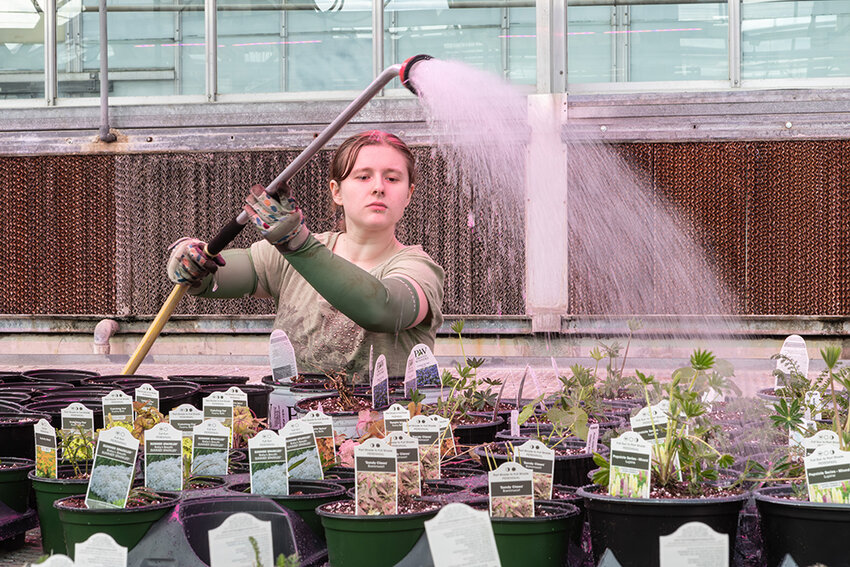
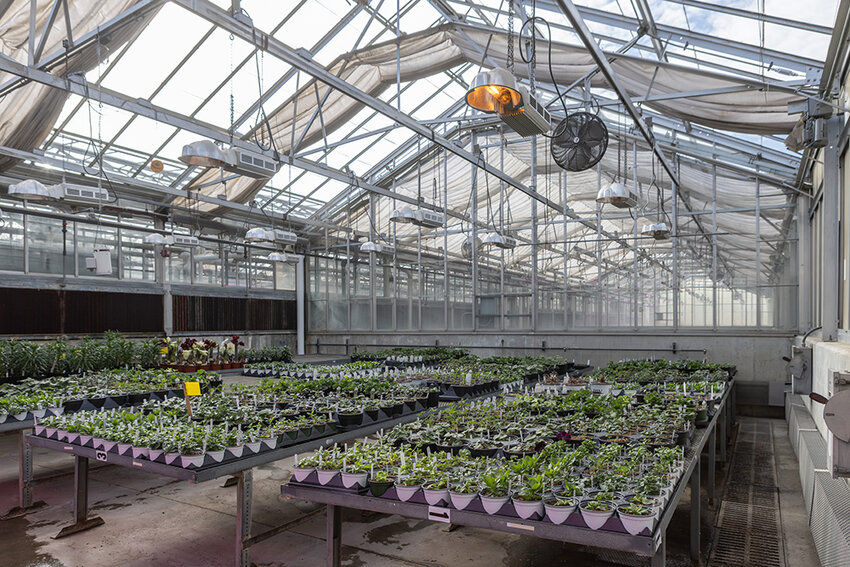
Michigan State University Department of Horticulture greenhouses.
Raymond Holt
Instead, Schneider recommends backyard native beginners begin with a few flats of native perennial plants, which may cost more, and plant them tightly together while working over a few years to thickly fill up the borders of any yard.
Working on a border, he said, will give new habitat for animals and keep most of the yard accessible, plus it will be less work than what you’re used to doing.
Start small
Native planting doesn’t require sweeping and dramatic commitments like swapping out your whole lawn for white clover (but you can!), so let’s think small.
Jean Persely, a Michigan expert who is teaching a Native Plants in Your Home Garden course at this weekend’s Wildflower Association of Michigan conference, suggests starting with something manageable.
For a three-foot-by-three-foot plot, Persely recommends knotting onion around the edges (“an easy, easy plant”) and something taller like bee balm, Penstemon or butterfly weed in the middle and then packed with native grasses to keep weeds at bay.
For everyone in apartments: ask your landlords about adding a native border or converting space. The pitch is that a switch can save on landscaping dollars and bring an amenity that could attract new residents.
Michigan State University Department of Horticulture greenhouses.
Raymond Holt
Here’s the lazy guide:
Step 1.
Start with you’re working with
You start with looking at your dirt, said Katie Layman, operations coordinator for Michigan Wildflower Farm.
“Is it sandy, is it just a nice soil or is it super wet and soggy all the time,” she said. “Or is it sunny? Is it like full sun? Do you have puddles? Does it hold water? Do you have rocks?”
In the Greater Lansing area, chances are really good it’s a more clay mix than sandy so some plants – even wonderful Michigan natives like lupine and Cardinal flower, with just the most brilliant shade of red flowers – might not work in Lansing, Persely said.
“I’ve tried,” she said, with lupine. “Just because I think that’s just a beautiful plant and to no avail, they died.”
Miller, from MSU’s Beal Botanical Garden, recommends a soil test, especially if you’re considering using a product like the traditional 10x10x10 fertilizer on a normal lawn, to make sure there’s not an overabundance of magnesium and phosphorus. Her lawn had a ton of those, so using the normal recommended amount of fertilizer would have sent the chemicals straight into the watershed and done little or nothing for her lawn.
Soil tests can be useful for vegetable gardens, commercial growers, plants that require special ph balances and for non-native lawns that will get fertilized.
MSU offers a laboratory soil test for $26, and there are cheaper DIY options that don’t use a lab.
There’s the look-and-touch method, or a free hands-on test using a jar with water, filled about 75% with dirt, and shaken. Check the jar in a day or a week to see the proportions of (top to bottom) water, clay, silt and sand.
But for most native plants, a soil test isn’t necessary and a careful look around the spot, maybe a few times to catch the moving sun, will be enough to go to Step 2.
Step 2.
Get some plants
Once you have a good idea of your soil/sun/drainage conditions, head off for the store or a native plant sale or place a pre-order.
(You can grow plants from seed and it makes native planting far cheaper! But we’re doing a lazy guide, so let’s plan on that for next year …)
It’s not a bad idea to do research ahead of time online, at the library or through one of the many native plant groups in mid-Michigan, like Wild Ones Red Cedar chapter, Michigan Botanical Club and the Wildflower Association of Michigan.
Michigan State University Department of Horticulture greenhouses.
Raymond Holt
That might be daunting because are hundreds of native Michigan species, Michigan State University keeps a list of 50 of the most common in our area. But that’s still a lot to remember, so for many people, the bigger question is what’s in stock this year and what fits their yard.
“Don’t overthink it,” said Schneider, from Wildtype Native Plant Nursery. “Don’t be like Noah’s Ark and do two of everything, you want a lot for an aesthetic, it makes it nutritious and delicious.”
If the deer or the bugs get to it, having a lot is insurance so it will last long enough to get established over a few years. And planting the natives superthick helps a lot with weeds.
This is, after all, a lazy guide.
“Fewer strokes, like a golfer,” Schneider said. “A good golfer gets fewer strokes per hole, that means less walking and less swinging. There’s a quality inherent in doing it well that pays off.”
Step 3.
Plant the native plants
This part is easy.
Most natives don’t need any fertilizer or compost, not even to start with.
“Zero,” said Schneider.
“The reason we emphasize no fertilizer,” he said, “is that native plants do well at low and high nutrient levels. And weeds do better at high nutrient levels.”
The native plants don’t need fertilizer because they’re from here, said Durnwald, owner of Michigan Wildflower Farm.
“They’ve grown here for hundreds of years,” she said. “They’re acclimated to the soil.”
Persely said she will sometimes use fertilizer for the first year, to give the natives a boost.
“That first year I usually will mulch it, but once those plants fill in, you’ll never have to mulch again,” she said. “I will fertilize mine the first year. I just give them a little boost to get going.”
Skipping the fertilizer – whether entirely or after the first year – can be helpful because it tips the playing field toward the native plants.
And it’s not just fertilizer.
Dial up the lazy because natives are used to Michigan’s conditions and don’t need to be babied.
Michigan State University Department of Horticulture greenhouses.
Raymond Holt
“Esther and her crew, they don’t water any of these plants out here,” Layman said, gesturing over their Portland farmland. “Only when they’re the new plants and they’re just getting established. They don’t water it. You don’t apply any pesticides or fertilizers or additives to the soil. These plants out here are, like, gorgeous. They’re just amazing in the summertime.”
Last bits
Start small.
Don’t worry about transforming an entire yard, this is a guide for lazy gardening so start with replacing whatever dies in the yard with something native that comes the closest (habitat, size, texture, fall and flower color).
Use phone apps to help identify existing yard plants or interesting ones while walking, said Abby Deneau, a native plant expert whose Wild Ecoscapes LLC and Ecological Services Company is working to remove invasives from Montgomery Drain, at the Frandor Shopping Center, and replace them with natives.
She said plant identification phone apps – and confirming through a Google search or consulting with a good book or an expert – is a great way to start to learn the differences between natives and non-natives.
“Once you start looking,” Deneau said, “you’ll find native plants that will fit better everywhere.”
Comments are closed.