
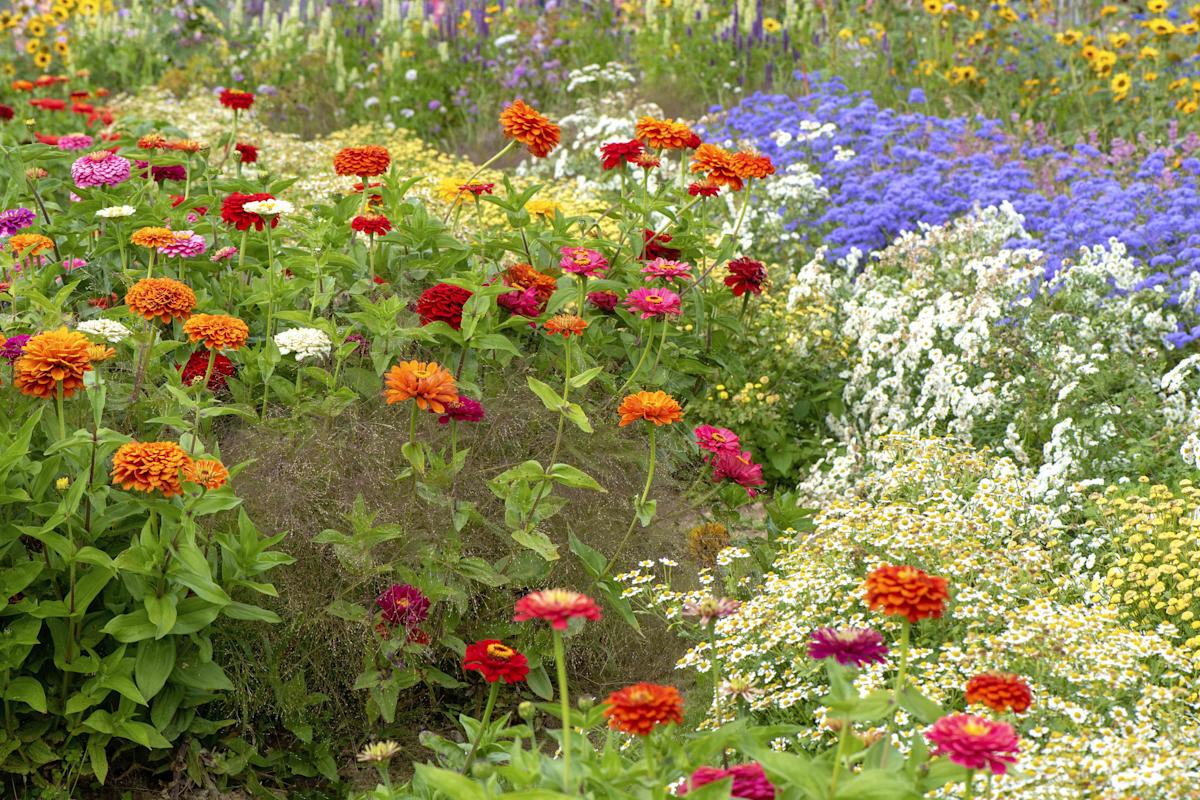
For a colorful garden all summer long, look to zinnias (Zinnia elegans). These annuals grow quickly from seed, come in a rainbow of colors, including shades of purple, pink, red, orange, cream, as well as bold greens like chartreuse and lime. They’ll fill a sunny spot in your yard with blooms from summer through fall. You won’t need to spend hours tending to them, but you’ll find yourself doing it anyway while you select the perfect arrangement for a cut-flower bouquet. While you’re buying packets of zinnia seeds for your garden, look around for other beautiful blooms, herbs, or veggies to grow alongside them. Some plants make better companions than others because they deter pests, attract pollinators, or combine to create a stunning landscape. Sow a few extra seeds, and you’ll have a cutting garden to fill your home with fresh flowers all season long. Here are the best companion plants to grow with your zinnias this season.
01 of 09
Salvia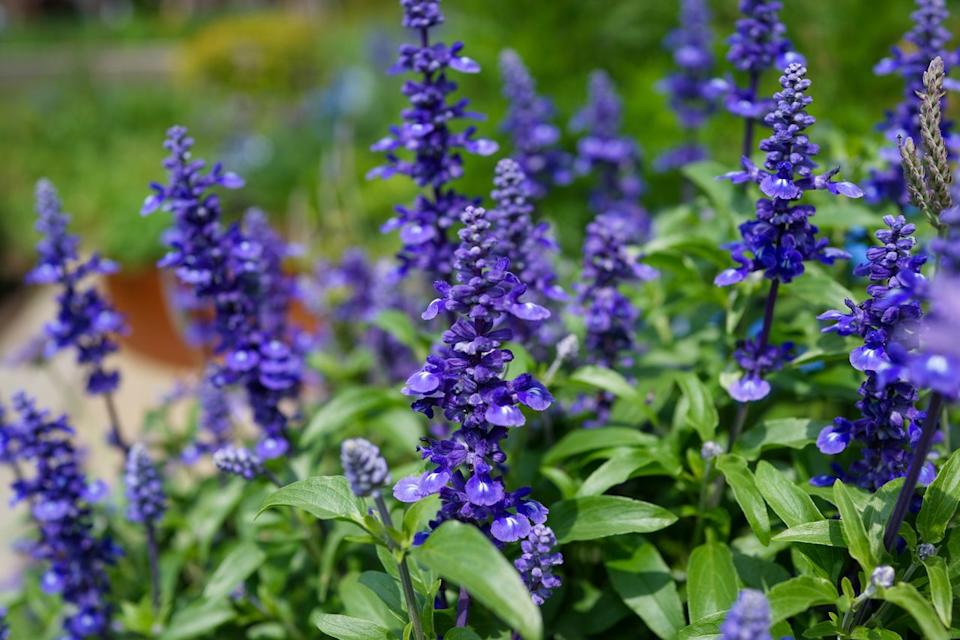
Credit: wulingyun/Getty Images
Salvia’s tall spikes complement zinnias’ cheery round blooms well. Like zinnias, salvia (Salvia leucophylla) likes full sun and well-draining soil. Once established, both flowers can withstand drought conditions. Both plants attract pollinators, and salvia benefits zinnias by deterring aphids, whiteflies, and other common garden pests. Choose complementary colors for a striking display.
02 of 09
Peony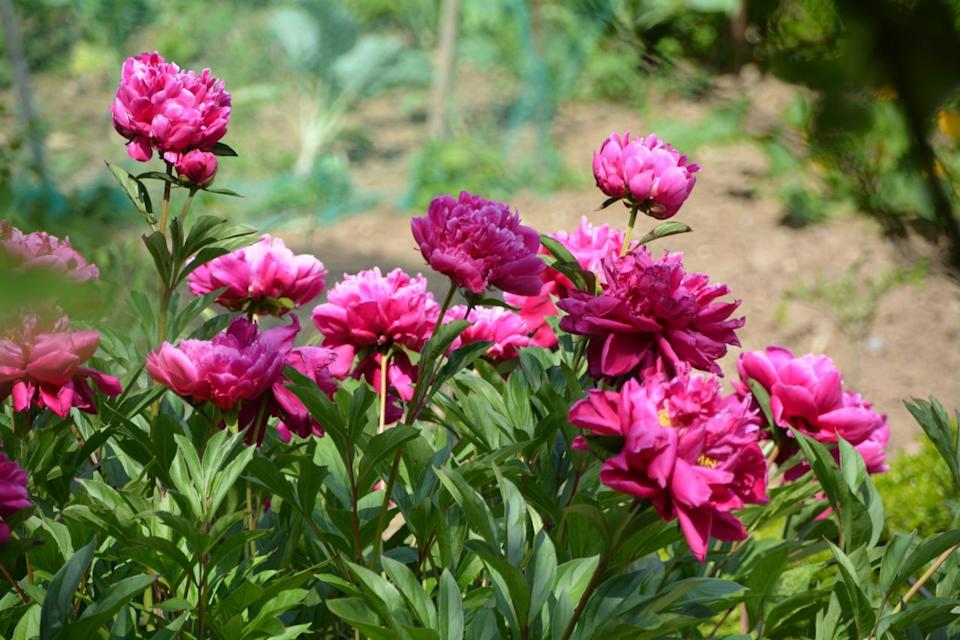
Credit: Piero Intraligi / EyeEm / Getty Images
Zinnias fill in the space and add color to sunny spots in your yard as peonies fade. Peonies (Paeonia) stop blooming in the spring, but their leaves will remain well into fall. Zinnias continue adding color until the first frost. Keep enough space during planting to avoid overcrowding and airflow problems that can encourage fungal diseases.
03 of 09
Vinca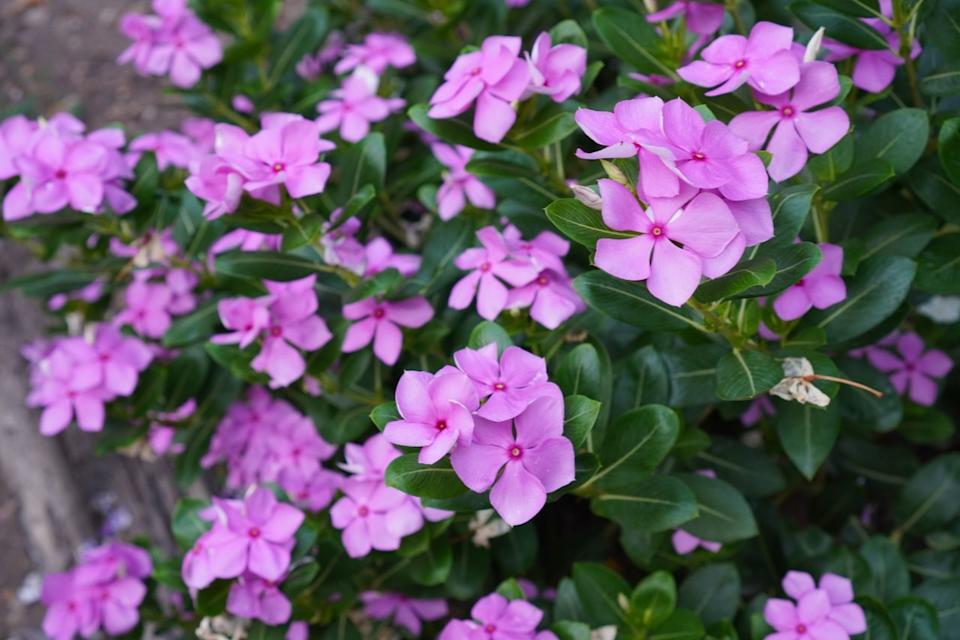
Credit: Penpak Ngamsathain/Getty Images
If you’re looking for something with the same low-maintenance, drought-tolerant, sun-loving attitude of zinnias, pair them with vincas (Catharanthus roseus). Since vincas are low-growing, plant them under tall zinnias for a lush, layered landscape for non-stop color from spring through fall. Neither flower needs deadheading, though it can encourage more blooms. Vincas don’t have many pest issues, so they won’t invite problems to the garden.
04 of 09
Snapdragons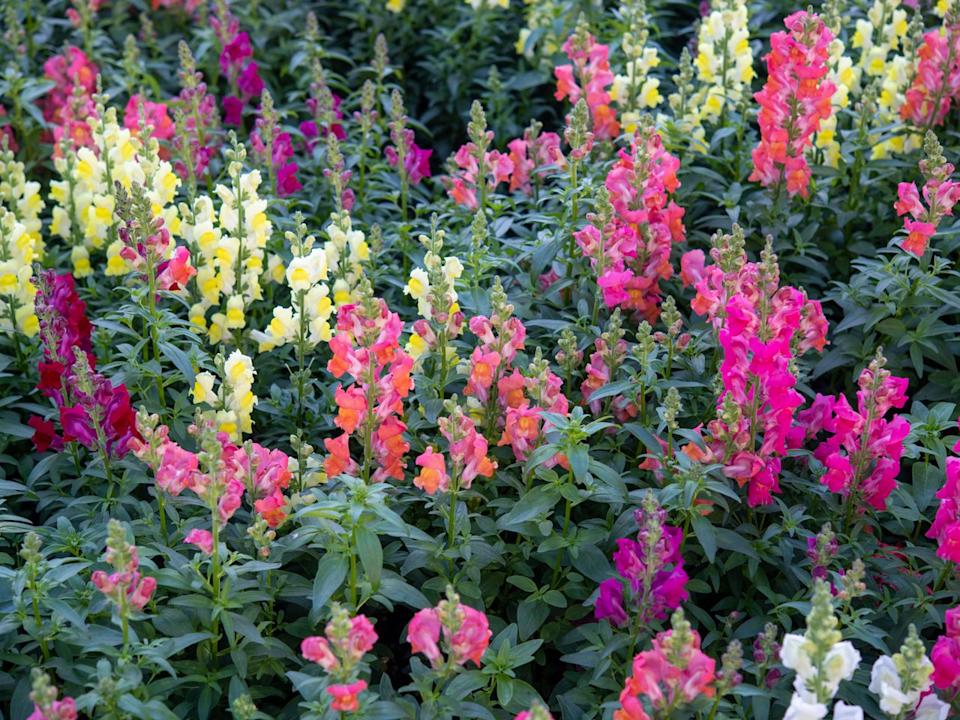
Credit: Roberto Machado Noa/Getty Images
Snapdragons (Antirrhinum majus) and zinnias are a good match for succession planting since they keep the color going from one season to the next. While both flowers like full sun and well-draining soil, snapdragon plants like cooler weather. They begin to die when the weather warms, and then zinnias will take over since they thrive in hotter temperatures. Make sure to space them at least 6 inches apart to provide good airflow. This will prevent crowding and keep diseases away.
05 of 09
Basil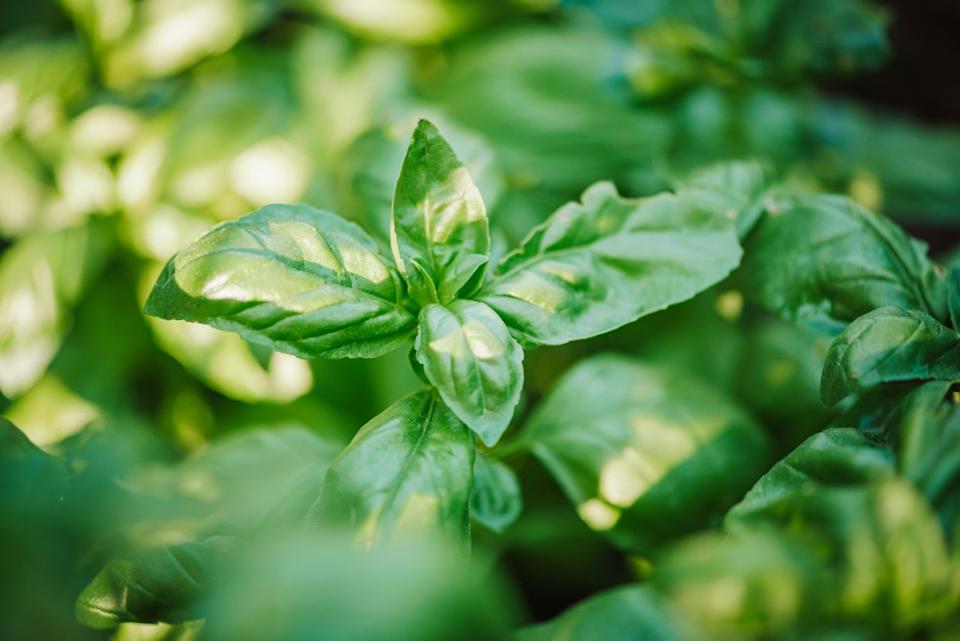
Credit: Vasil Dimitrov/Getty Images
Take advantage of basil’s (Ocimum basilicum) pest-repelling abilities by planting zinnias nearby. Common pests like aphids and whiteflies are turned away by the aromatic natural oils in basil. In turn, zinnias attract pollinators that benefit your basil plants. It’s a win-win in the garden. Fill in the spaces around taller zinnias with basil plants, making sure the plants have good air circulation by spacing them at least 12 inches apart.
06 of 09
Marigold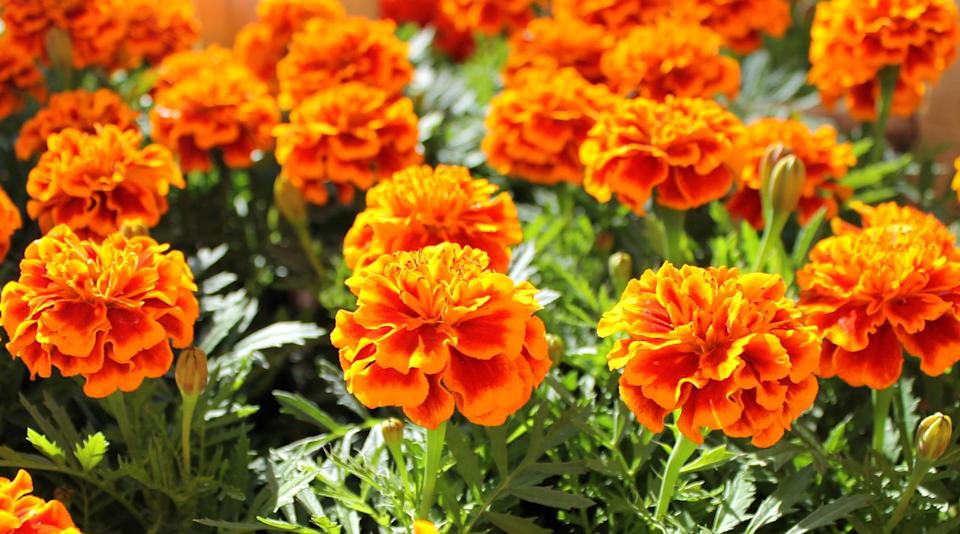
Credit: Shef-time/Getty Images
Bright and cheerful marigolds (Tagetes spp.) accent any sunny garden, but their vibrant color complements zinnias especially well. Marigolds benefit other plants because they repel common pests like whiteflies, aphids, and nematodes, which are microscopic worms, and they attract helpful insects and pollinators. They grow about 1 to 4 feet tall and make a great addition to a cutting garden. Expect more blooms when grown with zinnias in full sun.
07 of 09
Sweet Potato Vine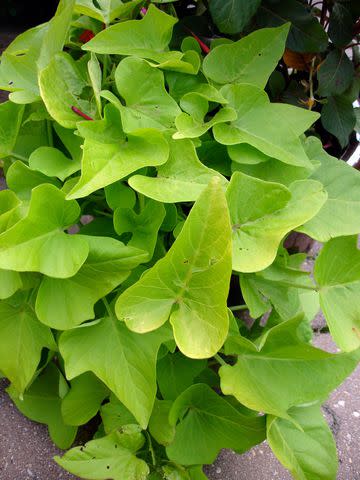
Credit: Daryl Mitchell
Add trailing and contrasting sweet potato vines (Ipomoea batatas) to your zinnia garden. Whether grown as a ground cover to fill in the area below your zinnias or as a spiller in a potted plant, their vibrant lime, green, or purple color makes a striking backdrop for the taller annuals. Prune the vines regularly to keep them from taking over your zinnias. Full sun, consistent moisture, and well-drained soil will keep them happy.
08 of 09
Coneflower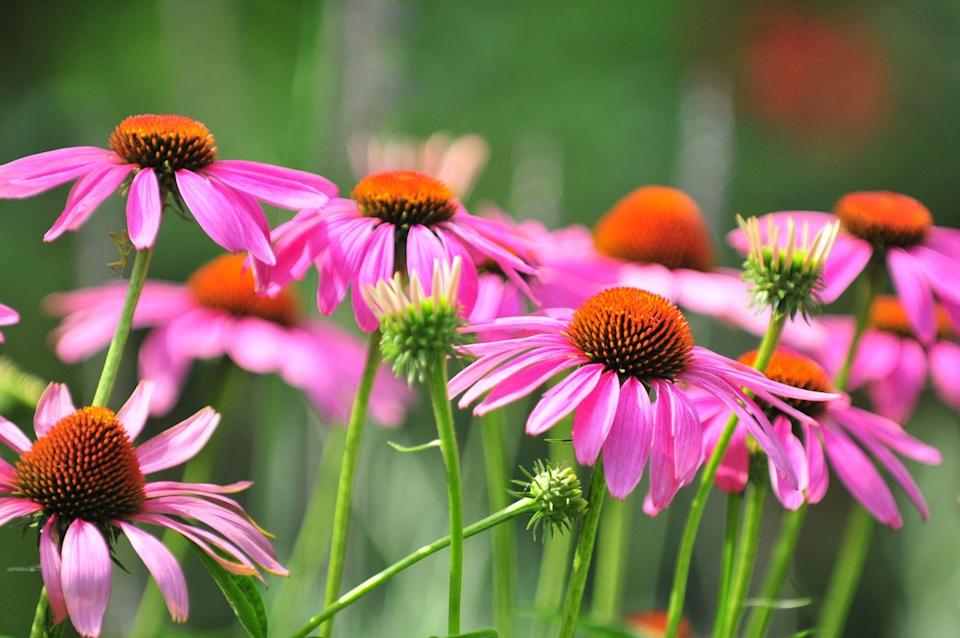
Credit: magicflute002/Getty Images
For a stunning, colorful display of blooms that lasts until the first frost, plant coneflower (Echinacea purpurea) alongside your zinnias. The bright colors attract pollinators for a healthy garden, and both flowers thrive in full sun. Since coneflowers grow taller than zinnias, plant them behind the annuals to add height and structure. At the end of the season, leave the seed heads for the birds to enjoy.
09 of 09
Tomato
Credit: Getty Images
Both tomatoes (Solanum lycopersicum) and zinnias can benefit from a mutual partnership. Zinnia blooms attract bees that are crucial for tomato plant pollination, as well as attracting beneficial ladybugs and hoverflies that prey on harmful tomato pests. They also act as a “trap crop” to entice pests like aphids away from the tomatoes. Both plants get along in a sunny garden with soil that drains well. Support the tomatoes with cages or stakes to keep them from shading your zinnias. Maintain good airflow between the plants to keep fungal diseases away.
What Not To Plant With Zinnias
Because zinnias do best in average soil in sunny spots, make sure nearby plants like the same growing conditions. Plants that like soggy or clay soil or lots of shade aren’t a good fit. So hostas, ferns, lavender, mint, and roses should be avoided. You should also avoid planting zinnias too close to cucumbers and squash, which are prone to powdery mildew that can affect your zinnias.
Read the original article on Southern Living
Comments are closed.