
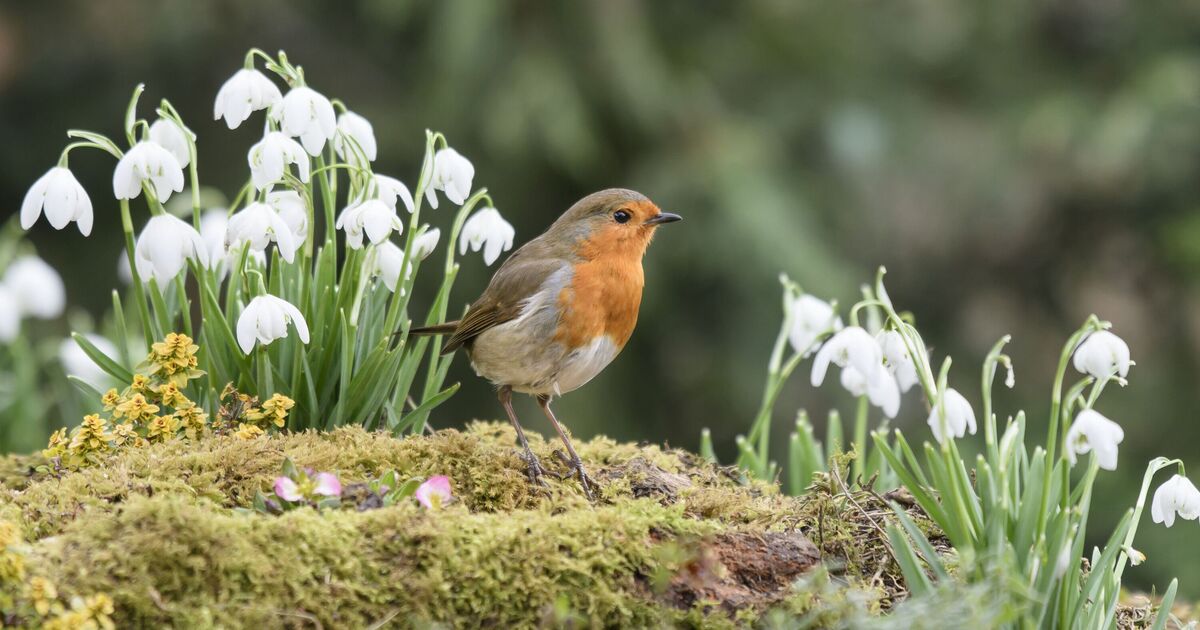
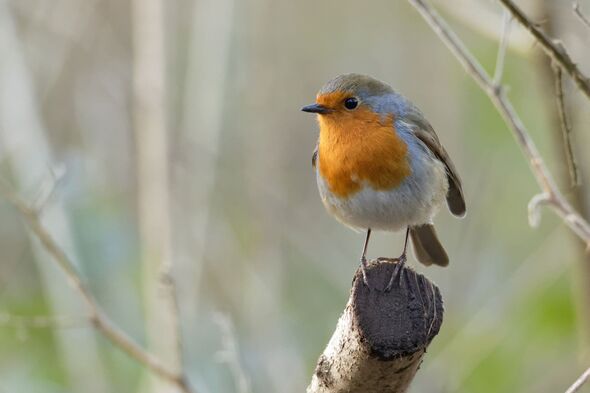
Today in National Robin Day (Image: Getty)
Today is National Robin Day – and what better way to celebrate this 24-hour period dedicated to the UK’s favourite garden bird than to find a surefire way to attract more of them into your garden in time for spring.
Robins don’t migrate for winter, so can be seen all year round in British outdoor spaces. Right now, as the weather finally begins to warm, robins are on the lookout for late winter food as nesting season begins.
According to garden expert James Ewens at Green Feathers, there are some foods you can leave out for robins in winter which will bring their cheerful song and vibrant colours to your backyard even in the colder conditions before spring returns later this month.
He told the Express: “Robins are a favourite of mine, and it’s always a pleasure when one pays you a visit, especially to brighten up a winter’s day!
READ MORE: Gardeners urged to sprinkle chilli powder in garden in March
READ MORE: Warning issued to anyone with leaves in garden
“People think luring robins is an impossible task, and while they can be a rare sighting, when you know, you know. Considering their basic needs and comfort – food and drink, nesting opportunities, shelter, and their most-loved plants and shrubs, goes a long way.”
He then urged gardeners to pick mealworms (either live, or mercifully, dried) as a top offering. Alternatively, you can offer suet. But if you can’t plump for fancy specialist bird feed, a simple slice of apple or pear will do.
He said: “Knowing what robins like to eat, and need to survive, is essential. Robins love live food, but as the cooler months draw in, their supply of insects is scarce. If you provide mealworms and earthworms, robins will love you forever, and keep coming back.
“Suet balls are a firm favourite, with their high-fat, high-energy content, they’re not only appealing for robins, but essential to support their physiology and carry them through the harsh winter months.”
He added: “Apples, pears, and dried fruit can be a great source of fibre and vitamins A, E and C for robins – supporting digestion, healthy feathers and eyes, and immunity.
“But make sure you place feed close to the ground, such as a low table, or even directly on the soil.
“Believe it or not, where you position a robins’ feast really matters. Robins prefer to forage closer to the ground, so scatter some food on a low table or directly onto soil to mimic their natural feeding habits.”
Comments are closed.