
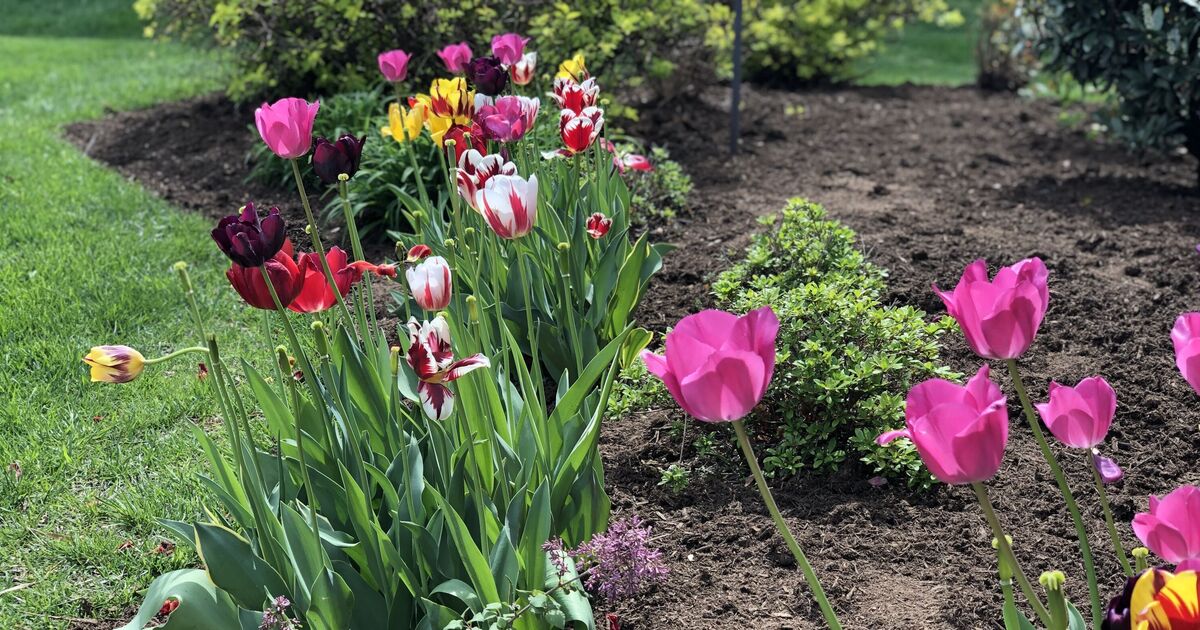
Experts recommend adding a layer of mulch to your soil in spring (Image: Getty)
The long, cold winter is almost at an end, with milder temperatures and lighter evenings marking the first signs that spring is almost here.
The spring equinox in the northern hemisphere will occur on Friday, March 20, and will be followed by a clock change on the last Sunday of the month, officially kicking off British Summer Time. The winter period is a quiet time for gardening, and much like the plants and wildlife, the garden tools often go into hibernation for several months until the weather warms up. But with the arrival of spring just weeks away, there are plenty of tasks to get on with this month to prepare for the new season, with March being the perfect time to start sowing seeds, pruning plants and tidying things up.
But one important task gardeners should pay attention to in March to achieve a thriving garden in spring is ridding their soil of any weeds.
Read More: Garden lawns will grow back thicker if one March ‘rule’ is followed
Read More: Spring season start date as clocks to go forward one hour
As a general rule, weed control should be carried out year-round, but it is especially important ahead of spring, as removing them now will prevent them from thriving as the weather warms up.
Ali Lijee, garden expert at TreeMend, said: “Right now, weeds are small and manageable. In just a few weeks, they’ll put on rapid growth. If you clear them now, you prevent them from competing with your plants for nutrients, water and light.
“Do not leave roots behind, especially with perennial weeds like bindweed. If you let them establish now, you’ll be fighting them all season.”
Gardening experts recommend removing weeds by hand or with a garden hoe on dry days, and mulching should follow weeding immediately.
Mulch is essentially just a thick layer of organic material made from manure, compost, bark, leaves or grass clippings that is spread around your plants and on top of the soil.
By adding this layer, you’re not only helping the soil retain moisture and nutrients and insulating plant roots, but you’re also suppressing weeds, keeping them under the surface and away from sunlight, so they usually die from suffocation.
This will help to keep weeds at bay and will prevent them from stealing water, nutrients and sunlight from your flowers, helping them to thrive as the weather warms up.
If you don’t remove weeds, they can potentially cause flowers to have stunted growth and reduced blooms as they aren’t getting the nutrients they need.
Experts recommend removing any weeds from your flower beds and giving the ground a good watering before adding your layer of mulch. You can use a hoe to break the surface of the soil and pull the weeds out, or use a garden fork to turf out any larger weeds that are a bit more stubborn to remove with your hands.
*** Ensure our latest lifestyle and travel headlines always appear at the top of your Google Search by making us a Preferred Source. Click here to activate or add us as Preferred Source in your Google search settings. ***
Gardeners’ World explains: “Simply lay 5cm of your chosen mulch onto the bed or around key plants, without smothering them or damaging the lower stems. Bear in mind that a really thick layer of mulch will suppress more weeds, but bulbs and other plants will find it hard to grow through more than a 5cm layer.
“Use your hands or a spade to add the mulch, depending on the material you choose. Finally, use a rake or hoe to make sure the mulch is evenly distributed. When applying mulch, it pays to prepare the soil beforehand. This will save you time and effort in the long run.”
Gardeners’ World adds that mulch should be applying around spring bulbs, under hedges, around herbaceous perennials, and around fruit trees and bushes.
Comments are closed.