
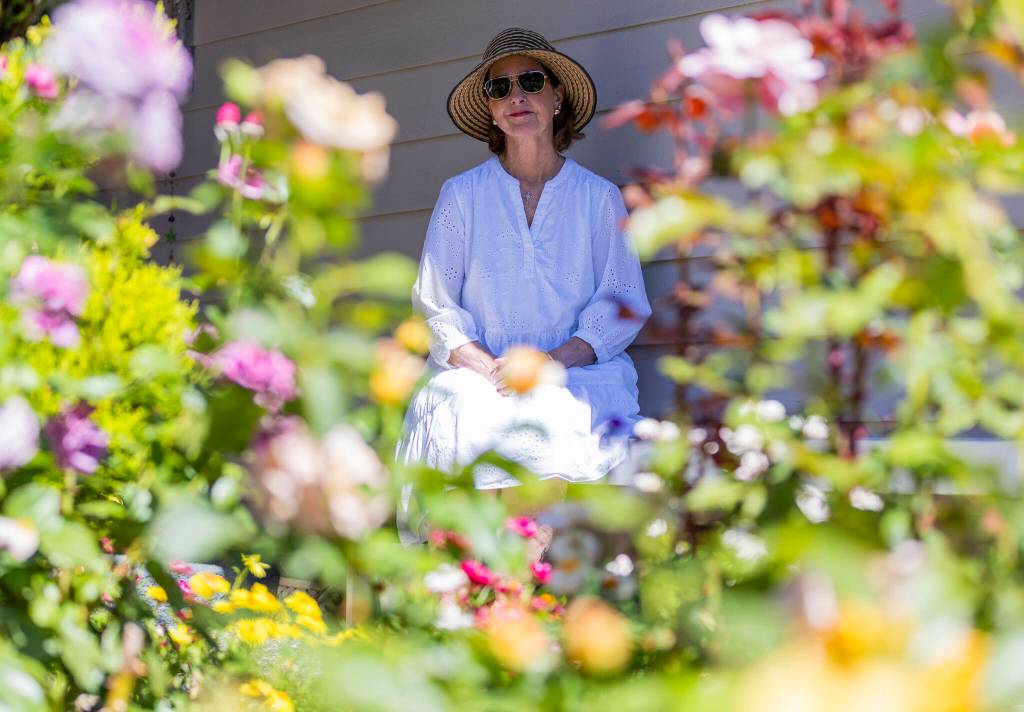
MILL CREEK — Unlike most Northwesterners, Paula Dickman does open umbrellas in the rain. Not for herself, but for her roses.
On soggy rainy days, the tall golf umbrellas shelter Dickman’s front-garden roses, attesting to her passion.
Lucky for thousands of people in the Northwest, Dickman likes to share that passion for roses, as well as her hard-earned knowledge on how to successfully grow them here.
The Mill Creek gardener grows more than 50 rose bushes, has taught many classes, hosted home garden tours and enjoys more than 4,000 followers on her Facebook page — PNW Rose Gardener’s Corner.
Dickman, 76, grew up in Southern California, admiring her mother’s and grandmother’s roses in a region where it’s relatively easy to grow them. You can’t beat that California heat.
Her retail career brought her to the Seattle area 20 years ago. She loves the Northwest and vows she won’t return to California.
“But learning how to grow roses here was a challenge,” Dickman said. “It was a hands-on project. Trial and error.”
She started with three roses.
“I was sorely disappointed with the results,” Dickman said. “I had no concept of the climate issues. It was a huge learning curve. I didn’t know about black spot.”
That’s where her 25 rose umbrellas come in. It pays to keep the rain off.
Black spot is a fungus that leads to defoliation and weak plants. Keeping black spot off roses involves removing infected leaves, keeping the soil clean, watering at the base of the plant, making sure the roses have air circulation and using natural fungicides.
Dickman consulted Washington State University rosarians, experts in growing and cultivating roses. She read voraciously. She visited nurseries, researched products that might combat black spot and powdery mildew. Later on, she added the Facebook page to share what she had learned.
Paula also had help from her husband David Dickman, who she describes as a “dream partner” with an equal passion for gardening.
The Dickmans’ place is not all about roses, despite the flower’s prominence in their lives.
The back garden showcases native plants and trees such as cedars, ferns, salal and huckleberry, as well as Japanese maples, hydrangeas, birch trees and hostas. On the south side of the property, they grow fruit trees and vegetables. The wide back porch is dotted with pots containing a variety of plants.
But, again, roses are king. Even in the shadier backyard, dozens of roses flourish.
“I don’t vacation in the summer because I am so focused on the roses. It takes 40 hours a week to water the roses and the rest of the gardens,” Dickman said. “Growing roses is a huge commitment.”
Sharing her knowledge about gardening and roses in particular has brought Dickman lots of joy, she said. “I started the Facebook page primarily out of a need for camaraderie. I learn from other rose-growers as well.”
The commitment to the online exchange with her fellow rosarians is huge as well. Dickman estimates she checks the Facebook page about 50 times a day, answering questions and commenting on all the posts.
Alison Boeke, 43, also of Mill Creek, got to know Paula Dickman through the Facebook page and one of the free classes Dickman offered. Now they are close friends.
“Paula is so kind and generous with her time,” Boeke said. “I would recommend her to anyone with an interest in roses. I have rose books, how-to videos and more, and nothing competes with the advice I get from Paula. She helped me design my rose garden.”
After years of working with roses in our climate (and removing those that weren’t thriving) Dickman offers up these names as her favorite roses: New Zealand, Memorial Day, Julia Child, Sparkle & Shine.
To find your favorites, she suggests touring rose gardens and nurseries in the summer and browsing catalogs in the winter. Dickman’s favorite regional rose nurseries are Flower World in Maltby and Christianson’s near Mount Vernon.
Late winter and early spring are when the rose growing season begins. It’s time to buy roses and hard prune your existing roses.
IF YOU GROW
On the Facebook page, Paula Dickman has a carefully composed calendar for rose growers.
From mid-February and into March, hard-prune your roses and use a dormant spray on bare canes and soil. Plant new roses or transplant in March. Use Dr. Earth Rose Fertilizer in mid-April.
Watch for aphids in May, and squish them! Deadhead spent blooms in June, and apply more fertilizer the last day of the month. In July begin regular frequent watering at ground level. In August, continue frequent watering, deadhead spent blooms, and use Dr. Earth Disease Control fungicide .
Later in September, water deeply, and discontinue deadheading to prevent frost damage and prepare the plant for winter hardening. Prepare roses for hibernation in October, tidy up the soil, and add a protective layer of compost. In November, remove about a quarter of the rose’s ragged growth from the top. Apply compost to the top of the rose crown in December. Use dormant spray in January.
Follow the Facebook page, PNW Rose Gardener’s Corner
Writer Gale Fiege is trying to grow roses in the rain. Contact her at gfiege56@gmail.com.
This story originally appeared in Sound & Summit magazine, The Daily Herald’s quarterly publication. Explore Snohomish and Island counties with each issue. Subscribe and receive four issues for $18. Call 425-339-3200 or go to soundsummitmagazine.com
Comments are closed.