
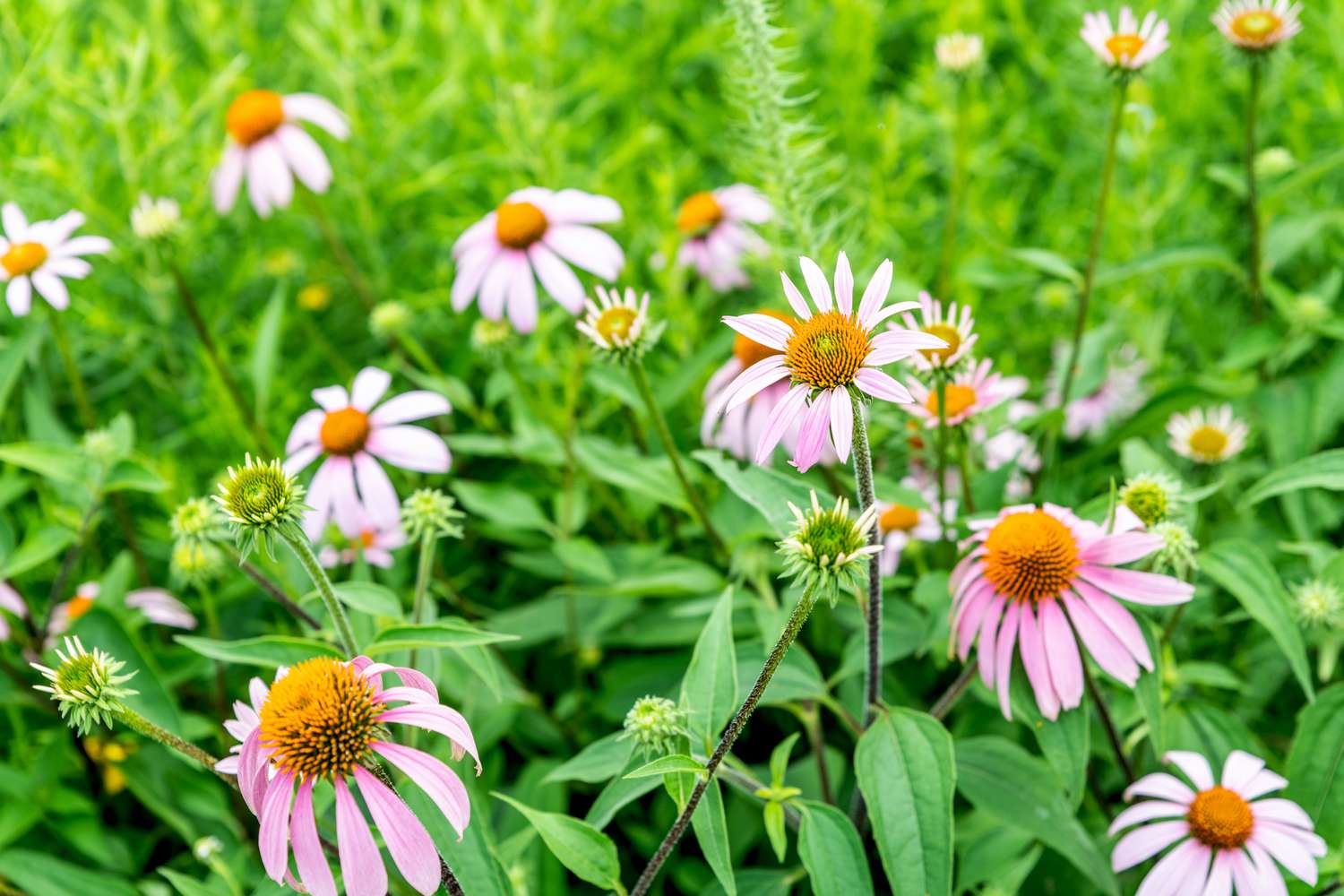
Perennial plants are the ideal choice for low-maintenance gardening. Since they return year after year, you only need to plant them once to enjoy years of blooms. Perennials are much less work than annuals, which require yearly planting, and once they are established, most perennials require little upkeep. The best hardy perennials have long bloom periods, providing weeks or even months of color. Many attract butterflies, bees, and other pollinators to the garden. Careful selection and placement of perennial plants ensures the garden always looks its best.
Like all plants, perennials require special care during their establishment period. Supplement rainfall as needed to provide regular irrigation during their first year as plants establish a robust root system. Some perennials may not flower the first year because they are focusing energy on growing roots. Don’t be alarmed. Plants will return next year stronger than ever and ready to produce flowers.
Threadleaf Coreopsis
Credit: gubernat/Getty Images
Botanical Name: Coreopsis verticillataSun Exposure: Full sunSoil Type: Average to poor, well-drainingSoil pH: Acidic (5.5-6.5)USDA Plant Hardiness Zone: 3 to 9
This Southern native shines in the toughest locations, producing an abundance of sunny yellow blooms from spring through summer. The blooms attract butterflies and the seeds feed hungry songbirds, but deer and rabbits leave coreopsis alone. Dark green thread-like foliage adds gorgeous texture to any garden setting. Plants tolerate salt, drought, heat and humidity, making an excellent addition to coastal gardens.
Summer Phlox
Credit:
Getty Images
Botanical Name: Phlox paniculataSun Exposure: Full sun to part shadeSoil Type: Medium, well-draining, average fertilitySoil pH: Slightly acidic to slightly alkaline (6.0-8.0)USDA Plant Hardiness Zone: 4 to 8
Summer phlox, also called garden or tall phlox, produces fragrant blooms from mid to late summer in rich pink, white, purple, blue, and red hues. The small tubular blooms are produced in showy clusters that attract hummingbirds, butterflies, and bees. Native to the Eastern states, summer phlox grows well beneath black walnut trees, where many plants fail.
Variegated Solomon’s Seal
Credit: Photo: Ralph Anderson
Botanical Name: Polygonatum odoratum var. pluriflorum ‘Variegatum’Sun Exposure: Full to partial shadeSoil Type: Medium to moist, well-drainingSoil pH: Acidic to slightly alkaline (5.5 – 8.0)USDA Plant Hardiness Zone: 3 to 8
This popular shade perennial has a graceful appearance that belies its rugged nature. Grown primarily for its gorgeous foliage, Solomon’s seal’s bright green leaves are variegated yellow and cream along the margin. Foliage is held on long arching stems tinged with maroon hues. White bell-shaped flowers dangle from stems beneath the leaves, providing nectar for bees and butterflies. Plant masses of this beauty in woodlands gardens and along shaded walkways.
Speedwell
Credit:
Getty Images
Botanical Name: Veronica spicataSun Exposure: Full sunSoil Type: Medium, well-draining, averageSoil pH: Acidic to slightly alkaline (5.6-7.8)USDA Hardiness Zone: 3 to 8
This easy-to-grow perennial produces spikes of lavender blue, pink, or white blooms that stand upright above deep green foliage. Plants spread in low masses to create a lush groundcover perfect for the front of borders. Flower spikes last for months, emerging in late spring and lasting well into summer. Shear off spent blooms to enjoy a repeat performance in autumn.
False Indigo
Credit: beekeepx / Getty Images
Botanical Name: Baptisia spp. and hybridsSun Exposure: Full sun to part shadeSoil Type: Dry to medium, well-draining, averageSoil pH: Mildly acidic to neutral (6.0-7.2)USDA Plant Hardiness Zone: 3 to 9
False or wild indigo is a stately native perennial with strong, upright architecture and lovely gray-green foliage. Flowers are loosely clustered on tall stalks that rise above the foliage. Several species are commercially available with flowers typically white, yellow, or blue, though some unusual cultivars are also sold. Plants develop a deep tap root making them exceptionally drought tolerant, but difficult to move once established, so plan accordingly.
Catmint
Credit:
Getty Images
Botanical Name: Nepeta spp. and hybridsSun Exposure: Full sunSoil Type: Dry to medium, well-draining, averageSoil pH: Acidic to alkaline (6.0-8.0)USDA Hardiness Zones: 4 to 8
Catmint blooms for months on end, from spring through the heat of summer and, for many varieties, well into autumn. Clusters of lavender blue blooms cover plants and attract an abundance of bees, butterflies, and other beneficial insects. Catmint can reseed in the garden, so look for sterile varieties such as ‘Select Blue’, ‘ Walker’s Low’, or ‘Cat’s Meow’. Cut back plants in spring to 4 to 6 inches above ground level.
Columbine
Credit:
Getty Images
Botanical Name: Aquilegia spp.Sun Exposure: Full sun to part shadeSoil Type: Medium moisture, well-draining, average fertilitySoil pH: Slightly Acidic to Neutral (6.5-7.5)USDA Hardiness Zones: 3 to 9
With its lacy foliage and thin stems, columbine looks delicate but is surprisingly durable. Plants flower mid to late spring, filling the gap between spring bulbs and summer blooms. Their unique spurred flowers are commonly bicolored, though many varieties are available. In very hot climates, plants may dieback during the dog days of summer, but they will return in spring for another dramatic display. Individual plants are not very long lived, but they reseed in the garden ensuring a lasting stand.
Mountain Mint
Credit:
Getty Images
Botanical Name: Pycnanthemum spp. and hybridsSun Exposure: Full sun to part shadeSoil Type: Dry to medium, well-draining, average to richSoil pH: Slightly Acidic to Neutral (6.5-7.5)USDA Plant Hardiness Zone: 3 to 9
Mountain mints are native perennials found throughout the South in a variety of habitats. Don’t let the name fool you – these pollinator magnets are just as happy growing in the mountains as they are along the coastal plains. Plants are covered in white to purple blooms from mid-summer through fall, providing a buffet for honeybees, native bees, beetles, and butterflies. The foliage has a powerful minty aroma and is used in cooking and brewing teas.
Hellebore
Credit: Getty/sandra standbridge
Botanical Name: Helleborus spp. and hybridsSun Exposure: Partial to full shadeSoil Type: Medium to moist, well-draining, richSoil pH: Neutral to slightly alkaline (7.0-8.0)USDA Hardiness Zones: 4 to 9
Hellebores are beloved for their evergreen foliage and winter (or spring) blooms that provide lasting color in the garden. The bold, deeply lobed foliage of this shade loving perennial grows in mounds that carpet the floor of shade gardens year round. Flowering times and colors vary by species, with white, pink, purple, and even green hues common. Hellebores seed in the garden and spread to form a small but easily contained colony. Numerous hybrids are available that do not seed as readily.
Asiatic Lily
Credit:
Yulia Naumenko/Getty
Botanical Name: Lilium Asiatic hybridsSun Exposure: Full sun to part shadeSoil Type: Average, medium moisture, well-drainingSoil pH: Acidic to neutral (5.5-7.5)USDA Hardiness Zones: 4 to 9
Few plants provide as spectacular a floral display as lilies. Asiatic lilies are hybrids that stand very upright, producing 4- to 6-inch flowers on thick stems that seldom need staking. They are the first lilies to bloom each season, flowering in bold red, orange, yellow, and lavender hues. Asiatic lilies make excellent cut flowers and grow well in both gardens and containers (particularly the shorter varieties). Provide a well-draining soil to ensure plants return year after year.
Coneflowers
Credit:
Southern Living/Adrienne Legault
Botanical Name: Echinacea species and hybridsSun Exposure: Full sunSoil Type: Medium to dry, well-draining, average fertility Soil pH: Slightly acidic to neutral (5.5-7.0)USDA Hardiness Zones: 3 to 10
These native wildflowers exploded on the market in recent decades and continue to captivate the attention of plant breeders. New cultivars are added yearly, pushing the bounds on flower colors and forms. To attract pollinators, avoid pompom or double types. Stick to native species and cultivars with single-type flowers, as these provide a rich source of nectar to butterflies and native bees as well as nutritious seeds that attract songbirds in autumn.
Liatris
Credit: magicflute002 / Getty Images
Botanical Name: Liatris spp.Sun Exposure: Full sunSoil Type: Medium, well-draining, averageSoil pH: Acidic to neutral (5.5-7.0)USDA Plant Hardiness Zone: 3 to 9
Commonly called blazing stars or gay feather, liatris species are native members of the Aster plant family, with clusters of small purple, pink, or white flowers produced on tall spikes. The flowers open sequentially from the top down, providing long-lasting color through the summer months. They are a favorite of native bees, butterflies, skippers, and moths. Liatris are drought tolerant and generally pest-free.
Arkansas Amsonia
Credit: Getty Images / Michele Lamontagne
Botanical Name: Amsonia hubrichtiiSun Exposure: Full sun top part shadeSoil Type: Medium, well-draining, averageSoil pH: Mildly acidic to neutral (6.2-7.0)USDA Plant Hardiness Zone: 5 to 8
The blue, star-shaped spring blooms of Arkansas amsonia are just icing on the cake—you’ll want to grow this deer-resistant native for its foliage alone. Plants grow as a rounded mound of feathery needle-like foliage that turns brilliant gold in autumn. The fine texture provides a soft backdrop to summer blooming annuals and perennials and pairs beautifully with fall foliage. Plants tolerate drought and poor soil, including clay or sand.
Beebalm
Credit:
Getty Images
Botanical Name: Monarda spp.Sun Exposure: Full sun to part shadeSoil Type: Medium to moist, richSoil pH: Slightly acidic to neutral (6.0-7.2)USDA Hardiness Zones: 4 to 9
Flowers of this aptly named native attract not just bees but also hummingbirds and butterflies. Blooming in shades of pink, purple, or red, depending on the species, beebalm flowers are followed by small seeds that feed hungry songbirds in autumn. Plants tolerate a range of soils and are unbothered by rabbits or deer. Other common names for monarda include bergamot and Oswego tea, referring to the use of foliage in brewing tea.
Yarrow
Credit: LianeM / Getty Images
Botanical Name: Achillea spp. and cvs.Sun Exposure: Full sunSoil Type: Dry to medium, well-draining, leanSoil pH: Acidic (5.5-6.8)USDA Hardiness Zones: 3 to 9
Yarrows produce large, flat-topped flowerheads in shades of yellow, red, pink, or white and are always buzzing with pollinators. Both native and introduced species are commonly available, along with numerous hybrids and cultivars. All tolerate challenging conditions including drought, heat, and humidity. The soft fern-like foliage resists browsing by deer and rabbits and remains evergreen in warmer climates.
Comments are closed.