

Credit: Getty Images / Paolo Carnassale
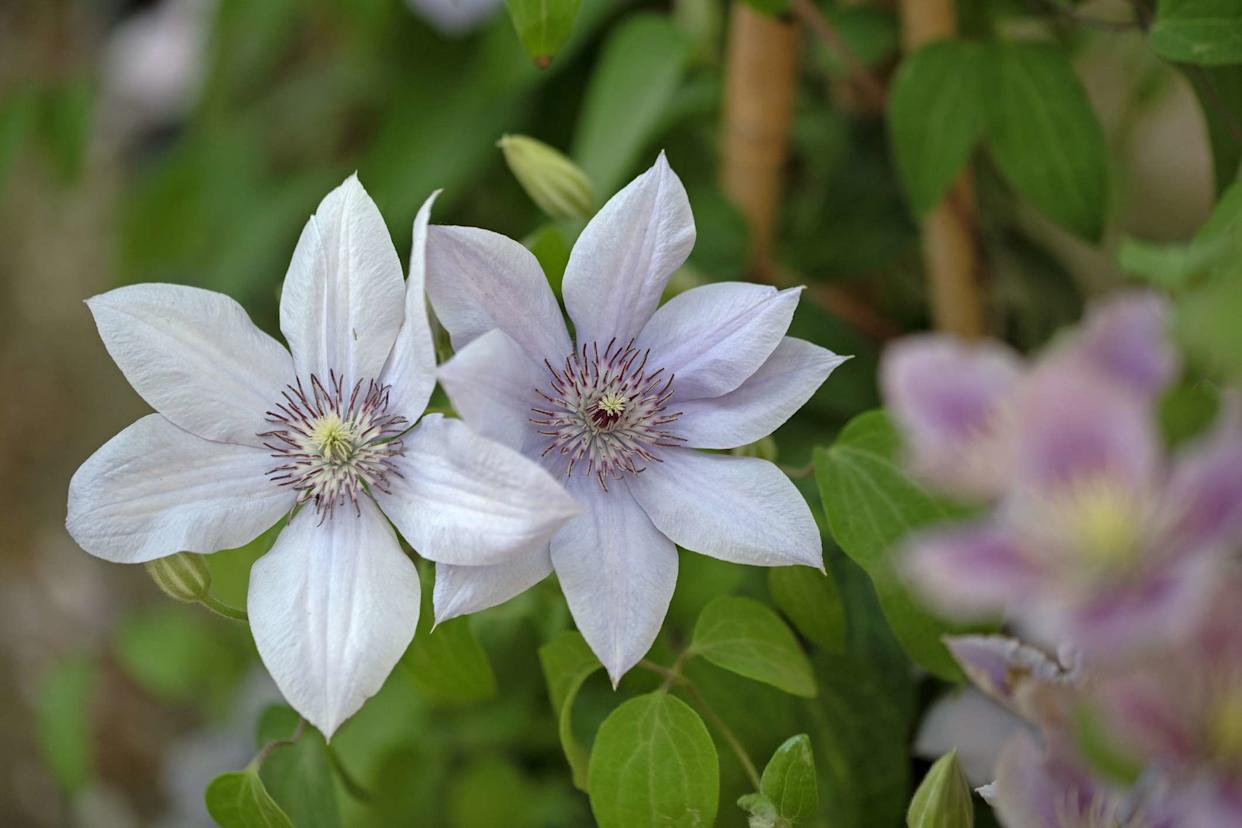
Whether they’re trailing across a fence or delicately covering an arbor, climbing vines and flowers add a cottage charm to gardens. But while these plants may look like they require hours of care and attention, there are actually a number of climbing plants that thrive in Southern gardens with little to no effort.
Whether you love the continuous colorful blooms of clematis or the sweet scent of jasmine, here are nine low-maintenance climbing plants for your garden.
01 of 09
Clematis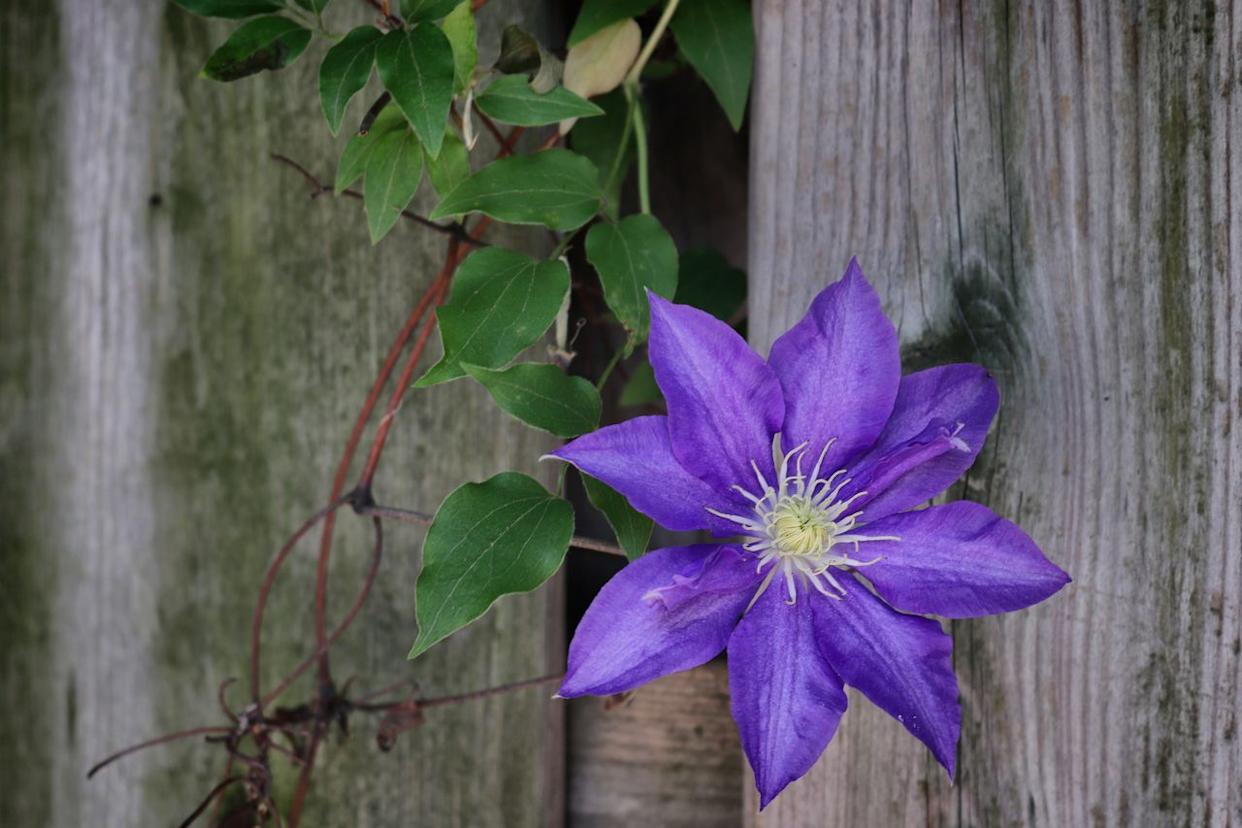
Credit: Getty Images / Katrin Ray Shumakov
Botanical Name: Clematis spp.
Sun Exposure: Full sun to partial shade
Soil Type: Moist, well-drained
Soil pH: Neutral to slightly alkaline (6.5-7.5)
If you are looking for a pretty summer flower that will bloom throughout the season, even in gardens with afternoon shade, look to clematis. This reliable perennial requires almost no care, and it will twist and turn its way around any fence or trellis.
“Clematis is low-maintenance and reblooms well,” says Josephine Drummonds, owner and manager of Golden Acres Flower Farm in Edinburg, Virginia. “Plus, it adds a wild, airy elegance to arrangements.”
02 of 09
Credit: Getty Images / M. Long
Botanical Name: Rosa setigera
Soil Type: Loamy, well-drained
Soil pH: Acidic (6.0 to 6.5)
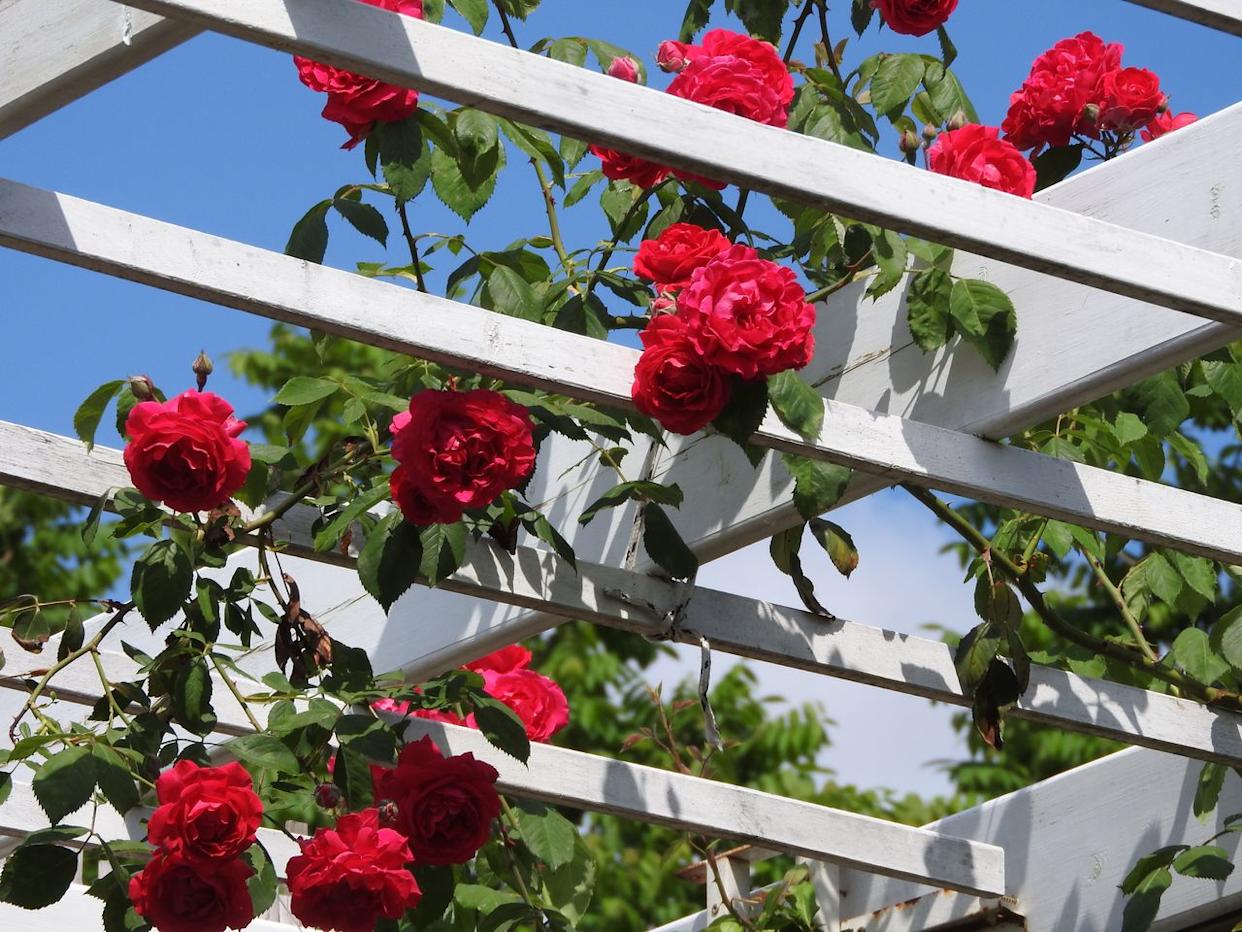
Climbing roses are perhaps the most classic of all the climbing plants. As long as they’re given full sun, these colorful flowers will cover fences and arbors with luscious, layered blooms in June and July, then again later in the summer. While they won’t twist around a surface on their own, only minimal securing is required to train them.
“Certain climbing roses are fantastic for cutting—long stems, repeat blooming, and often fragrant,” says Drummonds, who recommends just light support and pruning along the way.
03 of 09
Cup and Saucer Vine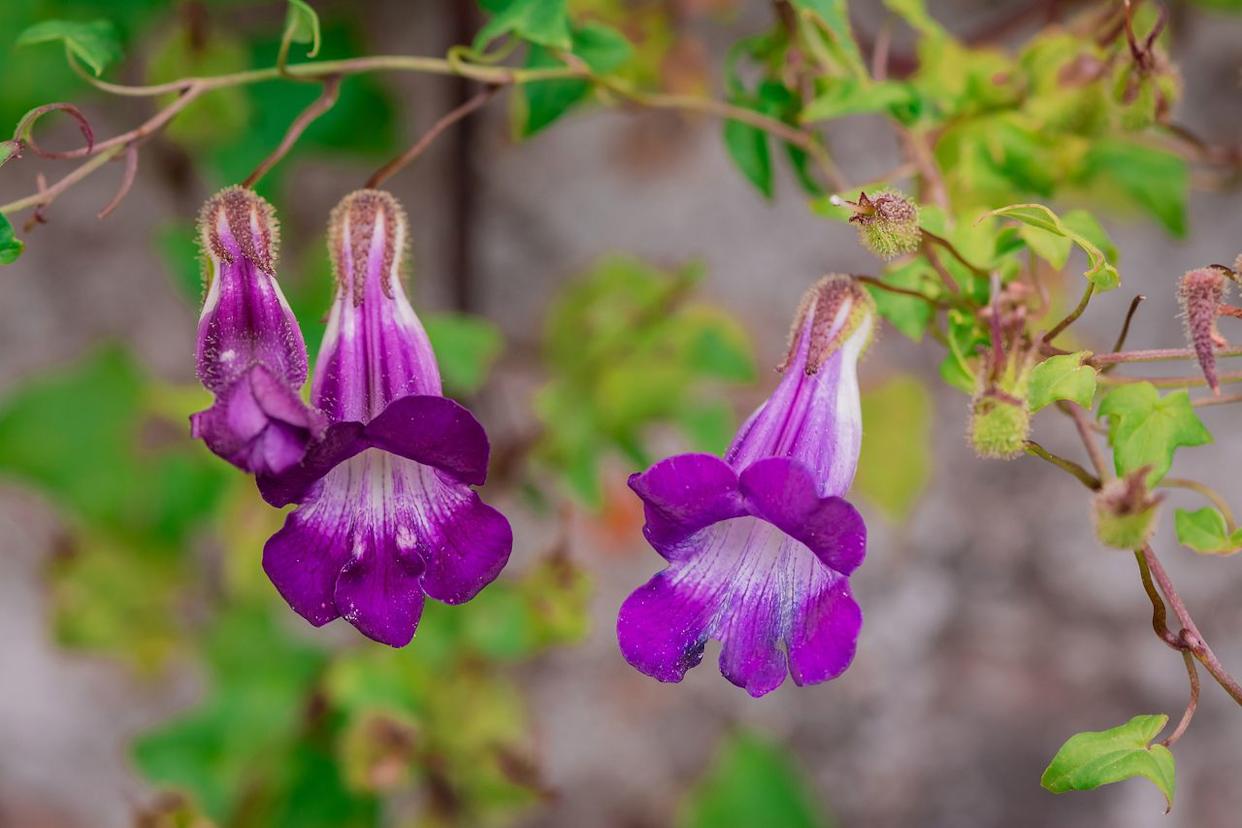
Credit: Getty Images / ANA LEBIODIENE
Botanical Name: Cobaea scandens
Soil Type: Moist, well-drained
Soil pH: Acidic to alkaline (6.0-7.5)
The shape of cup and saucer vine has led to its many nicknames, including cathedral bells and monastery bells. This vibrant purple flowering vine is native to sub-tropical regions and, under the right summer conditions, it can grow up to 40 feet. In zones 10 and 11, cup and saucer vine is grown as a perennial.
“Technically, it’s an annual in many zones, but cup and saucer vine is fast-growing, loves heat, and the blooms are totally unique in arrangements,” says Drummonds.
04 of 09
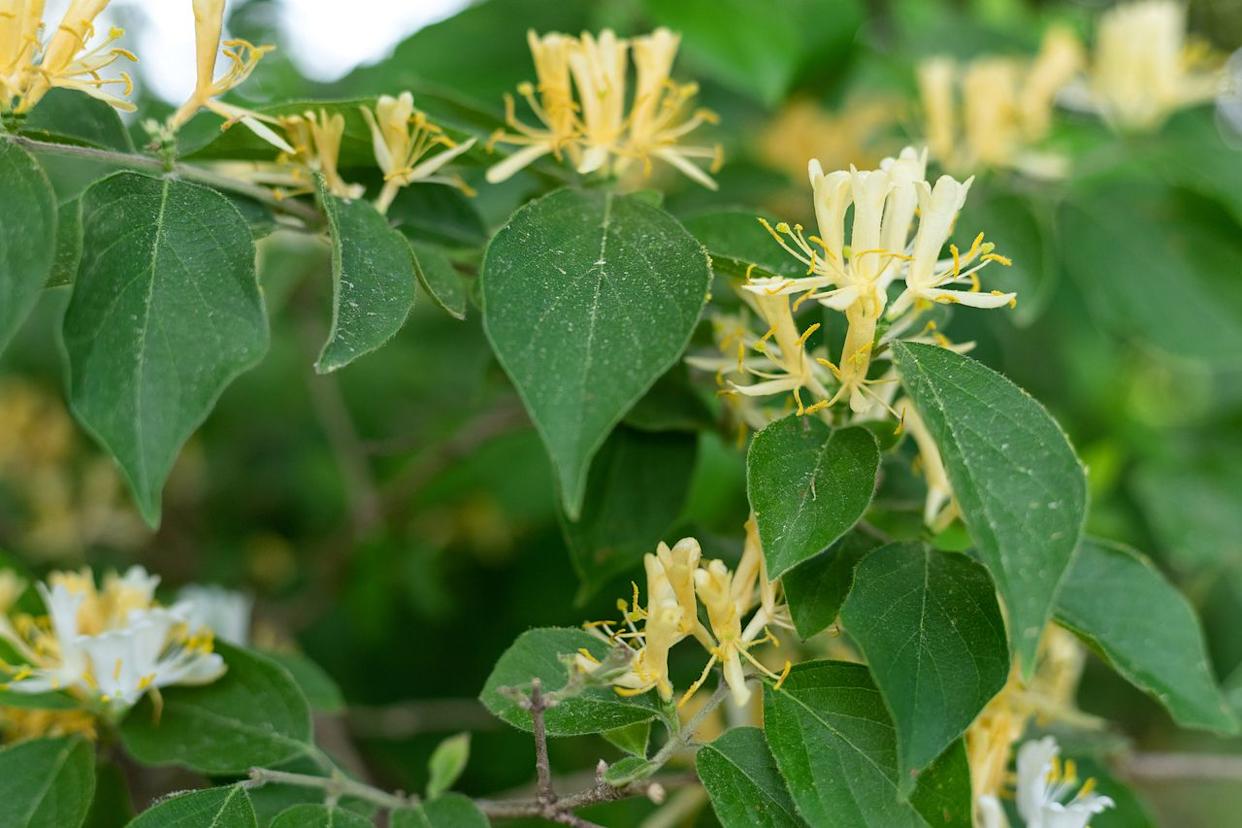
Credit: Getty Images / Ricky Kresslein
Botanical Name: Lonicera periclymenum
Sun Exposure: Partial, dappled
Soil Type: Moist, well-drained, rich
Soil pH: Slightly acidic to slightly alkaline (5.5 to 8.0)
Is there anything more nostalgic than the sweet scent of honeysuckle wafting through the air? It beckons you to try to squeeze one small drop of nectar from each delicate flower. While some varieties are invasive, common honeysuckle can be easily trained to grow along fences and trellises. And, wherever you find honeysuckle, you’re guaranteed to find pollinators. The tubular blooms are a favorite of bees, butterflies, and humingbirds.
05 of 09
Star Jasmine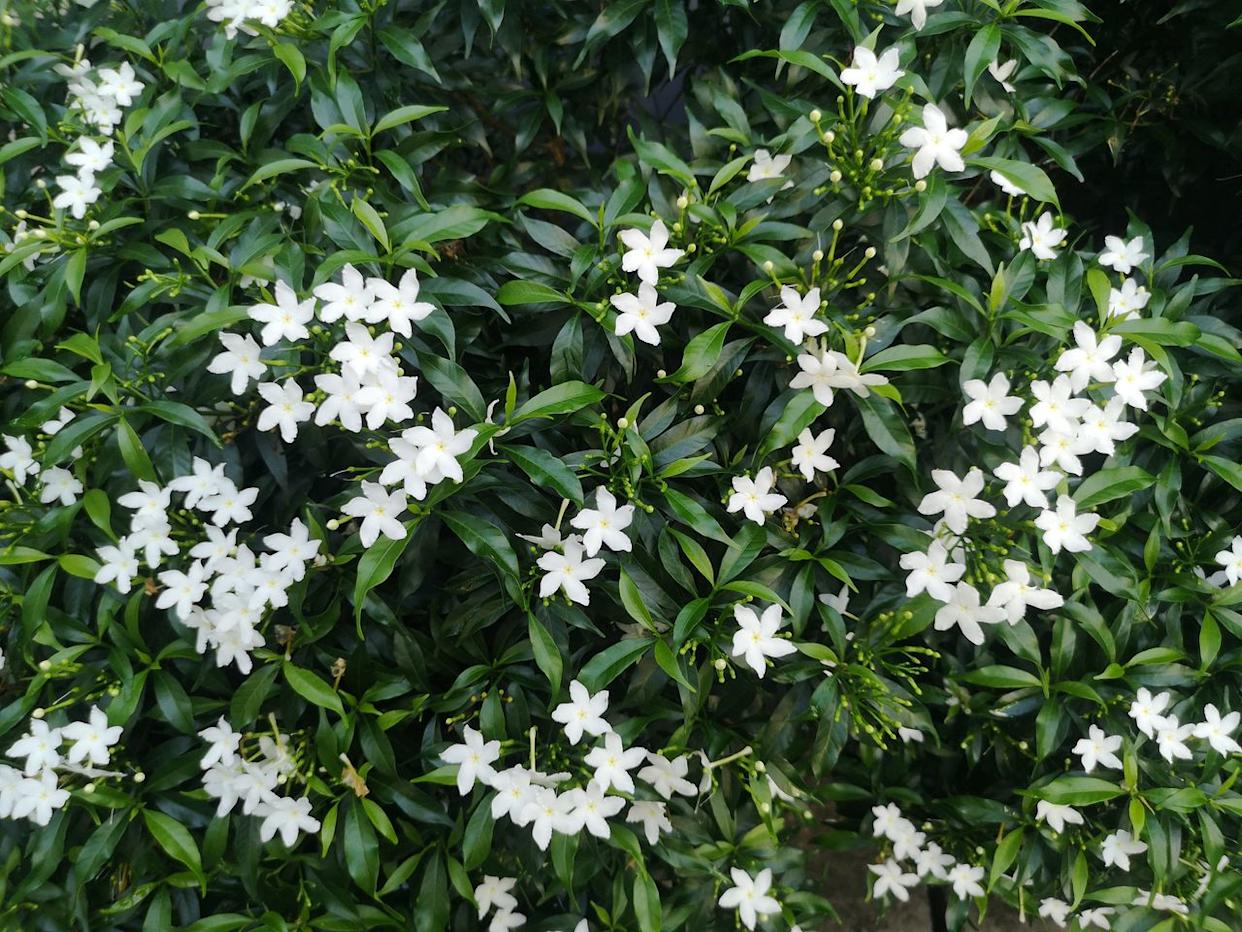
Credit: Getty Images / Penpak Ngamsathain
Botanical Name: Trachelospermum jasminoides
Sun Exposure: Full sun to partial shade
Soil Type: Moist, well-drained, loamy
Soil pH: Slightly acidic to neutral (6.0-7.0)
Sweetly scented star jasmine cascading over a wall is one of the prettiest sights of spring, and the fragrance is one that appeals to humans and pollinators alike. As long as it has room to spread, it will grow vigorously, filling gardens with dainty white flowers that provide a lovely contrast against lush evergreen vines.
06 of 09
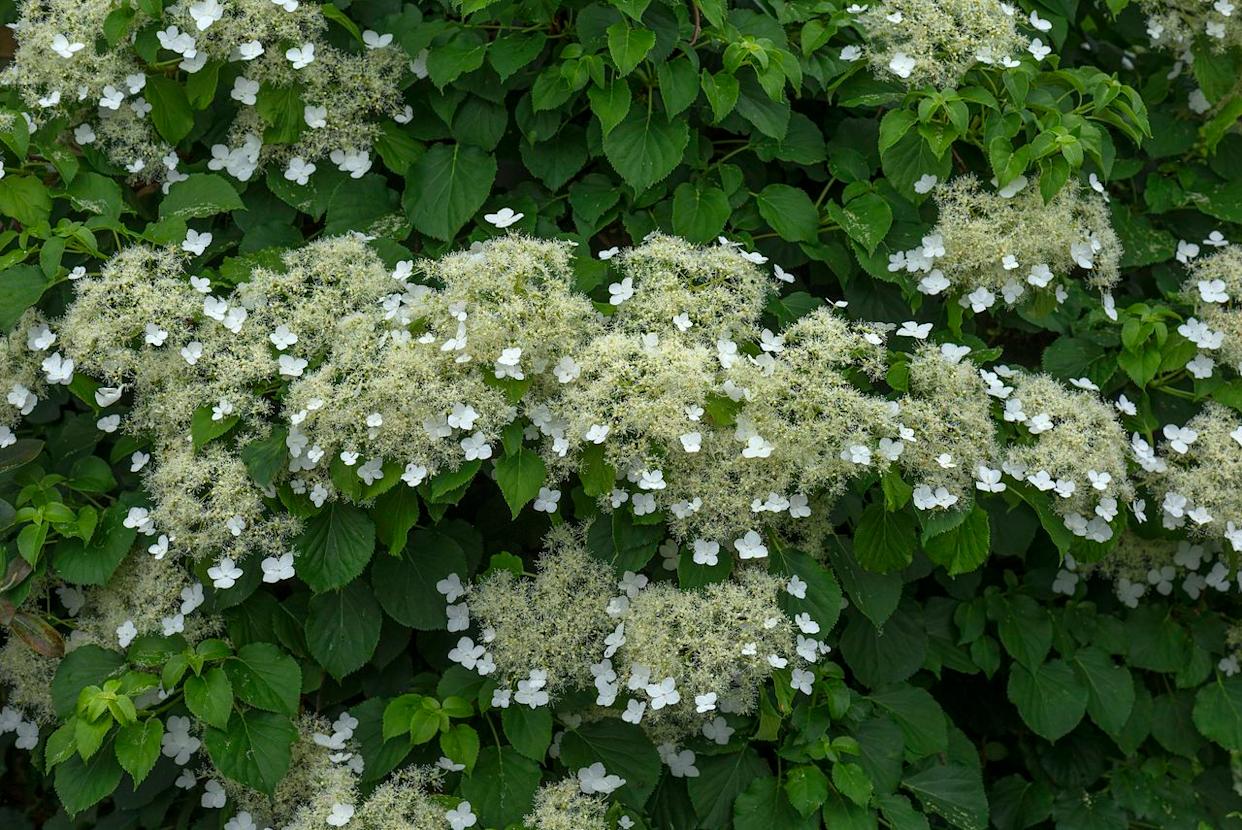
Credit: Getty Images / imageBROKER/Helmut Meyer zur Capellen
Botanical Name: Hydrangea anomala
Sun Exposure: Partial, dappled, full shade
Soil Type: Rich, well-drained, moist
Soil pH: Acidic to neutral (5.5-7.0)
While they’re not fast growers, climbing hydrangea can reach up to 50 feet over the course of years. All they need is a structure to attach themselves to, and they’ll make their way up buildings and fences alike. However, this comes with a caveat—make sure that the structure that the climbing hydrangea is along can actually support the weight of the plant.
07 of 09
Virginia Creeper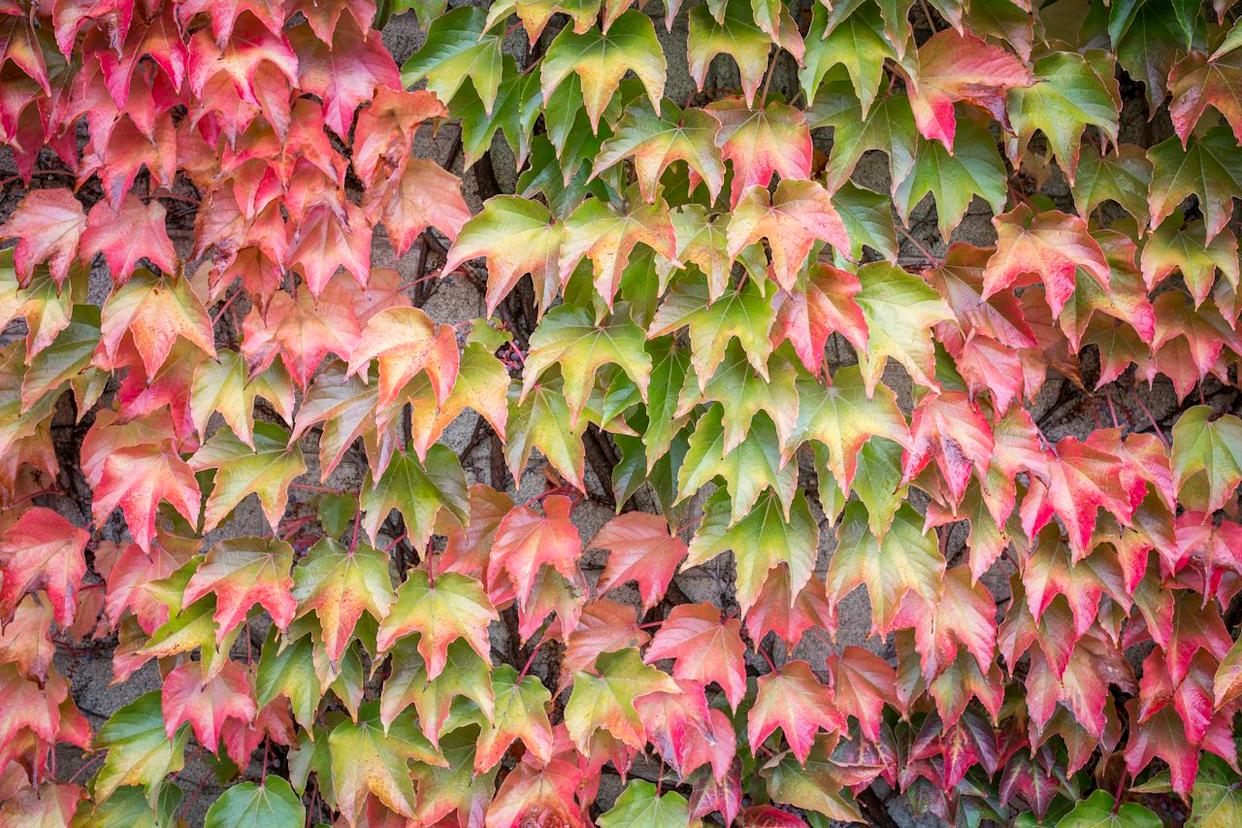
Credit: Getty Images / Westend61
Botanical Name: Parthenocissus quinquefolia
Sun Exposure: Full sun to partial shade
Soil Type: Well-drained, clay, sandy, loam
Soil pH: Slightly acidic to slightly alkaline (5.0-8.0)
Virginia creeper is an easygoing perennial that will grow in almost any zone across the United States, but it’s sometimes a little too easygoing. When you plant Virginia creeper, you can simply walk away and let it thrive on its own, but, if you don’t watch it, you might end up with it creeping far beyond its original footprint. It’ll enthusiastically climb walls and fences, and, in the fall, it will put on a show with its vibrant foliage.
08 of 09
Plumbago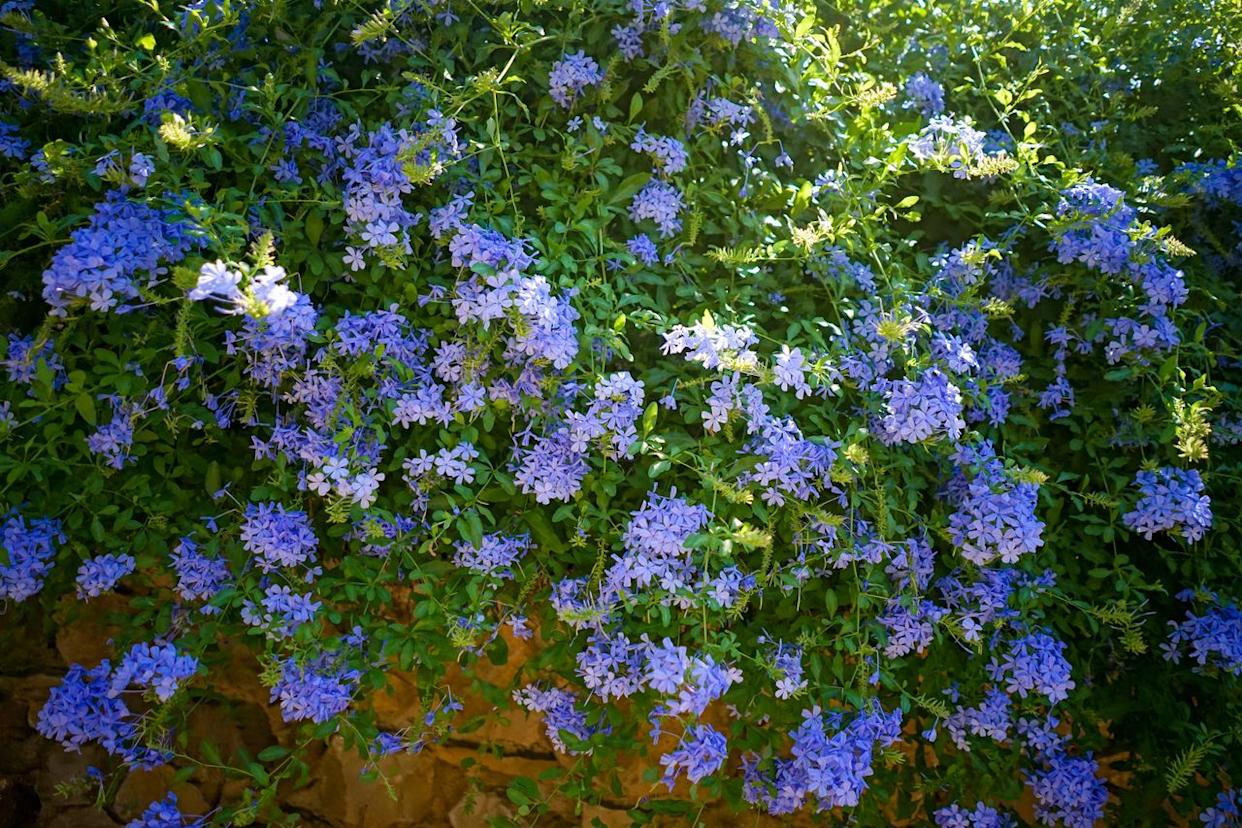
Credit: Getty Images / Icy Macload
Botanical Name: Plumbago auriculata
Sun Exposure: Full sun to partial shade
Soil Type: Medium, well-drained, rich
Soil pH: Mildly acidic to neutral (6.0-7.5)
You’ll get pretty little blooms all summer long with plumbago, a tropical flower with blue, pink, or white blooms. As long are you’re in USDA Hardiness Zones 8 through 11, you can grow plumbago as an evergreen perennial. Otherwise, you’ll start over each year with plumbago as an annual but, don’t worry, it grows quickly and with minimal effort.
09 of 09
Bougainvillea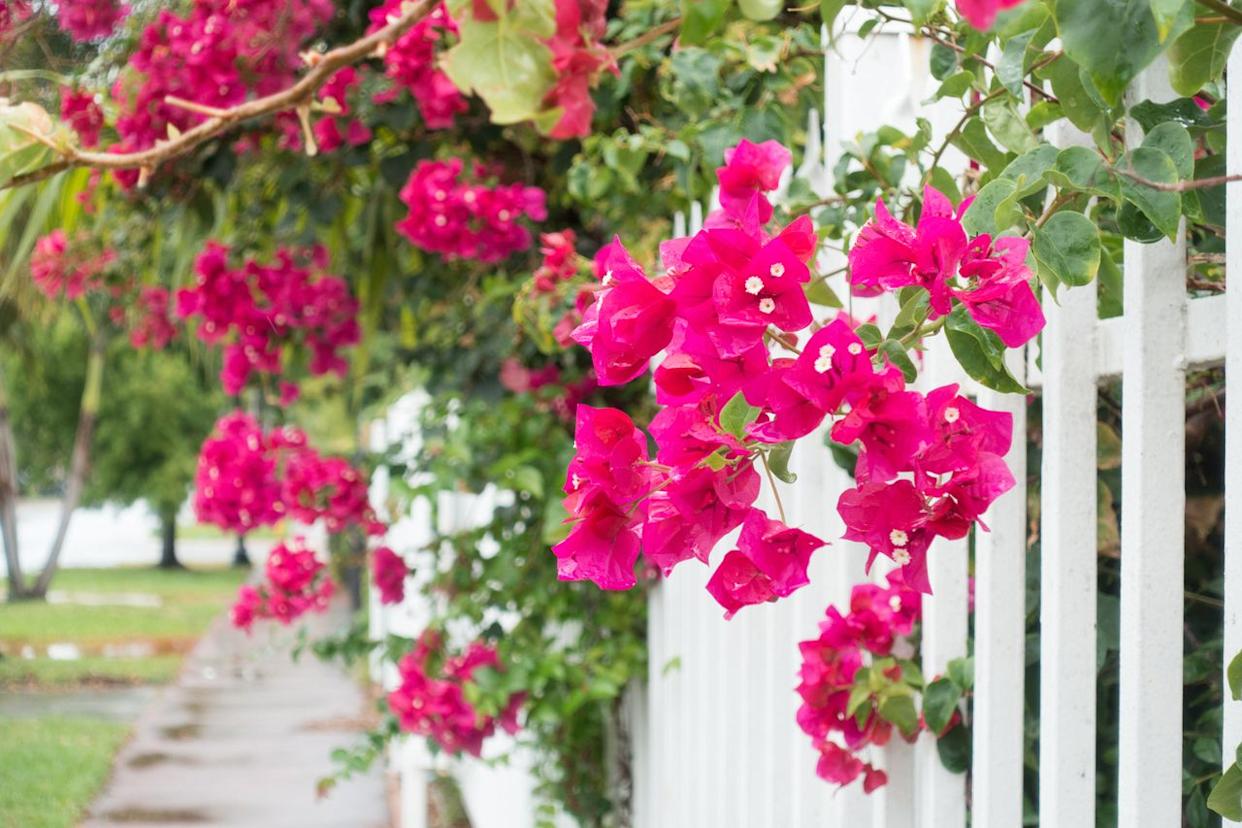
Credit: Getty Images / tovfla
Botanical Name: Bougainvillea spp.
Soil Type: Well-drained, sandy, loamy
Soil pH: Slightly acidic (5.5-6.5)
The joyful magenta blooms of bougainvillea are a familiar sight in south Florida and other balmy climates, but they can be grown as a climbing annual anywhere that gets hot, dry consitions in the summer. These vines will trail along buildings, fences, and trellises alike, giving gardens a tropical, vibrant feel. They’ll die back in the winter, and, in USDA Zones 9 through 11, they should reappear every spring.
Read the original article on Southern Living
Comments are closed.