
Dreaming of long, warm days in the garden? If you’re craving colour after months of grey skies, now is the moment to act. March is the last call to plant summer-flowering bulbs – and getting them in the ground now means weeks of vibrant colour from early summer and well into autumn.
From statement dahlias to easy, high-impact gladioli, these bulbs will transform borders, pots and even the smallest plots.
‘Not only will they bring colour back into the garden, but they will take you all the way from early summer right through to those first hard frosts,’ says Ann-Marie Powell, author and landscape designer.
Don’t miss your window: these are the 10 must-plant bulbs to get in the ground now for a spectacular summer display.
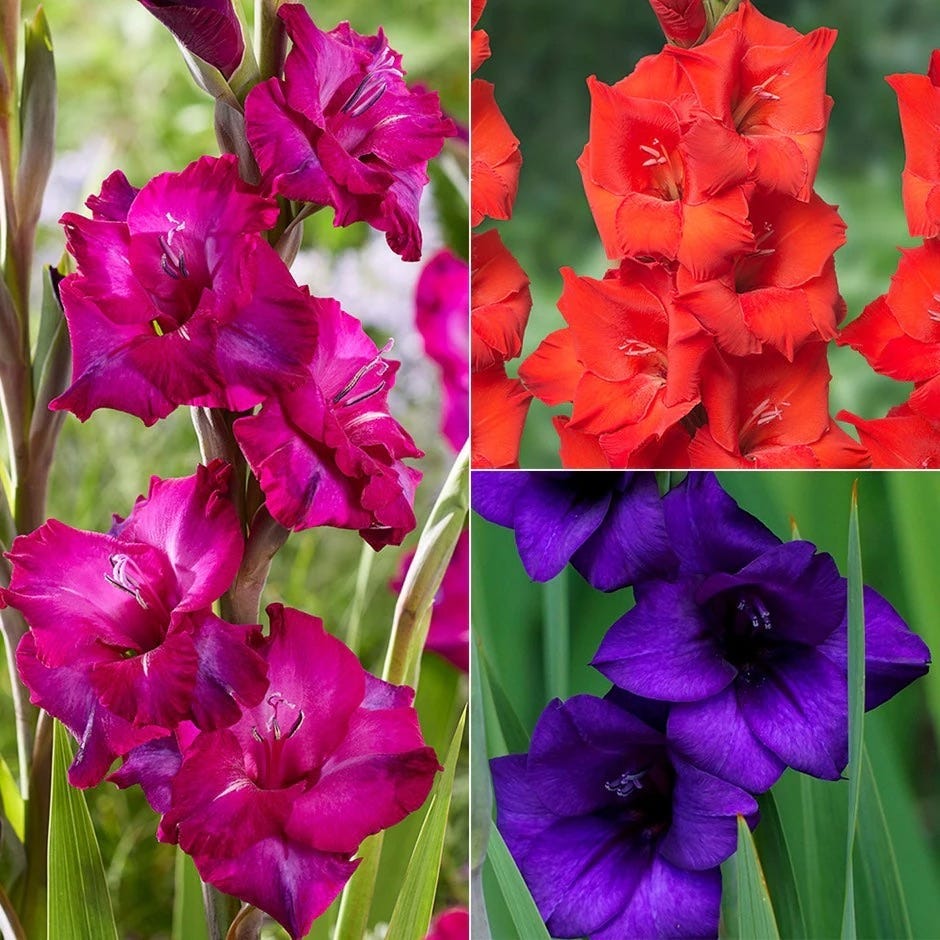
1. Gladiolus ‘Velvet Eyes’
If you want to kick-start your summer display with maximum impact, invest in these drop-dead gorgeous gladioli. ‘This flower is a deep velvety reddish-purple with crimson throats that looks absolutely fantastic in the garden,’ says Ann-Marie.
Perfect for adding height and structure to borders, they can reach up to 1.5m, bringing a dramatic, architectural feel and a dose of sultry summer elegance. They’re the kind of blooms that catch the evening light beautifully.
And if you’ve gone all out and planted quite a few, you’ll have some for indoors, too. ‘These flowers are stunning when you put them in a large vase,’ says Ann-Marie, ‘They will happily keep indoors for two weeks.’
Vibrant gladioli collection
 2. Gladiolus communis subsp. byzantinus
If you’ve set your hearts on pinks and purples this summer, then Ann-Marie’s second choice is waiting to be adored and will look perfectly divine in a cottage garden.
‘It has these vivid magenta funnel-shaped flowers, with striking white marks, off-set by sword-shaped leaves,’ she says, swooning over this creation which has the additional bonus of being a hardy, low-maintenance corm. ‘It does like full sun,’ she explains, ‘but the good news is you don’t have to lift it and if you’re thinking of planting a few of them in a more informal setting, it will naturalise very well in long grass.’
3. Crocosmia ‘Emily McKenzie’ 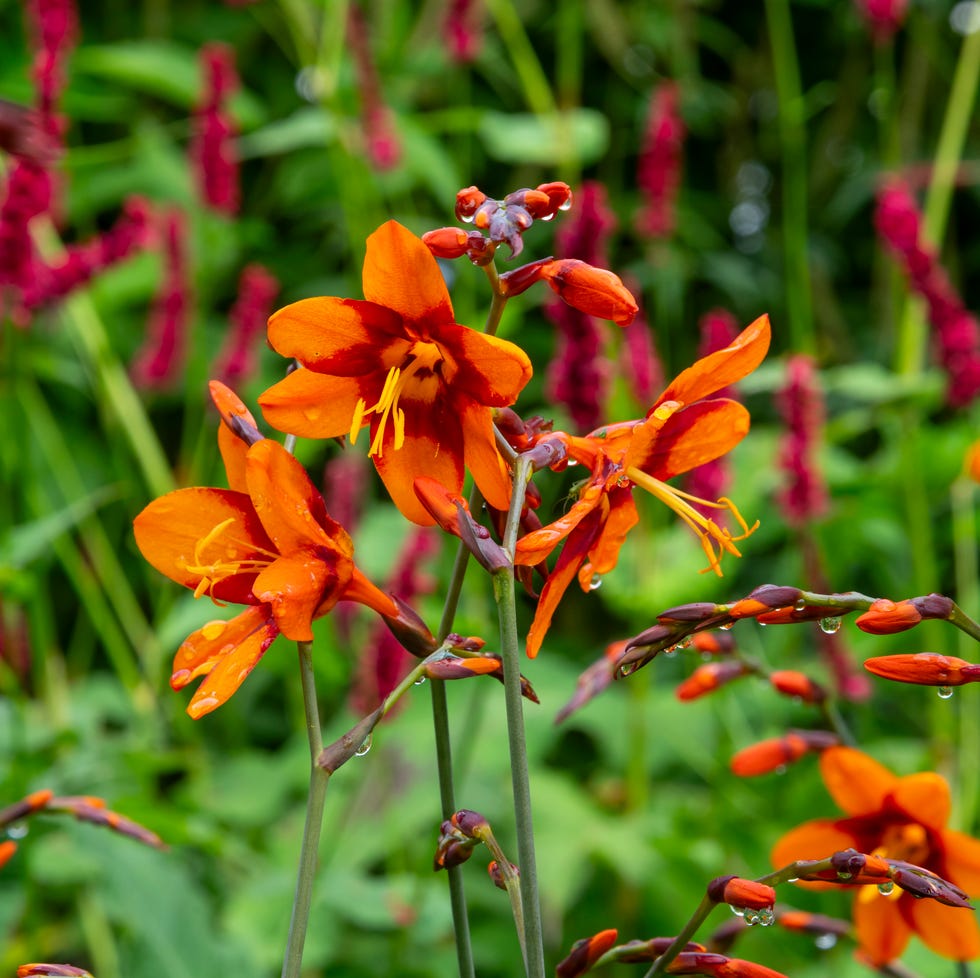

Photos by R A Kearton//Getty Images
Tubular bells, anyone? You might not hear them, but you will certainly see these firecrackers, which will light up any border in need of a few sparks. These beauties are happy in either full sun or partial shade; they don’t mind if they’re east, south or west facing, but will want to be watered if it’s particularly dry.
Ann-Marie describes their colour as ‘orange with an eye-catching dark mahogany splash at the centre of the flower’. She advises new growers of this plant to buy them as corms rather than potted, as, like a lot of bulbs, they do work out cheaper, especially if you’re hoping to splash out and buy quite a few. It’s perfect for those who love nothing better than a floral firework display.
4. Lilium ‘Arabian Knight’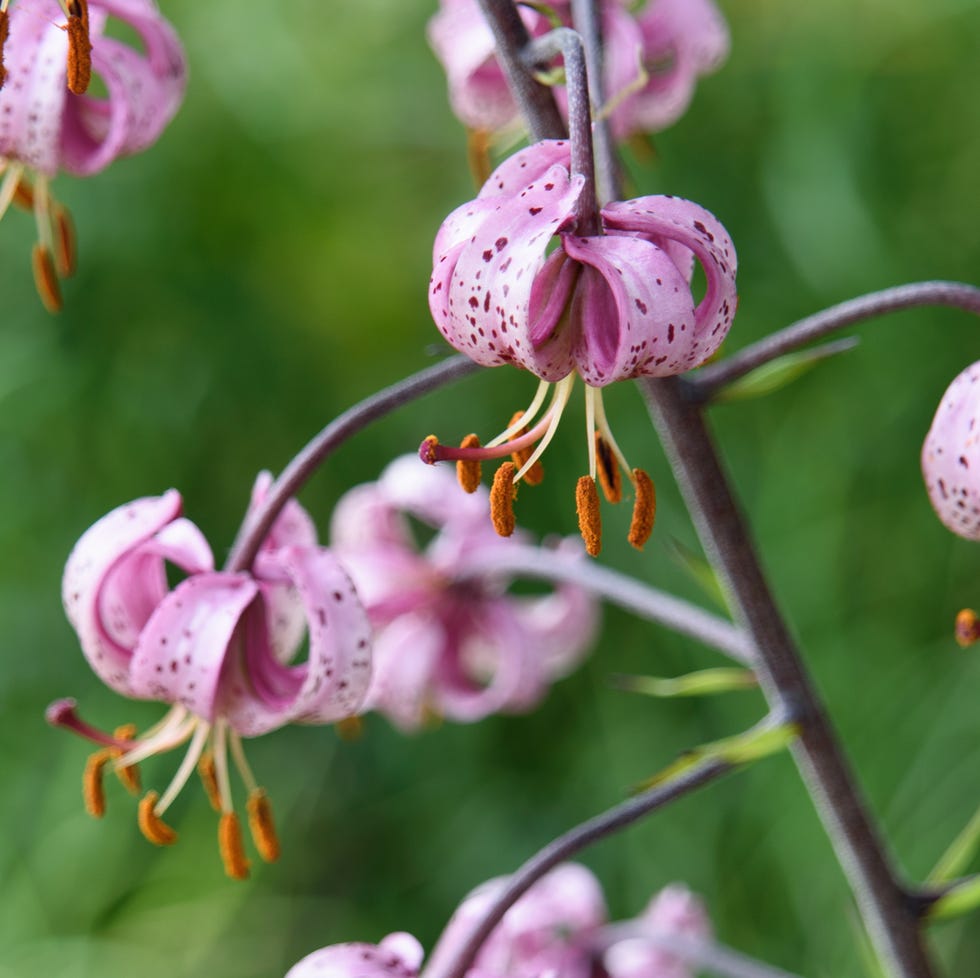
Floresphotographic//Getty Images
Lilium martagon is an instantly recognisable lily, which forms clusters of dainty nodding heads with curled back petals. Sometimes it will form as many as 20-30 flowers on one stem.
‘The petals on this rich mahogany-red martagon have striking splashes of tiny gold spots,’ says Ann-Marie. ‘It also has the bonus of being scented.’ This flower is native to the mountain meadows of Switzerland. Although it likes the sun, it also welcomes a bit of dappled shade, which many gardeners are always looking to fill.
As well as borders and beds, it grows well in pots and will also add some late summer colour and scent to your creative living room displays.
5. Lilium ‘Claude Shride’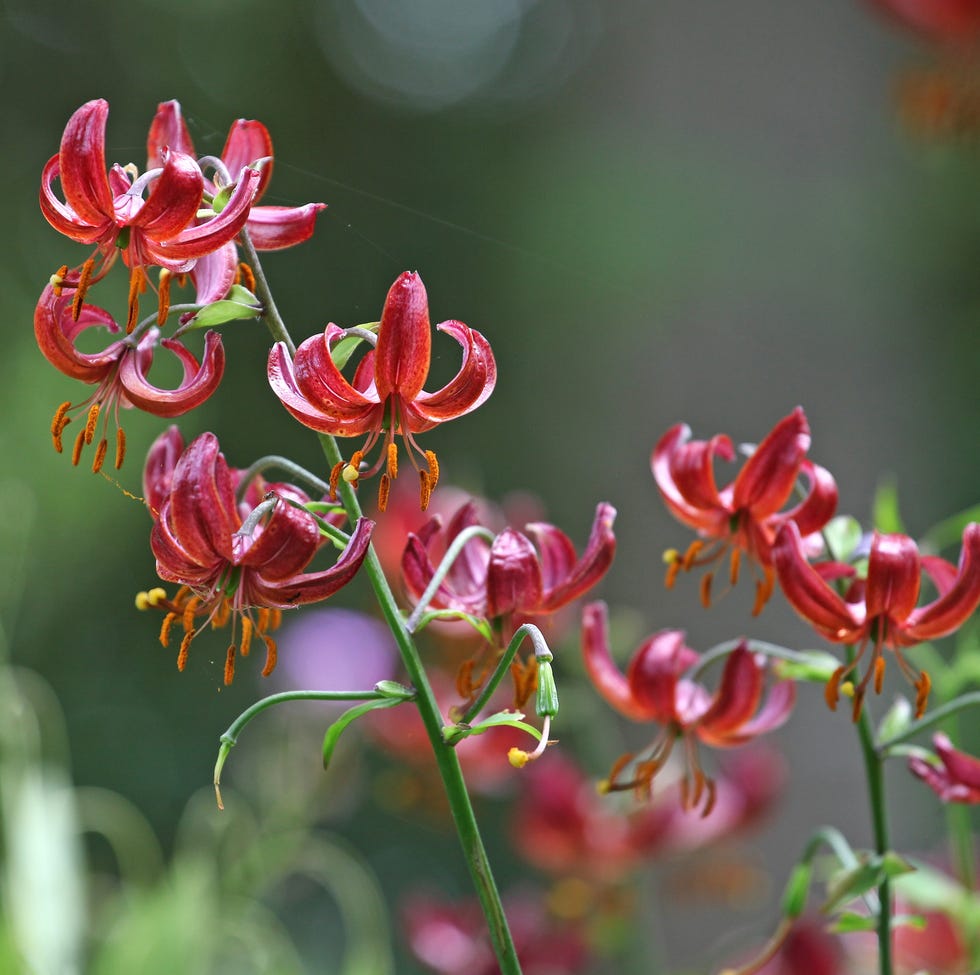
Alex Manders//Getty Images
Sarah Raven has called this flower her favourite of all the martagon lilies. And Ann-Marie is clearly a big fan, too. ‘It has this deep crimson colour and is speckled with gold,’ she says, clearly taken by the sophisticated shades of this summer perennial. It can grow to 1.2m and begins flowering in late May and early June.
Like other lilies in this family, the flowers love the sun, but the roots prefer things a bit cooler, hence their love of partial shade. ‘It will flower for four to six weeks, which is exceptional for a lily,’ says Ann-Marie, which gives you even more of a reason to pick the odd one for that new vase you’re eager to show off in the hallway.
6. Eucomis comosa ‘Sparkling Burgundy’ 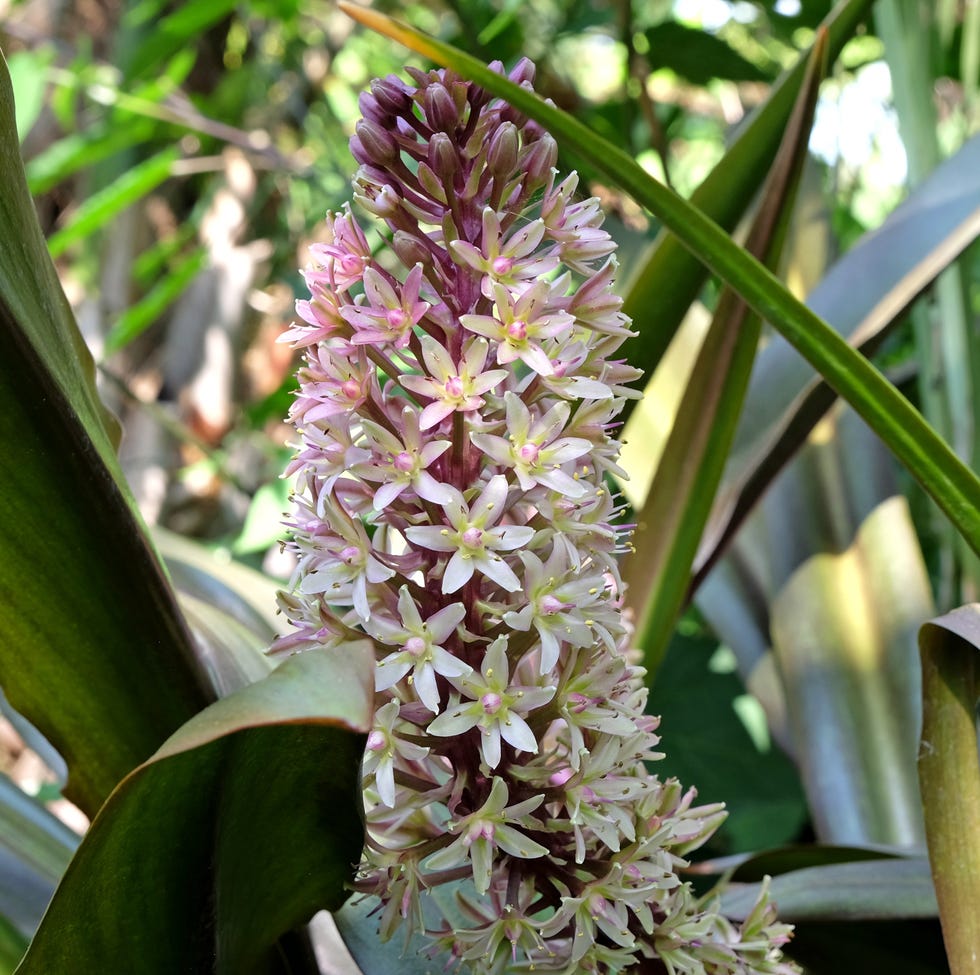
Alex Manders//Getty Images
‘This is more commonly known as the pineapple lily,’ explains Ann-Marie, ‘and I love it because it has these eye-catching architectural stems and this extraordinary foliage.’
Its elegant spires grow to about 70cm and from its distinctive red wine-coloured stems emerge purple buds which open into a medley of creamy white and powdery pink star-shaped flowers.
The plant gets its name from the top of the spire, which has what appears to be a little pineapple sitting on it. Much loved by butterflies, pineapple lily is a welcome addition to the garden in those mid to late summer months when many flowers have passed their best. Come autumn, these flowers develop into wonderful seed heads. What is there not to love?
7. Liatris spicata 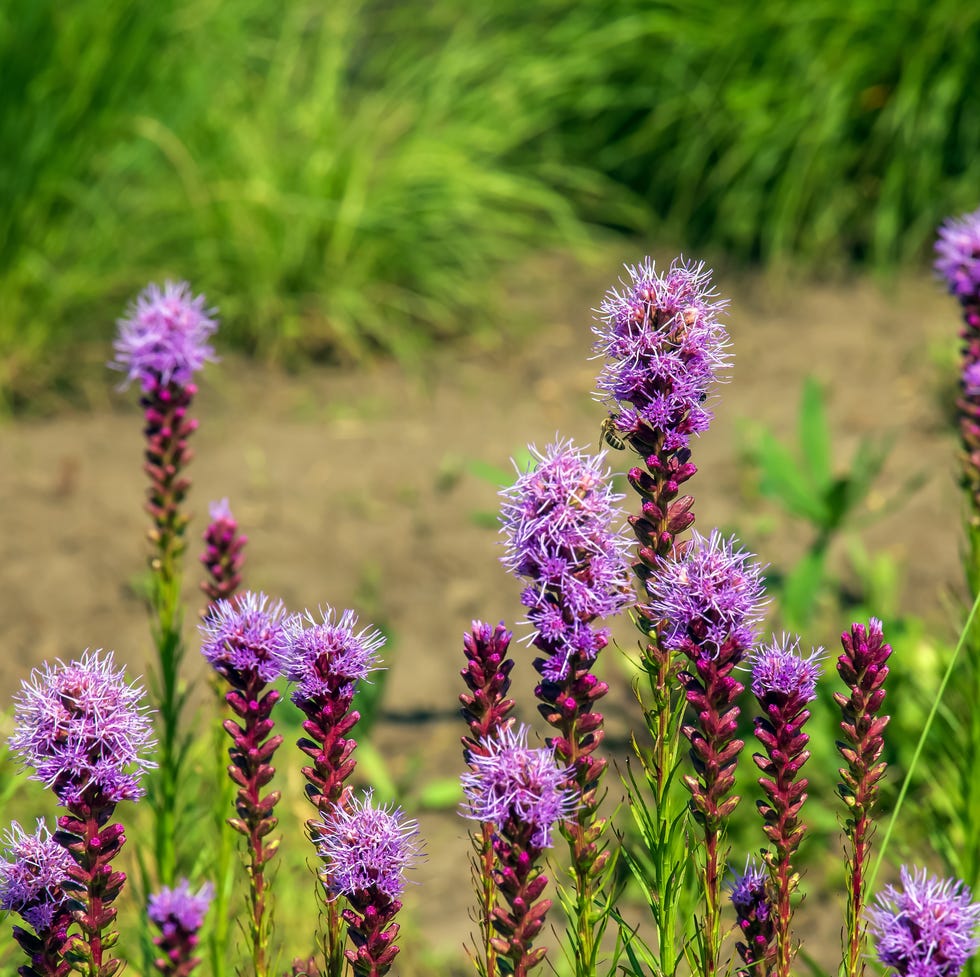
AntaresNS//Getty Images
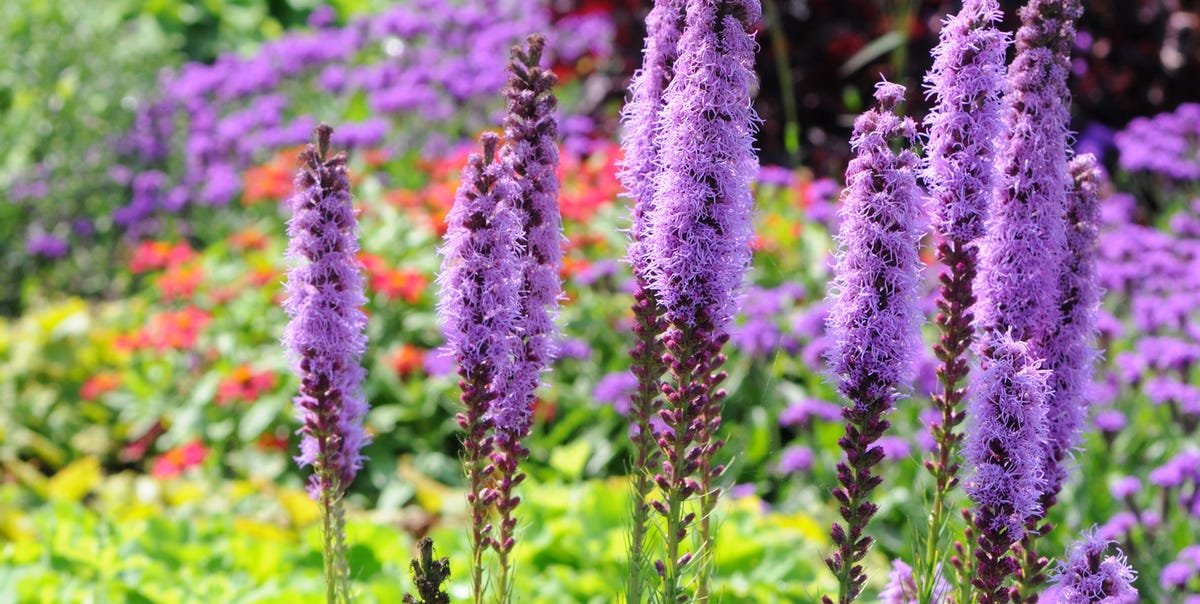
For gardeners who love their dreamy flower spires, having this plant alongside a border of pineapple lilies will have you thinking you are in a spire heaven. ‘These deep purple bottlebrush spikes flower from the top down and pollinators adore them,’ says Ann-Marie.
It is sometimes called Gayfeather, because it can look like feathers, but its common name is button snakewort, and it is native to North America where it is often found in wild meadows. This lavender shade looks particularly striking when planted in drifts but is equally at home in borders and containers.
Lastly, they’re easy to grow and are low maintenance – just the sort of thing you need when the summer heat gets the better of you.
8. Dierama pulcherrimum 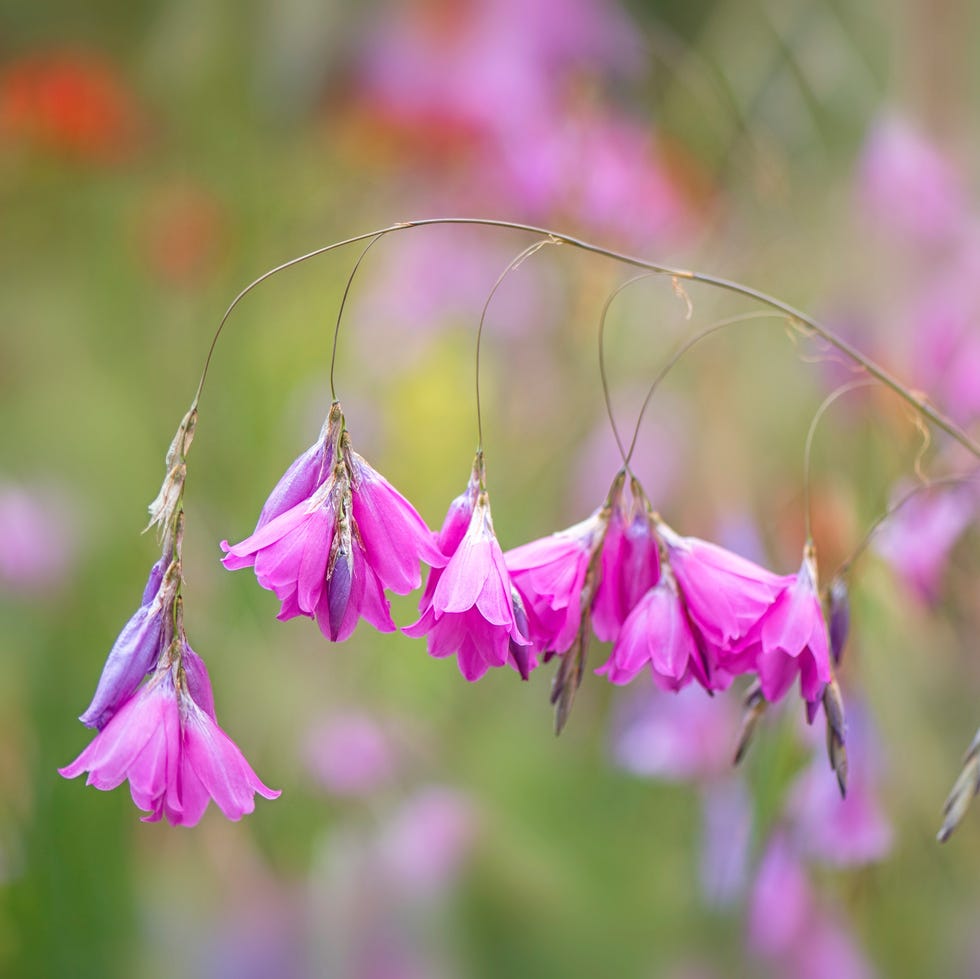
Jacky Parker//Getty Images
‘This flower is also known as angel’s fishing rod,’ says Ann-Marie, who finds these small jewel-like blooms enchanting.
‘They have these delicate nodding heads which look like tiny bells and arched stems which move in the slightest breeze.’ This plant is actually a member of the iris family and is native to South Africa.
The shades can range from pale lilac and lipstick pink to pomegranate and dark maroon, and do have something of a fairytale feel to them. They can be a bit slow to establish, but when they do, they’ll look exquisite amongst ornamental grass.
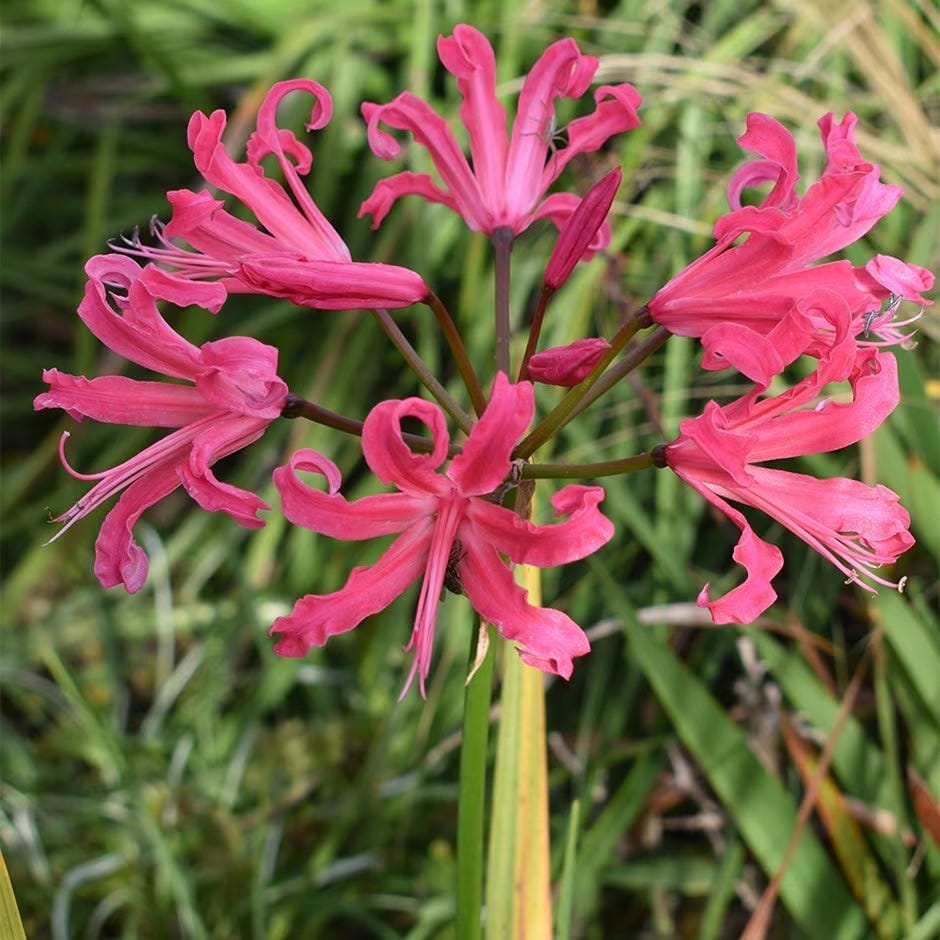
9. Nerine bowdenii ‘Isabel’
Just when everything is about to wrap up for the year, along come curly-petalled nerines to provide us one last hurrah of glamorous pinks.
‘The stems emerge in September, and these deep pink flowers emerge in October, providing this extra splash of late colour,’ says Ann-Marie, clearly a big fan of this late bloomer. They grow to about 50cm and you’ve only got to get a breeze, and these lily-like flowers look like they are dancing and skipping along the border.
It’s one of the hardier nerines and is ideally suited to a well-drained soil, along a south-or west-facing wall. The bulbs also need to be planted with the top third above the soil surface. Give them a while to get going and then you’ll never look back. You’ll be a nerine fan forever!
Nerine ‘Isabel’
 10. x Amarine tubergenii ‘Tomoko’
If you can’t get enough of nerines, but fancy adding something slightly different to create a late summer floral jamboree, then Ann-Marie’s last choice hits the nail on the head. These bulbous perennials are a clever cross between the nerine and the amaryllis, with tall lily-like elegance and leafless stems.
The shades range from pink to white, and for Ann-Marie, this particularly dark shade chimes with the change in season. ‘These rich magenta beauties will take you right through the autumn,’ she enthuses. ‘They are also that bit bigger and stronger than nerines and will provide you with brilliant cut flowers once everything else has gone.’
With all this wonderful late colour in the garden, could autumn now become the new summer? It certainly looks that way!
A Year of Colour: How to Create a Bold and Bright Garden by Ann-Marie Powell is available now (Frances Lincoln, £25).
Follow House Beautiful on Instagram, TikTok and Pinterest
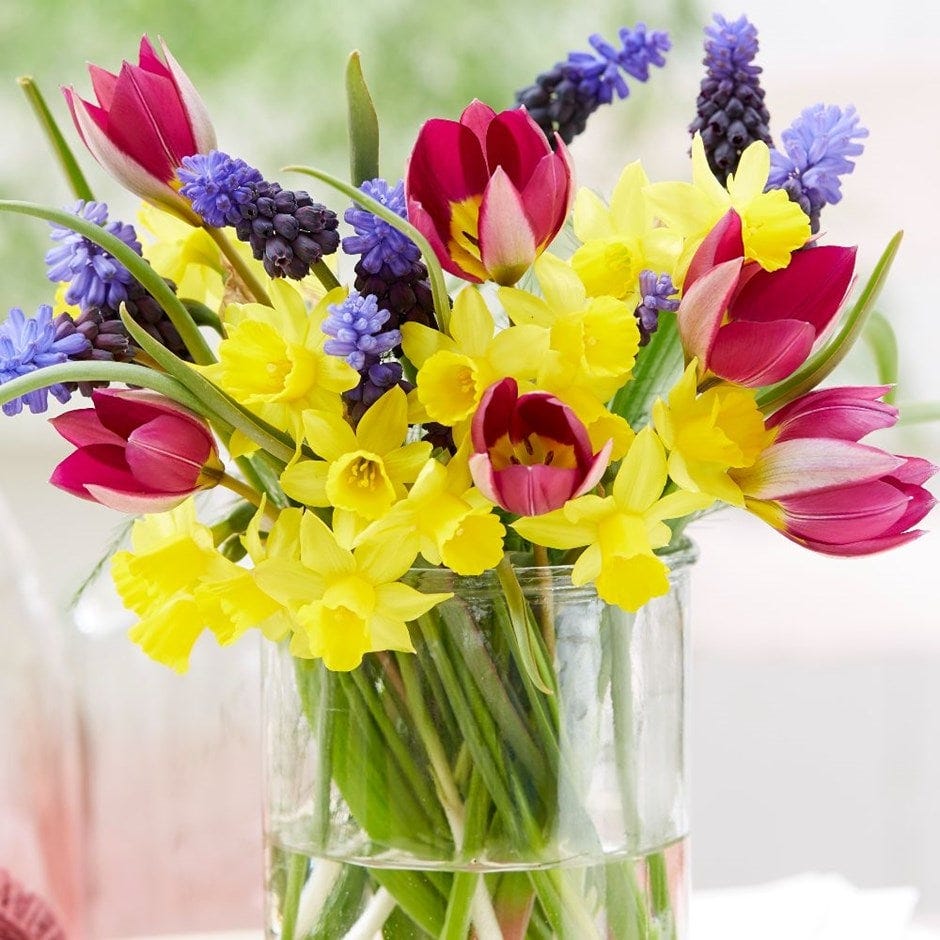 Spring bouquet bulb collection
Now 67% Off
Credit: crocus.co.uk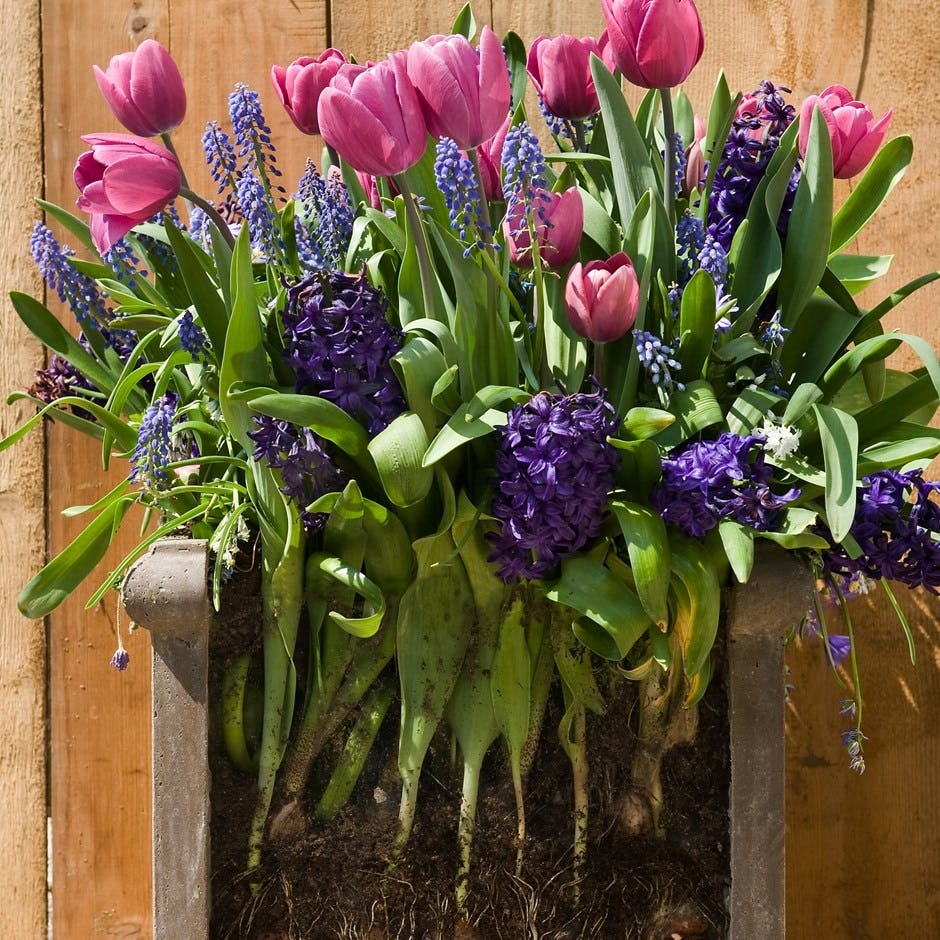 Bulbs for pots – Rich blues bulb lasagne collection for pots
Now 20% Off
Credit: crocus.co.uk 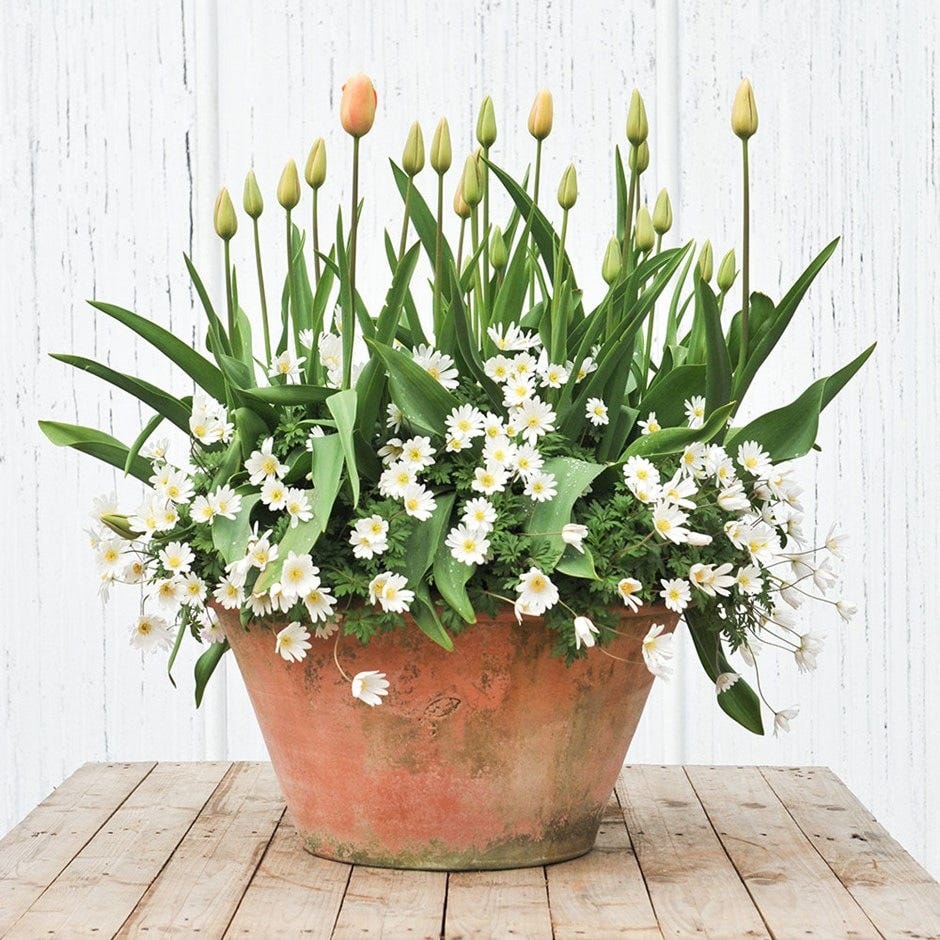 Bulbs for pots – Peach & white
Now 20% Off
Credit: crocus.co.uk
Comments are closed.