
Lawns will start to grow again now that springtime is almost here, but gardeners need to help the grass out now, or moss can quickly overrun it. Moss is more likely to grow in early spring than at any other time of the year, as the grass is still weak, as it is now only just recovering from the harsh winter weather. This means that moss can easily compete with a lawn for sunlight, space, and nutrients, which can further weaken the grass and prevent it from growing back properly.
Matt Adams, an expert from The Relentless Gardener, has shared an easy way to get rid of moss while also giving lawns a strong boost. He said: “Iron sulphate is a widely used product on lawns. It is, of course, known for its strength in controlling or killing moss. That’s not all, though, it can also help grass with photosynthesis, meaning it will help give it a nice green colour while adding some much-needed nutrients into the soil.”
Iron sulphate is a mineral salt that reacts with water, causing it to chemically burn and greatly damages moss. It is safe for grass in normal amounts, but it will also draw moisture from moss, which dehydrates it quickly because moss is thin and has no roots.
Lawns need iron for chlorophyll, which creates the green pigment in grass and within a few days after application, it will make a lawn look much healthier and vivid.
Chlorophyll helps plants capture sunlight for photosynthesis, which means iron sulphate will also give a lawn much more energy to grow thicker grass throughout spring.
Not only will it get rid of moss but it will ensure the grass does not become yellow and stay healthy so moss has less chance of growing back later in the season.
How to get rid of moss on a lawn using iron sulphate
It should be noted that lawns often become mossy over winter because the soil becomes compacted and waterlogged due to icy weather.
If you want to make sure moss never grows back, you will need to aerate and scarify the lawn first to ensure the soil drains properly.
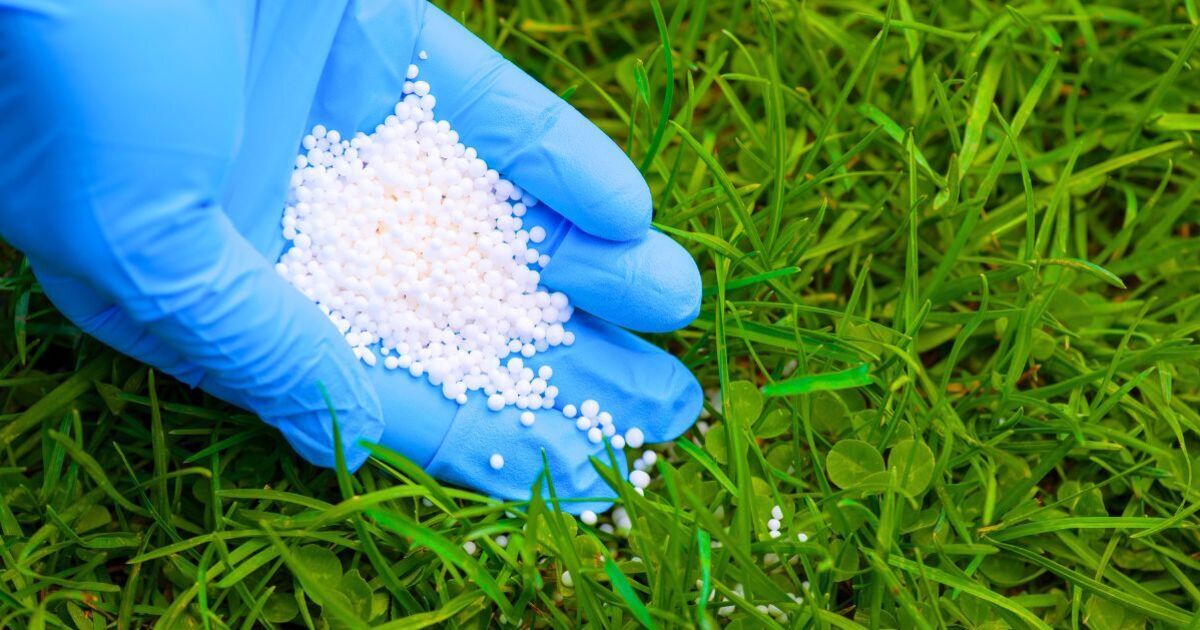
You can then buy iron sulphate at a gardening centre, as it is usually available as lawn sand, fertiliser, or a water-soluble product.
Do not ever just put iron on your grass, as it is quite potent, and it always needs to be mixed in water, sand or fertiliser; otherwise, it will burn your lawn as well as the moss.
It is usually better to use lawn sand in early spring to give lawns a nutrient boost, as fertilisers can badly damage grass if used when the weather is still cold.
Apply lawn sand with iron sulphate after it rains so it dissolves easily, helping grass become emerald green and keeping moss away throughout spring.
Comments are closed.