
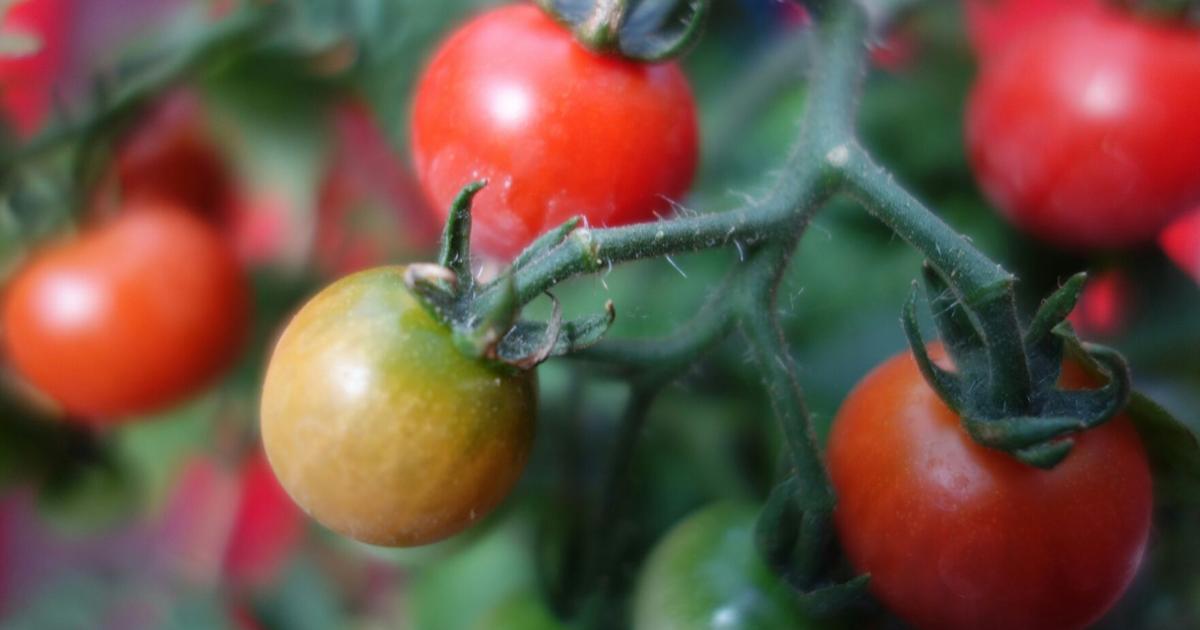
Tomatoes are the most beloved vegetable in the garden. They are easy to grow, yet tomato terminology can be confusing, making it difficult to decide what to grow. An explanation of a few basic terms may help you decide which varieties are right for your garden.
Determinate tomatoes are sometimes called bush or patio tomatoes. They grow to a compact 2-4 foot size, and have an upright growing habit. Once they reach their genetically determined size, they stop growing and producing fruit. They do well in containers and small gardens.
The majority of the crop will ripen within a four-week period when yields will be high. Before and after the main harvest, fruit yields are modest. Plants are very bushy and will have so many fruits ripe at one time that the branches can break from the weight. They may benefit from staking or caging. Pruning determinate tomatoes should be done very judiciously as it will reduce yields.
Some common determinate varieties are Better Bush, Celebrity, Early Girl Bush, Clear Pink Early, Legend, Taxi and Sophie’s Choice.
Semi-Determinate are taller than determinate, growing 5-8 feet tall, a height that is easy to trellis. There are far fewer varieties of semi-determinate tomatoes than either determinate or indeterminate. Finding seedlings locally is often difficult. You may need to search the internet for seeds and plan to grow your own seedlings. Some semi-determinate varieties are Black Sea Man, Amish Paste, Italian Heirloom, Sioux and Ace 55.
Indeterminate or long vine tomatoes are genetically dominate. They are by far the most common and offer the greatest selection. The vines usually grow 12-15 feet in our growing zone. Indeterminate plants will continue to grow and produce fruit until frost, disease or pests kill them. In the long growing season of the tropics, vines can grow to 60 feet.
For obvious reasons, indeterminate plants require very sturdy trellising or plenty of room to sprawl. They are challenging to grow in the confined spaces of small gardens. Some common indeterminate varieties are Super Fantastic, Early Girl, Better Boy, Black Cherry, Prudens Purple, Gloria’s and most Roma varieties.
Dwarf tomatoes are small and bushy. They are a true indeterminate plant that is intentionally bred for the rare recessive gene of dwarfism. They nearly always result from intentionally cross pollinating two different varieties. The offspring from the cross need to be grown and stabilized over 6-10 generations to create a new open pollinated variety.
While this process sounds complicated, it’s important to know that dwarf plants are not genetically modified or genetically engineered (GMO or GE). If you want to grow them, usually you need to start from seed. Some dwarf varieties are Sweet Adelaide, Perth Pride, Dwarf Wild Fred, Iditarod Red, Yukon Quest and Tasty Wine.
Sign up for our Daily Headlines newsletter — delivered to your inbox every morning at 7 a.m.
Thanks! You’re all set.
Watch your inbox for Daily Headlines.
Colors and flavors of tomatoes come in a wide range, which partially explains their beloved status among gardeners. The most common colors of tomatoes are described as red, scarlet, crimson, pink or purple. All are just fancy names for red.
Many gardeners describe the flavor of red tomatoes as common, ordinary or traditional. Although red still reigns supreme, other colors are rapidly gaining in popularity. The light colors of yellow, gold and orange have subtle, mild flavors, and less mouth-puckering tang for those who object to the acidity of tomatoes.
The darker colored tomatoes of chocolate and black are actually dark red colors of burgundy, dark red-brown or dark red-purple. There are also indigo colors where the skin is a dark blueberry color over a flesh of any color of tomato. These dark colored tomatoes often have stronger and more complex flavor blends of sweet, tart, savory and smoky.
Varieties that are green when ripe have a flavor similar to red tomatoes. However, green-lovers claim that they are a little sweeter with a slight peppery taste.
Different colored tomatoes offer different nutrients. For better nutrition grow a wide range of colors.
One final tip about tomato flavor: Varieties with green shoulders often taste better, though they may still look under-ripe. It used to be that all tomatoes ripened in a pattern, starting at the bottom and gradually moving toward the top, leaving the shoulders slightly green. This is not a sign that the tomato isn’t fully ripe.
About 70 years ago, a rare but naturally occurring mutation caused some tomatoes to ripen evenly, starting in the center and gradually moving outward to the skin. Evenly ripened tomatoes are very attractive at market. Unfortunately, the unintended consequence is that they often have less flavor and aroma. These tomatoes are usually picked green and continue to develop color — but not sugar, flavor or aroma. They may look pretty, but still taste slightly unripe.
The green-shouldered gene allows fruit to be picked before fully ripe and still continue developing sugar, flavor and aroma. So don’t get frustrated if your tomatoes don’t ripen evenly — it’s actually a very good thing!
Don’t let tomato terminology confuse you. Some basic information should make it easier for you to decide which tomatoes to grow. Now you can move on to planning your best garden ever!
Comments are closed.