
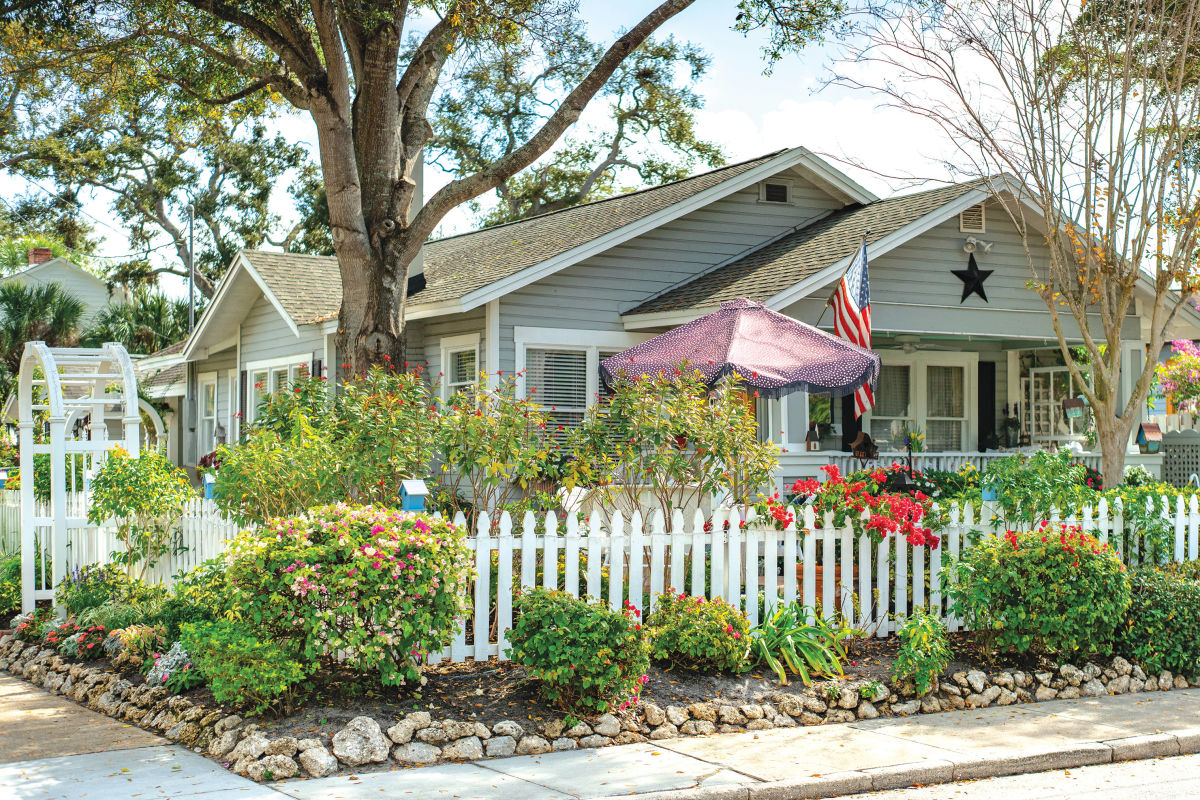
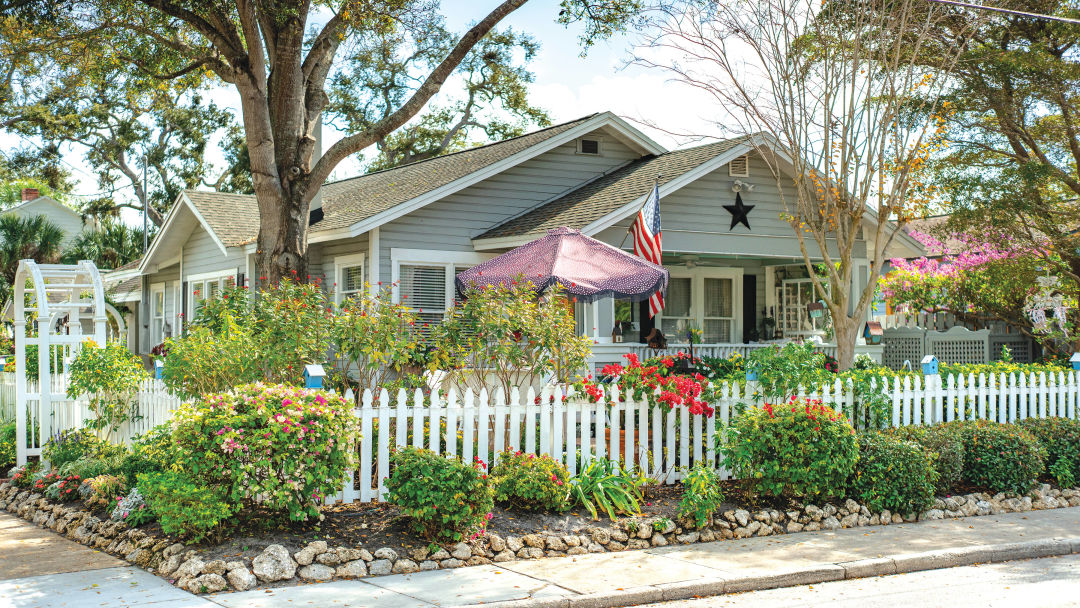
An English-style cottage garden on the tour.
Now’s your chance to meander through Gillispie Park’s charming streets, peeking into people’s gardens, without arousing suspicion. On Saturday, March 14, the public is invited to tour six gardens in this historic downtown neighborhood. The project, a collaboration between the Historical Society of Sarasota County and the Gillespie Park Neighborhood Association, is meant to draw people into an area of the city that may be new to them but is one of Sarasota’s oldest neighborhoods.
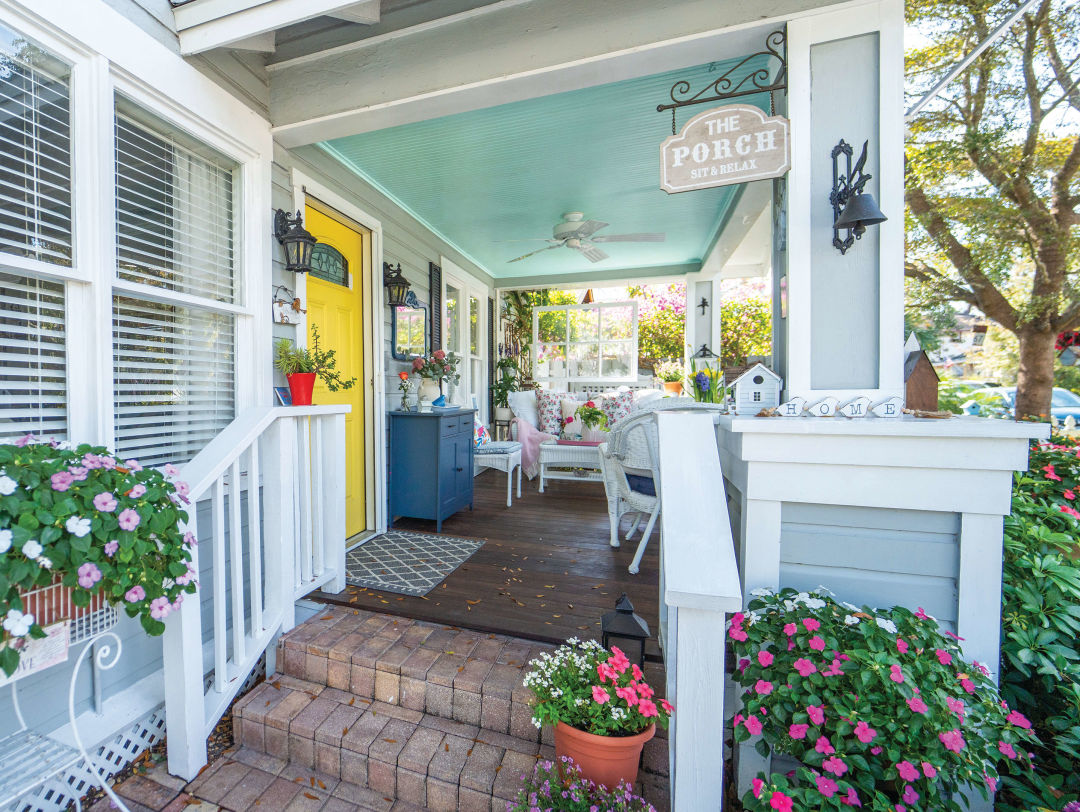
A storybook porch adorned with flowers.
“As part of our mission to teach the history of Sarasota County through programming and events, we want people in Sarasota to learn about the history of where they live and vacation,” says John Stone, site manager at the Historical Society. “This garden tour illuminates the history of an old and historically rich neighborhood. This is the second tour of its kind for us. Last year the gardens of the Central Cocoanut Historic District were featured.”
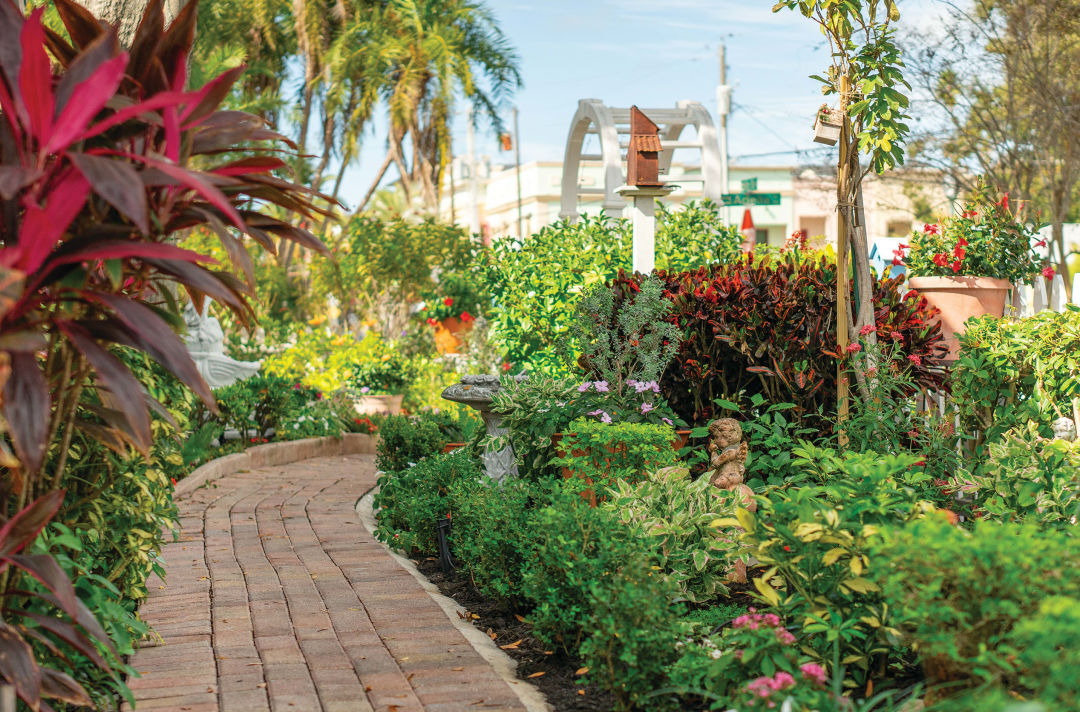
A winding path bordered by layers of color is a hallmark of a cottage garden.
The Gillespie Park subdivision was platted in 1917, but the majority of its homes were built during the mid-1920s Florida land boom. The neighborhood and the park are named after Col. John Hamilton Gillespie (1852-1923), a seminal developer of Sarasota. When the Town of Sarasota was incorporated in 1902, Gillespie was elected mayor and served six one-year terms, eventually earning the moniker “the Father of Sarasota.” Gillespie Park celebrated its 100th anniversary last year.
“Many of the homes on this tour are historically designated and represent styles of architecture fashionable in the early days of Sarasota’s development,” says Kelly Brown, president of the Gillespie Park Neighborhood Association.
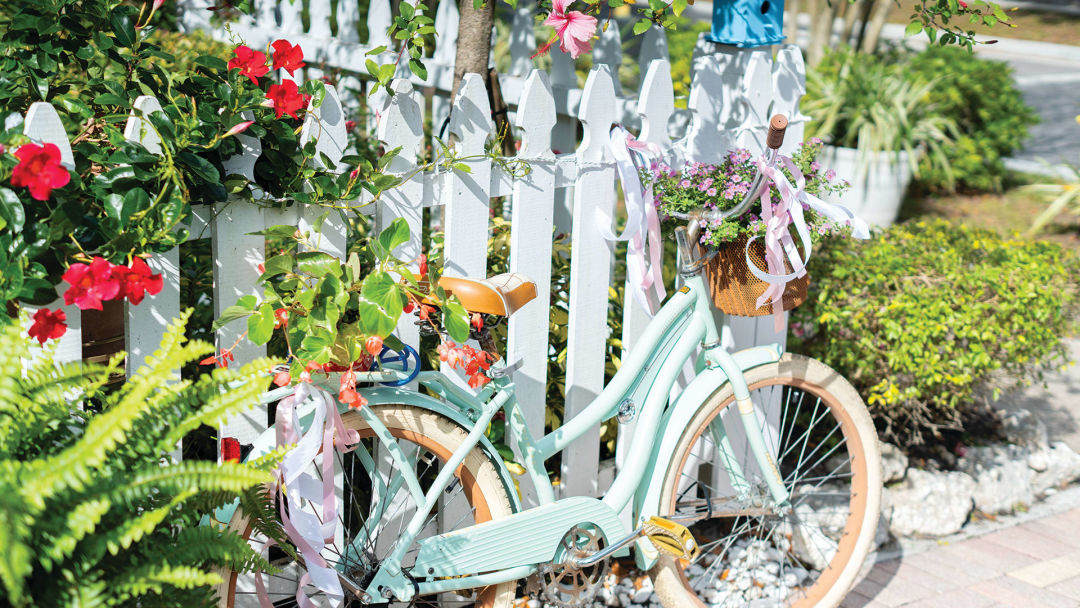
A fence and mint-colored bike provide charming focal points.
Brown, whose home is also on the tour, says tour goers will see Craftsman bungalows, Mediterranean Revival homes, farmhouse style and mid-century modern, too. “The gardens generally support the residential architecture, and tour goers will see a cottage garden, a naturalistic one, a garden where hardscape and art are important, even one where the homeowner carefully researched and chose non-toxic blooms because she didn’t want her two dogs who play in the garden harmed.
“And, of course, there is the 10-acre city park itself which is beautiful and is a terrific amenity for all of us who live here,” Brown continues. “I hope everyone who tours the gardens takes a stroll through the city park, too.”
Tour goers must buy their tickets at the Crocker Memorial Church in Pioneer Park, and they can visit two other historic buildings while they’re there. “When people come to Pioneer Park, they are invited to take a docent-led tour of the historic Bidwell-Wood House built in 1882 and the Crocker Memorial Church,” says Stone.
Volunteers from both organizations will staff the gardens on tour day, and master gardener Mimi Kempton will be in one of the gardens to answer questions about home gardens.
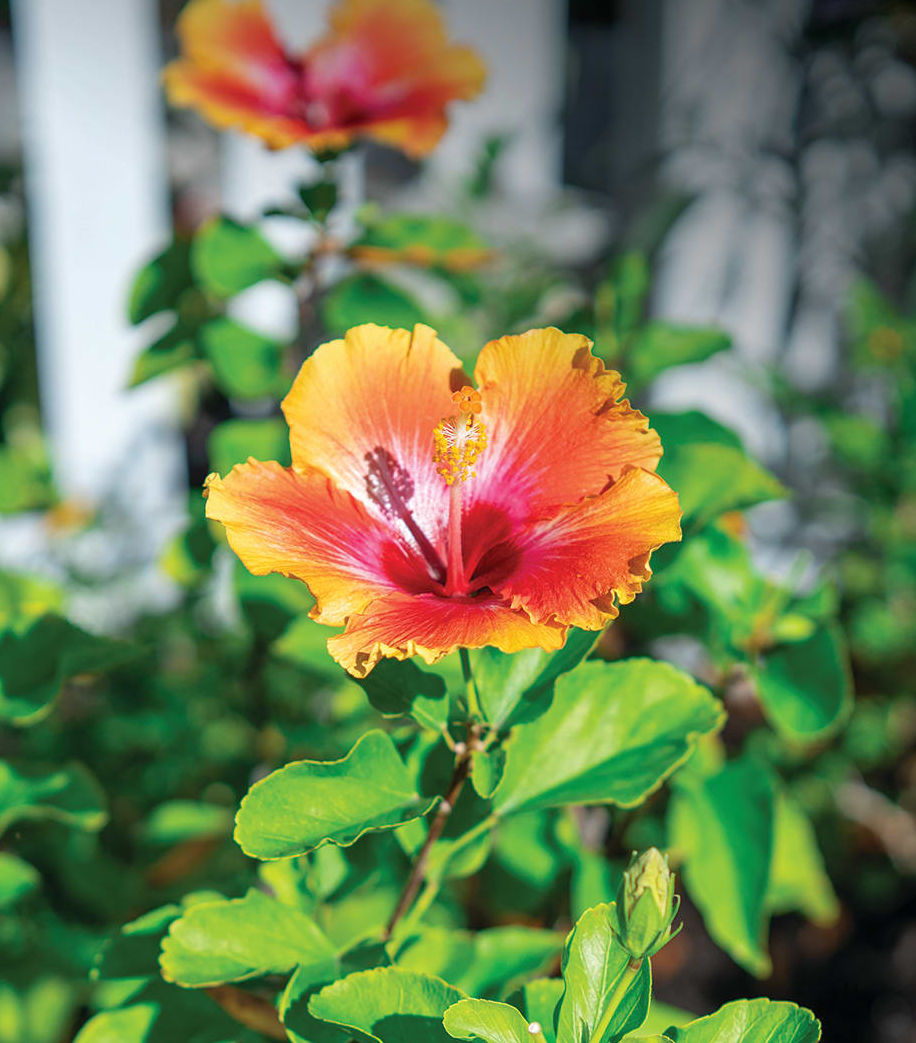
Hisbiscus adds color to any garden.
Cottage Garden Tips
How to create a garden full of color and charm.
Strolling through the historic homes of Gillespie Park, you’ll notice gardens that feel lush, layered and inviting—hallmarks of the cottage garden style. While cottage gardens are often associated with English landscapes, they translate beautifully to Sarasota when grounded in Florida-Friendly Landscaping (FFL) principles. At their heart, cottage gardens are a low-maintenance perennial garden designed for long flowering seasons, and bursts of color and charm. Here’s how to get started.
Build soil.
Healthy soil is the quiet hero of historic gardens—many Gillespie Park landscapes have benefited from decades of organic matter accumulation. In newer construction, gardeners may need to build soil with organic mulches and compost to achieve the same success.
Start with a plan.
A simple sketch on graph paper helps define beds, pathways and focal points.
Choose the right plants.
Research plants to learn about their site preferences and size at maturity to help with placement. Prioritize natives for resilience and fewer inputs. Review bloom times to maintain continued seasonal interest. Prioritize plants with year-round interest. Some good online resources include: Ask IFAS, FFL plant guide, Florida Wildflower Foundation and the Florida Native Plant Society.
Plant densely.
Close spacing shades soil, reduces weeds and creates that “abundant” look.
Mulch generously.
Use pine bark, pine straw or leaf mulch to build soil and conserve moisture.
Incorporate focal points.
Add an arbor or trellis for vines, and a fountain or seating area to provide spaces for the eye to rest.
For inspiration, visit Master Gardener Volunteer (MGV)-led monthly demonstration garden tours and mark your calendar for the MGV Spring Plant Sale on March 7, where many of these plants will be available. —Ashley Ellis, residential horticulture agent and master gardener coordinator for UF/IFAS Extension and Sustainability
Tickets are $20, available on tour day, March 14, 10 a.m. to 3 p.m., at the Crocker Memorial Church, 1260 12th St. (Pioneer Park), Sarasota. Each ticket is a brochure about the gardens and includes a map.
Comments are closed.