
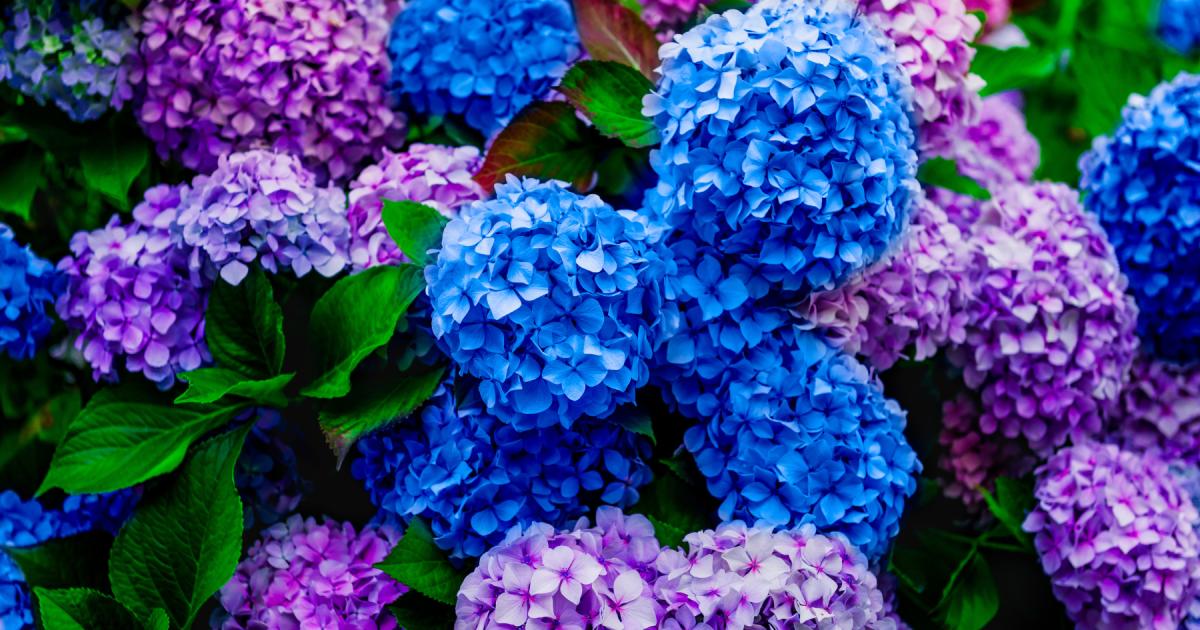
There are quite a few varieties of hydrangea, which can brighten up a garden with pink, white or blue flowers.
When they bloom properly in the summer, they can look beautiful, so it is important they receive plenty of care in the build-up to that season.
Mid to late winter and early spring are the best times to prune some varieties of hydrangea, but there is one mistake you should avoid making.
Mid to late winter and early spring are the best times to prune most varieties of hydrangea (Image: Getty Images)
What to avoid when pruning hydrangeas?
Several gardening experts have shared that you need to avoid pruning hydrangeas too hard, as they are a delicate plant.
Chris Taylor, of Chris Taylor Gardening, explained: “The biggest mistake I see gardeners make is cutting too hard at the wrong time, which can remove the very buds that would have produced that year’s blooms.
“For mophead and lacecap varieties (Hydrangea macrophylla), which flower on last year’s growth, I recommend pruning lightly in early to mid-spring.
“Remove only dead flower heads and cut back to the first strong pair of healthy buds below the bloom, along with any dead or weak stems at the base.
“Avoid hard pruning, as this can significantly reduce summer flowers.
“In contrast, Hydrangea paniculata and Hydrangea arborescens bloom on new growth, so they can be pruned more firmly in late winter or early spring.
“I typically cut these back to a strong framework 30–60cm from the ground, which encourages vigorous new shoots and larger flower heads.”
Elise Harlock, floral expert at Prestige Flowers, concurred, saying: “For varieties that flower on old wood, such as mopheads and lacecaps, spring pruning should stay gentle.
“Remove the faded flower heads by cutting just above a pair of healthy buds, and only take out the stems that are dead or damaged.
“This keeps the plant tidy without disturbing the developing buds that will carry this year’s flowers.”
Martin Chaplin, Head of Horticulture at Hedges Direct, shares that you need to be careful not to remove the wood that will carry this year’s blooms.
He added: “The best time to prune is in early to mid-spring, once the risk of severe frost has passed.
“At this stage, simply cut back the old, faded flowerheads to the first pair of strong, healthy buds beneath the bloom.
“Be sure to leave any stems that didn’t flower last year, as these are likely to produce flowers this season.”
For Hydrangea paniculata and Hydrangea arborescens, Mark Sage, Head of Horticulture at B&Q, said they can usually be reduced to around 30 – 45cm from the ground.
He continued: “Always use clean, sharp secateurs and cut just above a healthy outward-facing bud.
“Remove any dead, damaged or crossing stems as you see them.
“Careful, considered pruning each year will keep hydrangeas strong, well-shaped and reliably floriferous in a British garden.”
If you’re curious about climbing hydrangeas specifically, Jo McGarry, gardening expert at Caragh Nurseries, had some advice.
Recommended reading:
She said: “Climbing hydrangeas should be shortened after flowering, trimming long shoots back to strong buds and avoiding removing too much from the top where most flowers appear.
“If a climbing hydrangea needs to be reduced in size, spreading heavier pruning over two or three years helps limit the drop in flowering.”
It is important not to prune hydrangeas in the autumn period, as it protects developing buds from frost damage.
Comments are closed.