
Credit: Grant Webster
Can there be too many spring flowers? We don’t think so! Spring-blooming shrubs, like lilacs, rhododendrons, and forsythia, are standouts at delivering early season color and year-round garden structure. Enhance the show by adding a few less common spring-flowering shrubs alongside the tried-and-true stalwarts.
Count on these 7 lesser-known shrubs to partner well with bulbs, such a tulips and daffodils, and complement perennials that are just beginning to poke out of the soil. Offering benefits beyond colorful spring flowers, many of these unique spring flowering shrubs provide berries for wildlife and colorful fall foliage too.
Credit: Peter Krumhardt
Slender Deutzia
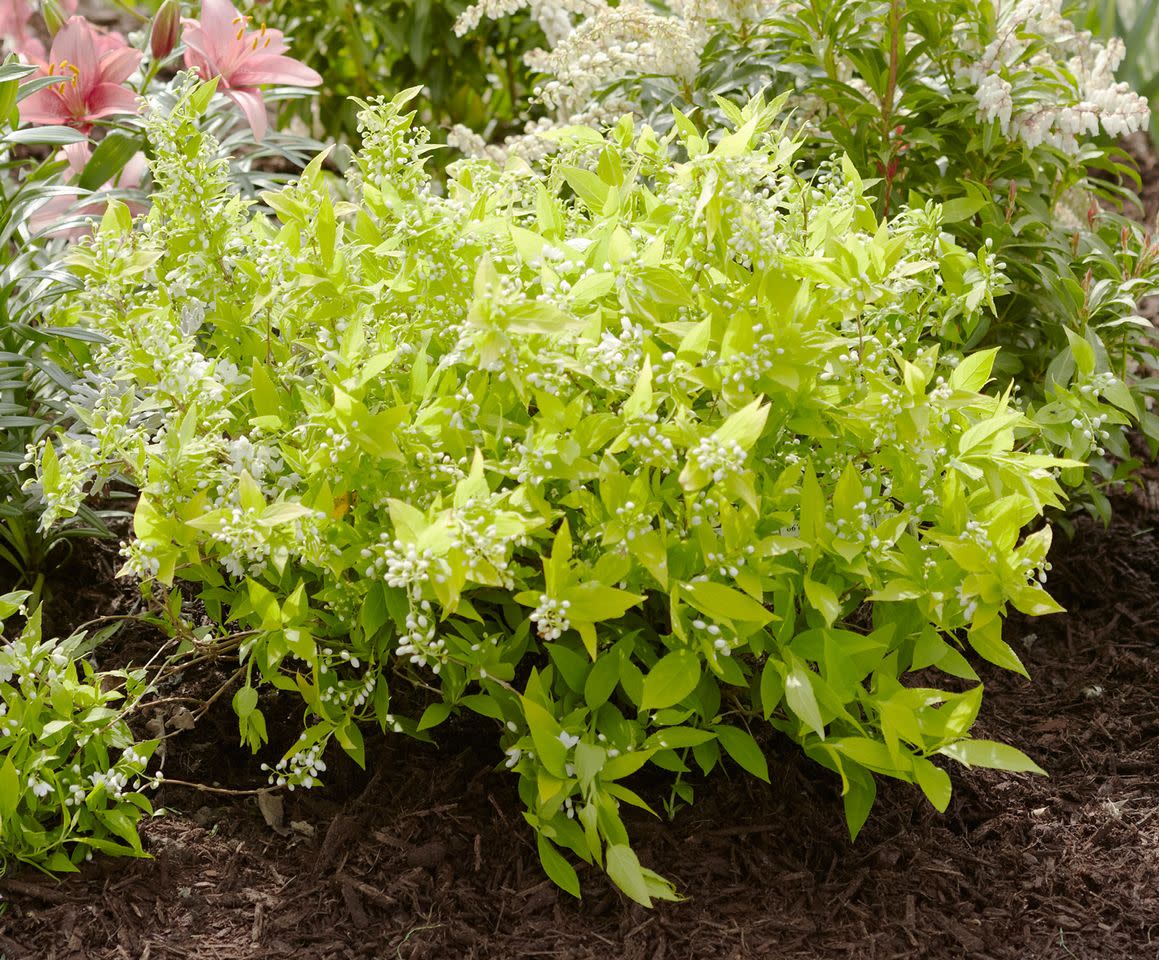
In mid-spring, this 2- to 4-foot-tall and wide shrub is covered with pearl-like flower buds that open into fragrant white flowers. Slender deutzia (Deutzia gracilis) is, like all members of the genus, native to Asia. It is a prolific bloomer and literally covered with blossoms. The graceful shrub has a compact habit, so scales well with perennials. And a big bonus: it’s deer-resistant. Zones 5–8
Where to plant: Full sun or part shade; well-drained soil
Care tips: Prune slender deutzia after flowering. Trim the arching stems back by one-third of their length to create a neat habit. Do a renewal pruning every couple of years by cutting out one-third of the oldest stems at ground level.
Noteworthy cultivar: ‘Chardonnay Pearls’ (shown here) flowers abundantly in spring and is covered with clean, green foliage through summer.
Credit: Marty Baldwin
2. Apple Serviceberry
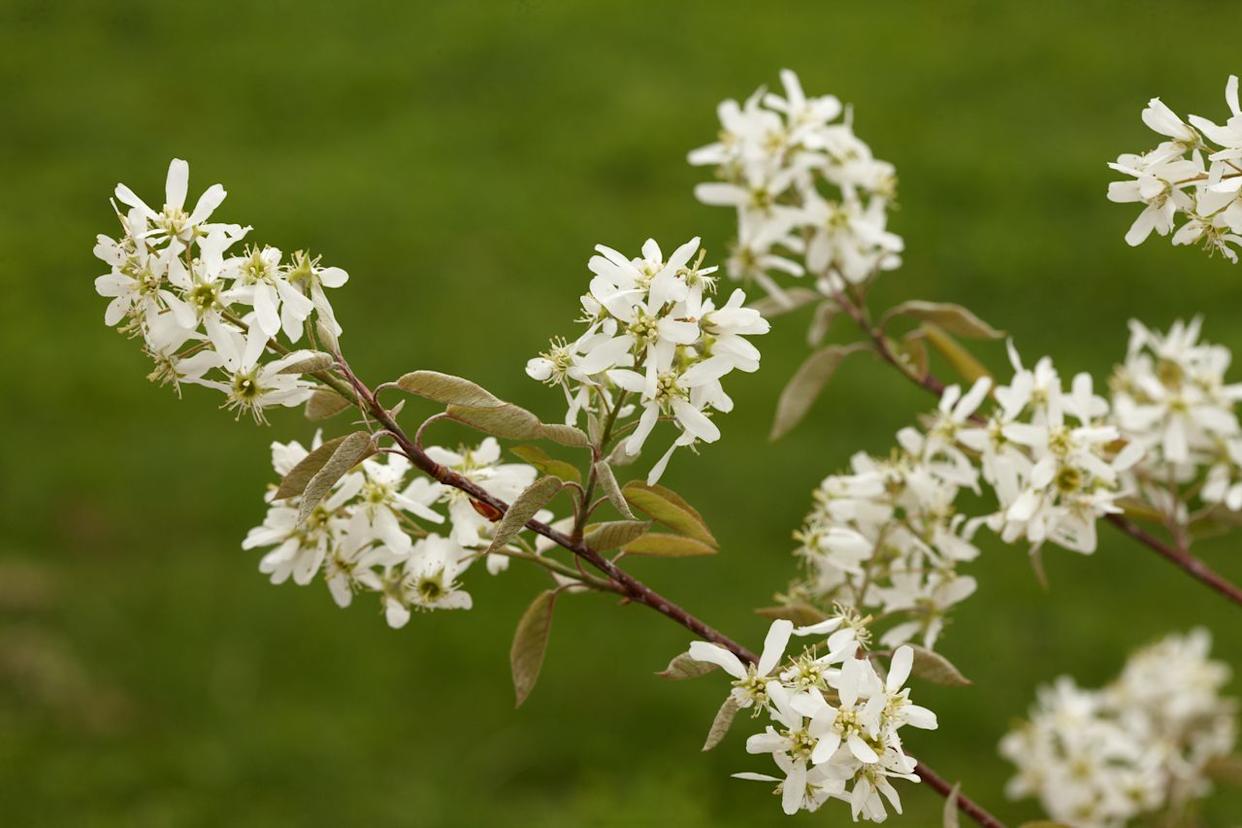
If you would like to add a native shrub to your landscape, consider apple serviceberry (Amelanchier x grandiflora). This cross between two serviceberries, downy serviceberry (A. arborea) and Allegheny serviceberry (A. laevis) can be grown as a large shrub or small tree. Early spring flowers are followed by blueberry-like fruit that attracts birds in early summer and brilliant yellow, red, and orange fall color. Plant it to anchor a landscape bed, frame an entry, or provide year-round interest near a patio. Zones 4–9
Where to plant: Full sun or part shade (as little as 6 hours of direct sunlight daily); well-drained soil
Care tips: If you are growing apple serviceberry as a small, multi-trunk tree, prune away root suckers that pop up at the base of the plant to maintain the tree-like form. This native shrub has excellent disease resistance and is usually care-free.
Noteworthy cultivar: ‘Autumn Brilliance’ is named for its bright orange-red fall color.

Credit: Dean Schoeppner
3. Ash Leaf Spirea
Despite its common name, this is botanically not a spirea, though ash leaf spirea (Sorbaria sorbifolia) also belongs to the rose family. A more befitting name for this plant, which is native to Central and Eastern Asia, is false spirea. It has a unique fernlike texture, and when the finely cut leaves emerge in early spring, they are tinged with hues of peach. The deep green foliage resembles that of mountain ash, to which it is related. Panicles of white flowers adorn the foliage in late spring or early summer. Zones 3-7
Where to plant: Full sun; well-drained soil
Care tips: Prune ash leaf spirea in late winter or early spring. Cut this fast-growing plant back by half its height. Maintain a neat, rounded form and healthy growth by cutting it back to ground level every three years or so.
Noteworthy cultivar: ‘Matcha Ball’ grows just 2 feet tall and wide; it is a perfect backdrop for spring bulbs. It blooms sparsely.
Credit: Justin Hancock
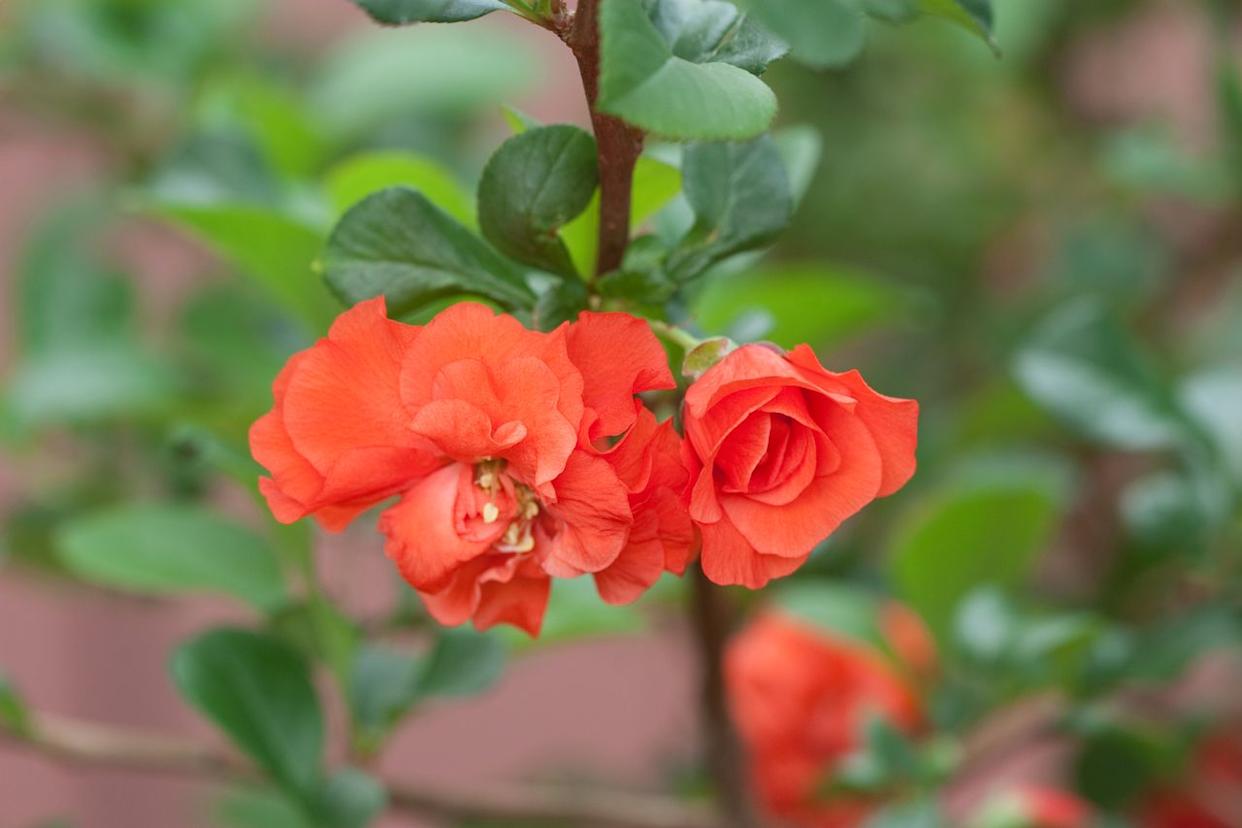
4. Flowering Quince
One of the first shrubs to begin blooming in early spring, flowering quince (Chaenomeles spp.) is prized for its showy flowers. Snip branches for a fresh bouquet or cut twigs before the flowers open and enjoy watching them unfurl indoors. Zones 4–8
Where to plant: Full sun; well-drained soil
Care tips: Flowering quince will tolerate periods of drought after establishment. Prune flowering quince in late spring after flowering. Cut stems back by one-third their length to maintain a pleasing shape. Cut one-third of the oldest stems back to ground level every three years or so to renew the plant.
Noteworthy cultivar: Newer cultivars have striking double flowers that resemble camellia blossoms. These new varieties, members of the ‘Double Take’ series, come in red, orange, pink, and white, and offer a consistent early spring bloom.
Credit: Dean Schoeppner
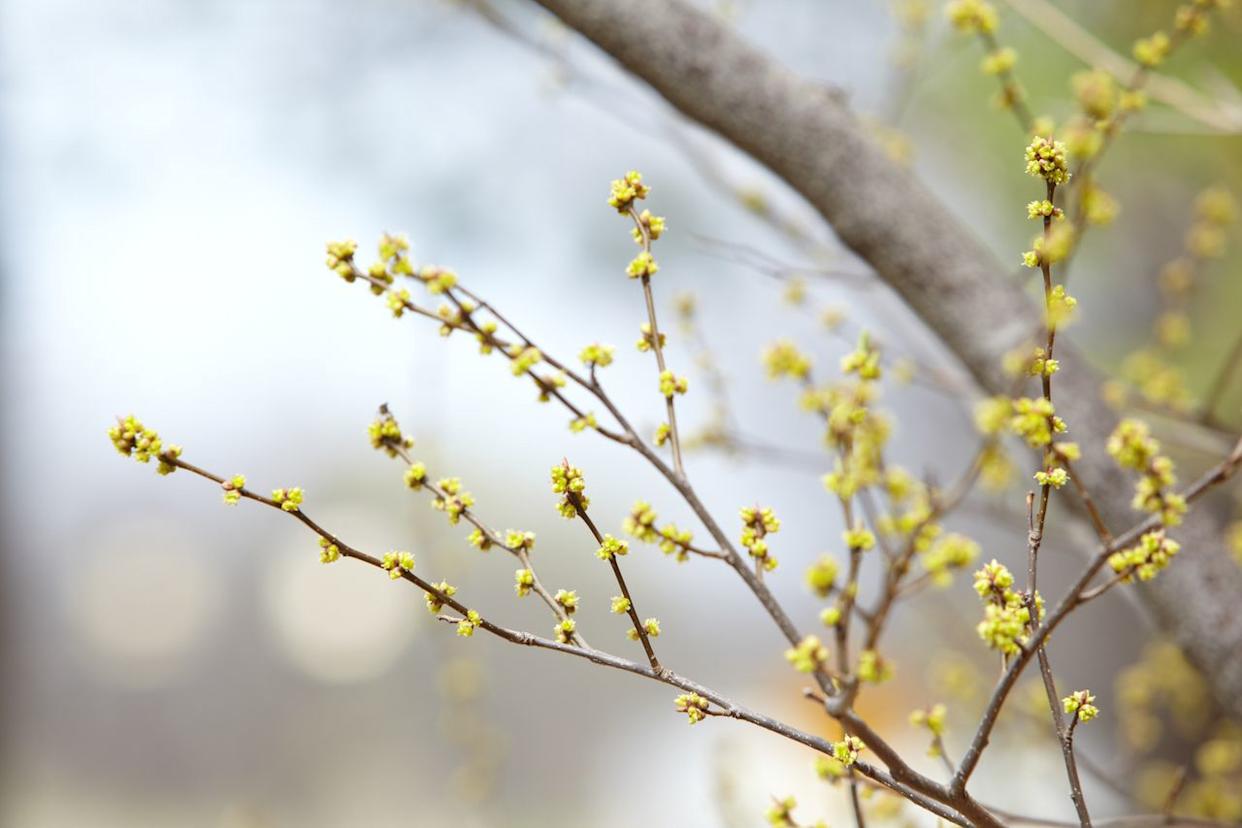
5. Spicebush
You likely catch the fragrance of a spicebush (Lindera benzoin) in bloom before you see it. The tiny greenish-yellow flowers emerge in early spring on leafless branches, and they scent the air with a delightful spicy perfume. Fruit follows the flowers and is devoured by birds during fall migration when the foliage turns a clear yellow. This shrub, which is native to the eastern and central United States, is a key host plant for the larvae of the spicebush swallowtail butterfly. It grows 6 to 12 feet tall and wide. Zones 4-9
Where to plant: Full sun or part shade, with best fall color in full sun; well-drained soil. Spicebush is tolerant of tough growing conditions, such as clay and shade.
Care tips: Prune in spring after flowering to create a pleasing size and shape.
Noteworthy cultivar: There are no widely grown cultivars of this native shrub. Ask for the straight species at your local garden center.
Credit: Denny Schrock
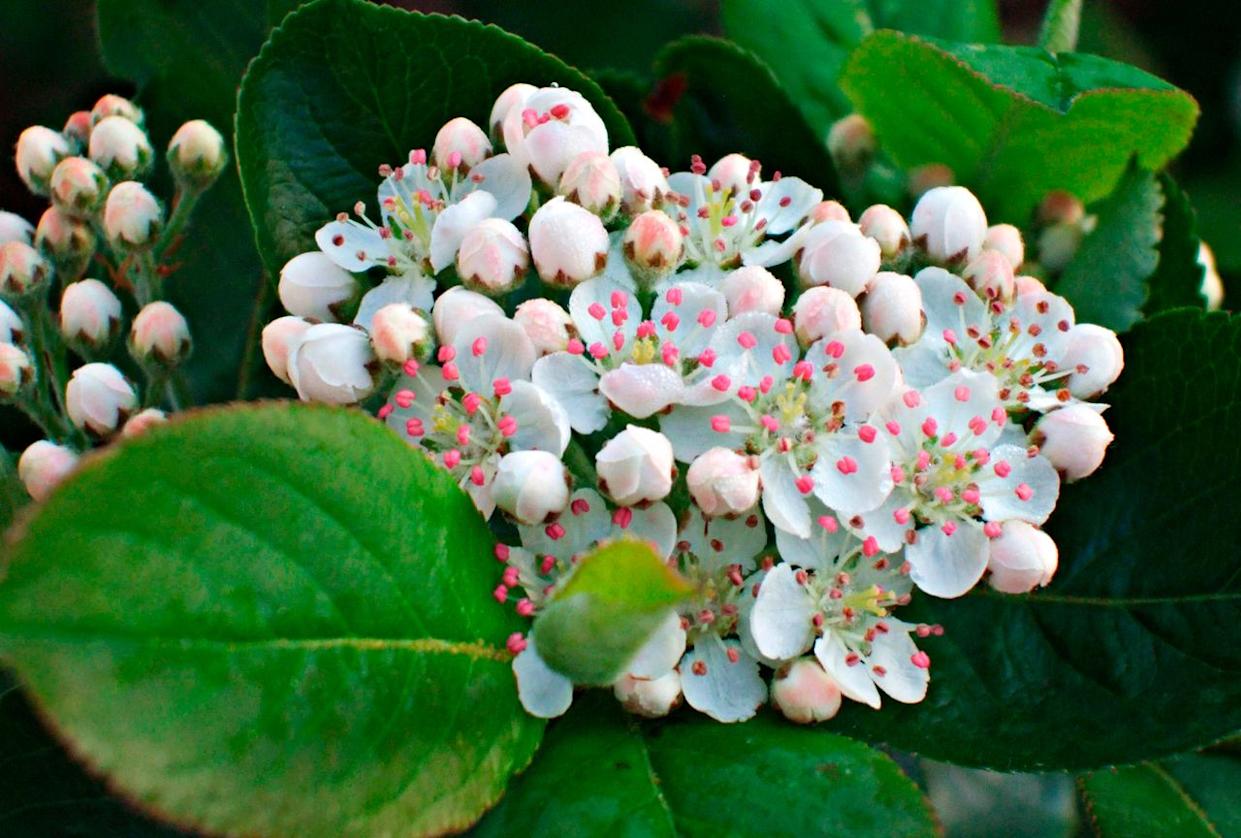
6. Aronia
Also known as black chokeberry, aronia (Aronia melanocarpa) is attractive in spring, summer, and fall. Count on clouds of dainty white flowers in spring, followed by glossy green leaves in summer, and bold fall color, along with purple-black fruit. A North American native, it provides valuable food for wildlife. Zones 3–8
Where to plant: Full sun or part shade; well-drained soil. Aronia tolerates a wide range of soils, including wet, boggy sites.
Care tips: Aronia naturally spreads to form a colony over time. Cut suckers back as needed to maintain the best size and shape shrub for your landscape.
Noteworthy cultivar: ‘Low Scape Mound’ grows just 3 feet tall and wide. It has a mounding, spreading habit that makes it an excellent groundcover or edging plant in a border. Its glossy green foliage turns brilliant red in autumn.
Credit: Grant Webster
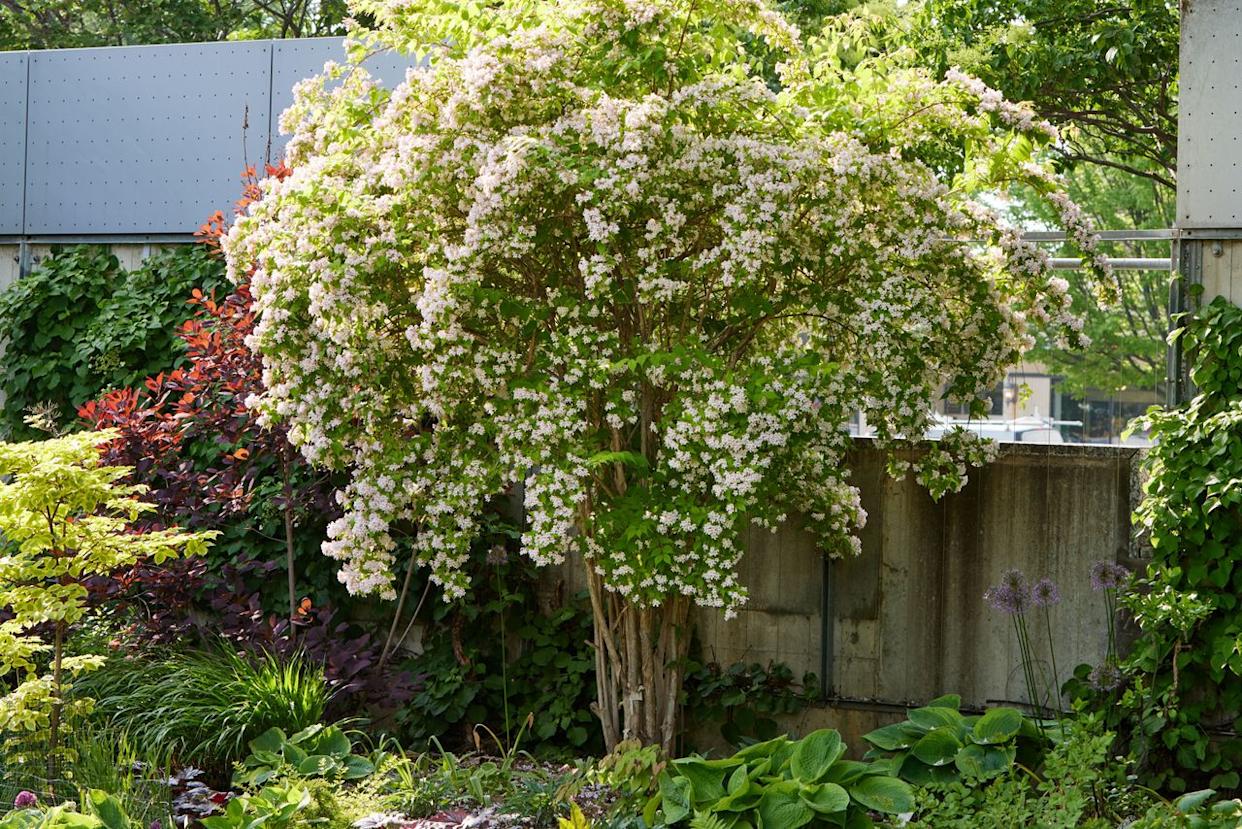
7. Beauty Bush
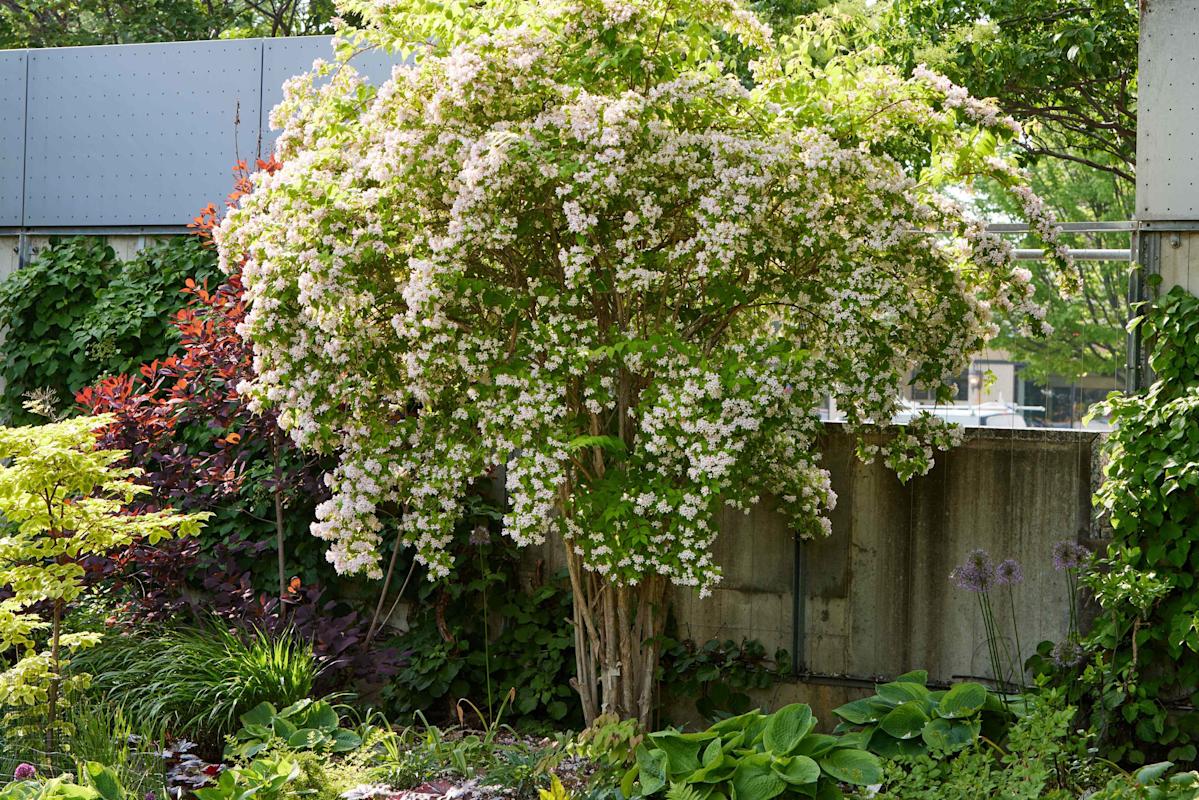
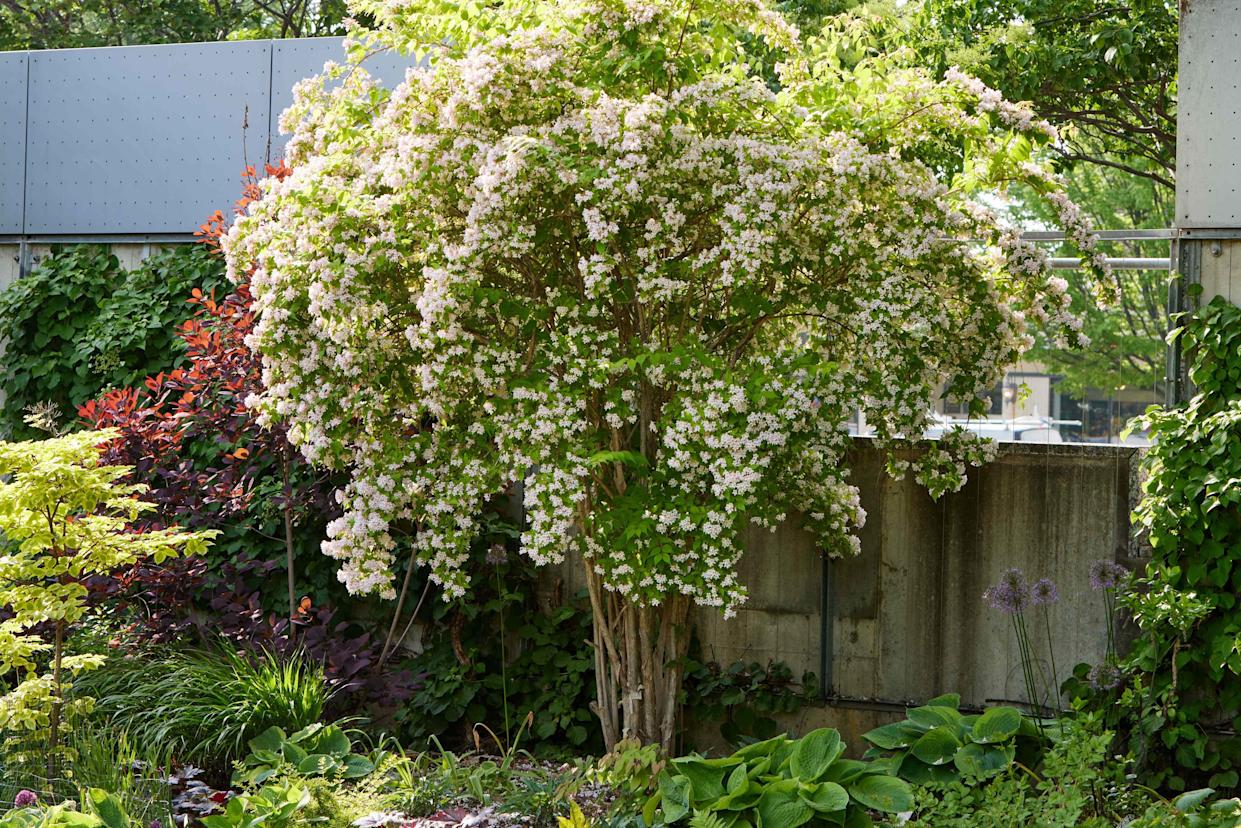
Ring in spring with the thousands of bell-shaped flowers dangling from beauty bush’s (Kolkwitzia amabilis) arching stems. The mid-size shrub’s vase-like habit and cascading stems give it a loose, informal outline that is a pleasing contrast to more structured shrubs such as boxwood and junipers. Zones 4–8.
Where to plant: Grow in full sun or part shade and moist, well-drained soil.
Care tips: Prune beauty bush for size and shape after blooms fade in late spring. This vigorous shrub can become overgrown and look unkept in time. Keep growth in-check by cutting the oldest stems back to ground level in late winter every three years or so.
Noteworthy cultivar: ‘Jolene, Jolene’ grows just 3 to 6 feet tall, making it a good fit for small landscapes.
Read the original article on Better Homes & Gardens
Comments are closed.